
I do love it when the Minister writes an open letter. It means she says what she thinks people want to hear, rather than what she actually does when people aren’t looking, taking the leadership stance of “Do as I say, not as I do”. In it, the minister harps on about providing better learning – a term that is so contrary to it’s original use. To learn is to aquire, receive, be given knowledge. To teach is to give, present, or to pass down knowledge. But there seems to be this trend to use “learning” instead of “teaching” which I disagree with; probably in an effort to degrade the skill required to be a teacher.
The legendary Boonman took to his usual satire in response to this article, and as can be expected, didn’t hold back with the comedy; which although is somewhat hilarious, is also true – which is why we laugh (because if we didn’t; we would cry).
However much I would like to be as satirical, I figured I would merely provide some teacher feedback, some next learning steps on the writing sample provided to us from Ms Parata’s pen. I hope that she will take the feedback on board, and work with her teacher to address some of the errors in her writing.
Read the original letter here: Hekia Parata: All ears to anyone ‘seriously committed’ to improving kids’ learning.
Let’s begin learning.
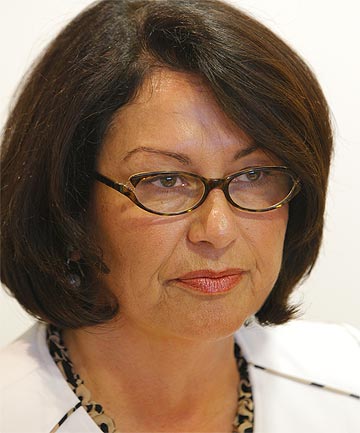 New Zealand has a very good education system. That’s beyond debate. Can we make it better? Yes, we can and we must.
We need to either work on your use of tense, or your spelling. You’ve used “has”, where as you need to have used “had”. Your sentence should read “New Zealand had a very good education system”. In addition to this, I’d probably shy away from Bob the Builder quotes, and rely more on tried and true cliché such as “If it ain’t broke, don’t fix it”.
As a passionate New Zealander and as a mum, I want to see an education system that delivers quality learning for every child and young person every day. Their achievement matters, to their families, their communities – and to me.
There is a chance that this paragraph may come across as bragging or somewhat arrogant. I am a New Zealander (and one might question my passion for the title under the current government) but I am not a mum. But I still want to see a quality education system in this country. Is my opinion not as important or passionate as yours because I have not been with child? Yet becoming a teacher without this does make my level of passion for education and learning far greater than most given most don’t want anything to do with schools unless they have children.
As a teacher, I can safely say that if we have a “very good education system” that you stated in part 1, then we have very good quality “learning” each and every day for each child or young person. However, to presume that their achievement matters to their family is a bit much, unless you have personally interviewed them all. Likewise, communities usually don’t focus around the achievement rates of their young people. From my experience, families are focussed on raising young children to be the best they can be in all areas of life. Sometimes sports become more important than achievement rates, as much as overseas holidays or trips do. They tend to want to provide experiences that will assist with creating well rounded individuals. Communities also tend to focus not on achievement rates, but solutions to keeping the young people off the street, running groups, clubs, or catching up with the latest gossip or what not. They tend to focus on them as people, instead of as data, numbers, and test takers.
I visit schools right across New Zealand on a regular basis, seeing for myself what’s happening in our classrooms. I speak to teachers, principals and parents about what I, as the Education Minister, can do to support them to ensure our kids are achieving.
It’s refreshing to hear that you get to travel around the country visiting schools. It would be such a wonderful experience to go around and see what a hard job teachers actually have, and what a great job they are already doing.
I would suggest the use of a wider vocabulary instead of “speak to”, you could use the term “ask”. However, as I know, you have very little interest in hearing what teachers, principals, and parents have to say about what you can do to support them. I suspect you would just tell them what you will do, and leave it up to them to change what they do so that what you’ve decided to do will be of benefit to them.
The proposed changes that we’re making in education are all about putting our kids at the centre of the education system, lifting the educational success of every young New Zealander.
Once again, this is an incredibly presumptuous statement, that a) kids weren’t at the centre of previous education systems, (which would be somewhat bizarre if that weren’t the case) – and b) that the changes that you’re making with or without the support of the education sector will lift the educational success of every child, more so than what the current system is and has already been doing before you stepped into power.
This means ensuring we get the right funding for the right children at the right time. That there are a wide range of education options that reflect our modern era, and that schools are supported in the best possible way to ensure that every child is learning the skills and knowledge they need to succeed in life.
I applaud your efforts in providing the right funding for the right children. However, your actions speak louder than words, and so far, you’ve shown a tendency to waste money on failing charter schools rather than investing in children. I suspect also, that the “right funding” that you talk about will, in turn, mean more funding, which your fellow minister in finances may wish to have a few words to you about.
Schools also need to be supported to know this learning is taking place to make sure they’re doing the best job they can for our kids.
Another presumptive statement Hekia. You are obviously not very aware of your audience when you write, a skill taught and learned in Level 3 of the curriculum by 9 and 10 year olds. Schools are already very aware of the learning taking place and the knowledge and skills required of students in this modern age. However, the basics of reading, writing, and maths are unlikely to change, and while you continue to maintain the expectation that schools assess against the National Standards, schools will unfortunately be forced to spend their time teaching and “learning” in these three curriculum areas.
Our education system is well funded. At $11.04 billion this year it is the biggest ever investment in early childhood education and schools. That’s more than we spend on police, defence, transport, conservation and foreign affairs combined.
Please refer to my earlier comment regarding charter schools. Maybe that might free up some of these funds for police, defense, and transport all of which are asking for more government funding.
As I’ve often said, “that’s a shipload of money”.
A very good attempt at the use of a familiar phrase or “kīanga”. However, it is not a ship full of money that is coming into harbour, because ships can carry a full load worth a lot more than $11.04b in notes alone.
And that “shipload” is growing. Funding hasn’t been frozen. Schools’ operational funding has increased by $12.3m for next year taking it to a total of $1.35 billion.
Once again, please refer to previous comment about ship load. It’s “shitload”; meaning a heck of a lot of excreetment.
Also, I’m not sure coming out with fictional information in such an open letter is appropriate. Please read this article re: funding freeze.
Spending has also increased by more than inflation, and I’m not expecting that to change any time soon.
Yet the teachers who teach the children who you have now put at the centre of your education plan and the support staff who help them are given minor increases that do not keep up with the increases of living? I strongly suggest rewording or even removing this statement from your piece.
The Funding Review currently taking place is focussed as much on whether we are getting the best for all these taxpayer bucks, as well as what more we might need.
I’m not sure if using the colloquial term for “money” is the best use of your Thesaurus, Hekia. By using “bucks” it makes it seem unimportant, unvalued, taken for granted, or even rudimentary to your audience. Once again, you should consider your audience when writing this, considering the majority of them will be taxpayers themselves and probably would like you to respect their hard earned money a little more than calling it “bucks”.
There are seven proposals being looked at as part of the Review and leaders from right across education have been included in the early development of these potential changes.
The legislation currently making its way through Parliament is about providing more flexibility, not only to schools and early learning providers, but to parents as well.
That is one thing it is providing – more flexibility. However, you need to add more details about the other things that it will bring. Details such as larger class sizes, more work for teachers, a national database of students that will track them through every year of their schooling. It’s details like these that your readers are interested in, even if you are not too keen on them yourself.
New Communities of Learning, or Kahui Ako, are also helping schools and services to work together for the benefit of their students.
Once again Minister, you need to add more details to how this is happening, and how it is benefiting the needs of individual students in their individual schools. Maybe alluding to the fact that this will lead to one principal and one board running multiple schools. No doubt this will free up some more of that “shipload” of bucks the education uses.
I’ve consistently listened to the teacher unions since I came into the education portfolio, regularly meeting with them and working with them on a number of important initiatives.
For the first time you have considered your audience, though it is important that when you do, you come across as sincere and truthful, rather than making things up. Also; I don’t believe you come “into” a portfolio. I suspect you were given it. Maybe you could reword your sentence to be a little less fictional by saying “I’ve consistently listened to the teacher unions bleating on since I received the education portfolio, regularly seeing them banging on my door, and ignoring them on a number of important initiatives until they give in and I do what I want anyway.”. I also find it ironic that hours after writing this letter, you leave on a trip meaning, for the third time in five years, you have declined the invite to said teacher union (NZEI Te Riu Roa) conference. That’s another example where actions speak louder than words.
I will work with any groups or individuals that are seriously committed to improving children’s learning and raising achievement.
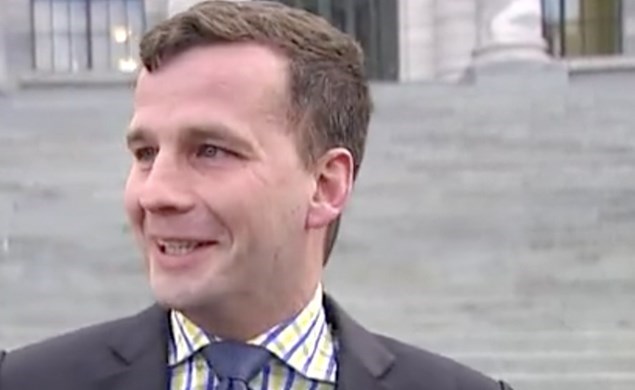 This sentence is somewhat contradictory. I would say that it would be almost impossible not to work with yourself or your team on this. Will you have to demonstrate to yourself that you are, in fact, serious and committed to improving children’s learning before you will work with yourself? I know for one that the under-secretary of Education has no commitment to improving children’s learning, and if he does, it’s certainly not serious.
Everything I’m working towards is about putting children and their achievement at the centre of the education system.
It’s about lifting the learning potential of every child, so we can continue to grow as a nation, and prosper. It’s about preparing young New Zealanders for a contrary, challenging, exciting world.
I’m not sure you have to continue to make things up and over-exaggerate about child achievement. I also think you should further consult your thesaurus regarding the words to describe the world. Contrary for example is a word that I would have thought you would be all too familiar with, especially with the number of backing down you’ve had to do in your time as Minister of Education. Maybe a “better, challenging, exciting world” might read better, especially as it provokes some sort of inspiration or hope for the young people who are lucky enough to be able to read this far into your letter without drifting off to sleep.
 I want our education system to ensure that every Kiwi kid can fly!
That is a bold attempt with the use of metaphor in your writing, Hekia, and definitely a great concluding sentence that really brings a climax to your points. However, I suspect that this will lead to some confusion as to the literal meaning of your sentence.For instance, if you’re wanting children to fly, they will need to evolve into a creature with wings, or maybe you are intending to use some of the shipload of bucks to subsidise the cost of airline tickets for children? Your intentions are not clear.
* Hekia Parata is the Education Minister
I suspect with Writing this poor with so many clinical errors, at this time in your political career, that in due course, you should be prepared to amend this line, using the past tense “was” instead of the present tense “is”.
Teacher’s Note: I apologise for the over analysis of this Writing sample, though as you and your advisors have said in the past; data is the key to success. The more data I have on this Writing sample, the better success you will have. Though at this stage, you are still falling well below the expected level and unfortunately, this will result in you being required to find another school who are prepared to put up with your poor achievement rates. Maybe the charter school down the road will take you in.
Leave a Reply