
Hekia did a U-Turn on class sizes back in 2012 when she announced National would be increasing class sizes.
John Key himself stated that he sent his children to private schools because of the smaller class sizes.
Yesterday Simon Bridges sent National back down the road, but this time after heading around the round-about and back in the complete opposite direction to his former leaders. In fact, it appears that he’s even driving on the wrong side of the road.
“In a fiery speech to the National Party annual conference on Sunday, Bridges promised National would increase the number of primary teachers to reduce class sizes and give kids “more teacher time”.
“With the right education we can overcome the challenges that some children face purely because of the circumstances they were born into,” he said.”
Stuff.co.nz – https://www.stuff.co.nz/national/politics/105832210/smaller-class-sizes-under-nats-says-simon-bridges-in-major-speech
It has left many of us scratching our heads, dazed and confused. Isn’t this what Teacher’s all around the country were asking for back when National was in power?
It would seem easy to make such promises when you’re not held to account, or when you’re not in driving seat or in charge of the books.
Of course, this gives Labour the mandate to lower class sizes and not have any opposition to such a proposal – least of all from the teachers around the country, backed (I’m assuming) by Simon Bridges himself.
It won’t happen though. And here’s why.
To lower the class sizes there are several things that need to change.
Either there needs to be more teachers. Or there needs to be less children.
Let’s assume that infanticide won’t go down well in 21st Century New Zealand, the government is forced into the first option.
Please be advised: There are a lot of links to news articles in this article. I encourage you to read each article in full to gain a better perspective on the issues at hand. There is more than just one factor in all of this, and having a full picture of it all will assist you in understanding the complex array of issues raised.
As I write this article, NZEI have just released a damning report regarding student numbers and the teaching profession, saying a crisis will hit by 2030 – a date that I bring up later on in this article as well!
Point one.
We’re already losing teachers by the bucket load. Earlier this year it was reported that half… HALF of all high school teachers quit within the first five years. That means that every five years we have to replace half of all the high school teachers. And that’s just to maintain the current teaching workforce. Similarly, 17% of all new ECE and primary graduates EXPECTED to leave within the first five years into their careers.

“They often leave because they are burnt out by the demands of teaching, an increasingly narrow and prescriptive curriculum, and by policy initiatives that promise much, deliver very little, and are quickly replaced by some “new” policy that is equally ineffective and short term.”
Point two.
We’re losing not only good teachers, but experienced ones, by the bucket load. I’m not talking about teachers with 10 years of experience. We’re talking deputy principals with 30 years of experience. We’re talking teachers with 23 years of experience as a principal, and 40 years in teaching. That kind of experience doesn’t just grow on trees. Simon Bridges was two when this principal BEGAN teaching.
Point three.
To try and address the dwindling education workforce, the National government sent an ambulance to the bottom of the cliff. From the ambulance came the idea that we’d just train new teachers, rather than trying to stem the flow of valuable, dedicated, and experienced teachers jumping from the top of the cliff face. We all know why they did this – paying beginning teachers is a lot cheaper than continuing to pay experienced ones. But needless to say, the results are as expected.
The course was introduced and graduates rushed through in record time. I trained for four years to become a teacher, and I was nowhere near prepared enough for the daily rigors of school life. Furthermore, while the introduction of this was (in my opinion) a good one with a step in the right direction towards ongoing apprenticeship where teaching students are placed in a school and get used to “the grind” with some real-life practice, it only had room for 20 applicants in it’s first year in 2016.
Nine MILLION dollars was injected into “a raft of new initiatives” to help address the shortage in 2016. Money well spent by Hekia and the National Government? I guess proof will be in the pudding.
On top of this, the numbers getting trained are subsiding as well. I’m not at all surprised. The number going through education training at the moment is a third of what it was when I trained in 2010. Continuing that trend we will no longer be training any new teachers by 2034. Poor pay, high stress, and better career options in other professions are being blamed.
In addition to this, we’re not even getting the brightest or best for the profession. Just read this article from 2016 which states that graduates accepted into teaching degrees were some of the lowest scores across ALL bachelor programmes. It also explains saying that “The number of entrants into teaching has dropped by 25 per cent in five years, putting pressure on universities to accept even lower entry grades to maintain numbers”.
Point four.
So as we can see, getting more teacher’s isn’t working. Why not?
Well – as a teacher, I’m certainly not recommending that anyone choose the career over any other. I’ve heard it on good authority that at least one local principal discouraged his own children from becoming teachers, stating that it isn’t like it used to be when he was a teacher while raising them in the 90’s.
As stated: Poor pay, high stress, and better career options exist out there for anyone wanting to earn a living in this world. We’ve already seen a teacher shortage in Auckland, not just because of the lack of teachers, but because of the cost of living, the cost of housing (renting or owning) in Auckland (and elsewhere around the country) is beyond their means. Even those that moved in to try and plug the gap are now looking at leaving.
Put simply, Teaching is no longer valued as it once was. And it is a detriment to our society.
So how do we show value in Teaching as a profession? Well. Pay is one way. If the job is paid well, there will naturally be more interest in it as it becomes a viable career on par with other options that are out there.
Check out these stats from a bit of research a Twitter follower did:


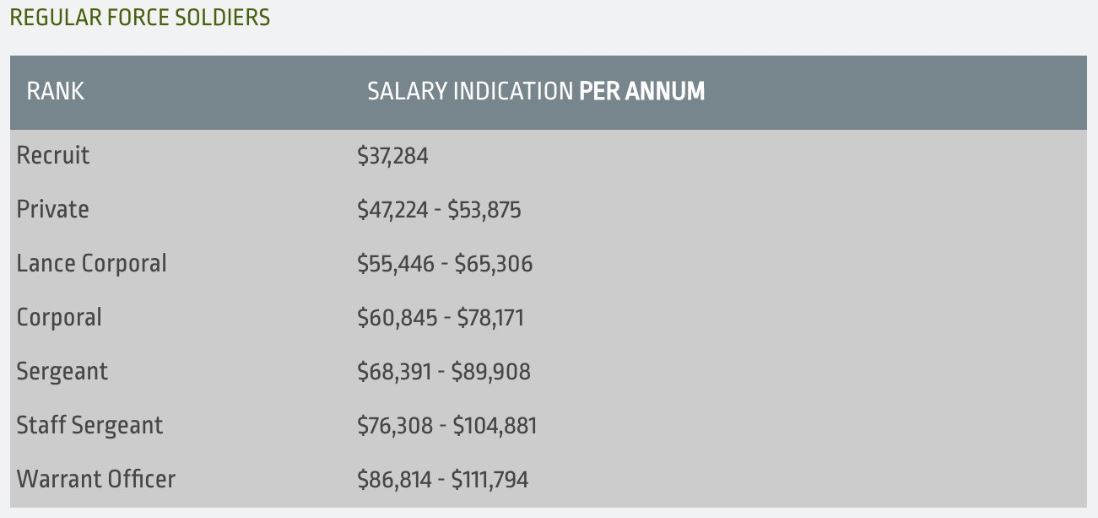
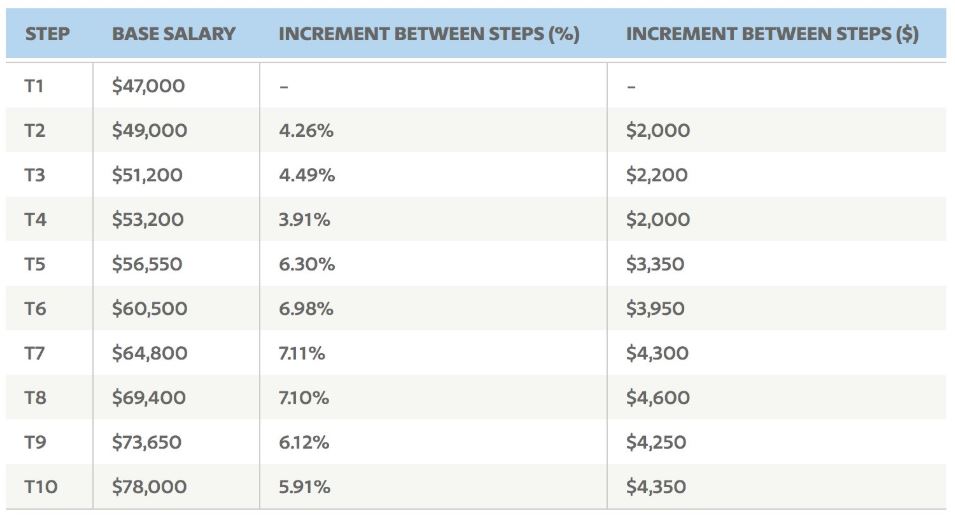
When a Corporal in the New Zealand Army can earn as much as the TOP tier experienced teachers (besides units, or senior management), then it speaks volumes. And don’t for a second think I am belittling Corporals in the New Zealand Military.
Heck; just look at the salaries of members of parliament. You have to go back to 1979 since the pay for a back-bench MP was the same as a Teacher’s salary. Now, a Back-bench MP brings home $168K worth of bacon each year – and then vote to increase their wages which gets passed almost before the Yay’s can say ‘Y’.
That’s a 40% difference, in nigh on 40 years. There’s no way that we’ll get back to where the pay scales will be anywhere near the same.
It can’t happen, I hear you say…
It did. Back in 1985, under a Lange led Labour government, a 40.17% pay hike was given to secondary teachers across the country.
I’m not saying that it will happen again. But if the government (and the people the MP’s represent) are serious about the future of the country, then they need to get serious about making Teaching a viable career.
You can come out and say that you want smaller class sizes, but to get to smaller class sizes, you need more teachers. And to get more teachers you have to make it a job worth staying in (less work pressure) and pay them more so that teaching is on par with other careers.
Everyone knows, thanks to Whitney Houston, that children are our future, and we’ve all had a teacher who has inspired us to be more than we are, or more than we were. You put money into education, and you get it back in droves in the generations to come.
The good news is, Minister Hipkins is aware of it and is doing something about it. Quite what it is that’s doing is largely unknown – given the latest purchase in the Defense force, but hey… at least it’s not a U-turn.
