Tag: community of learning

  • Community of Learning: Devoid of Individuality

    Over the last few nights, I have worked away going through all 61 of the accepted and approved Achievement Challenges that active CoL’s have put out.

    I spent time going through each one and noting down the key aspects of each. This included noting if they were based around National Standards, NCEA, Curriculum subject, and any other factors, such as Ethnicity or Gender focus, or a mixture of everything.

    These Communities of Learning are all unique. They all represent different parts of the country, and the schools in them reflect the communities and whanau who they serve. They are made up of a myriad of individuals who teach and lead within them and who work tirelessly at solving a range of different achievement challenges daily.

    Yet, out of the 180 CoL’s, only 61 have been accepted so far. Many, many of them have had to be returned with a “FAIL” on the grade paper, and asked to resubmit. Countless have been adjusted and modified to include certain aspects that the Ministry and the Government want to see in them. The following infographic shows this beyond doubt, that there is a definite agenda behind what the Ministry will accept as appropriate achievement challenges. Very few of them take into account any kind of individual or creative focus in which a Community of Learning might wish to operate and instead, pushes and prods until that CoL fits into the pre-determined box, ready to be shipped off.

    [su_box title=”Communities of Learning – March 2017″]View the enlightening infographic I made here.[/su_box]


    In the initial stages, schools were gun ho, with vast varieties of creative innovations for what these challenges could be and what would lead to set one community aside from another. Many delved into what was important to them and their community when deciding on their achievement challenges.

    In a quiet hush of excitement and trepardation rolled into one as the response envelope was opened. A quick skim to see if the achievement challenges had been accepted.

    No. Instead what many CoLs got was a rejection letter of their achievement challenges, with some suggestions and examples of what might be a better challenge.

    The result of this is quite evident where two years of returned achievement challenges until the CoLs came up with one that would fit into the box that the Ministry aresqueezing is all into.
    Of the 61 CoL’s that have currently (March 2017) had their achievement challenges accepted, I worked out the following stats:

    83% have something about Maths.

    88% have something about Writing. Of those, 60% are about National Standards.

    70% of CoLs want improvement at Achieving Level 2 NCEA.

    36% are focussed on Maori achievement in some way, and 29% on boys achievement.

    10% focus on additional learning needs.

    Next to none have anything holistic, such as Hauora (wellbeing) or creativity, mindfulness or community focuses, or other curriculum areas such as Science or the Arts.

    Make what you will of that.

     

  • CoLs: Achievement Challenge Numbers

    Part of establishing a CoL has been the task of setting an “Achievement Challenge” that all schools in your CoL will aim for and target.

    In the initial stages, schools were gun ho, with vast varieties of creative innovations for what these challenges could be and what would lead to set one community aside from another. Many delved into what was important to them and their community when deciding on their achievement challenges.

    In a quiet hush of excitement and trepardation rolled into one as the response envelope was opened. A quick skim to see if the achievement challenges had been accepted.

    No. Instead what many CoLs got was a rejection letter of their achievement challenges, with some suggestions and examples of what might be a better challenge.

    The result of this is quite evident where two years of returned achievement challenges until the CoLs came up with one that would fit into the box that the Ministry aresqueezing is all into.
    Of the 61 CoL’s that have currently (March 2017) had their achievement challenges accepted, I worked out the following stats:

    83% have something about Maths.

    88% have something about Writing. Of those, 60% are about National Standards.

    70% of CoLs want improvement at Achieving Level 2 NCEA.

    36% are focussed on Maori achievement in some way, and 29% on boys achievement.

    10% focus on additional learning needs.

    Next to none have anything holistic, such as Hauora (wellbeing) or creativity, mindfulness or community focuses, or other curriculum areas such as Science or the Arts.

    Make what you will of that.

  • CoL: Corruption on Learning

    The next phase of the privatisation of the education system is in full swing, with a series of schools being lured by the promise of $365million into Communities of Learning.
    Although there was a slight majority of 93% of NZEI voters voting to exit the negotiation tent when the Corruption of Schools initiative was announced, they continued working with the Ministry to develop a watered down version that is supposedly more palatable version of it.

    Unfortunately, as I have written in the past, a poisoned apple is still poisoned even if you polish it up nice, red and juicy. Or in slightly more crass terms; I’m not going to be eating a turd just because you’ve put chocolate icing on it.

    Groups of schools were then asked to submit expressions of interest into forming or joining a CoL and many did to explore the options. However, an “expression of interest” was taken by the Ministry as a firm “yes” of commitment, and when consulted about whether a CoL was to be formed, the Ministry responded with “well you’ve signed an expression of interest so you’re in one”. Fantastic. This is of course a numbers game, and the Ministry will spin it whichever way it can to show that it is working. Take this map for example. It says where all the communities of learning are around the country and all the schools involved, and all the students from those schools – failing to actually realise that as of March 2017, 61 CoL’s have approved achievement challenges. As of December 2016 there were 180 CoL’s, so only one third have had the go ahead on an achievement challenge. These achievement challenges essentially set a direction for the CoL and until they have been approved, the CoL is somewhat rudderless and ceases to exist. Thus, the Ministry’s numbers are overly inflated as to how many CoL’s there are, and how many schools are actually participating in one.

    At the NZPF Moot last week, Whetu Cormick spoke of the plans the Government is making, with international visits to the UK where Communities of Learning models have been rolled out and the devastating nature of them has become evident. They all centre around privatising education, and will spell the biggest asset sale in recent New Zealand history.

    Of course, as Whetu states, all of this is presented to the public and parents as a way for schools to be equally equipped, for resources to be shared. It’s far too difficult to argue, because all of these things seem very appealing at face value. However, the implications of these lead us to the issues that the UK and US are facing; neither of which has raised any kind of improvement in the achievement results of students. Of course, using National Standards to measure this is completely flawed anyway.

    What I find somewhat amusing is that every opportunity the minister gets at the moment she seems obligated to say “parents should get the choice”. But under this CoL model, schools will have a set of expectations dumped on them and they will all conform to eventually all be the same, with no room for individuality or working with the community. No chance to build a school curriculum or focussing on what is important to that school’s culture.

    I would be very interested to hear from anyone who is in a school involved with a CoL;

    • What are your experiences of it so far? Positive? Indifferent? Negative?
    • What are your “achievement challenges”? How do they relate to your students at your school?
    • Is the CoL having a positive impact on your school, and on student achievement?

    Related Reading

  • Taillight

    Over the last several months, we’ve seen an increase of ‘Principal-related’ jobs that have stacked on-top of the role that Principals already have to play. For one, I know that for many Principals, Novopay was one stress that has turned them greyer than ever, and continues to cause week in and week out stress as they become glorified pay clerks for their staff. Many Principals have off-loaded this role to their admin team; but many wish to take the responsibility of paying their staff on themselves, and won’t sleep soundly until they know each member has the right pay.

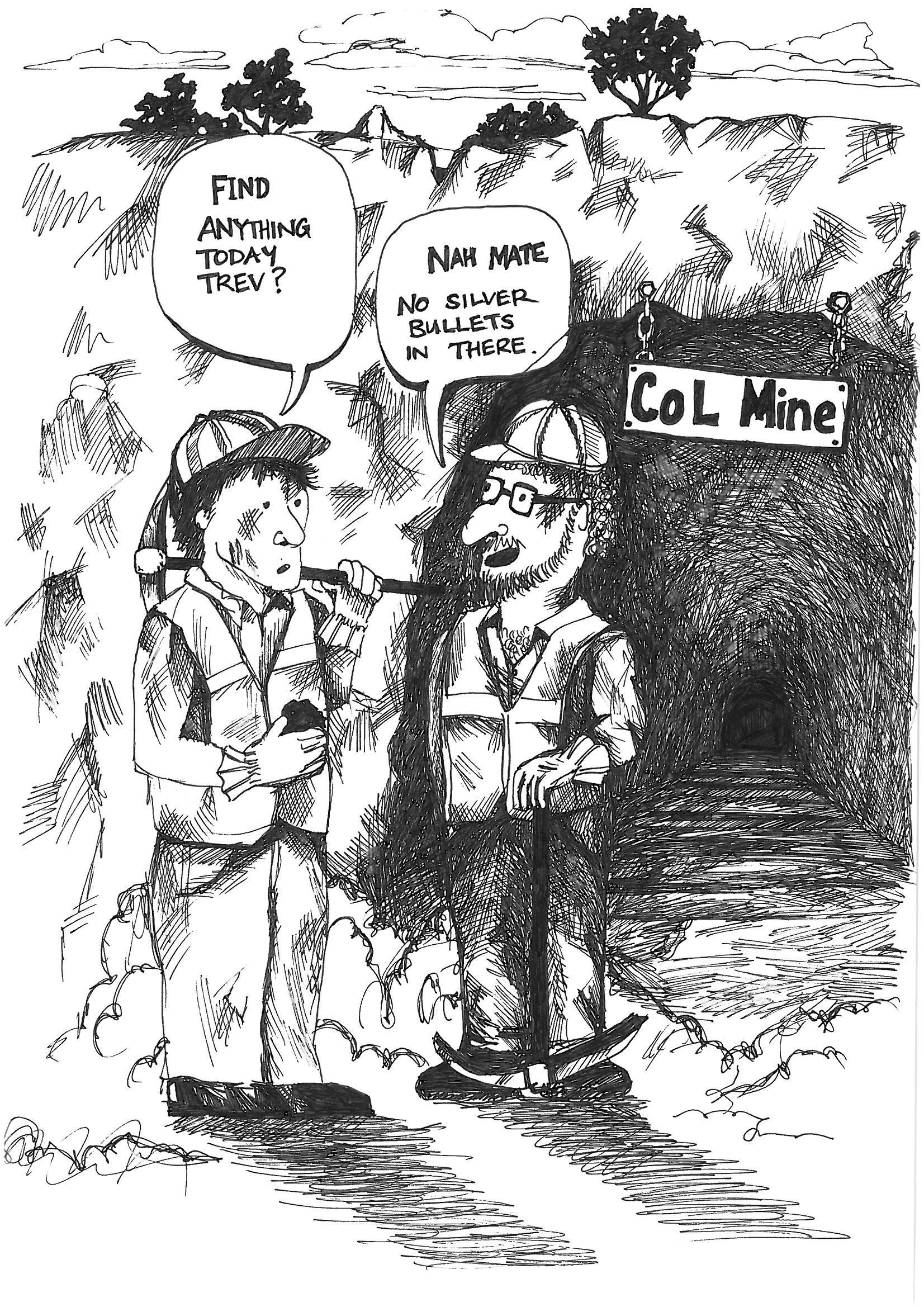
    Add to this the new legislation coming in such as the Health and Safety Act, and the Vunerable Children Act, which boards and Principals now inundated with new policies, new procedures, and paper work to sink HMS Bismark all over again.

    Some Principals are now facing the ongoing struggle to wrangle other local schools and boards together into a community of learning, even though they may or may not want to.

    Of course then there’s the ongoing pressures of financial audits, property regulations and funding, the charter and strategic plans, and that’s all to be done with the knowledge that ERO may or may not be far away depending on your school.

    Then, after leaving schools alone for the best part of a term, along come the senior advisors from the Ministry, who are meant to be a sounding board, a guide, someone who works alongside principals and schools. Do they ask how things are going? Do they ask what is on top? What is impacting the school? No. Do they actually visit the school and see how its going? Talk to principals, staff, children, to find out how the school is operating? No.

    No they are asking two questions.

    What is your data like? What are your target students results?

    Well, quite frankly; that’s like checking the taillights at a serious car accident.


    Don’t forget to comment below if you’ve heard similar stories! Share with your friends and colleagues.

  • Deathstar

    After another Ministry of Education hui for principals, a comment was made that the whole fiasco of the Community of Schools / Community of Learning negotiations with NZEI, have left teachers “…with the Deathstar, but we get to choose what colour lasers they use!”. I found it quite comical, and certainly falls inline with my views on the IES which can be found here.

  • Community of Learning Mincer

    In relation to Ministry comments at a recent Community of Learning hui for Board of Trustees.

    “The Community of Learning… is a pathway… to move a student through the pipeline…”