Tag: dyslexia

  • The right to read: My dyslexic daughter got the help she needed. All kids should.

    Original article here: Washington Post

    Before I was a dyslexia advocate, I was a mom sitting at the pool and complaining to a woman I will call Barbara about my daughter’s school. Barbara had four children — the youngest still in college, the others launched into different adulthoods — and was one of those moms who got her kids, who deftly described the job of being four different moms to four different children.

    I was speculating, I think, about how my daughter Phoebe, who has dyslexia, was being affected by attending her public middle school, and I asked for Barbara’s advice. “Oh,” she said, “I don’t know. My kids with no issues, I sent to public school. My kids with issues, I sent to private school. I thought that’s what you did.” She smiled at me as if it was a candid piece of guidance. Life hack! We don’t send kids with issues to the public schools.

    First, I felt poor (how do people survive sending multiple children to private school and then four children to college?), then I felt dumb (was the obvious solution right under my nose?). And then I felt angry. I said to Barbara, “Oh, and it’s all right with us if the public schools just don’t serve kids with learning problems?” After all, about one in five children has learning and attention problems, and don’t we need our public schools to help them become productive adults? Barbara gave me another smile, a kind one that seemed to say, “Of course you’re right, my dear.” Then she put on her goggles to do her laps.

    Conversations such as this one, as well as my experience with Phoebe, sparked an interest in dyslexia and advocacy, and I ended up serving two years on a task forceestablished by Maryland’s governor and General Assembly to make recommendations about dyslexia education. (Much of what follows was influenced by the experts I met while on the task force, but the opinions expressed are my own.)

    Through this experience, I’ve come to understand that reading is critical to a safe and productive adulthood, and a prerequisite to participation in civic life. A lawsuit filed this year against the state of Michigan contends that the opportunity to learn to read should be seen as a constitutional right — and a right that is being violated in Detroit, where only 6 percent of fourth-graders and 7 percent of eighth-graders read proficiently, according to National Assessment of Educational Progress scores. Whether this argument moves you or not (yes, the opportunity to learn to read is not spelled out by the Constitution), we should all become more aware of dyslexia and the policy changes needed to improve millions of lives.

    The arc of Phoebe’s treatment, I later realized, was typical of many students with dyslexia who need significant one-on-one help to obtain a good outcome. When she struggled with reading in kindergarten and first grade a decade ago, we tried not to fret too much, because her teachers told us that late bloomers often “take off” and read fluently by third grade. In second grade, we found her a private, after-school tutor. Yet even after two years of one-on-one instruction, the information wasn’t “sticking” from one session to the next. “I know this is hard to hear,” one of her tutors told me, looking at my face and recognizing my skepticism. But the tutor understood that Phoebe fit the best definition we have for a dyslexic: She couldn’t read even after having been provided with very adequate instruction.

    It was now time to pay for outstanding instruction — and word in my neighborhood was that I could find it at the Speech-Language Department of the Lab School of Washington. Phoebe did an intensive summer program before fourth grade, then was tutored twice a week there during the school years from fourth through sixth grades, and more sporadically elsewhere for a couple of years thereafter. Conservatively, we spent more than $35,000 on tutoring; the going rate for speech and language pathologists is more than $100 an hour. Every six months or so, I would eagerly ask her tutor, “How’s it going?” and hope to hear, “We’ve turned the corner.” Instead, I would be told that Phoebe was making steady progress at holding on to more letter combinations and sounds, and that her speed was not as slow as it used to be. This went on for years.

    While not thrilled about the tutoring, Phoebe recognized that the sessions at the Lab School were “better” than the help she was getting at public school, even from reading specialists and special educators. Why was this? I believe it was because her tutor was using an Orton-Gillingham-based approach to help her remember phonics — the word sounds that “normal” readers can’t recall learning to recognize in print because their brains held on to that information like flypaper in first grade. Developed in the early 20th century, Orton-Gillingham emphasized explicit, sequential, multisensory instruction (hearing, saying, tracing and writing). For example, Phoebe and her tutor might spend a session on the letter combination “ow” and the different sounds it makes, then review letter combinations Phoebe had mastered earlier. The training and materials for programs based on Orton-Gillingham tend to be expensive and work best one-on-one or in small groups, which may explain why this particular intervention wasn’t available at her school.

    During the summer before eighth grade, Phoebe’s tutor reported that her grasp of phonics was now in the average range, which meant she could decode nonsense words (like a line from “Jabberwocky”) about as well as her peers. But her fluency, the speed at which she read, was too slow for good comprehension or enjoyment. The fix for fluency was not more expensive tutoring in phonics (hallelujah!) but simply more time spent reading. Unsurprisingly, Phoebe thought books were “boring.” “If only she could find something that captured her interest,” her tutor said. During the school year, Phoebe came across that something: a smartphone app called Wattpad, where she read self-published stories, many of them by teen authors. She sweet-talked her teachers into accepting Wattpad as her free-reading book.

    Read more here.

    Source: https://www.washingtonpost.com/lifestyle/magazine/years-of-tutoring-helped-my-dyslexic-daughter-read-all-kids-deserve-such-support

  • Chrome Apps for Students with Learning Difficulties

    There are a number of students who are displaying signs of having learning difficulties, such as dyslexia, in schools across the country. While there are some troubles in getting a diagnosis for these students, there is no reason why we should not begin to help these students out where we can. In a senior school for example, you might have 4 classes with about 28 students in each. That is 112 students. It is said that one in five students have a learning difficulty such as dyslexia. That means that there is potentially 23 students who suffer from learning difficulty. That’s nigh on an entire class. Obviously, there will be many more who have difficulties developing through the junior school as well.

    One way that can help these students immensely is through the use of technology. (Please also read “The Answer to everything is not an App“). There are a number of different resources available online for these students. Some of these apps are free and open source for students to use as they see fit. These can all been installed on each student Chromebook account. Students with learning difficulties can then need to enable them on their accounts, and make sure they are turned on for them to work. Some teaching around these tools also needs to be done, so the students know they are there to help and assist them in dealing with their learning struggles.

    There is always a tendency to download and install absolutely everything, with features doubling up and too many to choose from (which to leads to none being chosen). I have personally installed each of these tools below and can personally recommend them. Each performs a different function to the other, and each has been designed to deal with learning difficulties that students face.

    Free Apps

    Open Dyslexic

    Open-Dyslexic is an open sourced font created to increase readability for readers with dyslexia. This extension overrides all fonts on webpages with the OpenDyslexic font, and formats pages to be more easily readable.

    Mercury Reader

    The Mercury Reader extension for Chrome removes ads and distractions, leaving only text and images for a clean and consistent reading view on every site.

    Read and Write for Google Chrome (Free Version)

    Boost reading and writing confidence across all types of content and devices, in class, at work, and at home!

    Wonderfully intuitive and easy-to-use, Read&Write for Google Chrome™ provides personalized support to make documents, web pages and common file types in Google Drive (including: Google Docs, PDF, ePub & Kes) more accessible. It’s designed to help everyone engage with digital content in a way that suits his/her abilities and learning styles.

    BeeLine Reader

    BeeLine uses a color gradient to guide your eyes from the end of one line to the beginning of the next.  This seemingly simple tweak makes reading substantially easier and faster because it allows you to transition between lines quickly and effortlessly.

    MagicScroll Web Reader

    The MagicScroll Web Reader turns every page on the web into a MagicScroll book.

    Its unique scrolling system lets you scroll web pages without moving them, making it easier to read long articles without being distracted.
    Many of the suggested apps that assist learning for these students have premium versions or require subscriptions for them to be useful. In some sense, this applies for all apps in learning, but the difference being that we would be targeting those students who need it most, rather than supplying it to everyone. Obviously this depends completely on the cost of the app, or ongoing subscription as to whether it is viable to purchase for all students to use or not. If I was to recommend any app to purchase for a student with dyslexia or other learning difficulty, it would be Read&Write for Google Chrome, as outlined below.

    Read & Write for Google Chrome

    As mentioned earlier, the free/trial version is already installed for all students, and some are using this to good effect in class. However, many of the specific tools that assist students with learning difficulties are reserved for only the premium version. Luckily, teachers can sign up for an education account, and the premium features will be unlocked for you. Having done this myself, I can tell you that the premium features clearly show how they assist struggling students.

    The app is developed by a company called Texthelp, and should go some way to explaining why they developed the features in this app. On their website, they describe their involvement in schools as “…award-winning assistive technology solutions [that] help school students of all ages with reading, writing and literacy in classroom lessons and at home. Used daily by millions of young people around the world, Read&Write literacy support software makes the web and documents more accessible for reluctant readers, individuals with dyslexia and other learning difficulties, as well as students whose first language isn’t English.” Their values as a company is all about the inclusive environment that all schools should be working towards. Their company values state that “At Texthelp we believe that absolutely everyone deserves the opportunity to reach their full potential – at school, in the workplace and in later life, too. We believe there’s a whole world of avid readers and fluent writers, waiting to emerge with the right tools and encouragement. We believe in digital inclusion – where life stage, visual impairment, dyslexia or dis/ability aren’t barriers to the online opportunities that others enjoy. Most importantly of all, we believe that everyone’s entitled to the best possible learning and language support on their own personal journey – from literacy to life.”

    It is quite obvious therefore how they came about developing the Read&Write app, and the features they decided to include in their premium version.


    Features of Read & Write Specifically for Students with Dyslexia

    • Text to Speech feature (Free)
      Highlights each word as it is spoken, proven to help improve comprehension and understanding.
    • Dictionary
      Quickly brings up definition of the selected word.
    • Picture Dictionary
      Displays a selection of pictures that relate to the of the selected words.
    • Prediction
      Displays a range (between 3-10) of words that could go next in a written sentence.
    • Screenshot Reader
      Students can select an area from the screen and it will analyse any text in that part of the screen and read it out loud.
    • Highlights
      Students can choose from 4 colours to highlight parts of text for research and finding key parts from information..
    • Vocabulary List
      Creates a document that students can add words for their vocabulary to.
    • Talk & Type
      Students can talk into the microphone and it will type in the words for the students. The accuracy of this takes some time to get used to.
    • Screen Masking
      Masks off top and bottom of the page, so that a light line can be moved up and down. This allows students to focus on the line that they are reading.

    While the free version allows for the main aspect of this app, where they can have what they have written read back to them, the features of the premium version are all highly valuable for students with learning difficulties.

    While it is entirely possible that these features can be found independently within individual free apps, there is something to be said for having them all in one easy-to-use app, even if it is at a cost.

    Read&Write for Google Feature

    Free Chrome App Alternative

    ✔    Text to Speech* Speakit!

    SpeakIt reads selected text using Text-to-Speech technology with language auto-detection. It can read text in more than 50 languages.

    ✔    Dictionary Google Dictionary (by Google)

    With this extension, you can:

    1) Double-click any word to view its definition in a small pop-up bubble.

    2) View the complete definition of any word or phrase using the toolbar dictionary.

    ✔    Picture Dictionary No free alternative
    ✔    Prediction No free alternative
    ✔    Screenshot Reader No alternative – see Text to Speech though…
    ✔    Highlights ClipTo

    Simplifies online research – Keep your highlights and notes on any page.

    ✔    Vocabulary List EachWord

    Add new words to the dictionary and they will be occasionally shown as cards.

    ✔    Talk and Type Click to Dictate

    Use this app to speak to dictate using speech recognition (voice-to-text, speech-to- text, instead of using your fingers typing)

    ✔    Screen Masking

    Visor

    Screen dimmer and reading aid, may help with fluency, eye-strain, concentration and comprehension whilst reading.

    * Note: This part of Read&Write is free, so does not necessarily require an alternative.


    There’s not really much more I can say in conclusion. In summary, get Read&Write for Google, and if you can justify it, purchase the premium version. If you can’t, don’t panic, there are several options to choose from that will provide students with assistive technology for a lower cost, though obviously, come in several packages, rather than in one easy-to-use app.

  • Dyslexia in New Zealand Schools

    The current support for dyslexic students in New Zealand schools is a joke. An absolute joke.

    When there is a reportedly 7% of students in New Zealand Schools have Dyslexia, it doesn’t sound like much. However, in a class of 28 students (the funded class size), that’s 2 students who will be struggling with dyslexia. Statistics say that as many as 20% of students will have learning disabilities, and it’s been noted that overall, dyslexia makes up about half of those disabilities. This means it could be even 3 students in your class that will be struggling with dyslexia.

    I also suspect, that the aforementioned 7%-10% is just those that have been diagnosed, and as a teacher, there are many more that are never picked up for a number of reasons.

    That’s not good enough.

    What’s more, is the Ministry of Education, Ministry of Health, and the Government all turn a blind eye about dyslexia support in schools – mainly because if they admit that it is a problem in New Zealand schools that dyslexia affects student’s learning, then they’ll be called upon to do something about it and support schools to address the problem. That comes at a cost to the Government. Essentially, what this has led to is a bunch of private organisations filling this void. However, this of course, comes at a cost.

    From the figures I have heard, to just get assessed for dyslexia, it will cost schools or families anywhere from $250-$400. This goes some way to explaining why so many more students are not picked up and struggle their way through the system with little or no support for them, their teacher, or their parents.

    Go figure.

    As a teacher, I am passionate about this. Not to find a reason for under-achievement or raise excuses, but to get support for these students who are struggling. It frustrates me to see these kids come in, and feel like I have nowhere to turn to get support for them, and if there is, how it always seems to come to a dead-end.

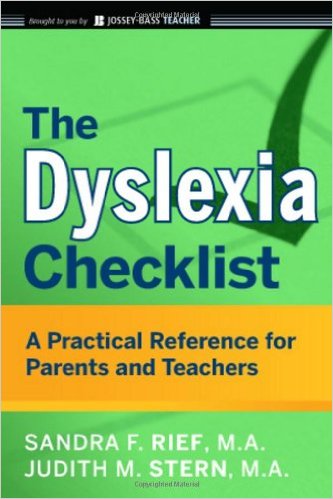
    In trying to understand dyslexia a bit more, and hopefully be able to support dyslexic students within my classroom myself (seeing as I’m getting no support), I have purchased a couple of books. One is ‘The Gift of Dyslexia’ by Ronald D. Davis (which I have leant to a friend when her child was diagnosed), and the other is ‘The Dyslexia Checklist’ by Sandra F. Rief and Judith M. Stern.  Hopefully they both offer some insight into how I can better support learners with dyslexia in my classroom.


  • Picture Books and Literacy Learning

    I was perplexed, astonished, gobsmacked, and bewildered when I read this article this morning.

    Picture books hurt reading, says linguist Pamela Protheroe

    Read Article – Stuff.co.nz

    There are very few words I can say right now about it.
    Luckily, most of us in Education circles have gotten used to ignoring such ‘research’ and will continue to listen to trained, practising teachers who know what works, rather than these so-called ‘researchers’ who blow in and blow out of a classroom to report their findings.

    But seriously. Let’s stop for just one moment. Someone has based their research thesis on this. Countless dollars on resources, time, and all sorts to carry out this research, and for the most part, it goes against every bit of logical instincts we have.

    My first reaction was – what are the implications for schools should this research be taken on board? Book rooms around the country turned upside down, with pictures being deleted from Ready to Read books, and replaced with text-only books. Picture books being thrown onto a fire in the school courtyard outside the school library. Its just not an image you even want to imagine books and schools becoming.

    Let’s face it. We’ve all been through school where picture books were more than a staple diet. They have helped us to make sense of the world, and have scaffolded our learning of English, which is confusing at the best of times! They have provided enjoyment and fun for reading. Even today, I prefer a good picture book, and the art covered pages that bring the story to life.

    And guess what. I’m not dyslexic. In fact, many of us aren’t. And even those that I know who are dyslexic, have not only learned to adapt with this world, but have done so from a very young age; suggesting that dyslexia isn’t really something that comes to haunt us in later life like baldness or arthritis might. I’m more than sure that if this research was the least bit true, that with the copious amounts of picture books that have been read over the years, we would have countless adults complaining of suddenly developing dyslexia and getting their words and letters muddled.

    Try, just for a minute, to picture it. Where the Wild Things Are, without the beautiful scratching and muted illustrations. The Very Hungry Caterpillar without the large stenciled fruit and holes in the pages. Green Eggs and Ham without the train going through the tunnel on tracks supported by the bamboo-like truffalo trees. There is no way that these stories, without their illustrations, would remain in our minds, but more importantly, remain in our hearts.

    9985972026_54e0b07122Imagination at heart

    As for ruining imagination; I somewhat agree. I believe the imagination of young people has been harmed by the overstimulation of digital media, film, and video games. But not by picture books. Not by still images. The stationary pictures that grace a page provide just a small portion of the imagination required to gather in the entire story. There are a lot more aspects to a story than even what the picture on a page can show us. Theres movement, there’s action, there’s descriptive settings, and facial expressions. There’s reactions and emotions, all of which change and adapt with the story, something that a still image in a picture book. They rather provide a starting point and a kick start for students imaginations to build on.

    Pictures, Pictures, Pictures

    My personal favourite is a book that has no words in it whatsoever. Most likely this is because of my prejudice towards art and drawings. It’s called ‘The Arrival‘ by Shaun Tan, and it is magical. In my teaching through Daily 5, a world wide literacy programme based on in class practice, developed by teachers for teachers, one of the things that is taught is ‘three ways to read a book’. One of those is to read by using the pictures. Even I ran into problems with this when teaching older children, who are now reading chapter books which contain very few pictures!

    In Conclusion

    I guess it is quite good that this researched doesn’t have a memorable name. I can’t even remember it from the title.

    There are a few things that we need to remember. They completely dispute her findings, and lay them to rest almost instantly. Firstly, like music, pictures are a universal language for all. They tell a story on their own. They are invaluable for communicating ideas for ELL students.

    And lastly, and most importantly, I leave you with one common phrase that is used all over the world, and speaks complete truth every time it is used. And I cannot think of a more suitable time to use it than this.

    “A picture is worth a thousand words.”