Tag: ERO

  • On the steps of parliament: protest against ERO | Network on Net

    Original article: https://networkonnet.wordpress.com/2017/08/14/on-the-steps-of-parliament-protest-against-ero/

    Timed for the opening of parliament 1996: New Zealand First in coalition with National

    On Wednesday, 11 December, I pointed my car down my driveway in Cambridge, turned right, and right again, and headed south.

    It was my appreciation that the present represented a defining moment in primary education – either education was going to be controlled by ERO through bureaucratic managerialism, or by all major participants in the spirit of democracy. As a result, it was not so much the present I was fighting against, but the future I was fighting for.

    The flux caused by the MMP elections and the coalition talks; the feistiness of the present Principals Federation executive; the concern about education directions in academic circles; the indications by the news media they were starting to understand the situation; the greater willingness of schools to take a stand; and the general alarm caused by ERO’s continued efforts to increase its powers – all combined to make this, from my perspective, a decisive moment. I had decided to give two months to the anti-bureaucratic campaign (ABC). The petition had been launched, and the returns were coming in strongly. I had hoped schools would, in their deliberations, rise above matters relating to whether they had just received a good ERO report or not, and see the role of the review office in the overall education culture; see the review office as at the centre of promoting and imposing the bureaucratic demands so widely complained about. The evidence, gratifyingly, was that schools were, indeed, seeing the wider picture.

    After launching the petition, my task, as I saw it, was to keep the issue, to the forefront, and to keep in touch with key people in education. My tactic each week was to develop a news release then sit in front of my fax, and fax for hours. In a way it was like fly fishing, you cast your line out a large number of times, and, every now and then, you have a strike. I can assure you, though, no matter how small the catch, I never threw one back. So I’d start with the big fish of the TV and metropolitan newspapers, then radio, the magazines, then moved on to the provincial newspapers and, time permitting local and suburban newspapers. I learnt a lot about the news media in the process.

    As in any campaign, the purpose is to get the message right, and then to find different ways of saying the same thing. Whether I got the message right, I don’t know, but I certainly found a lot of different ways to say the same thing. The message I tried to communicate was of a crisis in education – a structural crisis deriving from Tomorrow’s Schools allocation of increased powers to layers of bureaucracy at the expense of teachers’ sense of control over things important to them. And that a structural crisis could only be resolved through a structural response – tinkering would not do. For this reason, in respect to school reviewing, I favoured the idea of schools having a range of accredited reviewers to choose from. Such a change would free up education in all sorts of ways.

    Anyway, as I pressed on to Wellington, that was all behind me.

    About four weeks before I had received a call from Derek Gordon of Dunedin whose professional name as a storyteller to schools is Derek Bringwonder. He expressed his alarm, derived from his experience of visiting schools throughout New Zealand, at the harm ERO was inflicting on New Zealand schools. In other words, he had developed the same point of view as me from a different perspective. Derek also expressed wider concerns about the relations between the governed and those who govern – ERO’s behaviours simply being a prime example of those concerns.

    ‘I’ve heard about your petition,’ he said, ‘is there anything I could do to help?’

    ‘Thanks for the offer, I’ll think about it.’

    Two days later it came to me: those pages at the beginning of Hard Times in which the character Gradgrind insisted on reducing human behaviour to numbers, that would be just the ticket. I contemplated the matter for a few days – the idea had the capacity to be the most appalling flop, and would I have the energy? What appealed to me and tipped me in favour of ringing Derek was the opportunity to make a public statement about my concerns. For better or worse, whether the ABC petition was a success or not, I wanted to have the feeling that I had given it a lash – the best I could.

    So I rang Derek. We delegated responsibilities: he would brush up on Hard Times, do the banner, arrange for a Dickensian costume; I would try to entice along a small audience, gain the attendance of some parliamentary spokespeople, try and interest the news media, get permission from the clerk of the house for a protest on the steps of parliament, and organise material to hand out to those present.

    The following was part of the invitation to the members of parliament and others.

    Kelvin Smythe

    Developmental Publications Ltd

    PO Box 4082, Hamilton

    An invitation

    On Thursday, I2 December, at 12.20 p.m., a small meeting will be held in front of parliament allowing Derek Bringwonder, storyteller, to make a personal statement about the need to nurture the human spirit, and about his concern, developed as a result of working in schools throughout New Zealand, at the harmful effects on schools and teachers of review office practices and philosophy. (He will, as part of this, be dressed as Charles Dickens’ Gradgrind, and orate the philosophy of that character from Hard Times.) 

    I am delighted, as the organiser of the education anti-bureaucratic campaign (ABC) and petition, to support Derek Bringwonder in these purposes.

    If you could be there as an expression of your own support, it would be greatly appreciated. It will go ahead rain, hail, hurricane or shine. If you do think you can attend, please let me know.

    Best wishes

    Kelvin Smythe

    One of the difficulties was to find a day and a time when the members of parliament would be able to attend. We chose Thursday, 12 December, as a tentative date. But would that conflict with the swearing in of the new parliament? The swearing in date moved around, and sure enough, after all those weeks of coalition talks, the swearing in was Thursday, 12 December. I suggested to Liz Gordon, the newly elected Alliance member, that that might be for the best as it meant that at least they’d all be there, and that would be good; she said no, there’d be lots of other things going on, and that would be bad. However, Brian Donnelly said the swearing in would be over by 12 p.m. – as a result we adjusted the time to 12.20. When I visited National’s Tony Steel in his Hamilton electorate office he said he’d do his best to be there, and Trevor Mallard’s secretary said Trevor had noted it in his diary. Liz Gordon said there was no need for another fax, she’d be there if she could.

    So here I was heading to Wellington rather fearfully. Would my 20 or so invitees be there? Would the spokespeople be there? Would the idea be a good one in concept, irrespective of how everything else went? What would the weather be like? Though, on this, I was ambivalent. I rather liked, what was to me, the romantic notion of a howling gale, Charles Dickens and me and, of course, a back-turned Richard John Seddon, and no-one else, standing out there in howling wind and rain. We would proclaim to the elements.

    I booked in at a hotel near parliament, then walked down to it for a reconnoitre. As most people know, traffic goes round parliament in a frenzied circle. I had fears that tomorrow, in transporting the sound system in my car, of getting on this merry-go-round and not being able to get off. But there was the entrance near the cenotaph and a road looping gently to the paved area in front of the main steps with Richard John Seddon facing away. So it was back to the hotel for a sleep – of sorts.

    The coalition talks had come and gone. Information I was receiving indicated the review office was, indeed, a coalition issue, but there had not been, and there still wasn’t, any confirmation of this. I feared the worst – that in the rush to complete the talks, the matter would drop off the negotiating table.

    I went to the door to get the Dominion. On page 3 was an article about the coalition and what had been agreed. I ran my eye down the list, hoping, but not expecting, to see the review of the review office listed.

    But there it was, linked in with another review, and with the briefest possible reference. Now, how do they express this in the media? I was visibly moved.

    After years of plugging away, on the morning of a protest to be made on the steps of parliament – there it was in black and white. Wow! This was only a first step, the review office would fight a wily fight, but this was a moment to relish.

    I drove round to the hotel to pick up Derek and his wife Pamela. When he opened the door, top hat, red vest, black formal pants, and all – I felt immediately at ease. Hey! This had the makings of a memorable day.

    In picking up the sound system I found there wasn’t room in my car for an office chair I’d brought down for Derek to stand on if he needed some height to perform better. No – he didn’t need it. What to do with the chair? To this day I like to think of it still sitting in the entrance way of the shop I dumped it in.

    We made our way through the iron gates and parked on the parliamentary forefront. The day was fine (though breezy), so no Lear on the heath heroics. The parliamentary officials checked our permission papers; pointed us to our assigned place; assured us the sound system would be fine as long as we didn’t point it directly towards parliament; and, were generally very helpful. We set up the banner, the sound system, composed ourselves, and waited.

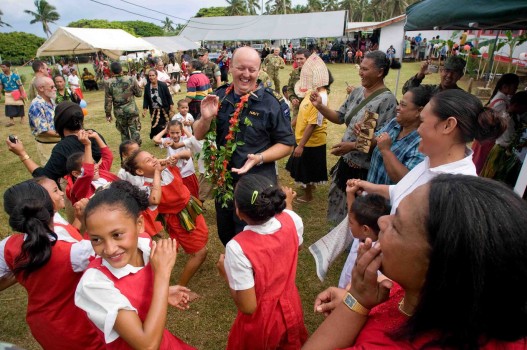
    The parliamentary scene to the north of us on the steps was one of remarkable vibrancy. The first time mps clearly identifiable by their cheerful, expectant expressions, the old hands by their here-we-go-again demeanour. Especially notable were the new Maori mps with their families and elders, hugging, laughing and singing. TV and radio reporters were everywhere. The chief justice and entourage swept past us in full regalia.

    Read full article here.

    Source: https://networkonnet.wordpress.com/2017/08/14/on-the-steps-of-parliament-protest-against-ero/


  • ERO strikes again. Seriously!?

    In their latest document of propaganda, ERO have made the following recommendations for schools to work towards improving the way they deliver education for their students. It is, however, only in draft format in it’s present state, but makes pretty clear the direction that they’re heading. It’s called “Effective School Evaluation”. Within it they have a table which includes examples of shifts in practice that schools have made to improve outcomes for learners. Their words, not mine.

    In it, they have different headings and different recommendations within each one. I’ve had a quick perusal through them, and there are a few that stand out that I wish to bring to your attention.


    Educationally powerful connections and relationships

    FROM: 15% attendance by parents and whānau at interviews – TO: 85% after introducing a whānau tutor system and giving parents and whānau a 20 minute interview with one teacher.

    Shifting from 15% of parents and whānau turning up to 85% turning up is not as easy as writing it down in a statement and assigning a “whānau tutor” . I’m not sure where ERO get their 15% of parents turning up for interviews, but I can only assume that it was from a school who was REALLY struggling.

    15% of a class of 28 (the current funding ratio for class sizes) is 4.2 families. At a meeting of 10 minutes each, this impacts on a teacher of…, wait for it,  42 minutes of additional non-contact time expected of teachers.

    ERO would like to increase attendance to parent-teacher interviews to 85% through the use of ‘whānau tutors’. Who will these tutors be? You guessed it – teachers. Who else is there?
    What will we be expected to do? And how will that ensure that parents come to teacher meetings if they are busy, or can’t make it, or are sick or looking after the tamariki? Seriously. It’s almost like ERO have no touch on reality.

    ERO also mentioned that the expected length on such meetings would be 20 minutes so that discussions can be in depth and meaningful.

    85% of a class of 28 (the current funding ratio for class sizes) is 23.8 families. At a meeting of 20 minutes each, this impacts on a teacher of…, wait for it, 476 minutes. That’s a total of 7 hours and 55 minutes additional time expected of teachers.

    Now; let us assume that in an alternate universe where teachers would be paid by the hour, and the pay rate would be on par with other trades at $80 an hour. We can safely assume that this would happen after school hours, so we’d have to pay time and a half. However, let’s be generous and just charge out the usual rate (That is the usual treatment of teachers time these days anyway!).
    So at $80.00 an hour, for 8 hours, that is $640 per teacher. That’s just for the interviews. That does not take into account the “whānau tutoring” that will also be expected of teacher’s time. I’m not sure when I last had 8 hours of additional time in my already jam packed schedule. Or are we expected to come back on the weekend to meet with parents?

    This goes along the same lines as a PacT Tool Workshop that I attended, in which they said that it’d probably take 25 minutes for each child when you first start doing it. I worked that out at the meeting and it was the turning point in my support for it. It worked out to be an additional 11 hours just to create an OTJ for every student in the class; something that should take no more than 30 minutes in my opinion.


    Responsive Curriculum, effective teaching and opportunity to learn

    FROM: Teaching Writing – TO: Teaching Writers

    Move from Teaching Writing to Teaching Writers.

    They think that this is a clever statement to cause thoughts and shifts in thinking. There are a few flaws however.

    To be a writer, you need to know how to write. Many new entrants do not know how to write, and yet we probably should teach them something about writing?

    Secondly, let’s look at the language being used.

    Writing – noun. The act of writing. A subject of study.

    Writers – noun. A person who writes.

    The shift ERO want us to make is from teaching a subject, to teaching the people. However, as a teacher, what am I doing when I teach Writing? I’m teaching students how to write better. What am I doing when I teach writers? I’m teaching students how to write better.

    Well, it would seem I can tick that one off the list of things to do.


    Responsive Curriculum, effective teaching and opportunity to learn

    FROM: Deficit thinking and blaming students for poor outcomes – TO: Teachers recognising the need to improve their teaching.

    Finally (for this post anyway), the last recommendation I’ll touch on is this. ERO wish us to move from deficit thinking on why students are failing, and instead, focus on how teachers can teach better.

    Go on. Bash away. We know you don’t respect us enough to give us credit, or even acknowledge that some of us (if not all of us) are actually doing the best we can with what we’ve got. They also forget that most of the students we teach are doing the best with what they’ve got. But the truth of the matter is there are other impacts on a child’s learning beyond that of their academic ability and the teacher’s adequacy in being able to teach. Poverty, hunger, broken families, abuse, violence. Need I go on?
    No. It couldn’t possibly be any of these mitigating factors. No. It’s because we are not teaching them well enough that there are poor outcomes.  Pffft. To suddenly start blaming ourselves for why students are not progressing is just as counter-productive as saying it’s the student’s fault that they aren’t succeeding.

    It’s enough to make my blood boil.

    At least I’ll stay warm while the educational winter is setting in.

  • Inherit Racism in NZ Education

    Time and time again, we are told about the ‘long tail of underachievement’ and the hideously stereotyped over representation of Māori students within it.

    And because there is a ‘problem’, it seems that everyone is solely focussed on the achievement rates of Māori students. Ministry advisors visit principals and ask how their Māori target students are doing.
    Upon visiting ERO’s website, we see that they have a new approach for accelerating Māori achievement. Their major focus on any school they visit now is ‘How effectively does this school respond to Māori students whose learning and achievement needs acceleration?’
    In addition to this, we’ve heard from the Auditor-General that the supposed answer is more data on Māori students. All of this in an attempt to address the ‘problem’.

    It amuses me that ERO state that their reason  for targeting Māori student achievement is in an attempt to achieve ‘…equity and excellence of education outcomes for all New Zealand’s children and young people.’
    In other words; by targeting and singling out the failing Māori students, we are making schools more equitable for all students.

    This itself is incredibly insulting, and does nothing but reinforce the already very presumptive notion that Māori students are failing, as well as implies that Māori students are not intelligent, and aren’t achieving.

    What began me thinking about this was this video. It is a reaction towards the racial unrest happening in the US today.

    https://www.youtube.com/watch?v=sj19qIgkJUs

    It was very eye opening for me, especially when she says that there is only one race, and that is the human race. Races are just a construct that people have made to  over others.

    For years, ever since entering the classroom, I have rarely ‘seen’ the colour of my students. Obviously, some are white, like me, and others are brown; being Maori, Samoan, or other ethnicity where the pigment levels are higher than my own. But internally, in the way that I treat students, in the way I talk to them about their learning, their behaviour, their life; the colour of their skin has not even come into my consciousness. Interestingly, as I reflect on this fact – the students themselves don’t distinguish between being Māori, European, or Pasifika. They’re friends with whoever they want to be friends with; they work with whoever they want to.

    However, I’ve been made to feel bad about this. Evidently, by not noticing the colour of their skin, I am not addressing THEIR needs as a Māori student; even though I am treating them on an equal and level playing field as the many other students in my class. 

    Jane Elliot (of the prior video) illustrates why we should not say “we don’t see colour”. She has two people from a group come to the front, one white female, one black male, and asks what is the first difference the group notice. Someone says “male”, and Elliot asks if being a male is important to the man at the front. He responds appropriately. She asks if he would want others to see him as male. “Of course” he says. The next difference is his skin colour. “Is being black important to you” Elliot asks. 

    “Very important” he states.

    “And do you want others to see you as black?” 

    “Absolutely”. 

    It’s a part of who that man is. It makes up his identity; it’s part of his story of who he is, and he would want it to be valued by others just as he values it.

    We should absolutely see colour and value it as a factor in what makes up an individual’s identity; but that should have no bearing on the way that we treat them.

    Each child has their own culture, background, family situation, background, living environment, demographic, and world view (even if that has been constructed mostly by their parents and whanau at their age). Each child has their strengths, each child has their weaknesses. Being good at Mathematics, or succeeding in Reading, or creating amazing work in Writing has little to do with the colour of their skin or their whakapapa (genealogy), just as it has nothing to do with being right or left handed, which gender you are, or if you have blue or brown eyes. Intelligence, or educational achievement is not determined by the level of pigmentation that students are born with.

    No doubt; being of Māori descent has a lot more to do with a person than the colour of their skin; just as having Irish, Japanese, or African origins would as well. We’ve been told to “help Māori achieve as Māori“, and there has been endless discussion as to what this means, and what it looks like in the classroom. In a nutshell, teachers need to ensure that each child is valued for their culture. In particular, this statement refers to our Māori students. However, it is my belief that teachers already are doing this – certainly all the ones I have been in contact with over the years. Valuing a student’s culture, and treating them as important is completely independent of their intelligence or educational achievement. No matter the ethnicity, there is no evidence to suggest that a person’s culture or ethnicity has anything to do with their level of intelligence. There’s no evidence, because it simply does not exist.

    Of the many classes I’ve taught, there have been many, many students who have succeeded. Many, many of my best students (in academic regards, as well as all-round individuals) have been Māori, and despite the ongoing stereotype that they ‘should’ be struggling, have left other students, some Māori, some non-Māori, in their wake. In addition to this, many, many of my students have fallen short of the farcical ‘National’ ‘Standards’ level for their year group. Many of these students have not been Māori, and many have been girls – even though the presumption is that those that struggle most are Māori boys. Many of the best students in my class have had blue eyes, and some have had brown. Others have been left handed. And all of them have had some other random categorical anomaly that we could use to put them in a box.

    It wasn’t that long ago when children attending school were discouraged heavily from using their left hand to work. Starting back in the middle ages, left handers were believed to be of the devil, and “…discriminatory practices and attitudes against left-handers persisted well into the 20th Century. At mid-century, eminent American psychoanalyst Abram Blau was still suggesting that left-handedness was merely due to perversity and the result of emotional negativism, on a par with a child’s obstinate refusal to eat everything on its plate.”

    Yet now, it would seem completely ludicrous to begin collecting data on left handed students and pouring over their academic results in an attempt to prove or disprove their academic ability. Likewise, if blue eyed students were disproportionately making up the ‘long tail of underachievement’, then you would say that it would be a complete waste of time to begin targeting these students, over-testing them, collecting and analysing data to see what kind of teaching is going to best suit students with blue eyes. These two examples both seem ludicrous because a) they are, and b) we KNOW (or assume) that neither left-handedness or iris melanin levels have anything to do with a person’s academic potential or ability.

    maxresdefault

    So what is the solution? Well, if you can answer that, then you could probably make yourself quite a bit of money.

    All I know is that there are a myriad of things that allow students to achieve well academically.

    • Sometimes it may be their ability to focus and remain on a task.
    • Sometimes it may be their ability to retain information, whether from visual (pictorial, or words), aural, or kinesthetic.
    • Sometimes it may be the support they get at home to assist with their learning, or the development and engagement they get from adults in the household.
    • Sometimes it may be their ability to overcome distractions, health issues, or learning difficulties.
    • Sometimes it may be the amount of food they have to eat each day.
    • Sometimes it may be their ability to deal with stress, depression, or other mental struggles.
    • Sometimes it may be their ability to lead others, or work with others in collaborative ways.
    • Sometimes it may be their ability to use their own experiences to inform and make their  learning personal to them.
    • Sometimes it may be the importance or priority that education has in their family.

    Very few of these have anything to do with ethnicity. Regardless if you are left handed, blue eyed, Māori, Samoan, Irish, Japanese, African, or European, your ability to have academic success is largely based on things other than your culture or ethnicity.

    But most importantly, let’s abandon this construct of race. Regardless of who you are in New Zealand, we cannot change the past. Yes, there have been some atrocities carried out by the European’s upon arrival and colonisation – but none of them are alive today. Likewise, those that these acts were carried out against are no longer with us. Instead, it’s about time we begin moving on as one nation – together.  We are New Zealanders. We live in Aotearoa. We’re in this boat together.
    We cannot keep separating ourselves, and we cannot keep ‘targeting’ Māori students because they’re susceptible to failing. That merely provides and enables the box to keep them in – the very box we are trying to get them out of! It puts Māori in an inferior place – even if only subconsciously – and keeps them there by continuing to revisit, deliberate, collect data, analyse and otherwise pull apart every aspect of any test students sit. Instead, we need to see each student as individuals. If they need help academically, we provide them with the skills they need to hopefully succeed, regardless of their race. We value students of any nationality, ethnicity, culture, or eye colour. We consider this as an important part of each child’s character, and we use it to their advantage wherever possible. We ‘target’ the students who need help, and we celebrate the success of students, regardless of their gender, ethnicity, and eye colour.

    This essentially gets rid of the box.

    This essentially creates “…equity and excellence of education outcomes for all New Zealand’s children and young people.”

    Ki te kotahi te kakaho ka whati, Ki te kapuia e kore e whati

    Alone we can be broken. Standing together, we are invincible.


    Please note; as I write this, I want to maintain a very independent view. However, being of NZ/European descent, I have a certain point of view which may be different to others. I do not wish to speak for Māori when I say ‘get rid of the box’ – though I would very much assume that Māori wouldn’t want that box anyway!

    In all seriousness though, I cannot and will not speak for all people, and the views I share are my own. I am not an advocate for racism and sincerely hope that none of my statements have caused offense in regards to race. I am also not an advocate for ‘anti-racism’ or ‘reverse racism’, such as being annoyed or disgruntled at the priority placed on Māori students and not students of other ethnicities. Such a view is not helpful and shows a distinct lack of understanding of key issues relating to race and ethnicity prejudice.
    The statement of ‘Māori achieving as Māori’ has very much been difficult for me to get my head around over the years. This is mostly because I don’t see the relevance of defining a person’s culture with anything related to achievement.

    Please comment below, or get in touch with me if you would like to discuss any of the points raised, or to put me right in any of my statements.


  • ERO Shrine

    ERO Publications

    Over the last few months; actually since the start of this year, I have noticed a definite increase in propaganda…I mean… publications from our beloved at the Education Review Office (the independent reviewer of schools that is run by the government – who also runs the Ministry of Education – go figure!).

    So I headed over to their website and thankfully in this technology day and age, it has been incredibly easy for people to archive their documents as PDF’s and have them available for all.

    When I got there, I wanted to see just how many publications there were. I started counting.

    As I was counting, I began to wonder a few things. Were these publications on a schedule? Were there certain months or time of the year that these are released? How long do school leaders get to peruse these wonderful documents before the next one gets sent out?

    Getting Data

    So as I often do, I started gathering data (which we now know to be the silver bullet in saving the education of Maori children). This lead me to some interesting discoveries, especially as we go back in time.

    Initially, I went back to 2010 – the year I got my first full time teaching placement. Then I realised there were certain other things that occurred that year, such as the roll out of National Standards.

    It was also soon after this, in 2011, that the Minister of Education Hekia Parata took office after Anne Tolley was somewhat swept aside (having already done the damage needed in rolling out the Standards).

    So I went back further. Let’s say, 2007, then 2008, when the current government took office. That’s a good period of time.

    Findings

    Here’s what I found:


    I wrote out the date of each publication and put it into a very simple graph.

    From this, it is quite clear to see that there is a significant increase in the number of publications ERO is sending out to schools about best practises, about leadership in schools, about review, inclusivity, inquiry, and a myriad of other pedagogical egregiousness.

    Volume & Numbers

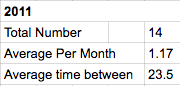
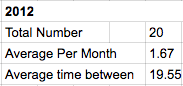
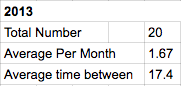
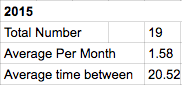
    Look at the numbers alone. Schools have gone from having 2 – 5 documents to read each year, to suddenly up around the 20 mark. Proponents for these documents will suggest that it is for the good of all schools to read, that it provides a more vigorous form of guidance and the assimilation of best practise across the country.

    However, there are many other factors that these documents bring upon the education sector.

    Firstly, time.

    Time

    In 2007 and 2008 there were five publications each year. Counting up the number of days between each of these five publications, it gave school leaders and board of trustees a whopping 55 days (approx) to read, digest, mull over, and apply the findings in these reports.

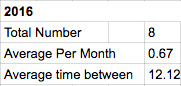
    By 2010, schools had less than a month. By 2013, schools were having just over a fortnight to read these publications, as the number of publications balloons to 20 publications in the year – four times the amount of reading to do. By March 2016, Schools have already received 8 documents from the Office, with an average of 12 days between each.

    On average, the publications range from about 25 pages in length, to about 60, with varying degrees of content. The majority are around 30 pages in length.

    In addition to this, expecting only 5 documents to be read throughout the year is not out of the realm of possibility. If we were to pay Principals their time to read these wonderful documents  the cost would be somewhat minimal. The average reading speed of 200-250 words per minute applies to non-technical material. Unfortunately, as anyone who has taken the time to flick through these ERO publications, they are full of technical terms used with education, and the editors thesaurus gets a good workout as they condense twelve easy to understand words into two obscure words that generally require deciphering. For such technical material, the average drops to 50-70 words per minute. This translates to 5-6 minutes per A4 page. If the document has 30 pages, then we can safely assume that this will take the average school principal 180 minutes to read each document. That’s 3 hours of a Principal’s time to read through each document.

    3 hours.

    Let’s put that in context. That’s half of the school day (contact time).

    You can start to see how this might start to grow exponentially, especially when a total of 15 hours per year might be spent in 2007, to suddenly 60 hours needed in 2013. In the three months to March this year, a whopping 24 hours would be needed to get through all the publications to date. That’s a whole day.

    Cost

    As we all know, time means money, and we can see how looking at the time it takes naturally moves into the cost to tax-payers that these publications might take.

    In New Zealand there are a total of 2,538 schools. Let’s assume (for ERO’s sake) that each school only gets one copy of the publication sent to them. That’s easy maths. That’s 2,538 copies. A reasonable sized print run.

    In 2007, there were 2,590 schools. Multiply this by the 5 publications printed in that year, and there’s a total of 12,950 documents.

    Postage

    Assuming that it was sent out by fast-post to schools, the cost back for postage in 2007 was $1.50.

    It’s okay. I’ll do the maths for you. Its $19K and change. Yup. $19,000.

    Now, it may not be quite that bad. Maybe government departments get discounted postage rights, especially when sending in bulk maybe. But still….

    Fast forward to 2016. Postage for one document is $3 in a foolscap size envelope. Fast-post.

    In 2016 already, there has been 8 documents sent to the 2,538 schools (20,304). We’re at $60K in postage by March.

    Printing

    Printing costs are another matter.

    I haven’t been able to find out the company that the NZ Government or ERO might use for printing these documents.

    However, going to Print.com/nz, I was able to get a rough price for an A4 portrait document. Granted, the pages are glossy (ERO’s pages are matte), and only 120gsm (ERO’s pages feel more like 300gsm) but the price is $5.42 per document.

    We have to assume that the Government would get some suitable discount on this price, but this is about as good as I could find.

    So. More maths.

    If the cost of postage has doubled since 2007, then it is possible that the cost of printing has also doubled in that time.

    So for the 12,950 copies in 2007, this would cost $35K. Adding on the postage bill, and we’re looking at $54,000.

    By March 2016, using the current printing costs described above, ERO has spent $110,000. Add on the $60K postage, and there’s a whopping 170K bill to be paid.

    At it’s peak in 2013, there were 20 documents sent to 2,539 schools. Assuming printing and postage will be somewhere in between the 2007 and 2016 prices, we can surmise that Printing would be about $4.07, and postage at $2.25.

    All up, the ERO would be fitting a 2013 bill of some $465,017.85.

    $465K for a bunch of booklets that principals would be hard pushed to find 60 hours to set aside to read, let alone implement.

    Inaccuracies

    For reference, I do realise there are a lot of assumptions being made, and not only those that I have mentioned above. I’m very aware that not every principal or school would be required to read every document put out by ERO. For example, some of the documents are for ECE, some for Primary, and some for Secondary, and it’s fairly certain that ERO would not be expecting Primary Schools to be pouring over a document about Science teaching and achievement rates in Secondary Schools – and vice versa. There are other areas where the implications have been stretched – I will admit to that.

    But the reality is, these documents do need printing, and they do need sending, and they do need reading.

    And it seems like the number of publications are only but increasing. These publications are swamping principals desks, keeping them from their core business instead of providing insight, guidance, or help. Schools are being suffocated with the sheer volume of documents clogging up the leaders and bringing them to a grinding halt, staggering and stumbling until they can breathe no more; crushed by the weight of layers and layers of 300gsm matte paged booklets.


    Happy reading everyone!


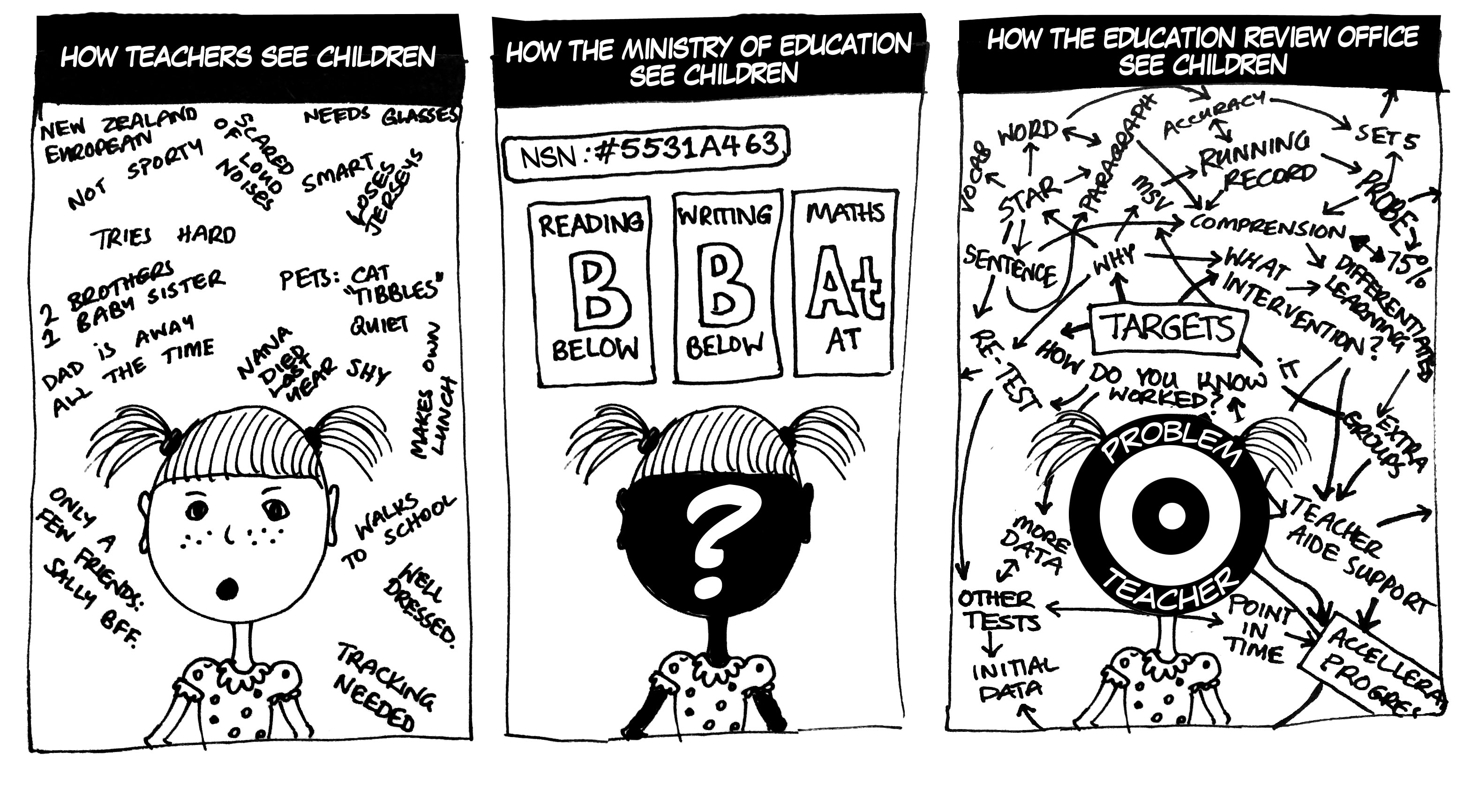
  • How Teachers See Children

    I was thinking today about the different professional views on how we should be seeing children, and how completely different that is from any kind of reality that actually faces us in the classroom.

    The only way to try and illustrate that, is in picture form.

  • Rangiora High principal ‘bullied’


    Rangiora High School’s principal alleges ”sustained bullying” by the school’s commissioner.

    Source: Rangiora High principal ‘bullied’

    This follows on from this ongoing saga for this school and this principal that has been happening since the start of last year.

    Finally someone in the media has hooked onto this. Quite ready for John Campbell to get back in the NZ Media spotlight! He would have been all over this!

    It seems like a very bad situation to be in, one that could only be seen in a movie.

    But it’s not. It’s real. And it is happening now.

    Kelvin Smythe has been a long time education reporter and writer, and has picked up on this issue since it happened.

    In cold blood: terror as an instrument of control in state education Part 1

    In cold blood: the Rangiora Horror Show Part 2

    Both of these articles are reasonably lengthy, but given the multitude of steps taken in this saga, it isn’t any wonder! I implore you to read them, and then form your opinion on whether you agree with what has happened. Obviously, Kelvin has his angle on any of these issues, but also gets his information from a variety of sources. However anti-government he appears to be, I do believe his intent is always to write the truth.

    And if this is anything to go by, its a terrifying series of events.

    It sucks to have to make my first posting of 2016 about something so horrific.

    Happy New Year everyone.


  • Do as I say, not do as I do – Consulting the Community

    A rising trend is occurring right before our eyes, and it’s  more than concerning. It’s definitely poor role-modelling, and is more than just a little unfair.

    For years the Education Review Office has been wandering around the country critiquing schools on their community engagement and consultation in an effort to get schools to get parents interested in their child’s education; supposedly to address the supposed “long tail” of underachievement that has hindered our nation for the last countless decades. Schools have then gone above and beyond to engage whanau, caregivers, kindergartens, churches, and more, in an effort to get the ERO off their backs… Oh, and try and address any under-achievement.

    The reality is, that schools have worked incredibly hard on this and have invested their time heavily, and the same problem remains; the difficult parents are still hard to get a hold of, and the ones who already support their child and value education are only too happy to support the school.

    So while the ERO and the Ministry would have teachers invest heavily in consulting the community, the same does not happen from the Minister at all.

    Consultation

    This has been highlighted on numerous occasions at the lack of consultation within the education sector during the reign of Ms. Parata (and her predecessor, Ms. Tolley). One shouldn’t have to remind people of the introduction of National Standards. In recent times; there has been the Novopay botch up, the reneg on class sizes, the closure of some Christchurch schools (1,2,3), and the announcement of IES, all of which had little or no consultation with schools.

    Even when the Minister does decide to consult the sector, it is done in less than ideal ways. Take the latest consultation around the Education Act. The changes were announced six weeks before the deadline; and while this is seemingly enough time, one cannot ignore the irony that the consultation has been conducted at the busiest time of year for teachers, principals, and schools alike, and this is even before we find out if submissions that do make it through are heard and listened to. Add to this, that the closing of Parliament in upcoming weeks for the Christmas break, for this Education Act to be passed through in the new year. Why would you not allow submissions to be made over Christmas and January, when teachers would be able to voice their concerns or ideas? Well – simply because they don’t want to hear from their community.

    Community

    As of this year, the Minister now hand picks who is on the Education Council; the overseeing body of teacher conduct and registration. There is no longer any member on the council that is elected by teachers. This is hardly democratic, and is indicative of things to come, such as Ministry appointed school boards. In a sense, there is no one who represents the community on the community board.


    In the announced changes to the Education Act, it is quite clear that the Minister wants to centralise a lot of different parts of the school community. Boards of Trustees will eventually be phased out in favour of a Board that runs several schools. This will be in conjunction with the introduction of “Communities of Learning” and the selection (somehow) of lead principals. I’m not sure how a selection of principals when put in a room would decide who will be the lead principal and get a nice sum as a bonus. No doubt, eventually, the Ministry will have to select or appoint a principal to be the lead principal.
    As each school becomes part of a bigger community, the community will grow. But that’s not always a good thing. As a community gets bigger, it becomes more difficult to organise that community, or even get a sense of community. Imagine, if you will, a board in charge of your school with parents you never see, and don’t recognise because they don’t have children at your school and don’t even live in the same area. The same thing will happen with lead principals, as they get tied up with more leadership in other schools, there is the high possibility they’ll never be seen in their own schools. Students already have a hard enough job seeing their principal as it is, let alone if they’re going to be running other schools as well.

    In conclusion

    So while the ERO and the Ministry would have schools consult their community to address issues within schools, the Minster is busy removing the sense of community within the education sector, and also to make it impossible to have a community to engage with once they’re finished. If a community is too large, it no longer keeps its sense of community, and becomes untenable to organise and maintain. Eventually, the “top-down” model imposes its ideas on everyone else and they are told to put up or shut up. As for consultation, it would be safe to assume that the Minister has only recently found the definition of it in her dictionary. Up until now, it hasn’t even been a consideration. We are still waiting to see what is done with whatever number of submissions the Minister receives, but if past experience is anything to go by, there is a rather large rug being lifted up to sweep them under.

  • Assessment Assessment Assessment

    In the current education climate, teachers are finding themselves with the responsibility of making OTJ’s (Overall Teacher Judgements) to report to parents about their child’s academic achievements, but the requirement to have evidence for these judgements. These are rarely school imposed, but instead come from the likes of the Ministry of Education or ERO, who continually ask “How do you know that?” type questions in relation to National Standards data, with schools only being able to say “because of the test results” as a viable and measurable response. Therefore schools are asking teachers to assess their students using a range of different school-set assessments.

    When I think of assessment, I usually can’t get pass the first three letters. It’s tedious, a bore, and whilst I enjoy analysing data from them, they are generally a waste of time when I consider what I could be doing – working alongside students, engaging with them, insipring them, and unleashing them.

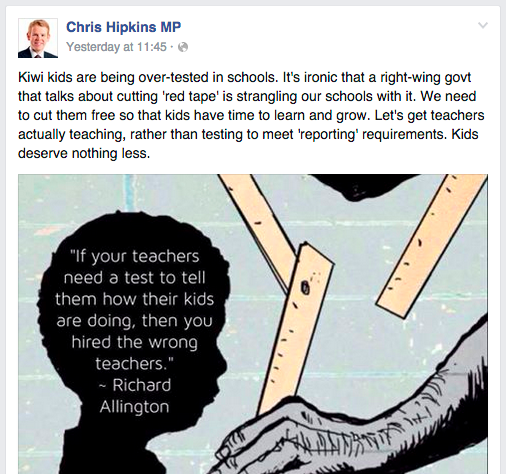
    Chris Hipkins wrote an interesting post about Kiwi kids being over tested. He says:

    Kiwi kids are being over-tested in schools… Let’s get teachers actually teaching, rather than testing to meet ‘reporting’ requirements. Kids deserve nothing less.

    It has been an issue I’ve noticed increasingly in my career. Whether it’s because I’m male, or because it’s genuinely difficult to do, I find that to test the entire class, I have to shut down the learning programme and go into ‘Assessment Mode’. I find I don’t do any actual “Teaching” during this time, more just provide suitable ‘practise’ type activities for students to work on independently while I repeat 1-on-1 testing. I can’t do both ‘assessment’ and ‘teaching’ at the same time. As a school, we are now moving away from whole-class testing because it gives a very limited view of the student’s abilities. But this means that more 1-on-1 testing is required. This can take 3 to 4 days to complete with a class of 28.

    I wrote a reply to Chris’s post that expressed my ideas:

    Thanks Chris for this! I’m a primary teacher and I’m constantly going into “assessment mode” to get through the entire class, that sometimes I wonder if I’m actually teaching them anything! By the time I’ve finished one lot of assessment, the next lot is on my desk!
    I feel that if I were able to work constantly alongside my students; encourage, inform, correct, show, teach, and build genuine learning relationships with them that I’d have a much better understanding of them as individuals and thus understand what they need in their learning. Any assessment should only be to confirm what teachers already know about their students.

    And that’s just it. If teachers were given the trust that a) they deserve, and b) that is required to make OTJ’s in the first place, then I’m sure that there would be better outcomes for all students. We are told constantly that teaching and learning is all about relationships, but I fail to see how sitting tests and being assessed builds any kind of meaningful learning relationship between student and teacher. Secondly – spending time working with these students and teaching them will only enhance my ability to make a judgement.
    We are showed the assessment pyramid regularly in P.L.D (Professional Learning & Development), and it still staggers me that things remain the same. The assessment pyramid works a lot like the food pyramid, with the top tier representing assessment that, whilst is usable, should not make up the bulk of assessment used in the classroom. The bottom tier represents assessments like teacher observations, anecdotal notes, conversations, discussions, behaviours, troubles, problem solving, which should be use more frequently. Yet the rate of importance placed on assessments is opposite. Those that fit down the bottom of the pyramid which should happen daily and make up the majority of our assessment as teachers, is given the least importance, while those at the top which happen once or twice a year, are relied heavily on when schools are asked to “prove it” by Ministry or ERO officials.

    Chris finished up his post by replying with a disclaimer that he in no way intends for there to be NO form of assessment, just that “…there is too much testing for ‘compliance’ rather than to genuinely inform the next steps in a child’s learning.”. And I wholeheartedly agree. If all we are doing is relying on test results, weighing the pig time and time again, it’s not going to help the students. Further to this is the issues happening in education overseas.

    Teachers in the U.S. have the common core to teach and to contend with where the success of the students in their class directly relates to their school image. What has ended up happening? Teachers preparing students for the test; not actually teaching them.

    My old Principal was so enamored by an awarded Title I school for bringing up test scores. Their formula? Test prep. We copied and plummeted.” – @TeacherReality

    It is highly tempting to give students practise at sitting tests, or answering similar questions over and over again, in order to boost their test score by being able to answer similar questions. But this in no way is why we became teachers. We didn’t become teachers to give test-like questions, show helpful formulas to solve test-like problems, or show them practise tests to help them pass a ‘real’ one. No. We became teachers because we wanted to impart knowledge, to inspire and to encourage, to challenge and watch students struggle in the hope that one day, one day, they would be able to apply themselves in life and succeed.

    As I write this, I find myself thinking; “I know all this, and say all this, but hypocritically find myself in class administering tests. Why!?”. Well, mostly this is because of the school having certain requirements (from external or internal pressures) of the teachers, as most schools around the country will have. So what can be done? What can I do as a teacher?

    These are genuine questions. I don’t have the answers. I have the ideal – which is to make observations and notes the most important and reliable source of information about student learning available. It means teaching and working alongside students. And so I must do that. I must make that a priority. I won’t be able to avoid the summative tests at all, but I can certainly try to maximise the time I do have to assess informally, and use these with more prominence than a one off test.

    How do you manage the balance of testing vs. teaching? What restrictions are placed on you by school or external sources in terms of assessment? How do you deal with that? What suggestions do you have for others? Please leave your comments below.