His books still grace the ears and eyes of my class, even 30-40 years after they were written.
Naturally, I make sure I read them to each and every class I can. This video shows the man behind the words in a beautiful way. Words won’t do it justice.

His books still grace the ears and eyes of my class, even 30-40 years after they were written.
Naturally, I make sure I read them to each and every class I can. This video shows the man behind the words in a beautiful way. Words won’t do it justice.
The current support for dyslexic students in New Zealand schools is a joke. An absolute joke.
When there is a reportedly 7% of students in New Zealand Schools have Dyslexia, it doesn’t sound like much. However, in a class of 28 students (the funded class size), that’s 2 students who will be struggling with dyslexia. Statistics say that as many as 20% of students will have learning disabilities, and it’s been noted that overall, dyslexia makes up about half of those disabilities. This means it could be even 3 students in your class that will be struggling with dyslexia.
I also suspect, that the aforementioned 7%-10% is just those that have been diagnosed, and as a teacher, there are many more that are never picked up for a number of reasons.
That’s not good enough.
What’s more, is the Ministry of Education, Ministry of Health, and the Government all turn a blind eye about dyslexia support in schools – mainly because if they admit that it is a problem in New Zealand schools that dyslexia affects student’s learning, then they’ll be called upon to do something about it and support schools to address the problem. That comes at a cost to the Government. Essentially, what this has led to is a bunch of private organisations filling this void. However, this of course, comes at a cost.
From the figures I have heard, to just get assessed for dyslexia, it will cost schools or families anywhere from $250-$400. This goes some way to explaining why so many more students are not picked up and struggle their way through the system with little or no support for them, their teacher, or their parents.
Go figure.
As a teacher, I am passionate about this. Not to find a reason for under-achievement or raise excuses, but to get support for these students who are struggling. It frustrates me to see these kids come in, and feel like I have nowhere to turn to get support for them, and if there is, how it always seems to come to a dead-end.
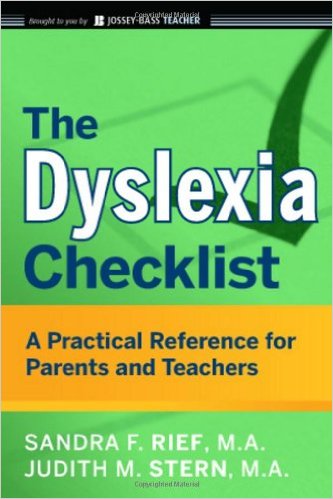
In trying to understand dyslexia a bit more, and hopefully be able to support dyslexic students within my classroom myself (seeing as I’m getting no support), I have purchased a couple of books. One is ‘The Gift of Dyslexia’ by Ronald D. Davis (which I have leant to a friend when her child was diagnosed), and the other is ‘The Dyslexia Checklist’ by Sandra F. Rief and Judith M. Stern. Hopefully they both offer some insight into how I can better support learners with dyslexia in my classroom.

As a bit of End of Year fun, I got my students to make a quick video of our favourite part of each day – the Daily 5. In the video you’ll get a glimpse of what the Daily 5 are, what happens during Daily 5, and why the kids love it so much.
Enjoy!
Previously I wrote about the impact of Daily 5 in a Year 3 and 4 class.
In this article I focus in on some of those students, as well as others, who have made progress under Daily 5.
For privacy, I will call students by generic anglo-saxon names.
In the previous article we investigated the impact that Daily 5 had on Jake, a student in the class who was a reluctant reader.
I have continued to monitor Jake’s progress, but also his attitude. In a recent questionnaire conducted with the class, I asked what their favourite thing to do in their spare time was. Jake’s response was “Reading”; something which would not have been directly obvious if his prior results had shown us without the intervention of Daily 5. You can find out more about Jake’s progress later on.

Read the full article here:
[icon name=”file-pdf-o” class=”” unprefixed_class=””] The Impact of Daily 5 Continues.pdf (430kb)
If you enjoyed this article, there will be another one published next week with the findings from this year (2016). Keep an eye out for it soon!
I have seen first hand the benefits of Daily 5, as have the initiators of the programme when they first started it.
In this article I focus in on one particular student in my class this year.
For privacy, I will call this student Jake.
Jake is a student that many classes will have. He is a Māori boy from a relatively large family. While he experiences a degree of poverty each day, he is well kept, well clothed, and generally has lunch. At times he is truant from school, but generally enjoys his days here, and has a good mix of friends. He gets along well with everyone, and treats others with respect. He can get angry at times, but doesn’t over react.
Academically, Jake has struggled with Reading since starting school. Over the years he has been a part of various different literacy initiatives to try and get him up to a sustainable reading level so that he can keep up with his chronological age, and his peers. His Writing ability is similar to that of Reading, and while he has reasonably good spelling, he wouldn’t be considered a ‘confident writer’.
Daily 5 is based completely around five activities linked directly to improving student’s Literacy. They are: Read to Self, Read to Someone, Listen to Reading, Work on Writing, and Word Work. The combination of these five activities provide a solid foundation for all students to work independently and at a suitable level for them. The ability for students to choose their own activity allows for intrinsic motivation for learning, and sets these students up to become independent learners.
In Daily 5, there are ample opportunities for students to read and to practice reading. Using the CAFE menu (Comprehension, Accuracy, Fluency, Expand vocabulary) as a structure, teachers can provide students with strategies to help them with their reading specifically tailored for that student.
Daily 5 also provides opportunities for students to write, and write, and write. Students are motivated by choosing what they write about, and then whole class teaching focusses in on general trends noticed in the class, or specific lessons on different genres.

Read the full article here:
[icon name=”file-pdf-o” class=”” unprefixed_class=””] The Impact of Daily 5.pdf (401kb)
If you enjoyed this article, there will be another one published next week with the findings from this year (2016). Keep an eye out for it soon!
 This week, the Minister published a new announcement through the media. The headline: “Hekia Parata – Let’s make learning better.”
For whatever reason, this completely grated with all sense and sensibility within me. Something just didn’t ring right grammatically.
I’ve heard “Let’s make teaching better” before (all the time) as the powers that be whip and flog teachers who are already doing their darndest to keep a level head, and keep it above surface level (at least once in a while so they can take a breath).
But I don’t think you can just switch the verb to learning and it make sense. Someone with
Learning is defined by Merriam-Webster as “the activity or process of gaining knowledge or skill by studying, practicing, being taught, or experiencing something : the activity of someone who learns.”
Teaching is defined as “the job or profession of a teacher, and something that is taught : the ideas and beliefs that are taught by a person…”
Learning is therefore the acquisition of knowledge, while Teaching is the imparting of knowledge. The two are direct opposites and so when used in a sentence such as “Let’s make learning better”, we start to question what is actually meant by that.
How do we make the acquisition of knowledge better? Sure – imparting knowledge in different ways is possible, but to change how knowledge or experiences is acquired – is that even possible? Are we not, as humans, limited to how we can gain knowledge, through our 5 senses? Touch, Hear, Sight, Smell, Taste? Is this not the extent of how we can learn? And how does one make this better? Obviously, vision and hearing impaired students have glasses and hearing aids to assist with these learning facets we have.
Is the Minister asking for schools to increase the rate of so-called evolution so that we can learn better?
Or have we now resorted to student bashing instead of teacher bashing?
Is the emphasis shift all part of making the student at the centre?
For decades now, the way to make what you have to say more authentic and culturally sensitive, it has become custom to translate certain words from English into Māori. Whilst that may be a very cynical view of things, and possibly the initial use of such terms was genuine, we have built a series of terms that we now use in common New Zealand speak. Terms such as whanau, mana, and in education, akonga and ako.
Ako itself means “teaching and learning”, and educationalists around the country jumped on it and spread it amongst the myriads of documents. It was one of the first Māori terms introduced in our university papers when learning about teaching and education.
Not at all. Whilst the Māori use the same term for both, the context in which they do is what provides the meaning (as it does for other terms as well – for example puku can mean secret or silent, as well as, fasting, to swell, or to intensify a quality such as pukuriri which means “furious” – riri means angry.) There are terms in English as well that we know to mean different things.
No. Teaching and Learning are not interchangeable just to sound smart. They are opposites. Like inhaling and exhaling. Up and Down, Square and Circle.
The minister and others should stop trying to sound smart and stop confusing the matter.