

Tag: MLE
-
Modern Learning Environments become Innovative
What’s in a name?
- Community of Schools = Community of Learning
- Charter Schools = Partnership Schools
- Modern Learning Environment = Innovative Learning Environment
 Given that the Ministry of Education has launched it’s latest site as ile.education.govt.nz I suspect it is here to say.
I still think it is a fad though.
Here are some additional reasons why, apart from cyclical nature of schools and education, what is popular now won’t be in 10 years, and what was popular 10 years ago isn’t popular now, and what was introduced 20 years ago is coming back into fashion now.
In my article ‘Are Modern Learning Environments a Fad?‘ I looked at what MLE’s (now ILE’s) are, and what some of their pitfalls are.
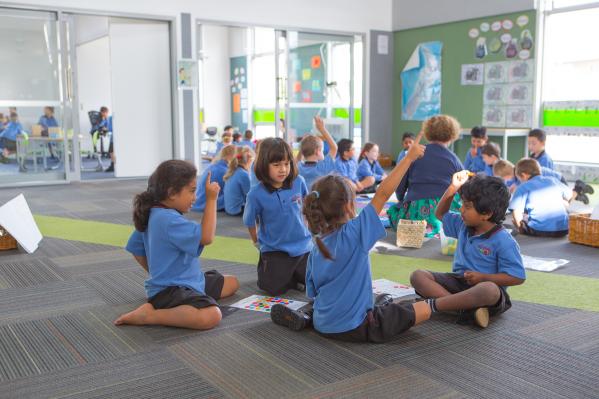 Recently, my current school has undergone a serious upgrade of its classrooms, which bear the resemblance of how they did when they were built in the 1960’s, maybe with a coat of extra paint. Other than that, not much changed. The cabinetry for example, is all solid rimu sacrilegiously painted over with enamel white paint. So the board has been making plans to begin to upgrade these spaces, and we were lucky to visit a series of schools, as well as gain perspectives on the latest trends from our property manager.
We were shown the latest and greatest and encouraged to put glass sliding doors between the classrooms. We were told of the flexibility this space would then have, where teachers could open up the doors and combine classes, work closer together, team teach, as well as have flexibility in furniture spaces as well. We were told the distractions from the other class with kids peering through soon dissipated as the children got used to it.
However, our teaching staff resisted. For several reasons.
- Wall space. Putting sliding doors between classes knocks out a large space from which to display work, reminders, posters and other important learning prompts in the class. Given that the other walls consist of windows down both sides, and the new whiteboard wall on the other, we wanted to preserve as much wall space as possible.
- Distraction. Despite assurances that students got used to the windows between the classrooms, or the possibility of adding frosting, we felt that students would get easily distracted by the goings on in the other classroom. Given that recently we had doors installed with glass panels going to the floor, and the tendency of students to look out the door while sitting on the mat, we figured that our students would take a longer time to get used to the doors.
- Cost. Added cost of the doors onto an already inflated cost (and more than the Ministry would provide us with) helped with our decision not to allow the classrooms to be joined.
- Behaviour. Each year our school works out the classes students will be in for the following year based on a myriad of different properties. One of those properties is student behaviour: which students don’t work well together, which students clash, and how many ‘difficult’ students a classroom teacher has. Because of this, many of our most challenging students are kept separate through assigning them to different classes within the same year level. Opening up the adjoining classrooms would bring those students who we tried to separate back together, and open us up to issues.
- Size. We have had some schools say that they have some students working in flexible spaces and open classrooms up, but those that have problems learning like this (demonstrated through their behaviour) are kept in more traditional classroom setups. Our school simply isn’t big enough to do this. We have two classes at each year level, and use these, as mentioned, to alleviate behavioural problems as it is. Assigning a ‘well-behaved’ class to a MLE or open plan classroom isn’t going to happen because we only have two classes at each year level and we’d be opening those two classes onto each other.
Thankfully, the Board agreed and we are remaining with single cell learning spaces, with upgraded walls, windows, and carpets, and hopefully some furniture as well.
Luckily they did so, as when the builders were pulling the lining off the walls, they found a large black cable running through where the sliding doors would go. We were told by the electrician on site that the large black cable was in fact the main power line for the entire school, and we really didn’t want to know the cost involved in relocating this to accommodate for the doors.
-
Are Modern Learning Environments a Fad?
We’ve all heard it in news, and seen it in the high glossy magazines or furniture websites, claiming ergonomic desks provide a quieter classroom, or driving through the new housing development with a 21st Century school nearby while the state housing that serves the poorer side of society watches on from across the road. Some have even experienced it going to a conference or workshop which are always held in the latest completed building project, often surrounded by glass walls and neatly air-conditioned atmosphere with the fresh aroma of recently laid high tensile carpet.
Thats right. Modern Learning Environments, or ‘MLE’ for those of us keeping a list of teacher jargon and acronyms.
 Back when my grandparents went to school, every classroom was the same. A blackboard with chalk-filled scratches and impurities, each wooden desk facing the front, lined up in an individual grid for maximum efficiency. The teacher provided information for the masses, delivering speeches from the front like a preacher at a pulpit, and it was your responsibility to remember and follow directions or you would miss out.
As time went by, we began to question the effectiveness of this. Desks began to get grouped into small clusters, and the term ‘desk groups’ was formed. In junior classes especially, desks were done away with completely, with furniture makers beginning to focus on large tables for schools. A classroom computer (ex-office computer) sits in the corner and is the place for students to go during wet lunchtimes where the class Solitaire challenge begins. The blackboard is removed for the front of a fridge, and is so called as a ‘whiteboard’. The teacher sets group work and walks around the class to ensure students are on task and discussing ideas together.
Eventually we reach the current predicament where schools feel like they have to provide a range of different ‘areas’ for students. There are small pods of desks which link together in different ways, ottomans which cluster into circles or snakes, carpet pads or cushions instead of chairs, bean-bags are brought out from the corners, barstools with benches instead of individual desks. There is no ‘front’ of the classroom, and the standard whiteboard is now an interactive projector with multi-touch capability. We’ve opened up the school network to enable students to bring their own device (‘BYOD’) to school on which they can complete their school work. The teacher is a facilitator of learning for every student, and provides a model for inquiry, where students learn on their own with support from others around them, finding out what they want to find out, how they want to find it out. The classroom accesses all corners of the internet, and learning outside the classroom happens each week where the class Skypes another class across the other side of the world. The students are connected through a learning management system (‘LMS’), and parents regularly check in with their child’s progress at school through the school Moodle.
What actually is a Modern Learning Environment?
The Ministry of Education defines a MLE as follows:
“A learning environment may be understood to be the complete physical, social and pedagogical context in which learning is intended to occur. …a modern learning environment is one that is capable of evolving and adapting as educational practices evolve and change – thus remaining modern and future focused.”
MLE.education.govt.nzIn short, a MLE is a space that changes depending on the learning at the time, and is future focussed as education progresses. It provides students and teachers with a choice on how to use the space, depending on the learning activity at the time. Students may find it more comfortable to lie on the floor with a laptop, rather than sit upright at a desk with pencil and paper.
The Ministry website continues to explain that there are eight parts to consider when discussing a Modern Learning Environment.
- Accessible
- Air Quality
- Heating
- Healthy and Safe
- Lighting
- Insulation
- Sustainable
- Acoustics.
It is important to remember that this is purely the physical environment. It does not consider online communities, or digital environments within this; but does take into account the idea of ‘ICT everywhere’.
Why the Craze?
So why is everyone clambering to get up the property ladder and develop their school into a MLE? Is it the consumer culture we’ve become so entrenched in now filtering into our expectations for school buildings. Is it the same reason that we have to have the latest iPhone as we do have to have the latest classroom fad?
Firstly, we are attracted to the new. Many classrooms look tired. Those schools that were built during the baby boom in the 1960’s, now have classrooms that are pushing 50 years old. Heck, I bet any of us would look tired if we’d had 1000’s of kids running around us over the course of 50 years! Schools have lots of other priorities as they come to grips with the technical age, and ‘modernising’ classrooms is well down the list of things-to-do.
It thus becomes very attractive walking into a classroom with clean walls, sharp, clean lines, superb lighting quality, and durable, usable spaces. I’m not sure cleaners will agree that full length glass walls are a good idea, but there is a sense of flow having them, un-defining the boundaries of a space and creating an openness to the area. There is a natural desire for this new environment, given that the alternative is so… old.
 The Need for Guidelines
In some ways, with everyone wanting the new buildings and new furniture, there has to be suitable reasons and guidelines behind having them installed, so that the government can quantify and add some structure to the wants and desiers of every teacher in the country. The eight parts of the MLE were developed to ensure that there are reasons behind the decisions that are made regarding school property. Even when upgrading old school buildings, the eight boxes can get ticked off as the issues within them are addressed, and though they might not have the latest and greatest technology, or motion sensor lights, or wall to ceiling windows, or enough range in furniture to put a furniture sale to shame, they can still be considered as a MLE.
So is it a Fad?
Essentially, no. It’s not a fad. It’s not just the latest thing people are talking about. While environment is important, it is not the be all and end all of learning and education. Can it help? Yes. But a good teacher will teach well in any environment. A good student will learn well in any environment.
But we are in the 21st Century. There are lots of amazing options out there to explore, especially in regards to our learning environments, and pursuing these is just another step in developing life long learners out of our classes.