
Seriously. The latest in Ministry bull-hockey is in full swing.
Many teachers were somewhat perplexed at the latest heightening of the issue of restraint in schools, when the Ministry introduced a layer of bureaucracy to the issue of restraining children who were out of control in the school. In the bulletin dated 21 August 2017, the Ministry states that
“New rules have come into force which require schools to notify, monitor and report on the use of physical restraint.
Schools should be, and usually are, a safe and happy place. But there are times when things risk getting out of control and someone needs to step in.
On rare occasions a student may need to be physically restrained and new rules have now been issued to give greater clarity about when it is okay to do so.”
Trust is a two way street, and the Ministry here demonstrates exactly the level of trust that it has in it’s teachers. Due to this, teachers are naturally cautious to this, with many thinking of where this leads. While the Ministry say that this is purely for monitoring purposes and to see if the school needs help in managing the behaviour at the school, many teachers are much more cynical, and can see this leading to sanctions on individual teachers who restrain too often, or repercussions to schools who are required to restrain on a regular basis. What’s more, the chances of legal procedures also looms in minds around the country.
Which is why now, teachers more than ever are hesitant, and on occasion flat out refuse to restrain children, even when student safety is in question. The hassle of filling out the form is one reason for ignoring it, but the process behind the form, and the repercussions it could lead to are much bigger deterrents.
Of course, the first question on many of our lips was – “What constitutes restraint?”
The bulletin listed some examples for us, to give us an idea:
“The legislation says that a teacher or authorised staff member can use physical restraint if he or she reasonably believes that there is a serious and imminent risk to the safety of the student or others, and the physical restraint must be reasonable and proportionate in the circumstances. Situations where it may be appropriate include:
-
Breaking up a fight
-
Stopping a student from moving in with a weapon
-
Stopping a student who is throwing furniture close to others who could be injured
-
Preventing a student from running onto a road.”
Suddenly, separating two students who are throwing haymakers (an activity that happens at least once a month, if not once a week in some schools) now requires a teacher to fill out a form and report to the Ministry. A copy also goes to their Board of Trustees. An interview (usually by phone) also occurs after the form is submitted.
So what about if I have to remove a child from class because they refuse to follow my instructions and are disrupting the class? Another form. Another interview. But is it restraint?

So naturally, schools began asking the Ministry these questions, hoping to seek some clarification around the new laws that were put in place. Somewhat expectedly, the MoE had no answers. They fumbled around and provided comments that amounted to not much more than “We don’t know”.
Surely they had a plan in place? Surely they could foresee that there would need to be some clarification for those on the front line as they ducked and dodged the furniture being thrown at them?
Hastily, they put together an all encompassing workshop: “Understanding Behaviour, Responding Safely” or UBRS for short.
I had the privilege of going to one of these courses today.
What an absolute joke. Bordering on pathetic.
The whole basis for the workshop was “Minimising the use of Restraint”. This says one thing; that we (MoE), think all teachers use restraint as step one in our behaviour plan. The majority of the course discussed and elaborated and explained all the ins and outs of managing behaviour, providing safe learning spaces, and building relationships with the children – once again assuming that teachers do not already do all of this.
Seriously.
In a room full of teachers, all of whom are wondering what is considered restraint, what isn’t considered restraint, when do I have to fill out the form and when do I not, and some safe and un-harmful ways to restrain children in a suitable way.
Instead, this question (which was raised in the first five minutes of the workshop) got shut down and dismissed, as “we are looking at ways you can deal with the behaviour before it escalates”.
Pathetic.
To assume that teacher’s don’t already do all of that in their class; that they don’t get to know their students, work out what triggers students, work along students to de-escalate conflict, and do everything in their power to NOT get to a point where a student flies out of control, was nothing more than belittling and patronising.
Yet this is what is being rolled out.
We were even told that this wasn’t really even designed to be used at this level, and wasn’t about dealing with restraint. Yet on the Ministry website, it is made quite clear on their “Support for schools to manage challenging student behaviour” page which mentions restraint, that the training provided is “The Understanding Behaviour, Responding Safely (UBRS), workshop…” and “…is delivered in modules for whole school staff groups focusing on prevention and de-escalation strategies.”
It does not mention anything about restraint, which the new laws are about, and are what teachers are actually concerned about, as opposed to managing behaviour focussed on prevention and de-escalation.
What a joke.
Look; Teacher’s aren’t walking about looking for kids to restrain. We aren’t going around antagonising and riling up students until they’re out of control and we need to drag them over to the school office.
But if you’re going to make a “No restraint” rule, but make the exception for certain circumstances, then you’re going to have to do some work with those that are affected, namely teachers, on what those circumstances are, and safe ways (for the student AND the teacher) to carry out any kind of restraint IN CASE it is necessary.
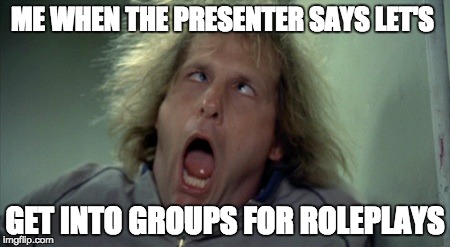
P.S. Please, please, please; if you’re running an ADULT’s workshop, do not expect us to a) work effectively in groups with strangers and b) do roleplays.
 Over the last several months, we’ve seen an increase of ‘Principal-related’ jobs that have stacked on-top of the role that Principals already have to play. For one, I know that for many Principals, Novopay was one stress that has turned them greyer than ever, and continues to cause week in and week out stress as they become glorified pay clerks for their staff. Many Principals have off-loaded this role to their admin team; but many wish to take the responsibility of paying their staff on themselves, and won’t sleep soundly until they know each member has the right pay.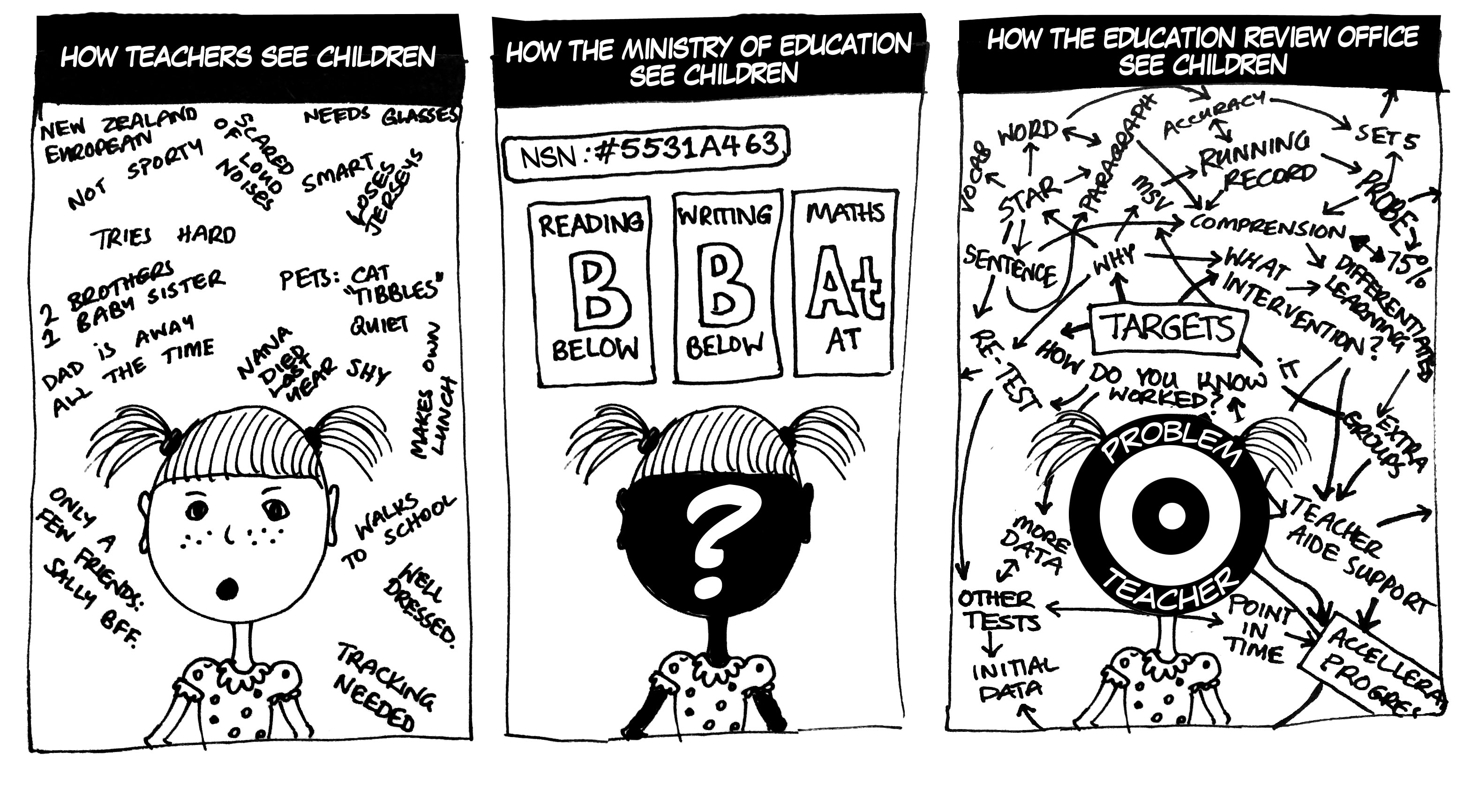

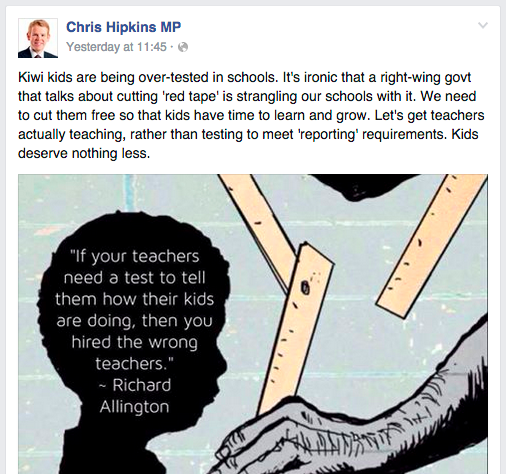
 We are showed the assessment pyramid regularly in P.L.D (Professional Learning & Development), and it still staggers me that things remain the same. The assessment pyramid works a lot like the food pyramid, with the top tier representing assessment that, whilst is usable, should not make up the bulk of assessment used in the classroom. The bottom tier represents assessments like teacher observations, anecdotal notes, conversations, discussions, behaviours, troubles, problem solving, which should be use more frequently. Yet the rate of importance placed on assessments is opposite. Those that fit down the bottom of the pyramid which should happen daily and make up the majority of our assessment as teachers, is given the least importance, while those at the top which happen once or twice a year, are relied heavily on when schools are asked to “prove it” by Ministry or ERO officials.