Tag: money

  • Tomorrow Schools and the Equity Gap

    It’s interesting to see that word “review” and “reform” getting bandied about.

    At one point, reform was an issue as we fought off “GERM”…

    Now, a review is taking place of our school system, and some suggestions being made, and suddenly those that may have been encouraging GERM are now questioning this review.

    The main objection to the review is stemming from the education elite; those sizeable schools who have clawed in students and money and status through whatever means possible. The bigger the school, the more influence you’re seen to have, as the more students you have, the more parents you have, and usually, the more chances of having very rich or important parents. The sphere of influence grows and it becomes all about who you know, not what you know.

    Take the article They’ve Seen the Future for instance; Martin Thrupp has some very good points that he makes in the article. He says…

    “It is a kind of view that runs through New Zealand society; this great concern about inequality, poverty and so on, but at the same time people who are on the advantaged side of it don’t necessarily want to share their resources.

    “Because of that, we do see principals of high socio-economic schools not particularly supportive of redistribution efforts and greater equity funding for low socio-economic schools.”

    He goes on to say that parents are the same, clustering together to improve their status, keeping up with the joneses, purchasing houses in specific zones (Look at the marketing done in the season of the Block where one house was in zone for a particular Auckland school). They work together to all jostle for position, and not only demand, but provide resources to ensure, that their child gets the best possible education. This carries on at home.
    Thrupp says that this doesn’t always happen in low-socio economic communities.

    We see what money means to those schools as well.

    Wellington College Principal says that with the donations his school receives, he is able… “to make decisions around overstaffing, to pay for a teacher’s salary beyond the [roll-related] staffing. It’s enabled us to sometimes have smaller classes, start new subjects, retain high-quality staff.”

    Now, that’s all well and good, and a great luxury to have. But there is always another side of the coin.

    This kind of luxury is simply not available to schools in low socio-economic  areas – places where smaller classes and decisions on overstaffing would be very much beneficial. These schools have high-quality staff, but they often get burnt out managing classes of 30+ pupils, or leave for greener pastures at schools that might be able to offer smaller classes, better resourcing, or other incentives for them. Needless to say, this also means that any high quality staff these schools have, won’t have the same effectiveness due to their larger class sizes. I don’t really care for what Hattie’s research (however bogus or biased it is) says about class size; if you take a great teacher and put them in front of 30 students, and then put them in front of 20 students, they are going to have better success (not to mention overall better well-being) in the class of 20 students.

    Okay. Time for some maths.

    In the article, it states that Wellington College received $5.7 million in donations in 2017, the most for any school. It’s roll is around 1750 students.

    So taking that $5.7million, and calculating how much that amounts per student, we end up with a figure of $3,257 per student. PER STUDENT.

    I can guarantee, that is more for one student than most schools receive in donations for their whole school. Add to that the notion that the Government suggested during their election run that they would subsidise schools $150 per student if they dropped their school donations for parents. This has yet to happen, but I know of several schools that have waived asking for school donations from their communities, because of this, but also because they know the burden it puts on some of their families.

    Three and a quarter thousand dollars per student is a long way from a mythical $150.

    No wonder these schools don’t want the review suggestions to be implemented.

    I wonder what would happen if, just for a week, those principals in the lofty heights of the wealth and famous, got to see the otherside of the coin, and got to see that we are all here for one reason – to educate our young people, and begin seeing this as a New Zealand wide system rather than just from their ivory insulated tower. Maybe, just maybe, they’d see things in a different light, and hopefully be able to see the disparity that exists and that this taskforce are trying to address.

    How can education in New Zealand provide the same opportunities for every child when there is such a massive gap between the rich and privileged and the rest who are doing the best they can with what they’ve got?


    Original Article: https://www.stuff.co.nz/national/education/110421061/theyve-seen-future–its-not-tomorrows-schools


  • School Donations: Rich get Richer…

    Original Article: https://www.stuff.co.nz/national/education/109937537/rich-school-poor-school-top-schools-get-millions-in-donations-while-others-get-0

    About $140 million was donated to New Zealand schools in 2017 – and more than half of that went to just 10 per cent of schools.

    Wellington College received the most money of any state school, banking almost $5.7m.

    Coming in second was St Peter’s College in the Auckland suburb of Epsom, which received more than $3m in donations.

    At Auckland Grammar School, just 350 metres down the road, donations topped $2.2m.

    And a three-minute drive away at Epsom Girls’ Grammar School, the figure was almost $1.8m.

    Between them, the three Epsom schools received just shy of $7m.

    By contrast, 37 schools recorded no donations for 2017, and a further 79 received $1000 or less.

    The data, supplied by the Ministry of Education, included all donations to a school, whether from parents or other sources.

    Wellington College had a bumper year for donations in 2017 because donors contributed to a new performing arts centre, principal Gregor Fountain said.

    Some schools have scrapped parental donations to ease the financial burden on families.

    In its election manifesto, Labour pledged an additional $150 per student for schools that did not ask parents for donations.

    Little has been said about the policy since, with Education Minister Chris Hipkins saying it was “Budget sensitive”, so he could not talk about it.

    Capping the amount schools could ask for was one of the suggestions to come out of the Tomorrow’s Schools review.

    The taskforce heard some families could be “put off” sending their children to a particular school due to high donation levels.

    Limiting the amount schools could request would mean all families had equity of choice, the report said.

    A donation was, by definition, voluntary. However, Post-Primary Teachers’ Association (PPTA) president Jack Boyle said there were many schools where it “isn’t voluntary, nor is it a donation. It’s a compulsory fee”.

    Read Original Article Here

  • A Rainy Day

    In relation to:

  • Vane Sopoaga teaches money literacy to 100,000 children | Stuff.co.nz

    Having had Vane in my class on numerous occasions, I’m delighted he is getting recognition. Incredibly energetic, engaging, and makes connections with the kids almost immediately. A true example of Engage, Inspire, Unleash!

    Vane Sopoaga knows money matters.

    The ASB GetWise facilitator spends his days teaching money literacy to pupils, largely in the Wellington region, and has just reached a big milestone.

    On Thursday, at Rangikura School in Porirua, Sopoaga delivered one of his workshops to his 100,000th pupil.

    It’s a huge number, he says, achieved over six years of “just preaching the good word of financial literacy”.

    In total, he has delivered more than 4000 workshops to more than 257 schools.

    With a background in dance, performing arts and social work, Sopoaga – and his personas of Captain Cashtastic and P.T, a personal trainer – brings energy and fun to the classroom as a way of teaching kids valuable lessons.

    “Think of this age, right now, and where they are. If we can have the ability to just nudge them, just gently, into a positive direction where they’re going to make some better financial decisions, it can have a huge impact on their lives.

    “Obviously knowledge is key and then trying to motivate them to have better decisions, it’s got to be a positive thing.”

    Teaching money literacy in schools is a relatively new concept. ASB began its GetWise programme in 2009.

    Sopoaga says he didn’t learn anything he teaches during his school years.

    “I never had that growing up … I saved up my whole primary and intermediate years and I ended up saving $8.80,” he says.

    Read full article here.

  • ERO Shrine

    ERO Publications

    Over the last few months; actually since the start of this year, I have noticed a definite increase in propaganda…I mean… publications from our beloved at the Education Review Office (the independent reviewer of schools that is run by the government – who also runs the Ministry of Education – go figure!).

    So I headed over to their website and thankfully in this technology day and age, it has been incredibly easy for people to archive their documents as PDF’s and have them available for all.

    When I got there, I wanted to see just how many publications there were. I started counting.

    As I was counting, I began to wonder a few things. Were these publications on a schedule? Were there certain months or time of the year that these are released? How long do school leaders get to peruse these wonderful documents before the next one gets sent out?

    Getting Data

    So as I often do, I started gathering data (which we now know to be the silver bullet in saving the education of Maori children). This lead me to some interesting discoveries, especially as we go back in time.

    Initially, I went back to 2010 – the year I got my first full time teaching placement. Then I realised there were certain other things that occurred that year, such as the roll out of National Standards.

    It was also soon after this, in 2011, that the Minister of Education Hekia Parata took office after Anne Tolley was somewhat swept aside (having already done the damage needed in rolling out the Standards).

    So I went back further. Let’s say, 2007, then 2008, when the current government took office. That’s a good period of time.

    Findings

    Here’s what I found:


    I wrote out the date of each publication and put it into a very simple graph.

    From this, it is quite clear to see that there is a significant increase in the number of publications ERO is sending out to schools about best practises, about leadership in schools, about review, inclusivity, inquiry, and a myriad of other pedagogical egregiousness.

    Volume & Numbers

    Look at the numbers alone. Schools have gone from having 2 – 5 documents to read each year, to suddenly up around the 20 mark. Proponents for these documents will suggest that it is for the good of all schools to read, that it provides a more vigorous form of guidance and the assimilation of best practise across the country.

    However, there are many other factors that these documents bring upon the education sector.

    Firstly, time.

    Time

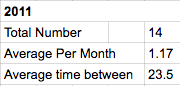
    In 2007 and 2008 there were five publications each year. Counting up the number of days between each of these five publications, it gave school leaders and board of trustees a whopping 55 days (approx) to read, digest, mull over, and apply the findings in these reports.

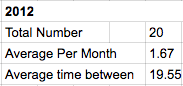
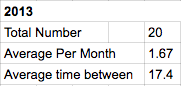
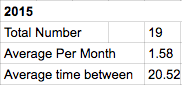
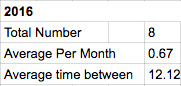
    By 2010, schools had less than a month. By 2013, schools were having just over a fortnight to read these publications, as the number of publications balloons to 20 publications in the year – four times the amount of reading to do. By March 2016, Schools have already received 8 documents from the Office, with an average of 12 days between each.

    On average, the publications range from about 25 pages in length, to about 60, with varying degrees of content. The majority are around 30 pages in length.

    In addition to this, expecting only 5 documents to be read throughout the year is not out of the realm of possibility. If we were to pay Principals their time to read these wonderful documents  the cost would be somewhat minimal. The average reading speed of 200-250 words per minute applies to non-technical material. Unfortunately, as anyone who has taken the time to flick through these ERO publications, they are full of technical terms used with education, and the editors thesaurus gets a good workout as they condense twelve easy to understand words into two obscure words that generally require deciphering. For such technical material, the average drops to 50-70 words per minute. This translates to 5-6 minutes per A4 page. If the document has 30 pages, then we can safely assume that this will take the average school principal 180 minutes to read each document. That’s 3 hours of a Principal’s time to read through each document.

    3 hours.

    Let’s put that in context. That’s half of the school day (contact time).

    You can start to see how this might start to grow exponentially, especially when a total of 15 hours per year might be spent in 2007, to suddenly 60 hours needed in 2013. In the three months to March this year, a whopping 24 hours would be needed to get through all the publications to date. That’s a whole day.

    Cost

    As we all know, time means money, and we can see how looking at the time it takes naturally moves into the cost to tax-payers that these publications might take.

    In New Zealand there are a total of 2,538 schools. Let’s assume (for ERO’s sake) that each school only gets one copy of the publication sent to them. That’s easy maths. That’s 2,538 copies. A reasonable sized print run.

    In 2007, there were 2,590 schools. Multiply this by the 5 publications printed in that year, and there’s a total of 12,950 documents.

    Postage

    Assuming that it was sent out by fast-post to schools, the cost back for postage in 2007 was $1.50.

    It’s okay. I’ll do the maths for you. Its $19K and change. Yup. $19,000.

    Now, it may not be quite that bad. Maybe government departments get discounted postage rights, especially when sending in bulk maybe. But still….

    Fast forward to 2016. Postage for one document is $3 in a foolscap size envelope. Fast-post.

    In 2016 already, there has been 8 documents sent to the 2,538 schools (20,304). We’re at $60K in postage by March.

    Printing

    Printing costs are another matter.

    I haven’t been able to find out the company that the NZ Government or ERO might use for printing these documents.

    However, going to Print.com/nz, I was able to get a rough price for an A4 portrait document. Granted, the pages are glossy (ERO’s pages are matte), and only 120gsm (ERO’s pages feel more like 300gsm) but the price is $5.42 per document.

    We have to assume that the Government would get some suitable discount on this price, but this is about as good as I could find.

    So. More maths.

    If the cost of postage has doubled since 2007, then it is possible that the cost of printing has also doubled in that time.

    So for the 12,950 copies in 2007, this would cost $35K. Adding on the postage bill, and we’re looking at $54,000.

    By March 2016, using the current printing costs described above, ERO has spent $110,000. Add on the $60K postage, and there’s a whopping 170K bill to be paid.

    At it’s peak in 2013, there were 20 documents sent to 2,539 schools. Assuming printing and postage will be somewhere in between the 2007 and 2016 prices, we can surmise that Printing would be about $4.07, and postage at $2.25.

    All up, the ERO would be fitting a 2013 bill of some $465,017.85.

    $465K for a bunch of booklets that principals would be hard pushed to find 60 hours to set aside to read, let alone implement.

    Inaccuracies

    For reference, I do realise there are a lot of assumptions being made, and not only those that I have mentioned above. I’m very aware that not every principal or school would be required to read every document put out by ERO. For example, some of the documents are for ECE, some for Primary, and some for Secondary, and it’s fairly certain that ERO would not be expecting Primary Schools to be pouring over a document about Science teaching and achievement rates in Secondary Schools – and vice versa. There are other areas where the implications have been stretched – I will admit to that.

    But the reality is, these documents do need printing, and they do need sending, and they do need reading.

    And it seems like the number of publications are only but increasing. These publications are swamping principals desks, keeping them from their core business instead of providing insight, guidance, or help. Schools are being suffocated with the sheer volume of documents clogging up the leaders and bringing them to a grinding halt, staggering and stumbling until they can breathe no more; crushed by the weight of layers and layers of 300gsm matte paged booklets.


    Happy reading everyone!


  • John Hattie: It is time to be rid of deciles – Education – NZ Herald News

    The decile system was introduced to guide equity funding to schools and in general it has worked very well. But there are two distinct aspects of deciles that need to be looked at separately.Firstly…

    Source: John Hattie: It is time to be rid of deciles – Education – NZ Herald News


    Deciles have long been under attack. Schools complain going up and down, parents are misguided as to what they mean, and the whole system is destined for an overhaul.

    However, I tend to agree (surprisingly) with Hattie’s comments regarding it. Let’s not completely throw the baby out with the bathwater.

    “It is time to be rid of deciles, but please find a way to have equity funding without the stigma that students in poorer areas receive a poor education. It needs to be based on a “basket of measures” and not be a single measure.”

    The reality is, that the key focus is around deciles being mis-interpreted as the quality of education at that particular school.

    Surely a little bit of public education would go a long way as to expelling this myth? Maybe then the government might come to realise just how difficult teaching actually is!

  • Email from the Minister

    ———- Forwarded message ———-

    From: “The Right Honorable Minister” <HerMajestyParata@ministryofed.govt.nz>
    Date: 4/02/2016 7:26 PM
    Subject: Ongoing Expenditure and Orders
    To: “Accounts” <MrFudge@ministryofed.govt.nz>

    Good morning sir,

    However, it is a short lived good morning as this morning has not been good at all. In fact it has been dreadful.

    We are all out of manuka honey which I was feeding to the Ministry’s prized stallion, “Whinnie”. His coat was looking a little dreary and I heard somewhere that smearing honey on their coat helps bring out a certain lustre. Of course, Whinnie deserves only the best of honey, and so I have ordered a large batch of 750g jars of Northern Hawkes Bay manuka honey. Of course, I will have the local supplier thrashed if these do not arrive on time. Please just add this to our outgoing expenditure for the month.

    In addition to this, I would like to make note of the lightbulb that has blown in the caretakers cupboard at our Horowhenua office. This is of course a huge breach of occupational health and safety, and will require a further seminar for all cleaners and custodians to attend. The only provider I have been able to find at short notice is in Sydney, and so I have gone ahead and booked flights and hotels, as is company government policy. I have also been in touch with Big Mike for him to start getting plans in place to rebuild the entire reception area in the Ministry of Education building in the Capital, seeing as Horowhenua are required to report to us. Seeing as this is a huge imposition on our staff, it is only right that they benefit in the way of being able to enjoy a fresh look as they enter their work place. I am hoping this will raise moral a little.

    I have told Big Mike, however, to watch the bottom line. He mentioned to me that instead of putting in an additional elevator, that he had a contact who had managed to get a cheap golden staircase which he would be willing to sell to us at minimal cost. This should cut the upgrade by at least $2million dollars from the proposed $30million.

    I am aware of the significant costs already spent on the stationery upgrade last month. Our custom made gold coated biro pens had “Ministry of Enducation” printed instead of “Ministry of Education”. I have been in touch with the printer, who while they cannot refund us, they can make another run at only 80% of the cost, seeing as there is now one less letter they have to print. I have okayed this deal.

    Lastly, I have asked our hygiene stockists to supply instructions on the inside roll of the Ministry designed loo paper. This should assist members to replace the toilet paper themselves, instead of having to hire the wait staff to come and perform their wipe duties. This should save the ministry about $400 a year. I have already terminated the contracts for the hygiene team.

    Please advise as to the arrival of my personal hover desk. The legs on my desk are getting tired, and will need to have a rest soon. The hover desk, while still being developed, should alleviate the health checks and risks that the legged desks have. I have gone ahead and approved the purchase of more of these for every Ministry of Education office around New Zealand, even though it may not be fully finished yet.

    I’m sure you’ll let me know if there are any issues with this. As usual, I’ll no doubt ignore your advice and refer you to HR. We cannot afford another Novopay debacle; although this was not really issue as it meant we did not have to pay the teachers for a while. I’m pretty sure they didn’t care anyway.

    Right. Off to set up the new charter school. This one is teaching purely in Latin, and will feature upside down learning. Evidently it’s been scientifically proven that any new learning actually has weight, and for children to really learn something properly, they should be turned upside down so that the information seeps down into their heads. Sounds more than plausible.

    Sincerely

    Her Majesty
    Ministry of Education
    New Zealand Government

    ———————————–

    Note: Privileged/Confidential information may be contained in this message and may be subject to legal privilege. Access to this e-mail by anyone other than the intended is unauthorised. If you are not the intended recipient (or responsible for delivery of the message to such person), you may not use, copy, distribute or deliver to anyone this message (or any part of its contents ) or take any action in reliance on it. In such case, you should destroy this message, and notify us immediately. Aforementioned email addresses, names, and expenditures are indeed made up and are intended for political satire.If you have received this email in error, please notify us immediately by e-mail or telephone and delete the e-mail from any computer. If you or your employer does not consent to internet e-mail messages of this kind, please notify us immediately. All reasonable precautions have been taken to ensure no viruses are present in this e-mail. As our company cannot accept responsibility for any loss or damage arising from the use of this e-mail or attachments we recommend that you subject these to your virus checking procedures prior to use. The views, opinions, conclusions and other informations expressed in this electronic mail are not given or endorsed by the company unless otherwise indicated by an authorized representative independent of this message. Please disregard this message if it has caused undue harm or offense.
    This article has been a follow up to the posts here: http://unleash.alingham.com/2015/the-true-cost-of-charter-schools/ and here: http://www.stuff.co.nz/national/politics/76717264/ministry-of-education-spends-25m-on-stairway-to-heaven-in-office-revamp  with more to follow, no doubt. http://www.newshub.co.nz/tvshows/story/ministry-of-education-faces-backlash-for-20-million-fit-out-2016021019#axzz3zXcRH7g8

  • The Cost of Free Education

    Families struggle to afford the rising cost of back-to-school requirements

    Free Education

    Firstly, I want to point out that this is purely my thoughts on this, and only using my view as a teacher and educator in my opinions of this. I believe education should always be free. I do not have children, and have come from a family fortunate enough to be able to afford education. I have never been in a position where I haven’t been able to make ends meet, and so this of course affects my views.

    I am, however, very aware and understand that the pressure and cost of school for some families is beyond their means at the present time, and I want to acknowledge that the beginning of the year can be an incredible hardship for them. I certainly do not intend to belittle that in any way.

    There are a number of issues that this article raises in its conscious or unconscious attack on schools. There are several inaccuracies from the outset, which are relatively clear from a schools point of view. Obviously, this article takes the side of the parents; as is much of the comments I’ve seen on social media about this. But hopefully your eyes might be opened to the reality of things for schools.

    The article begins by saying that the $35,000 spread out over each child’s years of schooling at a state school ($2.7K per year, $13.48 per school day) includes “…fees, extracurricular activities, other necessities, transport and computers, by the time they finish year 13.

    Fees

    State schools are not allowed to charge fees, yet many do. They are not compulsory to pay, and there have been several cases out there that have brought this to light. A certain school giving tags or badges out to show who has paid and who hasn’t comes to mind.

    A popular “fee” schools have introduced has been the ‘activity fee’. This often is to help cover or subsidise the cost of additional activities or programmes that the school is involved with during the year. This usually includes things like swimming, EOTC trips/activities, outside provider programmes, arts exhibitions or performances, etc. All of these activities are in aid of enriching the curriculum or learning experiences for the students. Schools cannot charge for accessing the curriculum, else it is not a free education. However, costs such as transport, instructors, tickets, or entry fees, are all too sizeable for schools to foot the bill themselves, even with an education rate or subsidy, and so schools often will ask families to help with this cost through an “activity fee”.

    Extracurricular Activities

    By its very definition, extracurricular activities are in addition to the curriculum. They are ‘above and beyond’ school time and school learning. Because of this they are, in their very nature, voluntary. Whilst I would strongly encourage such activities that are an addition to schooling; sports teams, musical instrument tuition, Kapahaka groups – they are in no way compulsory and should not be held ‘against’ a school by including them as a cost for free education.

    Other Necessities

    Other necessities is an incredibly vague term, but I assume that this relates to things like stationery and uniforms. These are not so much as part of the curriculum, but being part of a school. Unfortunately, there’s not much schools can do. Stationery is required to record, write, draw, detect, explore, share, and learn each and every school day. Unfortunately there’s no escaping this cost, and it seems unreasonable to hold this cost against a school from running a ‘free’ education. It’s almost like that free 14 day trial of the latest TV infomercial product, but you have to pay $9.95 in postage and packaging. The trial of the product itself is free, but there is still a cost to getting it to you for you to make the most of it.

    Transport

    Transport is a factor that has two sides to it. One, as mentioned, is getting students to and from activities, and buses are as cheap to charter as one would hope. The other aspect of ‘transport’ is getting to and from school. Sometimes this is by choice to send your child to another school further away than a local one, and sometimes the closest school is more than a walk away. Either way, this should not be considered a ‘cost’ on free education, in the same way that a plane ticket to a free concert in another city makes the concert any less ‘free’. You still have to get to it for it to be free!

    Computers

    Computers are an area that I am highly passionate about, especially in relation to education. Tech in classrooms has always been 10 years behind the times. And there is one reason for this.

    Cost.

    By the time a product or idea is ten years old, it’s become cheap enough for schools to get into the classrooms.

    Remember; for schools, yes there are some discounts, but in reality, the main factor is in the numbers. If each class at our school got an extra iPad for its use, the school doesn’t just have one iPad to purchase/lease. It has nine. And that’s just for one iPad between 28-30. For more usable numbers, you’d probably need at least 8 or 9 per class, making that upwards of 72 iPads. Not sure if you’ve purchased iPads before; but I can tell you that while education discounts help A LOT; 72 iPads is still a sizeable amount for a school to foot the bill for.

    Thus came the idea of schools introducing BYOD. Bring Your Own Distraction (device). By expecting each student to bring their own device, the school no longer has to pay massive amounts of money to have technology in the classroom that students can use for learning. However, this does come across as a ‘cost’ for education, but does come with the choice for students to bring any device; even ones they might already have, or that their family has.

    Once again however, schools can’t enforce this as compulsory. It is much the same as stationery in that it’s required, but comes at a cost for schools.

    Schools are pretty good at understanding situations, and will often have a selection of school devices available for students who don’t have devices to use throughout the day, should they be required for learning.

    I feel sorry for the mother who forked out for an iPad. The whole idea behind BYOD is that students should be able to bring their “own device”, regardless of brand. Enforcing that parents supply a particular brand, especially Apple products which are have a reputation of being among the most costly, is relatively insensitive of the school. It is also insensitive and bordering on illegal to put them on a stationery list as a requirement and not as an optional extra. I know some schools have put “computer usage subsidy” on stationery lists to help schools cover the cost of technology; but I’m told that this is also frowned upon by the powers that be.

    Getting Assistance

    Financial assistance is always an option in the many schools I have worked in. Schools are very aware of the cost they ask for, and are generally very understanding, especially with families with multiple children at the school, that it can be a struggle to make means meet. Many times, subsidies, reduced costs, sponsorships, scholarships, payment plans, and even waive the cost, are all possibilities that schools use to assist families. However; schools can only really help those families that they know of; and those that ask for help. Unfortunately here in lies the problem, in that there is certain social stigma, or whaka Ma around admitting to others that you dont have any money. But if schools don’t know, or aren’t told, there isn’t much they can do to help out.

    In addition to schools, there are also many other outside agencies and organisations that offer assistance, especially in the ‘back-to-school’ season. From stationery, to backpacks, to school shoes, there are a lot of options available; but once again, the stigma, shame, or pride get in the way. If they don’t know you’re struggling, then they can’t help out! I know the Social Workers in Schools has been able to assist in finding in and accessing these for people.

    Politics

    Weigh in the politicians. Chris Hipkins is right; there is an equity problem. There has become an expectation for schools to be at the forefront of technology like never before, and the idea of personal devices has increased the cost of getting technology into schools exponentially. Ms. Delahunty chimes in with overseas trips being offered as part of certain subjects, but again, these are always extra to the curriculum and while it’s “unfair” that not all families can afford to send their child on such trips, that is in-fact life. Some people are more privileged than others. Some are more blessed than others. That impedes not on the “free” education that state schools offer.

    In true Hekia form, she plays down everything and runs with a stock standard head in the sand response. She states that there is “no charge for education at state schools. “No child in New Zealand should miss out on an education because of cost.”.

    No child should. But some do. A lot do.

    She does make a factual statement I agree with in that most schools know the issues their community faces, and “…work hard to avoid imposing costs on them…”.

    “In addition, a range of support is available from the Ministry of Social Development for beneficiaries who are finding the start of the school year a particular challenge. My advice to any parent who is worried about the cost of uniforms, stationery or other school equipment such as electronic devices is to talk to their schools, who often have arrangements in place to assist families who are struggling financially.”

    I must say, this is the first and only time I have agreed with nigh on everything the Minister has to say. If cost is an issue – go and talk to the school. Meet with the teacher, principal, a board member, or even the office admin and ask. Don’t just blindly go and pay for the unaffordable if you are financially burdened, especially at this time of year.

    Every year an article like this comes out. The wonderful vibe schools get from its community heading into Christmas with the thanks and recognition of all that the teachers and staff have done throughout the year for their child is quickly forgotten and the media jumps on a bandwagon to hate on schools. For once the Minister is publicly defending schools in this case, which is a welcome change.

    The reality is this.

    Children cost money.

    An extra mouth to feed, an extra set of clothes, a extra health risk, an extra movie ticket, an extra holiday programme, and the list goes on.

    Yes, education and health care should be free. And yes, education, up until year 13 is free at all state schools.

    But yes, there are extra costs involved with schooling, like there are with having children in the first place. That’s life unfortunately; and it’s not school’s fault (not that it’s actually anyone’s fault – its just the way it is!)

    So let’s stop this back-to-school school bashing that goes on each year, and look for ways to help the situation for those who are struggling.

    To Help

    – Talk to your school. Be open and honest about your situation. Ignore the whaka ma because it is only in your head. Behind closed doors of the principals office, financial situations can be discussed and there is less judgement and more understanding than you’d expect. We always look for the worst in ourselves.
    – Education grants are often available for schools for certain projects. Some are easier to access than others; but the reality is, many schools and staff are busy and rarely have time (or energy) to go through lengthy grant application and approval processes. Maybe you could fill out the application for the grant on behalf of the school. Grants can go a long way into alleviating things like transport costs or increasing the budget for technology and devices within a school.

    – Offer to help with transport. I certainly wouldn’t recommend that every family do this to get out of paying for buses, but if you are out of pocket but have a car and license, I’m more than sure that arrangements could be made for you to transport your own child. In addition to this, it may be that the school may be able to reduce the cost of the trip if you come along with your child to supervise and support. Just an idea.

    – Education rates. Maybe you own a company, large or small. While the discounts offered to schools are sometimes sizeable and do go some way to alleviating the cost of things such as technology devices, if companies see the value in education rather than in money only, then put your money where your mouth is and offer them at import cost, so that your company isn’t taking profit from them, or even better, discount THAT rate aswell. I’m not saying make them free for schools (though I’m not going to stop you if that’s what you think you should do!), but discount them further than the 10 or 15% that schools usually get.

    – Make busses free for schools. This becomes a massive hurdle for schools to access other areas of education, such as swimming. With school pools being closed, and the local out door pool a) booked out during summer and b) closed during winter, we have about a 15-20km trip to the next closest pool. The biggest associated cost is not pool entry, nor is it the swimming instructors (both of which either the school pays for or we use grant monies for) but is the cost of the busses. Obviously bus companies have running costs to cover and driver salaries, but once again, there seems to be more than this put onto the cost for schools to offer the free education that our tamariki deserve.

    Free education is their right.

    Let us deliver on that for them.

  • The True Cost of Charter Schools

    Its time to face some facts here. There is something terribly wrong with the current government’s focus for its funding, especially when it comes to education.

    I decided to do some comparisons on money spent (or not spent) and see if any of it makes sense. I wanted to compare the budget they approve for some initiatives, and deny for others. In particular, the comparison between keeping charter schools open, verses the Feed the Kids bill that was denied in March earlier this year.

    Embattled Charter School

    At the end of July, the Minister announced that she would keep a failing charter school open, even though she stated it would face closure, and even though clear evidence showed inappropriate use of funds and suspicious achievement results.

    “The Ministry of Education has directed a Northland charter school to replace its current principal with someone more “appropriate and experienced” or face closure. The beleaguered Te Pūmanawa o Te Wairua School in Whangaruru opened last year at a cost of $3million and has suffered a falling roll, truancy and low achievement levels in the year since.” – Feb 2015 – Māori TV

    Previously the Government could only confirm it would negotiate with the trust should it close. The Northern Advocate can reveal $4.4million has been spent on the kura, which opened last year, including a recent one-off payment of $129,000 to help remedy the ongoing issues. – July 2015 – Northern Advocate

    By keeping the school open, the ongoing cost of this school will have reached astronomical figures. By the end of this year, the cost of the school on the government will have surpassed $5.2million. It is important to note that this is the cost from its opening in 2014.
    The cost of this school to the government for it to remain open each year is only a mere $1.65million.

    There are 39 students at Te Pumanawa o te Wairua.

    That’s a cost of $42,271 per student each year (assuming the roll remains at 39).

    Feed the Kids Bill

    Let’s compare this cost with a recent bill that has been defeated by a mere 2 votes. This bill was nicknamed  the “Feed the Kids Bill”. It sought to provide breakfast and lunch for every student in Decile 1 and 2 schools across the country.

    Mrs Turei said the National-led Government is failing New Zealand children, as more are going without food than ever before.

    “They are funding some programmes, but not enough, so they accept that there’s a problem, why won’t they fix it?

    “It’s not that expensive either, it costs something between $10 million and $14 million to feed every hungry kid, every day in their school. What’s so hard about that?” – 19 March – Radio NZ

    Education Counts lists the July 2014 roll returns, which shows that the number of students in Decile 1 and 2 schools across the country; some 111,069 pupils.

    Doing some quick maths, I’ve worked out that using Mrs Turei higher estimate of $14 million, when spit among the number of students in Decile 1 and 2 schools, comes out at a staggering $120.

    One hundred and twenty dollars and five cents.

    That doesn’t sound right.

    According to FeedtheKids.org.nz, the full cost of the programme would be $100 million a year – including food, staffing, administration, monitoring and evaluation. That sounds a lot more than $14 million, but the reality is, that not every child at decile one and two schools will need breakfast or lunch. At the school I work out, I’d say close to 85% of the students come with suitable lunch each day. The 15% that don’t, would benefit from this service. This also works out with Mrs Turei says around the $14 million mark, being that it is 15% of the stated $100 million on the Feed the Kids website.

    Regardless, I did a little bit more maths calculations, and using the $100 million as the figures, the cost per student is a whopping $900.34

    Nine hundred and thirty four cents.

    Let’s just compare that to the one charter school that is being kept open for 39 students.

    Charter School: $42,271 per student
    Feeding Kids   :      $900 per student

    That simply cannot be right. Can it?

    Oh wait. Of course! The $900 per student is on top of their education cost, where as the $42,271 is the cost of their entire education for the year. We will have to account for the decile one and two student’s education.

    Taking an average decile two school, such as the one I currently work at, our figures per student work out at approximately $6,884.61 per student. Add on $900 to that, takes it to $7,784.61.

    Comparing this to the forty two thousand, two hundred and seventy one dollars spent per student at the embattled charter school, it puts some clear messages out there as to what is fair, what is equal, and what is right out there. It also shows us exactly where the focus is for this government – and it’s not for those that are struggling.

    What’s more concerning is that this is just one charter school. There are more in the pipeline. More that will take money away from the kids who, through no fault of their own, are going hungry this year.