Tag: NZEI

  • A Twitter Conversation: May 2019

    A Twitter Conversation: May 2019

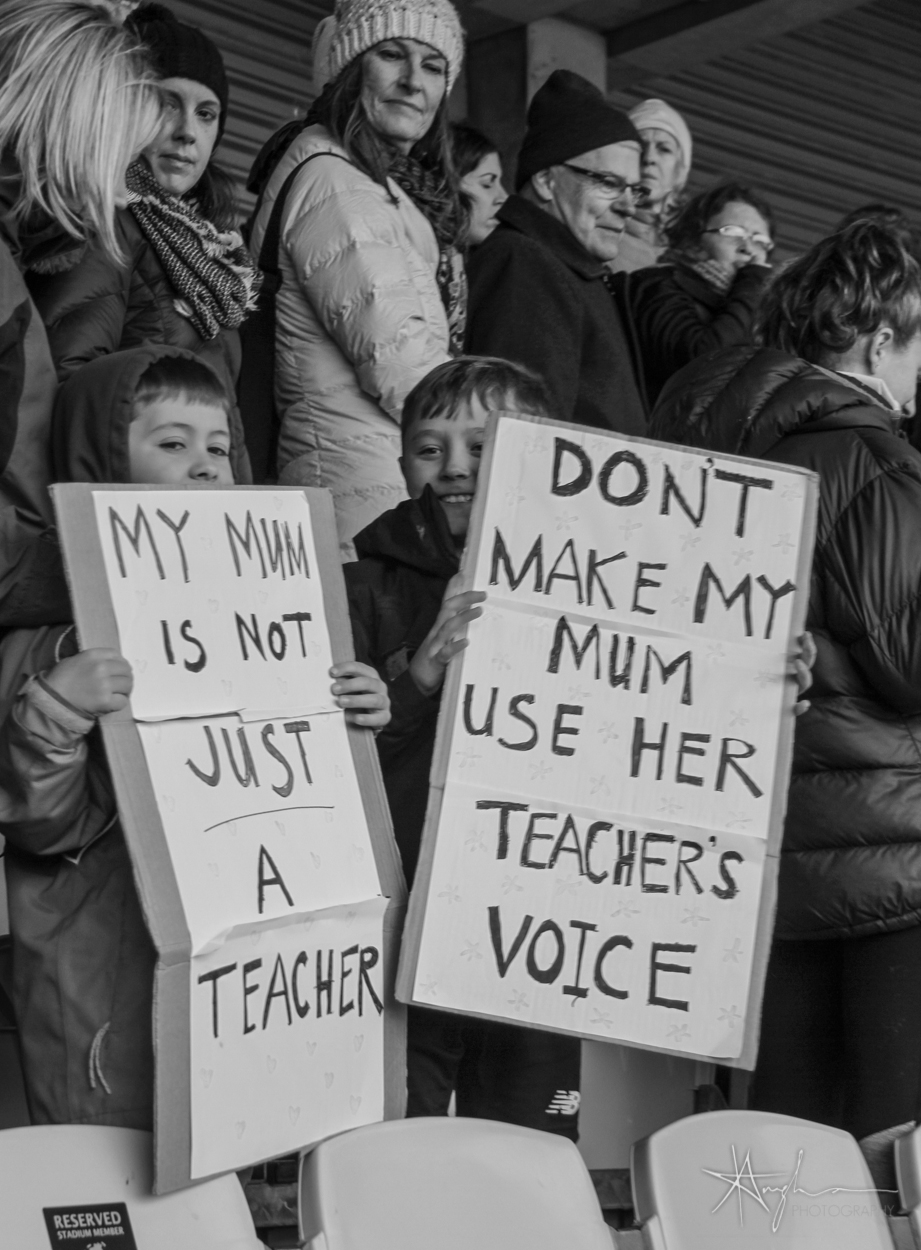
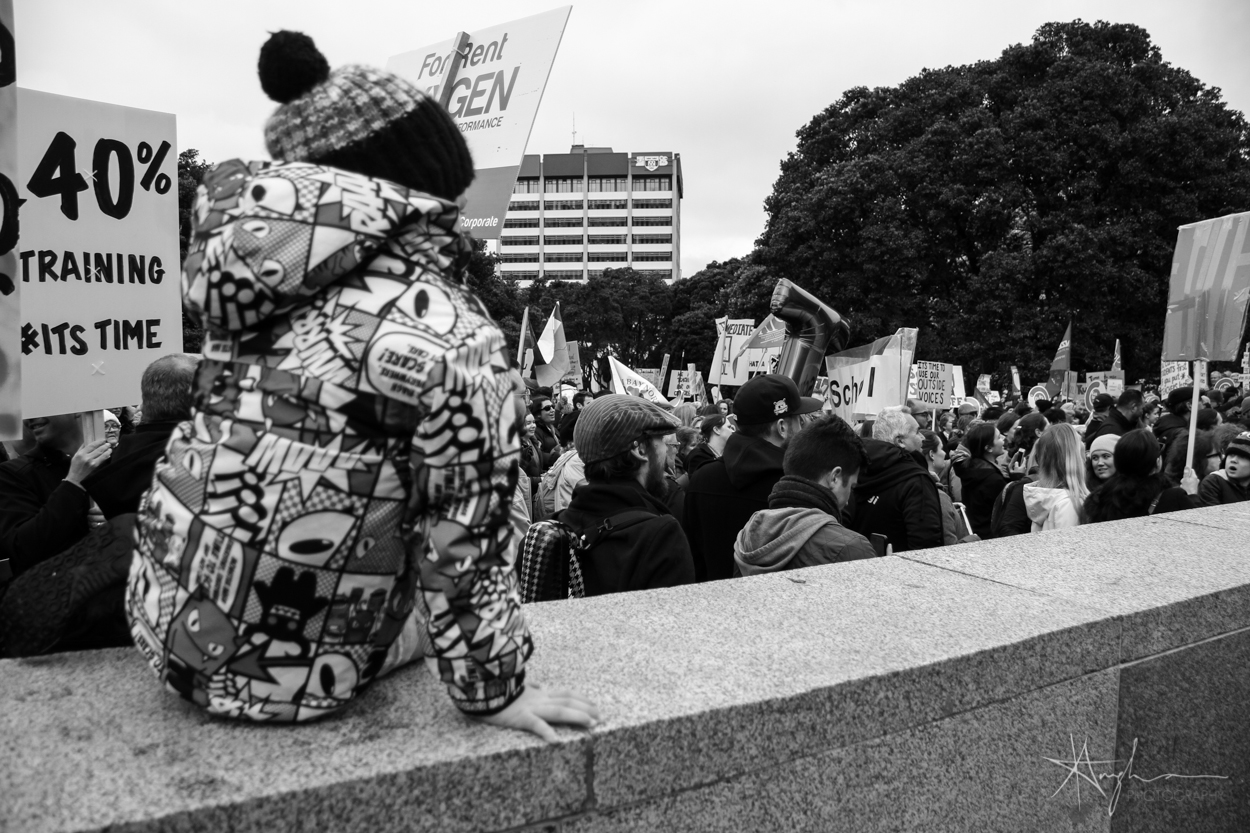
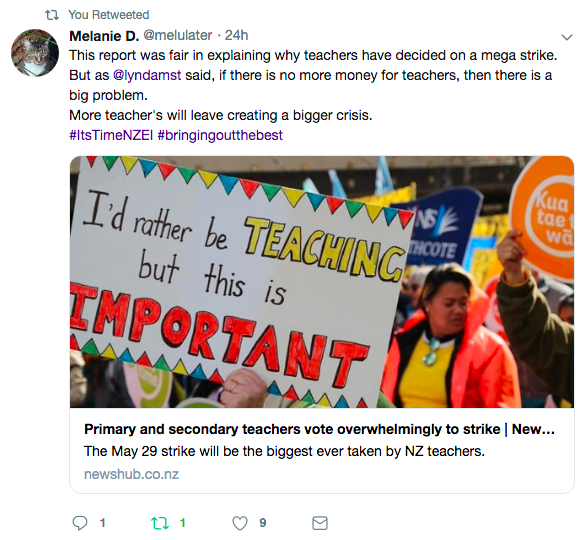
    ​School teachers and principals across the country have agreed to stage New Zealand’s largest-ever strike as negotiations with the Ministry of Education continue to stall.

    The Post Primary Teachers’ Association (PPTA) and New Zealand Educational Institute (NZEI) Te Rui Roa announced the move on Sunday, and said rolling strike action was also possible.

    Ths strike, on May 29, will involve almost 50,000 primary and secondary teachers and primary principals, and will affect hundreds of thousands of students in more than 2000 schools.

    https://www.stuff.co.nz/national/education/112655087/teachers-have-voted-to-strike-on-may-29


    The Conversation

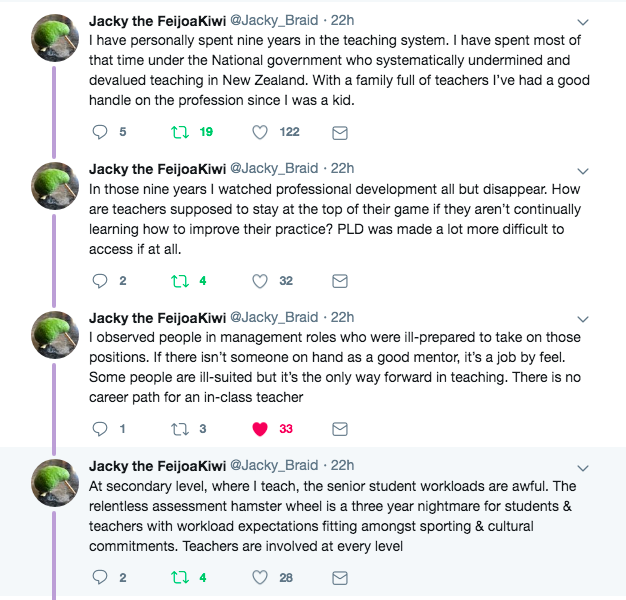
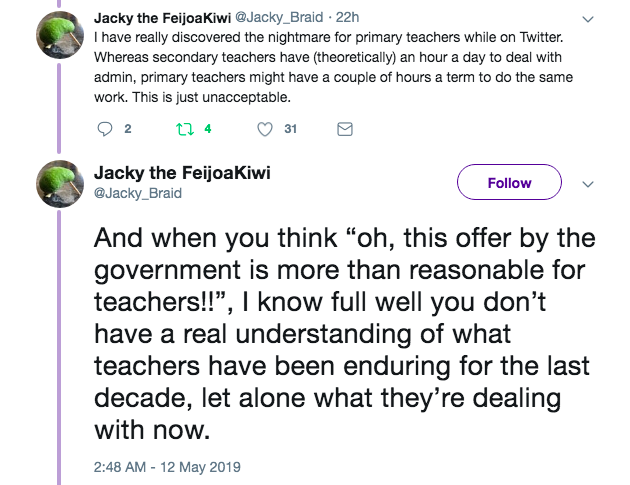
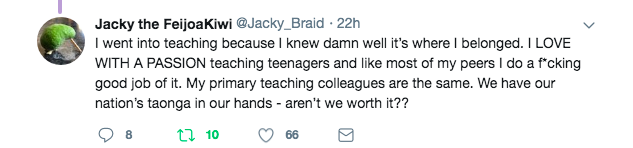
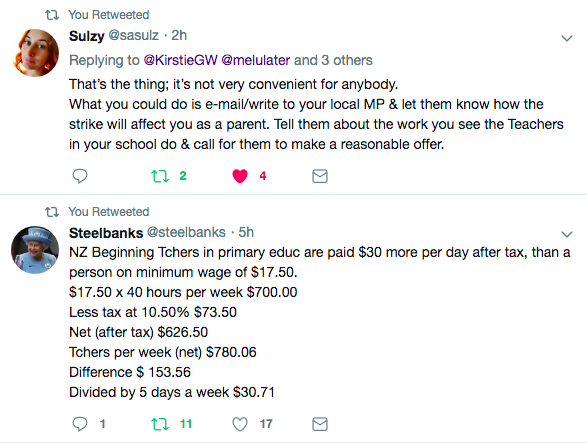
    Obviously there has been a lot of reaction to the recent vote to hold a mega strike, and a lot of this reaction has been documented on Twitter. I wanted to collect this reaction and keep a record of it in our blog. I have come to realise that I value the posts on this site, but often a lot of conversation happens on Twitter and then falls off into the Twittersphere.


    • The crisis is real, and it’s spreading. And the more who leave, the more work has to be picked up by other all-ready-stressed teachers. And thus the crisis is exponentially growing. And all the government is prepared to do is start training replacements!?
    • In all of these pay negotiations, not once have teachers been asking for anything that is unreasonable… It’s not like we’re asking for a slushy machine in every school!
    • Come on … Make history. Be the one MP to stand up for teachers and get them what they deserve. Show the public the importance of education in this country. Go on. I dare you!
    • So it’s not that the government CAN’T meet what we’re asking for…. it’s that they WON’T.
    • Kinda think that the Teacher Unions need to start playing hardball. Indefinite strike would soon get some results. Look at the bus drivers….

    • Started putting my thoughts down about teacher workload into a tweet…. ran out of characters and lost all energy and enthusiasm for continuing. A story all too common for lots of teachers at the moment!
    • Essentially here’s what would solve a lot of problems: • Pay Teachers more, because we’re worth it and we deserve it. • Shrink class sizes, because with less students comes less work but more teaching. • More SENCO resourcing, because there are more needs than ever before.
    • Shrinking class sizes is key. Less reports to write, less assessments to do, less paperwork to compile. More time for each student. More genuine relationships. More teaching. More jobs available for the additional teachers that come back into the workforce!
    • For me; class size plays a huge role on the teacher. For the last few years I’ve consistently had over 31 students in my class. Believe me; when there are 6 away and the class is only 25; it makes a HUGE difference in the way the classroom feels, acts, and learns.
    • For me, having more time in itself doesn’t sort anything out; it means time out of class if anything. What I need is less students in front of me which will in turn give me more time for each one. It also lessens the time I need for assessments, reports, planning etc…. win win!

    • I left the union at the end of last year. Not regretting it. They should be doing a LOT more given the circumstances, and a clear plan seems to be lacking. Seem to be floundering in too many ideas rather than laying out a “game” plan for teachers and the government to follow!
    • So why did the Ministry turn up to the last round of negotiations with NZEI with no new offer? Took active teachers and leaders out of their classrooms, made them organise relievers, sort out transport… for what!? No new offer!? How disrespectful.

    • Let’s face it. I am a teacher. No government is ever going to be able to pay me what I’m worth. I knew this going into the profession. But come on… at least you could try and show me I’m valued
    • Quick question … Why has class size not been a major negotiating point as a way of reducing workload? Teachers are definitely asking for this!!!

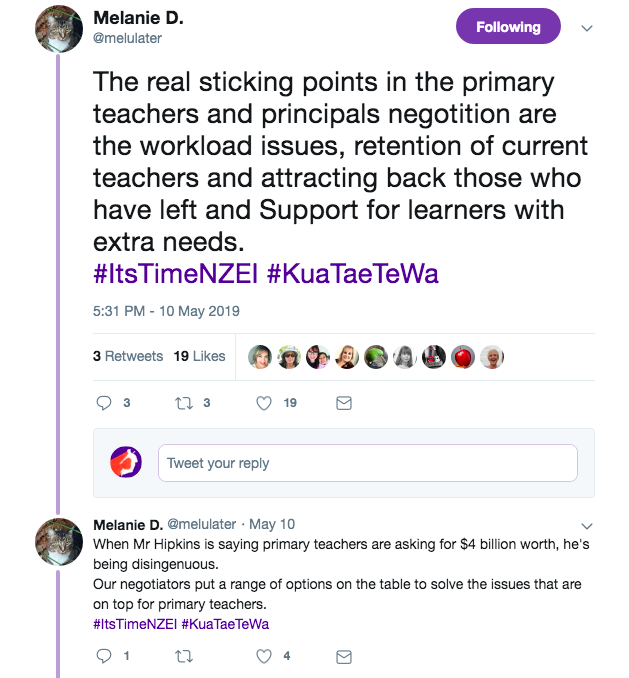
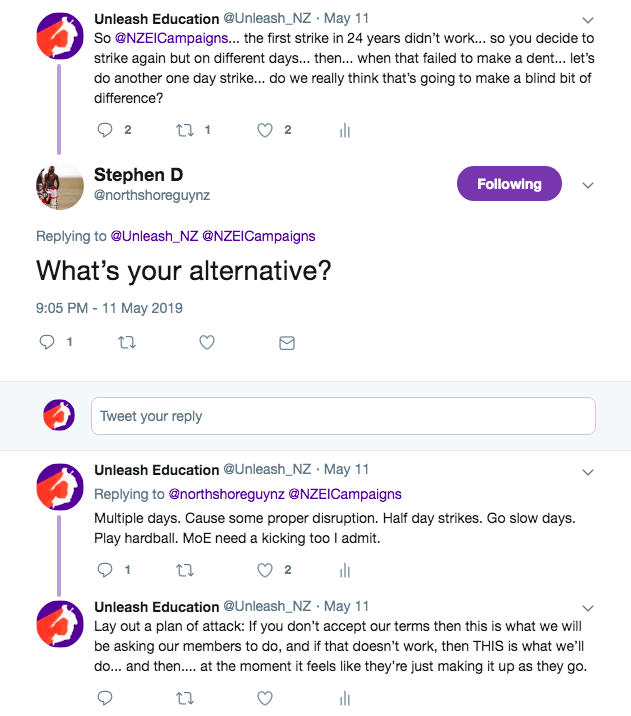
    • So … the first strike in 24 years didn’t work… so you decide to strike again but on different days… then… when that failed to make a dent… let’s do another one day strike… do we really think that’s going to make a blind bit of difference?
    • Multiple days. Cause some proper disruption. Half day strikes. Go slow days. Play hardball. MoE need a kicking too I admit.
    • Lay out a plan of attack: If you don’t accept our terms then this is what we will be asking our members to do, and if that doesn’t work, then THIS is what we’ll do… and then…. at the moment it feels like they’re just making it up as they go.
     

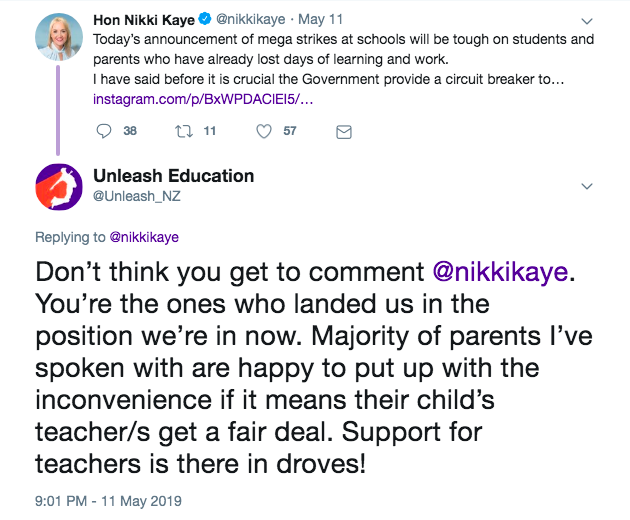
    • Don’t think you get to comment . You’re the ones who landed us in the position we’re in now. Majority of parents I’ve spoken with are happy to put up with the inconvenience if it means their child’s teacher/s get a fair deal. Support for teachers is there in droves!
    • But seeing as you do get to comment; what would National’s offer be if you were still in Govt?
    • I also find your teacher ratio comments hard to believe, given Hekia wanted to raise them through the roof. If I were you I’d be offering apologies and then begin making things right rather than trying to blame the ones who came after you for the monster you created.
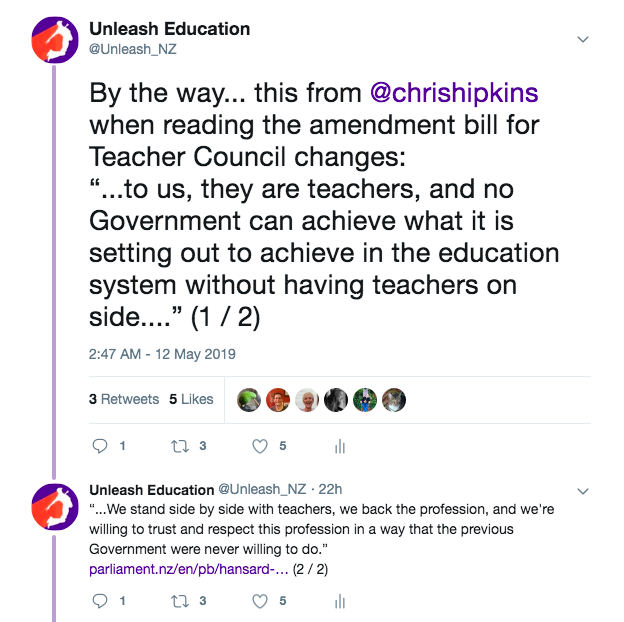
    • By the way… this from when reading the amendment bill for Teacher Council changes: “…to us, they are teachers, and no Government can achieve what it is setting out to achieve in the education system without having teachers on side….” (1 / 2)
    • “…We stand side by side with teachers, we back the profession, and we’re willing to trust and respect this profession in a way that the previous Government were never willing to do.” (2 / 2)


  • Why didn’t teachers strike under National? They were fighting to save education itself.

    Earlier this week a trade unionist wrote for The Spinoff about the rise of public service strike action under the Labour government. Today former Green Party education spokesperson Catherine Delahunty shares her perspective.

    I have heard more than a few complaints that teachers did not strike under National, so why are they doing it now? As education spokesperson for the Green Party for nearly nine years, I spent many hours with teachers and their unions, examining legislation which undermined the quality public education system. It wouldn’t be an exaggeration to say that over the last nine years the teaching profession was punchdrunk by a sustained political assault on their mission. Hence the exodus, and the struggle to replace the workforce. The recent teachers strikes are a last-ditch effort from a profession with legitimate expectations of fundamental change, relief and reward.

    At the very beginning of the Key government we went straight into urgency to debate their National Standards legislation. This was a disastrous policy which attacked the core principles of teaching and immediately teachers and their unions were forced into battle. Some schools resisted it, and many protested, but the policy of measuring and comparing primary students and schools via league tables became the norm. The damage was done. Remember: National Standards was never debated or discussed with schools and was passed into law under urgency.

    Then came Education Minister Hekia Parata’s attempt to increase class size, on the grounds that size doesn’t matter. This was resisted by parents as well as teachers, who knew that larger classes would mean teachers had less time with each child. The combined effort of both groups led to a humiliating back down by the minister, but the fight took up a lot of energy. In the middle of these debacles the Christchurch earthquakes struck and schools became hubs for communities and for children in shock. The government took the opportunity to impose a reform on Christchurch schools which went way beyond closing or repairing the damaged schools and a battle for survival took place, characterised by official mismanagement and insensitivity towards a traumatised school network.

    But this was just the beginning of the relentless changes and ideologically driven “reforms”. The charter schools championed by ACT and National were provided with resources other schools could only dream of and a range of experiments of highly variable value were begun. Military school and privatisation at public expense were put in the same basket as tangata whenua efforts for educational self determination, while 90% of Māori students remained in underfunded local English-medium schools. Teachers’ major focus was privatisation rather than wages and conditions.

    This all happened while house prices in Auckland went nuts and teacher aides did not get centralised wage funding. Early childhood education was a privatised mess and franchises created baby barns with government encouragement, while Kohanga Reo and Playcentre struggled.

    At the Education and Science Select Committee some seemingly random government bills kept turning up but they all facilitated reduced student and teacher representation in the tertiary sector, school boards being able to run several schools, the replacement of the Teachers Council by a new less representative body, the Teachers Code of Ethics becoming the Code of Conduct… on it went. This all took place in a global context of educational “reform” known as the GERM (Global Education Reform Movement), which led to a rewrite of the Education Act and an Update Bill to incorporate the COOL (Communities of Online Learning) concept – basically a digital replacement of the teacher.

    The actual rewrites were without vision and did not reflect many student or teacher ideas or a common purpose that lifted the debate. They generated deep concern from people like the Children’s Commissioner and the Ombudsman from a children’s voice and rights perspective. Meanwhile the learning support system continued to be broken and teachers were leaving the profession in despair.

    Read original article

  • ‘Tired of trying to hold the system together when it’s broken’ – NZ teachers prepared to strike for pay hike | 1 NEWS NOW | TVNZ

    Primary school teachers have today announced they are prepared to strike to get a significant pay hike.

    A pay deal with the government ends next year, but teachers say they aren’t prepared to accept a raise of between just one and two per cent.

    At a conference in Rotorua this morning, teacher representatives from the NZ Education Institute Te Riu Roa union voted to take action if they don’t get what they want.

    “Right now, children are missing out on some opportunities to learn because their teachers are bogged down in administration and testing, or are struggling to get support for children with additional needs,” NZEI president Lynda Stuart said.

    “To make matters worse, children are increasingly in doubled up classes because their school can’t find enough teachers.

    “Teachers and principals are fed up with seeing children miss out on the education they deserve and we’re tired of trying to hold the system together when it’s broken.”

    Collective agreements for primary principals and teachers are up for negotiation in the middle of next year.

    NZEI Te Riu Roa members will begin paid union meetings to form a claim from term from next year.

    View Video here.

    Source: https://www.tvnz.co.nz/one-news/new-zealand/tired-trying-hold-system-together-its-broken-nz-teachers-prepared-strike-pay-hike

  • Teachers commit to action, if needed, to free teachers to teach

    Primary teachers and principals have committed to taking action next year in order to give every child more teacher time, and attract more people to teaching.

    At their annual conference in Rotorua today, members of NZEI Te Riu Roa committed to fighting for pay and workload changes that will help retain and recruit teachers, and free teachers to teach.

    Collective agreements for primary principals and teachers are up for negotiation in the middle of next year.

    “Children go to school to learn the critical skills and abilities they’ll need when they grow up, and for that they need teachers to have time to teach,” said NZEI president Lynda Stuart.

    “Right now, children are missing out on some opportunities to learn because their teachers are bogged down in administration and testing, or are struggling to get support for children with additional needs.

    “To make matters worse, children are increasingly in doubled up classes because their school can’t find enough teachers.

    “Teachers and principals are fed up with seeing children miss out on the education they deserve and we’re tired of trying to hold the system together when it’s broken.

    “It’s time to get serious about giving our children the best education in the world and to focus on what’s really going to make a difference.

    Source: Teachers commit to action, if needed, to free teachers to teach

  • No More Sense from Seymour

    And so it begins.

    The non-sensical dribble spews forth from the under-secretary of Education, who gets into a lucrative position on the back of one electorate described on Wikipedia as an “exclusive, affluent suburb of Auckland”.

    That’s right. Mr. Seymour is at it again as he launches the ACT Party campaign.

    We will pay good teachers more. And great ones even more. No doubt David will be the judge as to which teachers make good teachers and which ones make great ones. I would put money on schools not being able to decide that themselves, and even more money on it being based on student results i.e. National Standards ala Performance Pay.

    Of course, one can see his point when he opens with the statement that the average teacher is paid a pittance, and deserve to be paid more.

    To fix that, the party is proposing an extra $1 billion in funding for education. “ACT’s proposed good teacher grants will give your average teacher a pay rise of $20,000 per year,” Mr Seymour claimed.

    But to receive the extra money, schools “need to opt out of the centralised payroll system and collective agreements”.

    This has rubbed a lot of people (in particular teachers) up the wrong way. No surprises there.

    But here’s why his solution makes no sense.

    Hypothetically Synonymous Seymoronous

    Let’s assume that schools go for this, and EVERY school in the country pays their teachers an average of $20,000 per year more than they are already. That is going to cost a lot.

    However, none of that has anything to do with collective agreements, the unions, or any centralised payroll system. They are not synonymous with each other.

    It’s illogical.

    In fact, under Seymour’s scheme, teachers could stay in the union with the collective agreement, and they could still get paid $20,000 more if he really means it; just get a new collective agreement ratified between the government and the union, or have both – give a bit more to schools to ‘top up’ teacher salaries that are paid through the collective agreement. It’s only because ACT are notoriously anti-union that he is dangling the carrot for principals and teachers to consider.

    Pay more Seymour

    The second factor is that given the current climate in education, there are teachers leaving in droves, and not always because they aren’t being paid enough. On many occasions, the workload is too much. Refer to this article in March. As a teacher, like many others, I would probably take less workload over getting paid more to ‘compensate’ for the increased workload that is currently expected of us.

    In Conclusion

    While paying teachers more is a genuinely nice touch, Mr. S, if you really cared and were really in touch with the education sector, and you actually wanted to value teachers, then maybe the first step is to work with the union rather than trying to sabotage it into non-existence.

    Illogical. Blackmail. Numpty.


  • NZEI: Not Zealous Enough. Ick.

    Three years ago the government announced their latest plan for collectives of schools to get together and share in the pot of $359 Million to share teachers, resources, and knowledge. Naturally, and rightly, NZEI took the initiative to their members. The following was the result:

    Primary Teachers and Principals vote to put kids first… 21 August 2014

    “Teachers and principals have voted overwhelmingly against the Government’s controversial “Investing in Educational Success” policy, including proposed highly-paid principal and teacher roles.

    A resounding 93 percent of teachers and principals voted “no confidence” in the government’s plan.

    When asked whether they wanted to try to reshape the policy or start again, 73 percent voted to reject the proposed new roles outright rather than try to change the policy through negotiation.”


    Since then, despite 93% of its members saying no thanks, NZEI have gone into negotiations with the Government, and come up with a revised outline for the IES, and a new label called “Communities of Learning”. But essentially they’ve ended up with the same turd, it’s just slightly more polished – as I wrote about here.


    Now, with the arrival of an election in September, the latest campaign from NZEI is to get more people in to vote, assuming that the more people they get in to vote, the more likely they are to get votes in ‘Teachers’ favour. The initiative is not targeting parents, it is in fact, targeting the students to get them to bring their parents along to vote.

    Quite frankly, I’m disgusted by this approach to working for Teachers.

    It is less than amicable, and has a range of issues that all lead to NZEI losing face. Big time.

    For a much more succinct account of these issues, head over to Whale Oil’s take on things. The fact that this has been picked up by Whale Oil, should be reason enough to look at this skeptically.


    As a teacher, I don’t pay NZEI to meddle in politics. I pay them to support me. To listen when we have a vote and do what we ask them to do (since they asked us what we wanted them to do). I pay them to negotiate on my behalf with the government, not go into political propaganda against them and try and influence votes through children. I find that intolerable.

    Some will say that if I don’t like it, then I should cease membership with them.

    While that’s fine in theory, I’m caught in a rock and a hard place. Don’t forget – I am a male primary school teacher. Few and far between – for a reason. It’s an incredibly risky workplace, and while I can safely say nothing is ever going to happen, I prefer to have the backing of NZEI’s lawyers than having to wrangle myself out of any false accusations. So unlike many who can, and have, and will, I can not just simply cease paying my membership, as it is security for me in my position as a male teacher.

    In conclusion; NZEI have lost any mana they might have had. I have no confidence in them, and will not be supporting them in any future plans.

  • Untrained Teachers Coming to a School Near You.

    There’s been quite a lot on the go this week in educational politics.

    But this one is one that should have every parent, school, and child very concerned.

    Education Minister Hekia Parata defends trainee teachers in new legislation

    At the release of the plans for partnership schools, there was very little surprise that they could hire who ever they liked as teachers, so that specially skilled and experts in different fields could work in these schools. It was advertised for the likes of Willie Apirana or Tana Umaga could be in front of a classroom and motivate and inspire children across a range of contexts and learning. Quite why they would want to be in a classroom instead of what they already do quite well, I don’t know.

    However, at the same time, the Minister tightened the reigns over the Education Council, and the regulations around appraisal and registration were put under the spotlight.

    This week however, the Minister has made a quick amendment to the Education Legislation Bill, that will essentially allow unqualified people to teach in state schools.


    “The proposed amendment to the Education Legislation Bill allows schools to establish a “trainee teaching” position for a school.

    According to NZEI, the primary teachers’ union, a “last-minute” change lets schools cheaply hire an “unqualified person in an unsupervised teaching role” while they did an initial teacher training programme.

    There has already been a lot made of the Teach First programme, where after a ridiculously short training period, teachers are pushed out into the real world with qualification to teach in the classroom, and many criticisms have been made of it.

    But why does the Minister suddenly need more teachers? We’re told that only 15% of graduates land a full time job.

    It’s simple.

    Experienced teachers cost money through salary to keep on staff. By reducing the number of experienced staff with jobs (through whatever method) they can be replaced by beginning staff who are paid less, due to the step that they will be starting on.

    At a recent meeting, when discussing the negotiations between NZEI and the Ministry for the latest collective agreement where the Education Council will be paying for the registration of teachers, Hekia Parata mentioned that she finds it strange that teachers don’t want to pay money into the Education Council; and that instead of paying into the union (NZEI) we should be paying into the Education Council.

    (Side Note: I might actually consider this if I had some kind of say on the Education Council; but if all the members on the council are simply appointed by the minister herself, then it is undemocratic and does not warrant my ‘subscription’.)

    In addition to this, David Seymour has weighed in on a different factor, but also brought into question the place of unions in the Secondary sector. “But what I would say is that all good, hard working teachers up and down the country might want to ask themselves if they want to be a member of an organisation that puts ideology ahead of kids like this.” – David Seymour

    What does this mean? Well, quite clearly, Hekia and her understudy don’t want the unions to exist. If teachers began paying into the Education Council instead of NZEI, then the union would cease to exist. If teachers leave unions on ‘moral’ grounds, then they will cease to exist. With all the control held within the Education Council, the Ministry can begin to tighten the screws even more on registration, and essentially drive out existing teachers. This has already begun to happen by using the whole vulnerable children act and finding “predators” that exist in the system. Each new case of child abuse from teachers or workers in schools as fuel to the fire of tightening the registration process, until even those of us who are great teachers, trained fully, and have a wealth of experience will be forced out as well.

    But it’s okay. Because even before they have completed training (which is already so minimal it’s under question) those enrolled in the Teach First programme can begin teaching in permanent positions around the country to replace the teachers who leave.

    No doubt, Hekia will come out with her standard response “It’s simply not true”, and the fact that there is no evidence to suggest this will happen is not a reason to ignore this as a threat in the future. The logical steps and the progression of this thing called GERM is taking place, and we’re seeing it happen right in front of it. They are put in for good reason, such as the registration process to weed out ‘those’ teachers, but their bigger mission opens it up to much more deviant possibilities.

    Watch this space people. Watch this space!

  • Education Changes – 2008-2015

    In the last five years there has been a dramatic shift in Education. Since this government (National) came into power in 2009, they have been non-stop in making wholesale changes across the sector.

    WELLINGTON, NEW ZEALAND - NOVEMBER 14: Education Minister Hekia Parata announces a Government partnership with New Zealand Rugby League at Westpac Stadium on November 14, 2014 in Wellington, New Zealand. The partnership has been set up to improve the education, health and wellbeing of thousands of young people and families associated with rugby league in New Zealand. (Photo by Hagen Hopkins/Getty Images)
    WELLINGTON, NEW ZEALAND – NOVEMBER 14: Education Minister Hekia Parata announces a Government partnership with New Zealand Rugby League at Westpac Stadium on November 14, 2014 in Wellington, New Zealand. The partnership has been set up to improve the education, health and wellbeing of thousands of young people and families associated with rugby league in New Zealand. (Photo by Hagen Hopkins/Getty Images)

    There is an old Māori whakataukī that says:
    Inā kei te mohio koe ko wai koe, I anga mai koe i hea, kei te mohio koe. Kei te anga atu ki hea.
    If you know who you are and where you are from, then you will know where you are going.

    What I want to do is take what changes have been made since the start of the National Government, and track these changes to their logical conclusion. By using what changes have been made, we can follow the progress of the GERM in our country.
    GERM is the Global Education Reform Movement.
    The Government is trying to create a crisis in education and impose a business model on our world class schools. This model, known as the GERM (Global Education Reform Movement) has infected other countries by introducing standardisation, competition and test-based accountability. – NZEI

    National’s Education Timeline

    2008

    • National releases their education policy.
    • National: Overhaul NCEA; introduce national literacy and numeracy standards; extend 20-hours early childhood education subsidy to playcentres and kohanga reos; teach more trades in schools and set up five “trade academies”; ensure all 16- and 17-year-olds are in school, work or approved training courses.
      ACT: Scrap Education Ministry and replace it with new Education Authority; allow state funding to public or private school of parents’ choice; deregulate schools but require them to be licensed by education authority; move curriculum “back to basics”.The key part of these policies is getting rid of the current education schemes, and replace them with more privatised versions of them. National Standards introduced to help regulate and narrow the curriculum, including going “back to basics” of reading, writing, and maths. Collect and monitor this data in primary school, and use NCEA “overhaul” to position schools against each other, including league tables. Deregulated schools, or Charter schools are to follow very soon after the election as part of ACT’s coalition.
    • National elected into government, using MMP to go into coalition with Māori Party and ACT.
    • Education (National Standards) Amendment Bill passed under urgency, allowing it to bypass the Education and Science Select Committee where the merits of National Standards could have been debated. Government sets precedence of limited to no consultation with parents or the sector.

    Visit NBR.co.nz for more information on government policies from 2008 election.

    2009

    • Anne Tolley becomes Minister of Education.
    • National makes large cuts to Teacher professional development services. This leads to a rise in private companies offering courses for teachers, and schools having to fund their own education development of its staff.
    • $35million additional funds budgeted over the next four years for independent (private) schools.
    • Education Amendment Bill 2009 introduces the idea of a ‘…body corporate or corporation sole may be appointed as a limited statutory manager or commissioner’
    • ‘Consultation’ with the public over National Standards. Data somewhat ignored (38% against, 14% for). Teachers vilified by the media for ‘not getting on board’ with the government policy.
    • Changes made to National Administration Guidelines to essentially make National Standards compulsory in all primary schools.
    • The Ministry begins promoting teaching and teacher supply initiatives and TeachNZ scholarships, informing overseas teachers of employment opportunities in key shortage areas in New Zealand, and awarding 1,023 scholarships to student teachers to study across the early childhood education, and schooling sectors.

    2010

    • Schools expected to begin using National Standards from the first day of school.
    • Schools that oppose National Standards forced to adopt them through threats of charter rejection, enforced ERO monitoring, or even closure.

    2011

    • Lesley Longstone appointed as Secretary of Education. Ms. Longstone had been a key figure in the introduction of charter schools in the UK.
    • National win general election by a landslide, and are re-elected into Government. Partnership with ACT and Māori Party continue.
    • Hekia Parata appointed as Minister of Education.


    2012

    • Minister of Education Hekia Parata announces policy to increase class sizes in order to be in-line with Treasury to save $43million each year. Continues with precedence of announcing policy with no consultation of the sector. Teachers appeal on force, and show multiple flaws in the numbers suggested by the Minister (such as making exceptions for technical teachers at intermediate schools).
    • Ms. Parata makes first mention of performance based pay for teachers as an option.
    • Minister of Education Hekia Parata backs down on class size policy, due to incorrect figures presented by Treasury, and from widespread disagreement from teachers, and more importantly, parents. “Ms Parata said the policy had caused “a disproportionate amount of anxiety” for parents and she was responding to that.”.
    • Novopay introduced for all teacher’s pay with limited to no trial or testing, despite advice given not to roll out the system which wasn’t ready. Not surprisingly, the system causes widespread issues, with some teachers not getting paid for months on end.
    • School Report launched by Fairfax Media to make National Standard data publically available. First comparisons between school’s data begins.
    • School closures and mergers in Christchurch announced following the 2010 and 2011 earthquakes. Limited to no consultation with those affected.
    • The Education Amendment Bill to allow charter schools introduced on October 15, 2012.
    • Lesley Longstone resigns after 13 months in the position, sighting a breakdown in relationship with Hekia Parata.

    2013

    2014

    • Government announces Investing in Education Success. $359million put into education through expert teachers and lead principals to oversee more than one school in an attempt to bring better practise across all schools. Initially accepted by secondary and principal unions. Primary school sector unhappy with the idea. Once again, limited to no consultation with the sector. NZEI negotiates changes with the Ministry.
    • First five charter schools open for the school year.
    • Government takes over ownership of Novopay. ‘All issues’ finally sorted out, two years after it’s release.

    2015

    • Removal of teacher elected Teacher’s Council. Rebranded as Education Council, with representatives selected by the Minister of Education.
    • Decile ratings changed for many areas around New Zealand.
    • Rules around teacher registration changed to align with the Vunerable Children Act 2014, introduced in light of child abuse and indecent assault of children, by teachers and those in authority. Examples: 1. 2. 3. 4.
    • PaCT tool being rolled out across the country for schools to ‘opt-in’ and use.
    • NZEI announces adjustments to IES proposal and seeks teacher vote.


    Where things are headed

    image-key-privatisationFirstly, your guess is as good as mine. All we can do is speculate and take what has happened and take it through to its logical conclusion. We can assume that this government what to turn schooling into a business, and privatise as many assets as it possibly can. The rich will get richer, and the poor even poorer. These are some of the natural conclusions of the moves that have been made in the reform of education in this country.

    • PaCT to become compulsory for schools to use to assess student achievement in Years 1-8, essentially becoming a Nationwide assessment.
    • PaCT data to be collected by the Ministry, and ‘failing’ students linked with their teacher so they can be monitored.
    • Teacher performance becomes linked to student achievement (or lack there of).
    • Performance pay introduced as a ‘reward’ for good teachers.
    • ‘Bad’ teachers ‘weaned’ out through lower performance pay, and increasingly difficult registration regulations and expectations. Some of these ‘bad’ teachers, however, will be ‘good’ teachers who have struggling students in their class and who aren’t getting ‘good’ results according to PaCT.
    • IES to make schools with ‘failing’ students adopt ‘successful’ school principal and lead teachers. Aligns with performance pay, and the removal of ‘bad’ teachers and principals from the school.
    • ‘Good’ principals to manage and run more than one school. Much like a CEO of a company.
    • School funding changes, along with IES, where groups of schools receive ‘bulk funding’ or ‘pooled resources time and money‘. (See 5.)
    • League tables introduced and made publically available through the media for parents to send their children to ‘successful’ schools, and avoid ‘failing’ schools; even though the quality of the teaching may be the same or even better. Schools funding also begins to be based on results of Fairfax Media’s “School Report“.
    • Failing schools to be merged into charter schools with private ‘managers’. More privatisation of the education sector.
    • Experienced teachers on highest pay packet to be replaced with young, inexperienced teachers on a lower salary, to save money in the budget.
    • Increase of class sizes to be rolled out.
    Notes

    In my opinion there are very few ‘bad’ teachers in education in New Zealand. When I make reference to ‘bad’ teachers in this post, I am making it from the perspective of the government, who would have us think that any teacher who has poor achievement results in relation to National Standards is a ‘bad’ teacher.
    In addition to this, I fail to see how teachers can be assessed in their ability to teach by the results of their students. I have had some students from struggling situations and home life who have made amazing progress in a year, but are still below where the Government reckon’s they should be according to the ‘aspirational’ National Standards. Furthermore, I have had some students who have made no progress, but I would challenge the best teacher in the country to do a better job and get that student to be At the National Standard, while still maintaining the teaching of the rest of the class as well. Therefore, this definition of ‘bad’ or ‘good’ teacher is completely flawed.

    Some may call this post ‘scare-mongering’; except it isn’t. The majority of it is laying out the facts, and then extrapolating them to their natural conclusion based on the precedence set by this government, and its desire to reform education in this country.

    Related Reading
  • The PaCT Tool

    There has been many thoughts around the PaCT tool and it’s use or non-use by New Zealand schools. New Zealand Educational Institute (union for primary teachers, NZEI) has warned against it, but they are bound to do so given the current political climate and their educational policies.

    Using the Progress and Consistency Tool
    However, what I don’t understand is that we (teachers, schools) have been saying that National Standards are not standard and there is a vast difference from school to school as to what is Below, At, or Above since it’s inception. The PaCT tool has been designed to moderate this very problem, as NZEI point out in their article, which is surely what teachers want – to make National Standards more reliable, rather than just doing it because we have to and working with rubbish data about our students.

    You cannot deny that Ms. Parata, however controversial, makes some sense in this article, and essentially makes the same points as I do above.

    It would seem that they (National Standards) are not going anywhere, with the National Government in power for another three years. I don’t particularly agree with the saying “If you can’t beat ’em, join ’em”, but in this case, it would seem pointless fighting. Teachers, Parents, Principals,  Educators, Educationalists and Professors have been fighting them since their release in 2010. Despite this, the National Standards continued to be rolled out, and the government continues to roll out other policies in the face of adversity. Most of the initial hatred towards them was the way they were rolled out, without any duty of care shown around their trialing on our kids. But it is now almost 5 years on. Let’s also make clear, that while the opposition would scrap them, they also suggest that they would still continue to monitor student’s progress, but align them to the curriculum. This seems like a complete waste of time, money, and resources, as if you read anything on the development of the National Standards, you’ll find that they are already aligned with the curriculum.

    “In doing this New Zealand has taken a different approach to the rest of the world. We have used our national curriculum to determine the standard of achievement that needs to be reached at the end of each year.” – Education Gazette, 11 October, 2010.

    Despite what the scare mongers say, I think it’d be worth every school investigating signing up to use the PaCT Tool.
    That’s my personal opinion.
    Personally, I know some of the developers of the tool, and I have been assured on more than one occasion that from their side of things (the developers) the PaCT tool has not been designed with the capacity to link student data with teacher pay. This seems to be the main concern with the doubters beyond that of trying to make the ‘flawed’ National Standards more reliable (rather than scrapping them and developing a more robust assessment).

    I think that if the government wanted to align student achievement with teacher salaries (i.e. performance pay), that they would already be able to do so without using the PaCT tool anyway. Therefore, if that’s the case, then any school using the PaCT tool will not make a difference for the government; but it has the potential to be very worthwhile for us as teachers and as a school to better get to grips with assessments for the National Standards, and might even go some way into making them more robust – which is what we’re asking for anyway.

    There has been many a classroom I’ve seen, where a student has stepped out of line and done things on their own terms. For example, entering the classroom (their own terms) instead of lining up like the rest of the class (teachers terms). The teacher might scold them and then send them out to the principal, if the student hasn’t already become defiant and stormed out of the class for the scolding. When you boil down the behaviour and the problem, and take a step back; the actions taken by the ‘professional’ have in fact caused that child to no longer be in class, and no longer learning. If a quiet word was had, a little pride (on the teacher’s behalf) dropped, and the student allowed to still remain in class before everyone else, then that student might still be in class learning and hopefully engaged. The end product is what we really wanted, which is the troublesome child in the class.

    Instead of fighting for fighting sake, why don’t we take a step back, work out what it is we want, and drop our pride of having things done on our (teachers) terms. Rather than missing the point and ending up with nothing, we should be thinking about the end product.

    The end product is we want a robust system of measuring our children on a national level, without using a one off national test (that students could fail if they had an off day). We want to be able to use our professional judgement as teachers, and our knowledge of each child as individuals, and use that subjective information in order to fit students against our curriculum. We want it to be a robust and moderated system so that the data can be trusted from school to school, from city to city, right across the country.

    If we want National Standards to be more robust, then lets see if using PaCT will in fact make them more reliable, rather than scrapping National Standards and making all line up outside before bringing them into the classroom again.