The current support for dyslexic students in New Zealand schools is a joke. An absolute joke.
When there is a reportedly 7% of students in New Zealand Schools have Dyslexia, it doesn’t sound like much. However, in a class of 28 students (the funded class size), that’s 2 students who will be struggling with dyslexia. Statistics say that as many as 20% of students will have learning disabilities, and it’s been noted that overall, dyslexia makes up about half of those disabilities. This means it could be even 3 students in your class that will be struggling with dyslexia.
I also suspect, that the aforementioned 7%-10% is just those that have been diagnosed, and as a teacher, there are many more that are never picked up for a number of reasons.
That’s not good enough.
What’s more, is the Ministry of Education, Ministry of Health, and the Government all turn a blind eye about dyslexia support in schools – mainly because if they admit that it is a problem in New Zealand schools that dyslexia affects student’s learning, then they’ll be called upon to do something about it and support schools to address the problem. That comes at a cost to the Government. Essentially, what this has led to is a bunch of private organisations filling this void. However, this of course, comes at a cost.
From the figures I have heard, to just get assessed for dyslexia, it will cost schools or families anywhere from $250-$400. This goes some way to explaining why so many more students are not picked up and struggle their way through the system with little or no support for them, their teacher, or their parents.
Go figure.
As a teacher, I am passionate about this. Not to find a reason for under-achievement or raise excuses, but to get support for these students who are struggling. It frustrates me to see these kids come in, and feel like I have nowhere to turn to get support for them, and if there is, how it always seems to come to a dead-end.
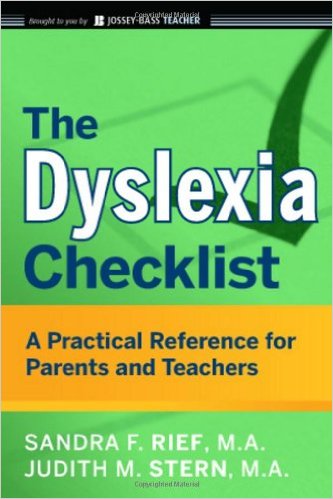
In trying to understand dyslexia a bit more, and hopefully be able to support dyslexic students within my classroom myself (seeing as I’m getting no support), I have purchased a couple of books. One is ‘The Gift of Dyslexia’ by Ronald D. Davis (which I have leant to a friend when her child was diagnosed), and the other is ‘The Dyslexia Checklist’ by Sandra F. Rief and Judith M. Stern. Hopefully they both offer some insight into how I can better support learners with dyslexia in my classroom.