Tag: strike

  • Valuing Teachers: Teacher Salaries Compared

    A pay deal offered to teachers would put some among the country’s top earners.

    Teachers are stuck in a stand-off with the Government over its latest pay offer.

    What’s been offered – and rejected – looks something like this.

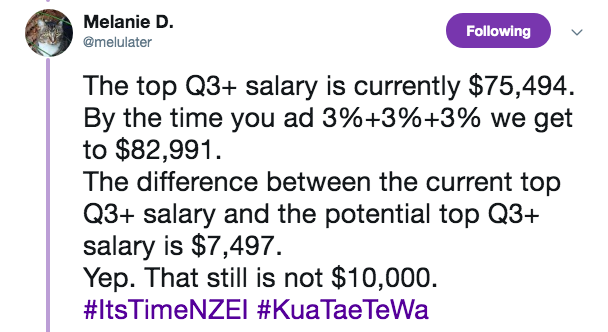
    Primary teachers with a degree, or advanced diploma, would have their base salaries increase to a range of $52,429 to $82,992, from $47,980 to $71,891 currently. Primary teachers with teaching qualifications and a specialist subject degree would get a bit more — $54,186 to $85,481.

    A beginner secondary teacher’s base salary would increase from $51,200 to $55,948 if they were to start teaching in 2021.

    More than 10,000 primary teachers, or about a third, get more than the top of the base scale (currently $71,891) because they receive extra payments in recognition of management or leadership responsibilities.

    The latest rejected offer would put a primary teacher with one unit for extra responsibilities at $89,481 a year by 2021.

     Almost 60 per cent, or 12,000 secondary teachers, are paid above the top of their base scale.


    Full Article: https://www.stuff.co.nz/business/113366626/valuing-teachers-does-pay-deal-stack-up

  • A Twitter Conversation: May 2019

    A Twitter Conversation: May 2019

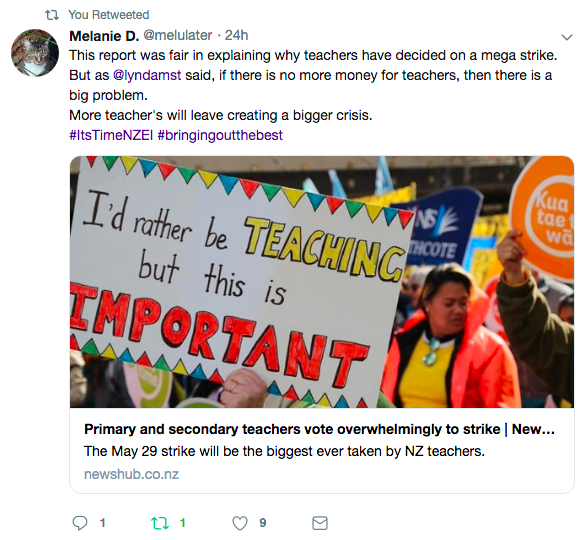
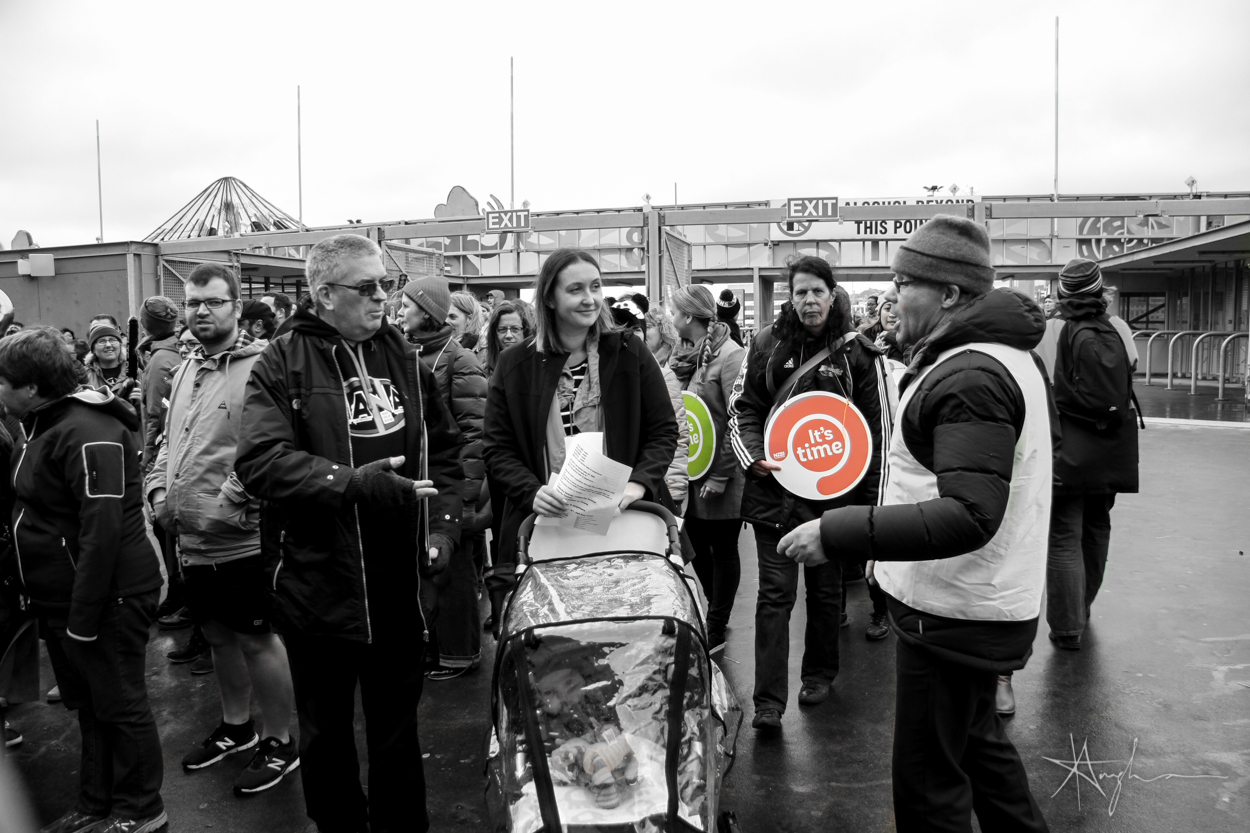
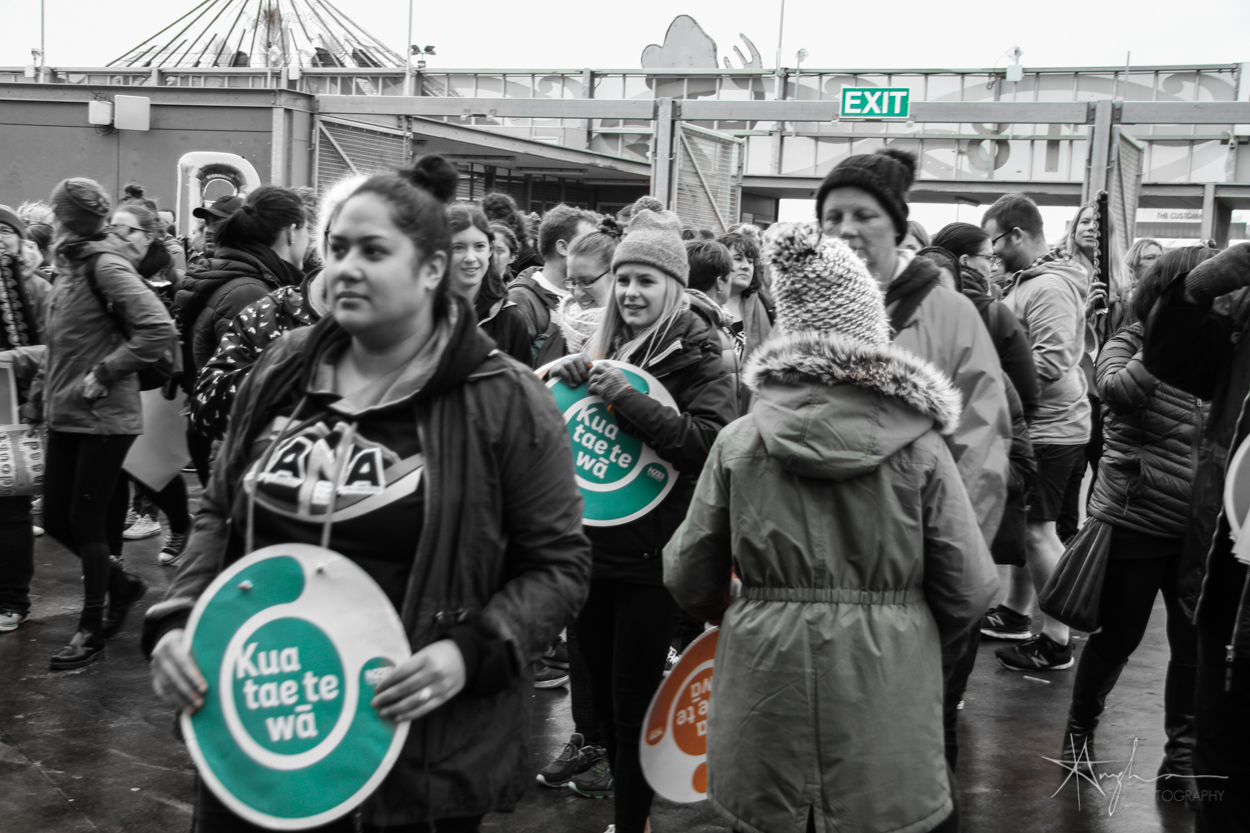
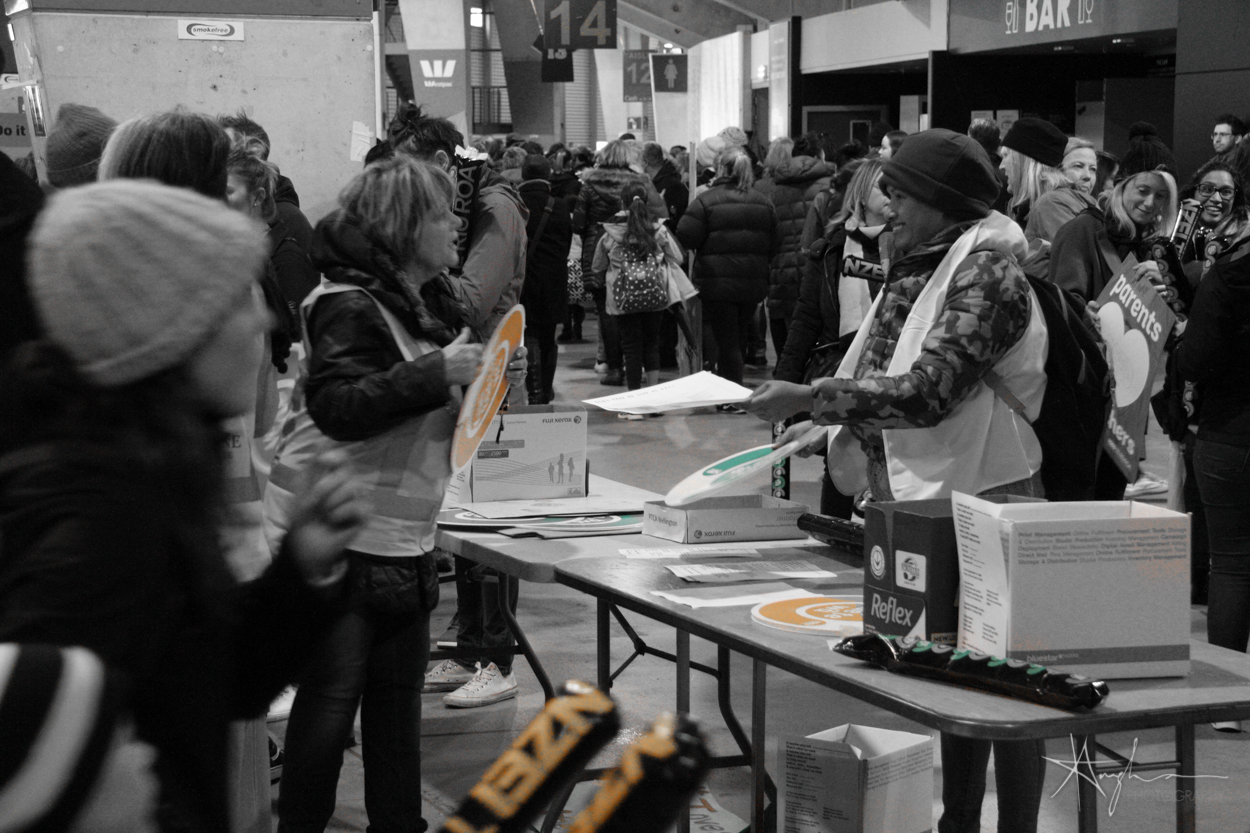
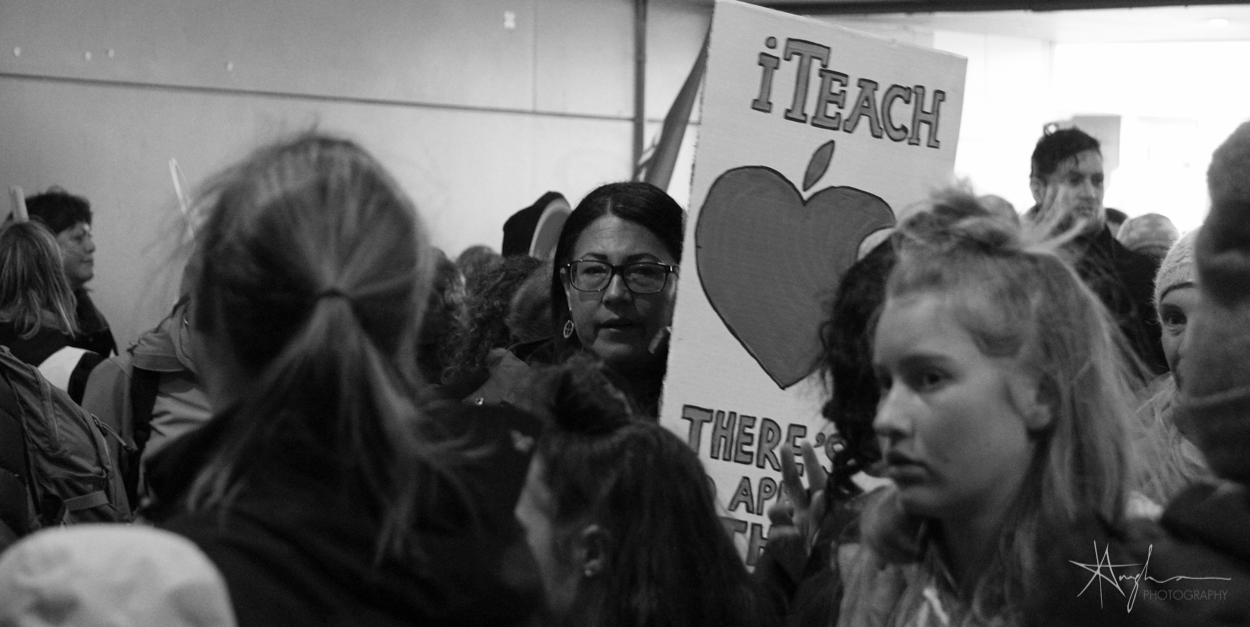
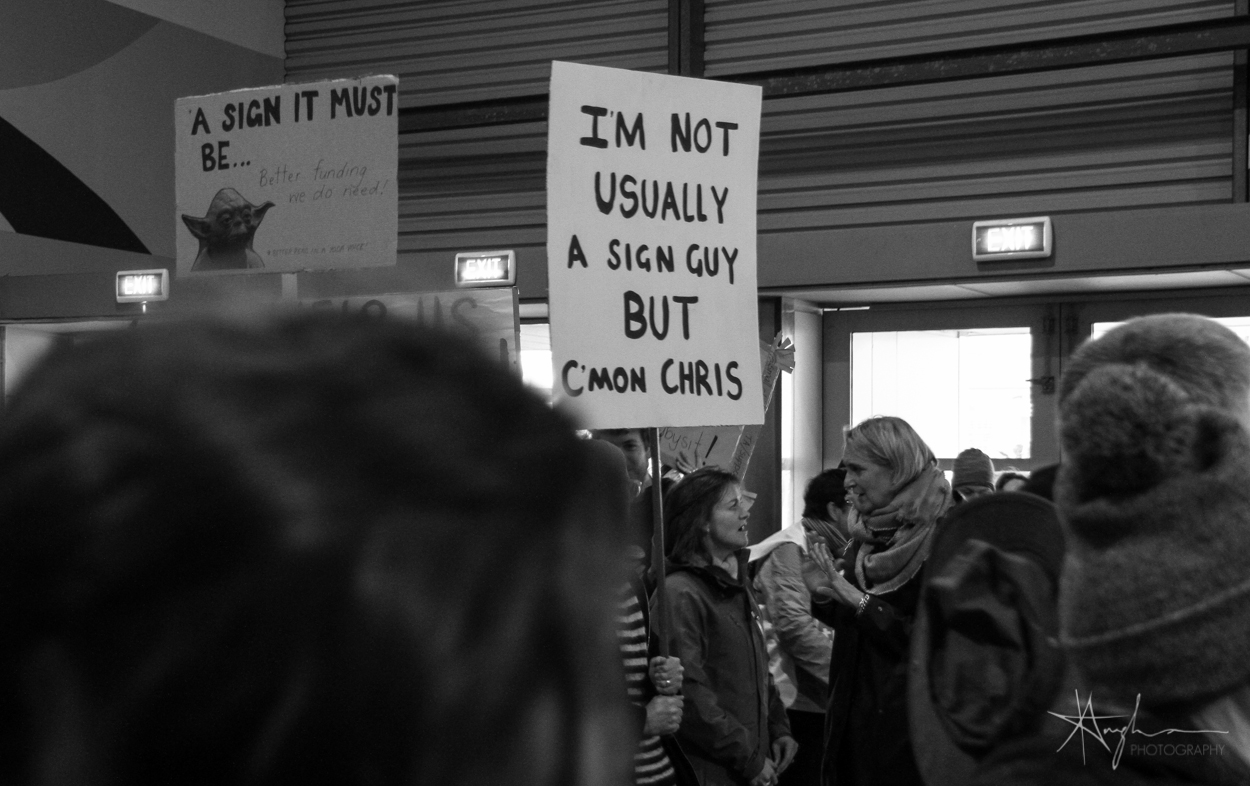
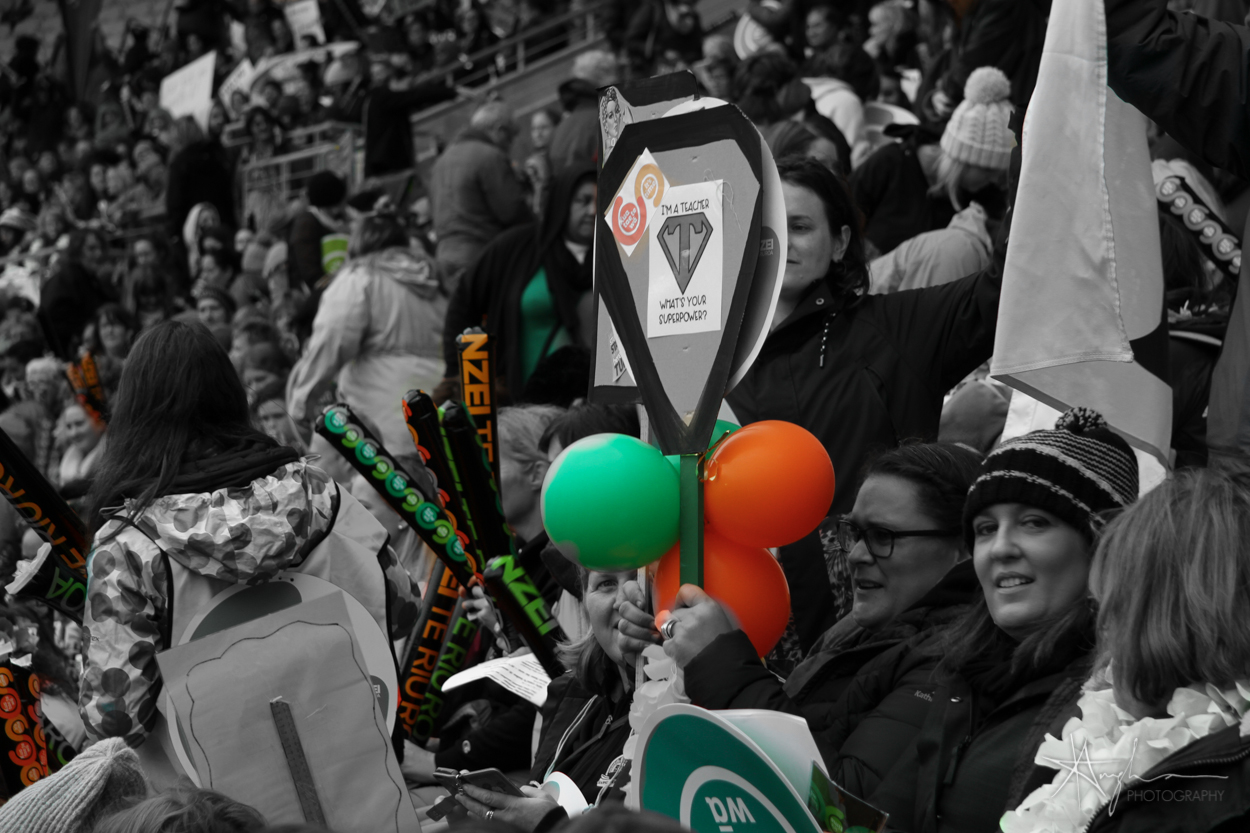
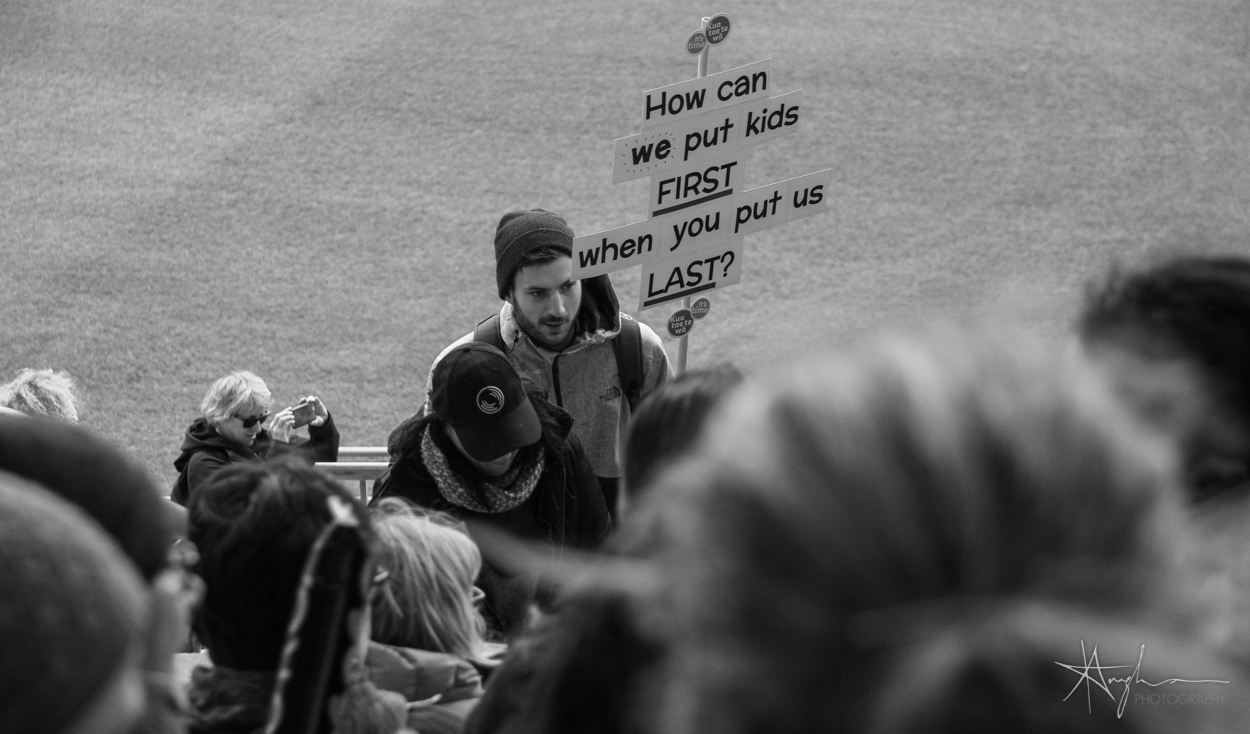
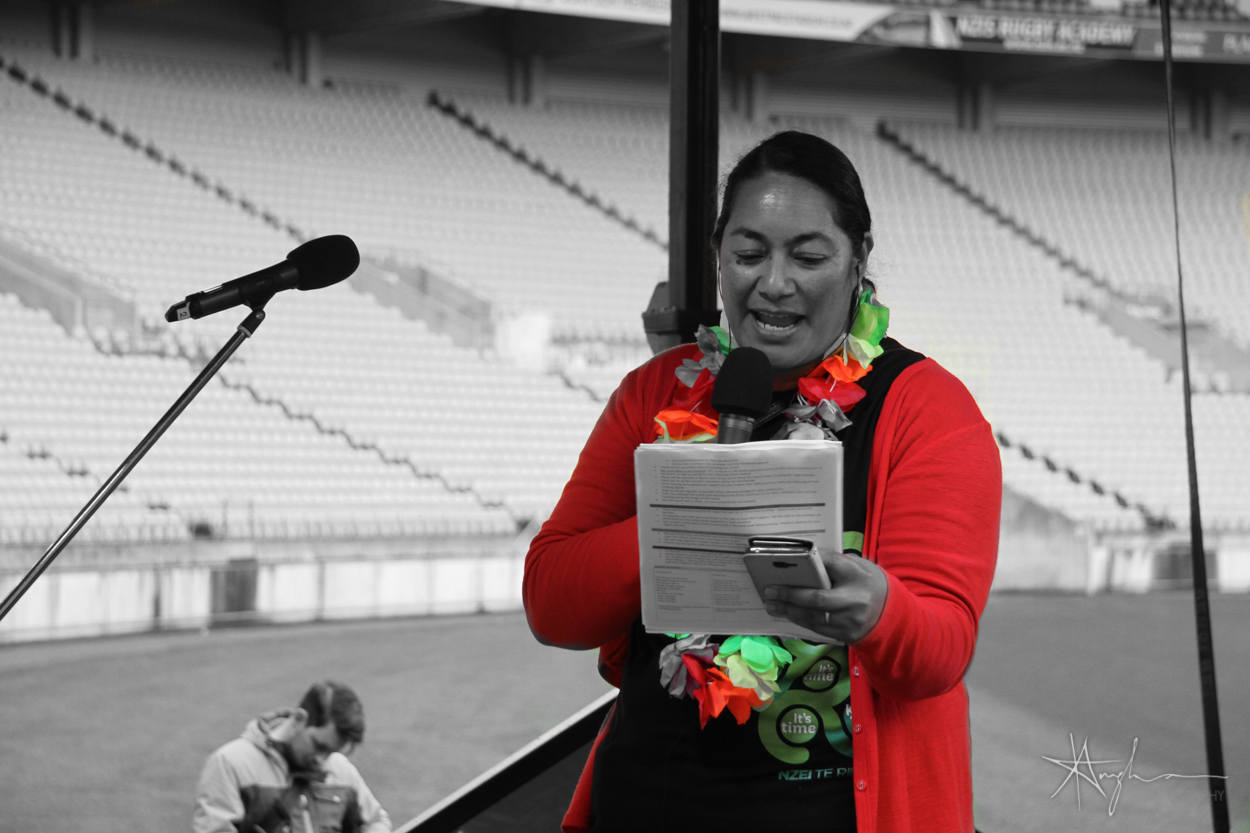
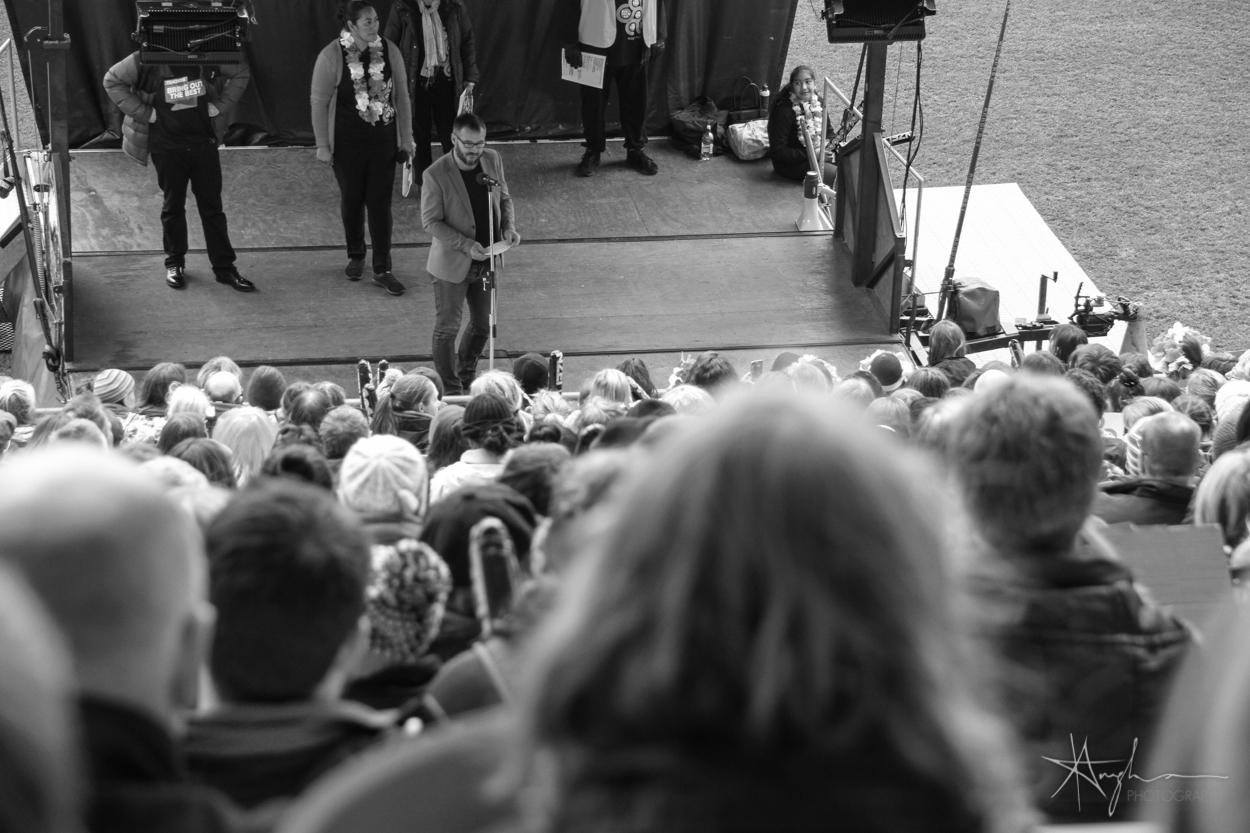
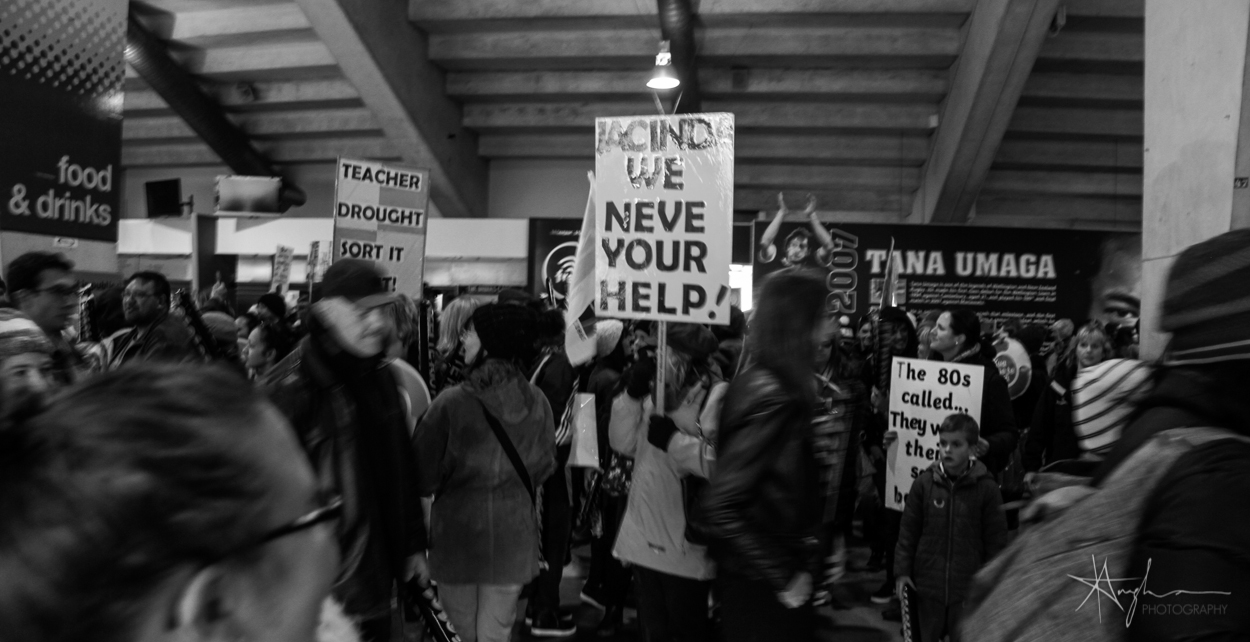
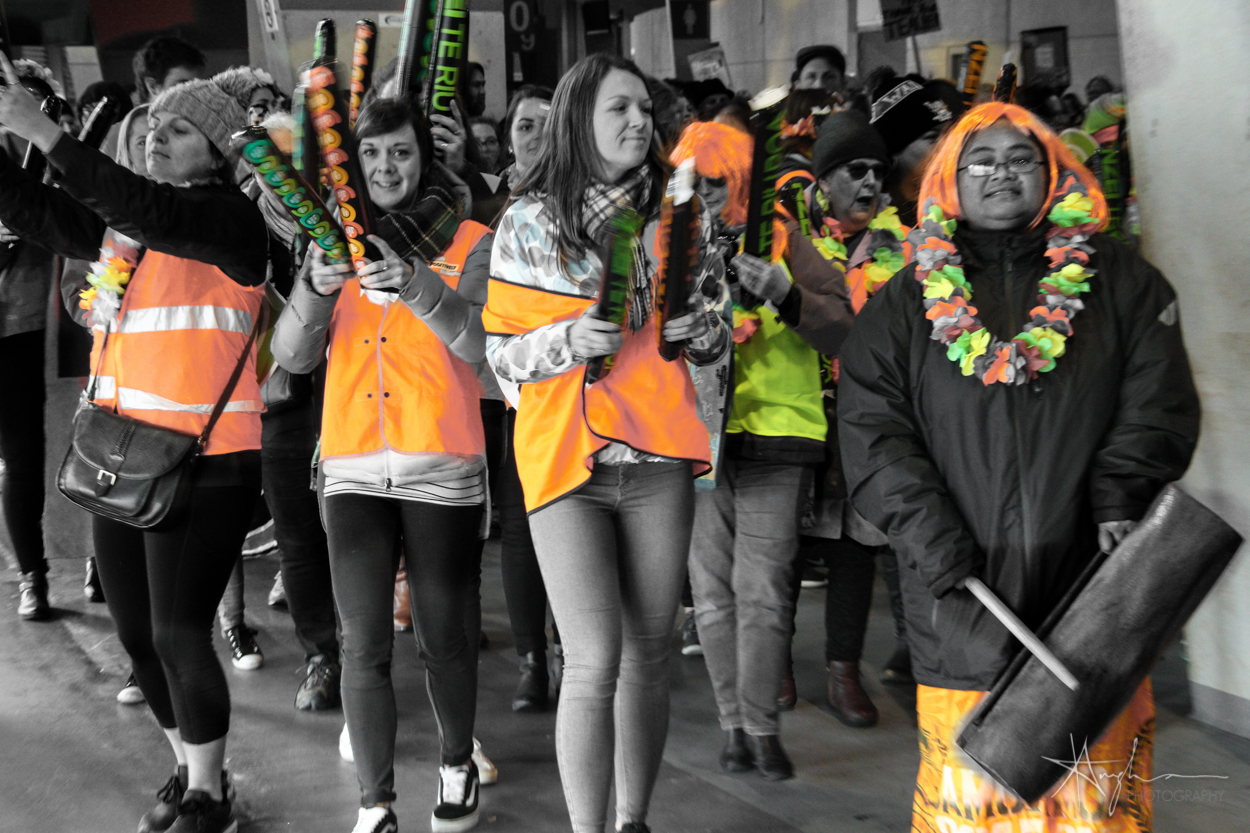
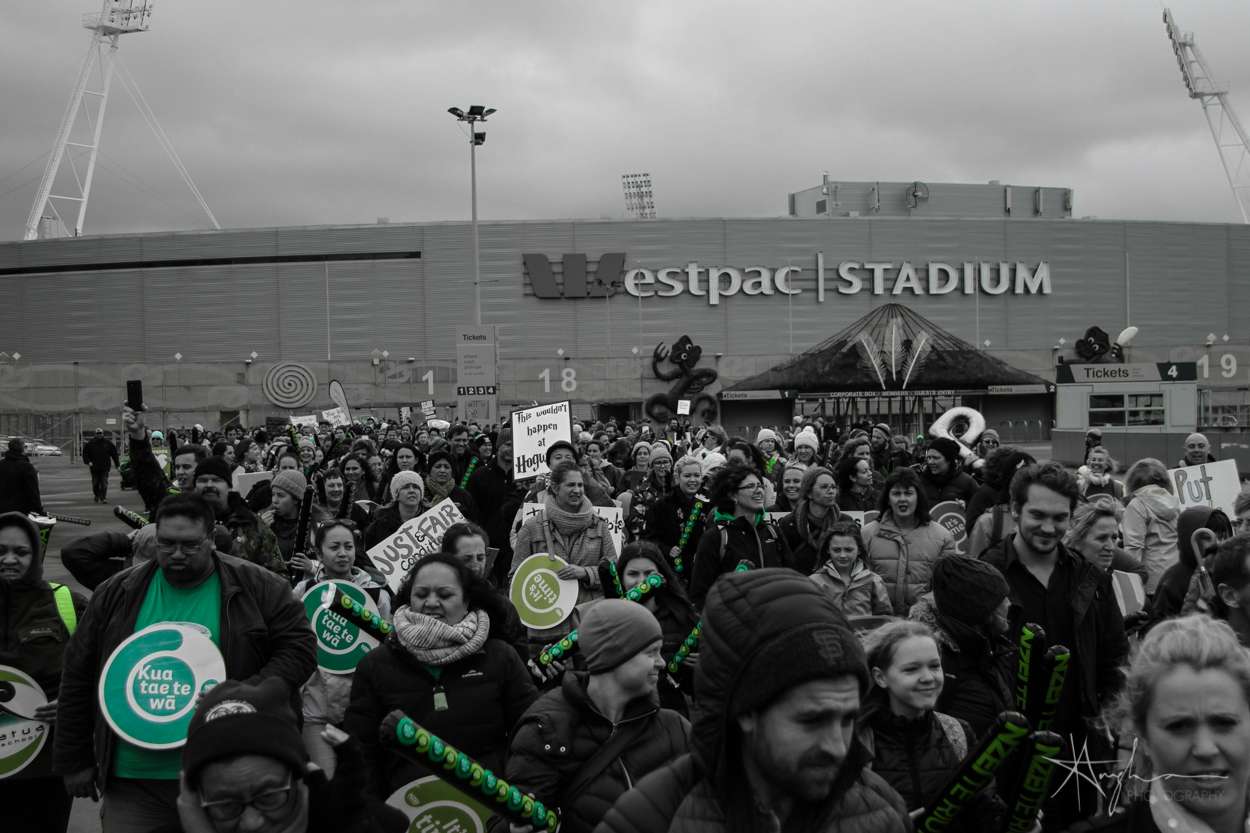
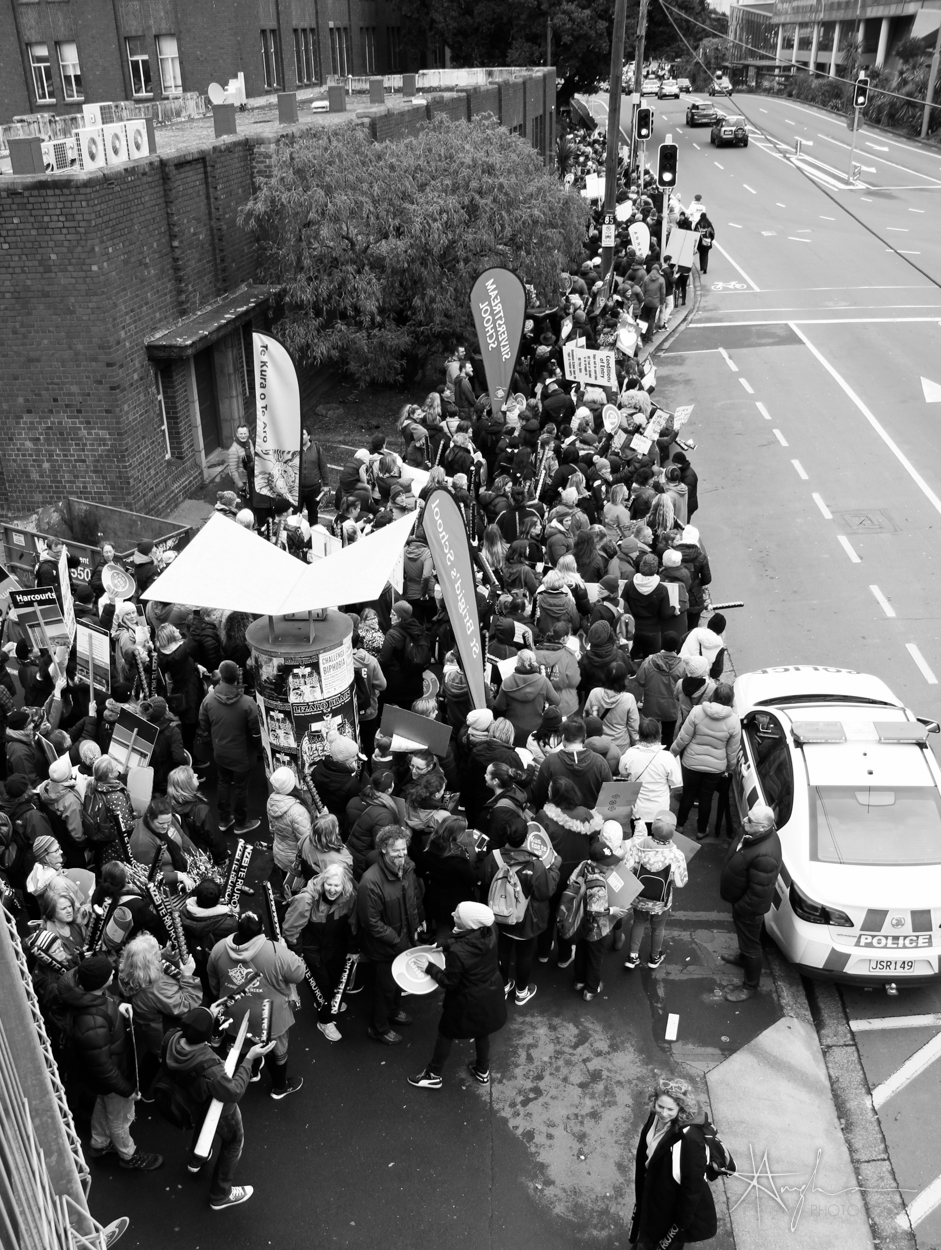
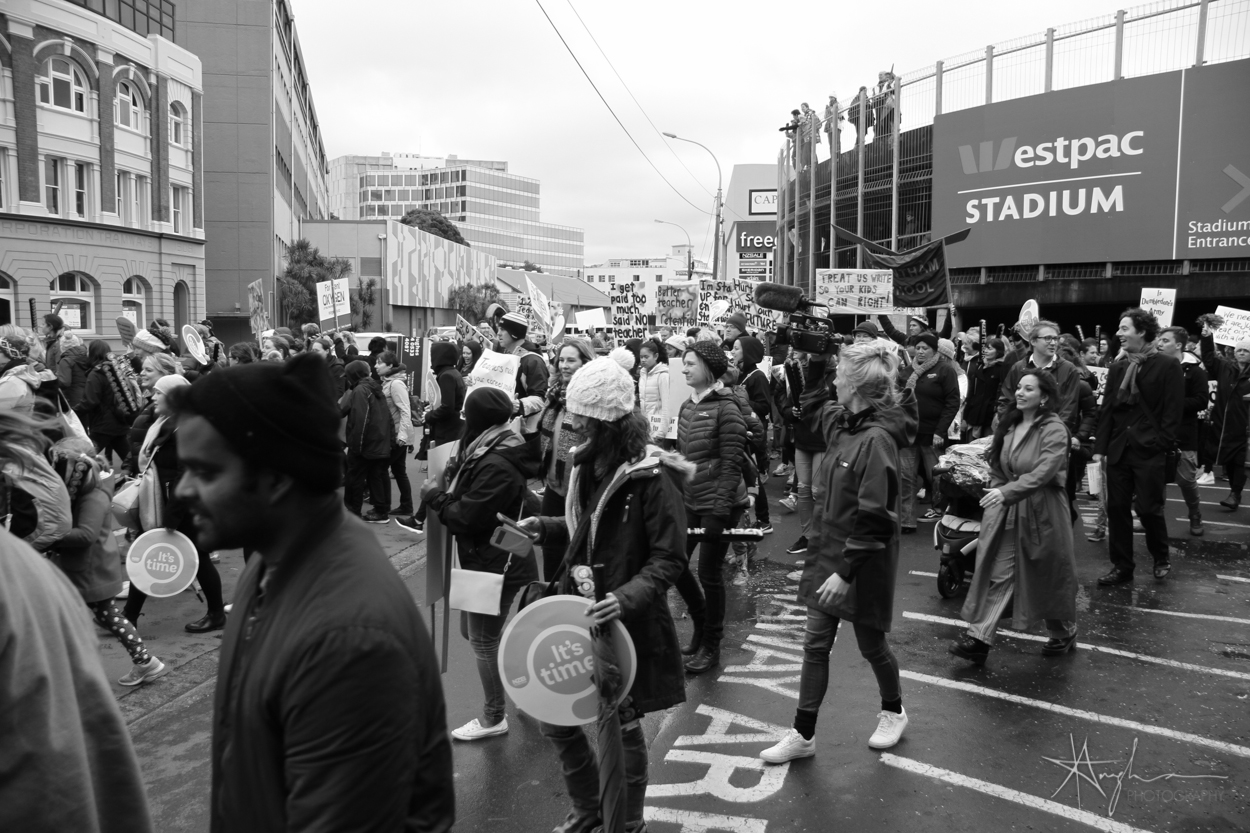
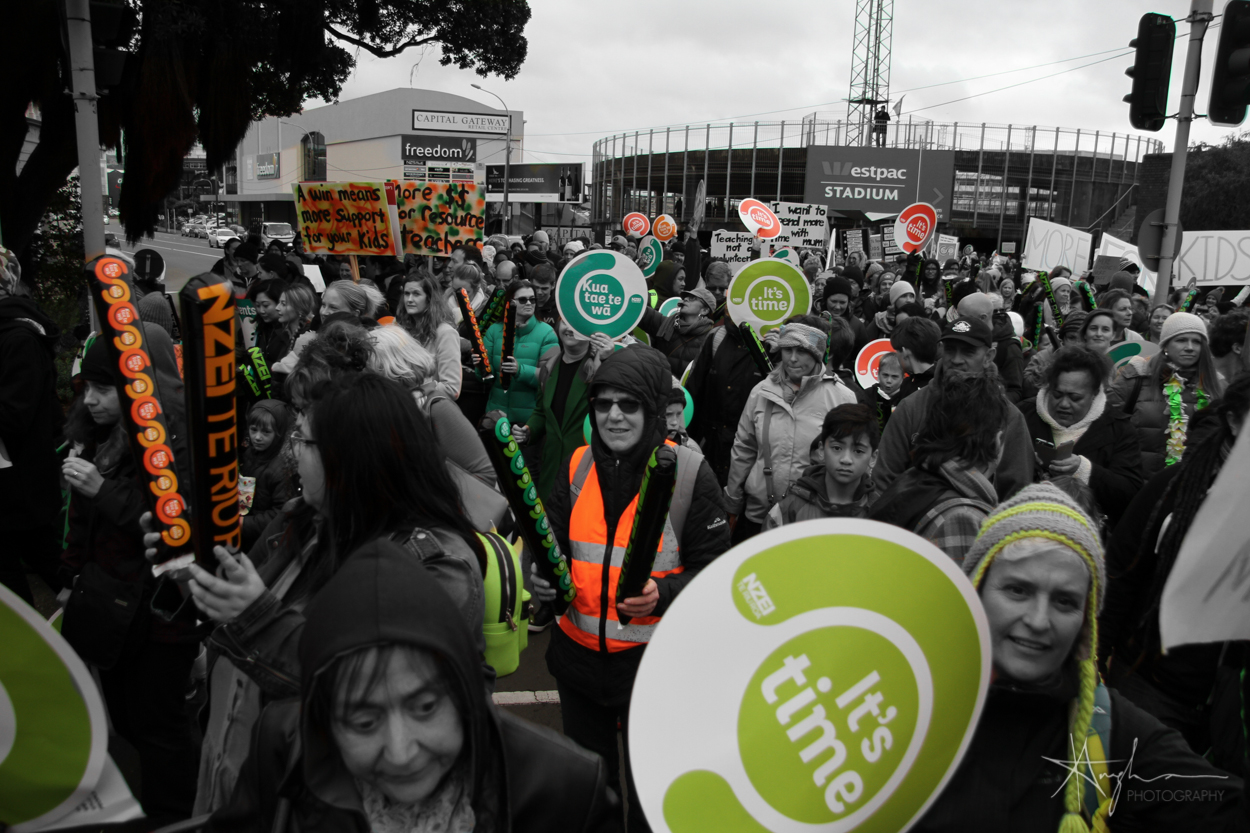
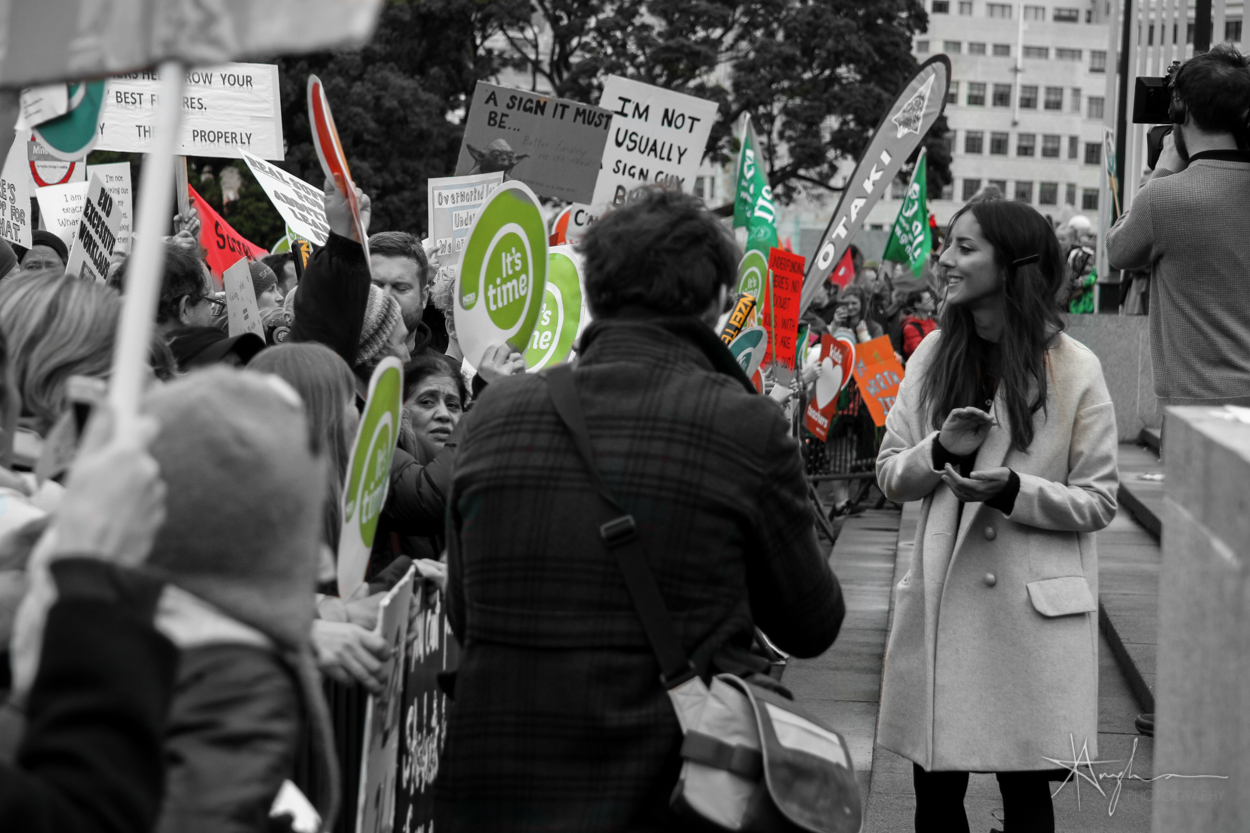
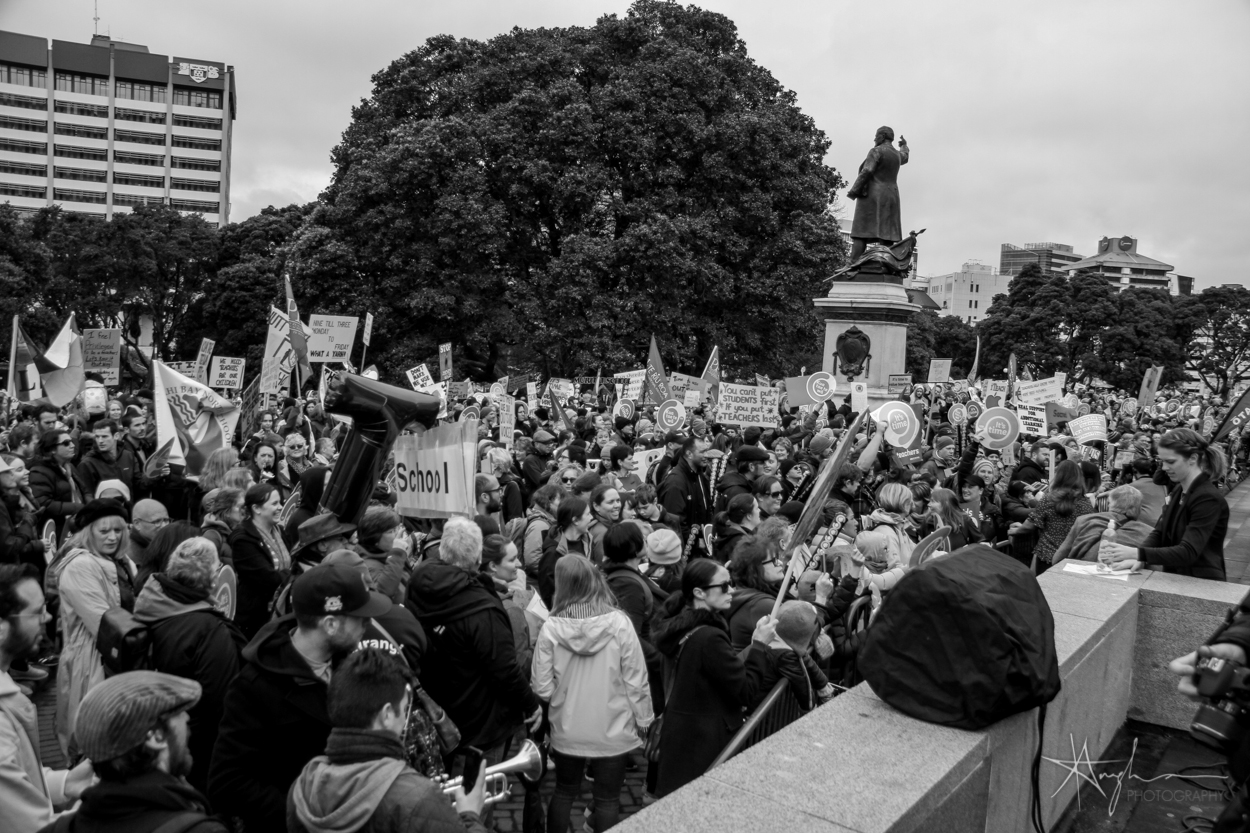
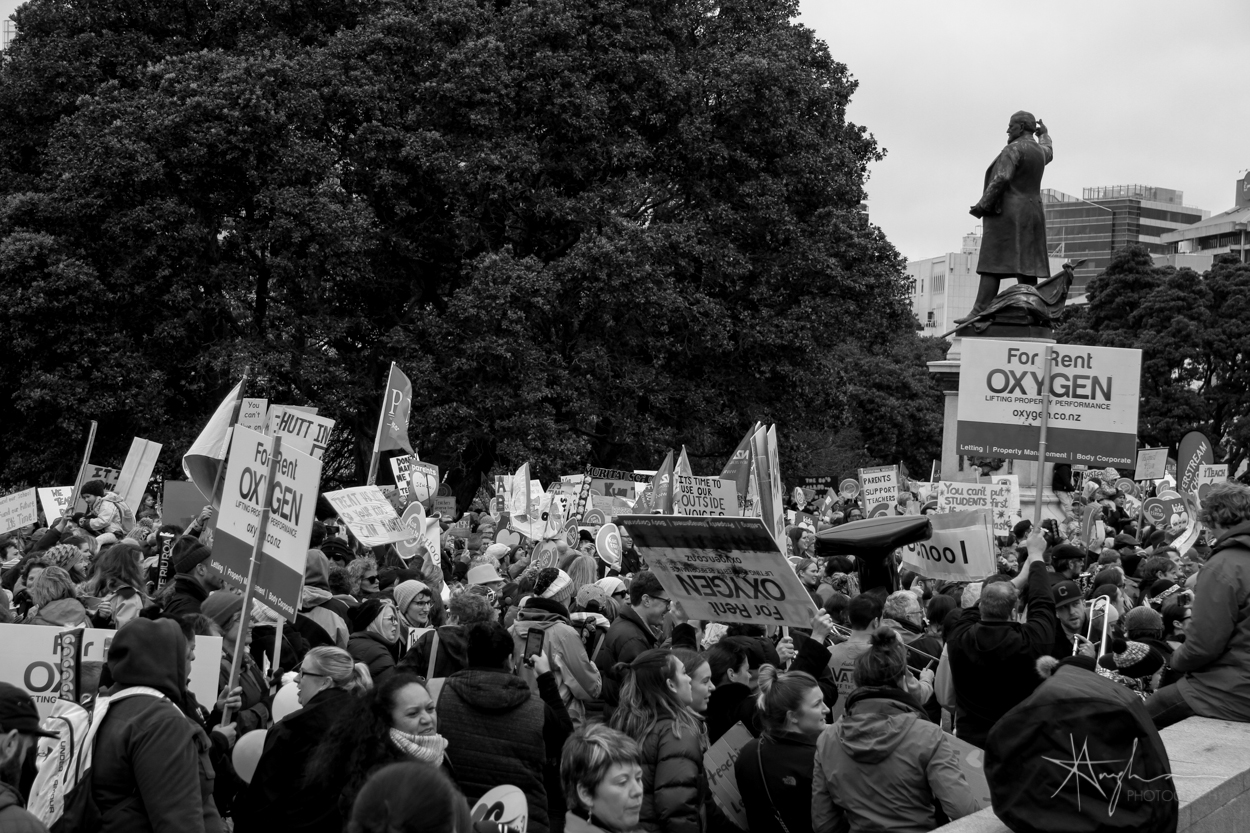
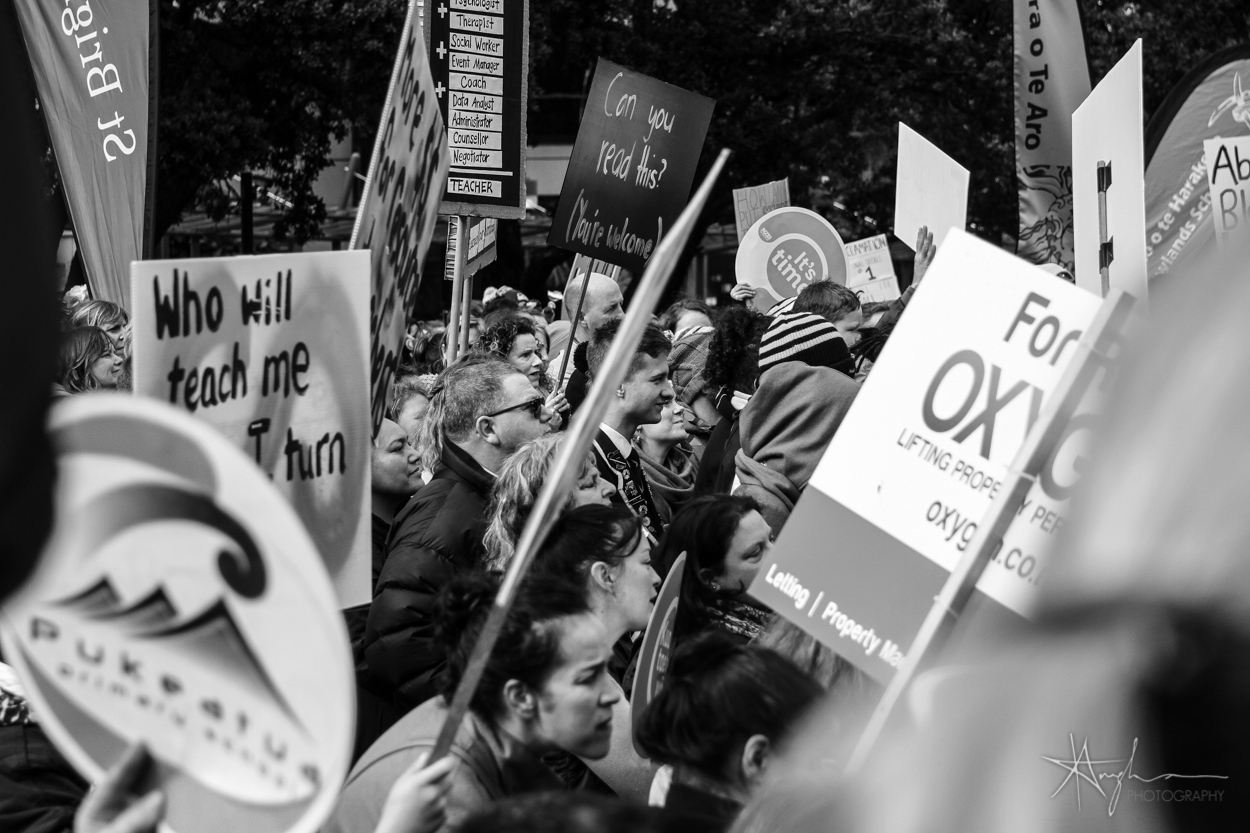
    ​School teachers and principals across the country have agreed to stage New Zealand’s largest-ever strike as negotiations with the Ministry of Education continue to stall.

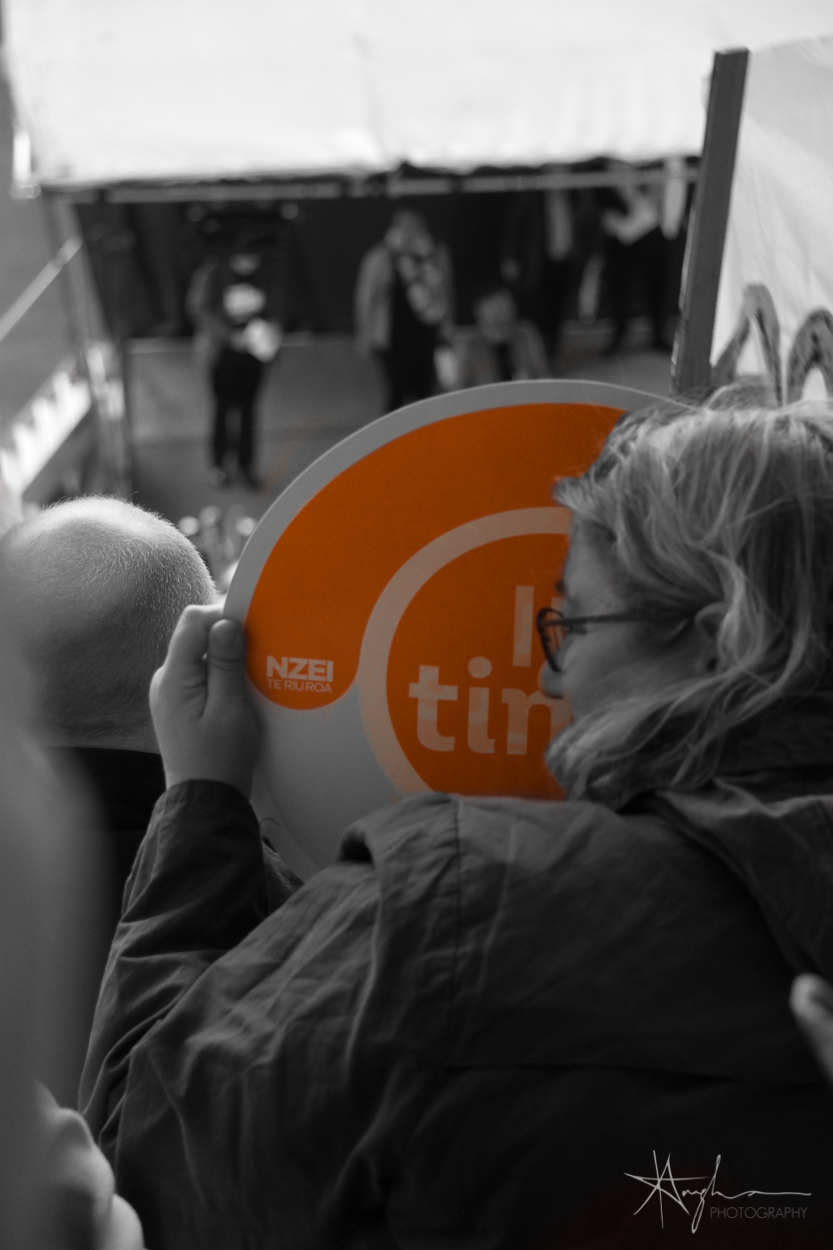
    The Post Primary Teachers’ Association (PPTA) and New Zealand Educational Institute (NZEI) Te Rui Roa announced the move on Sunday, and said rolling strike action was also possible.

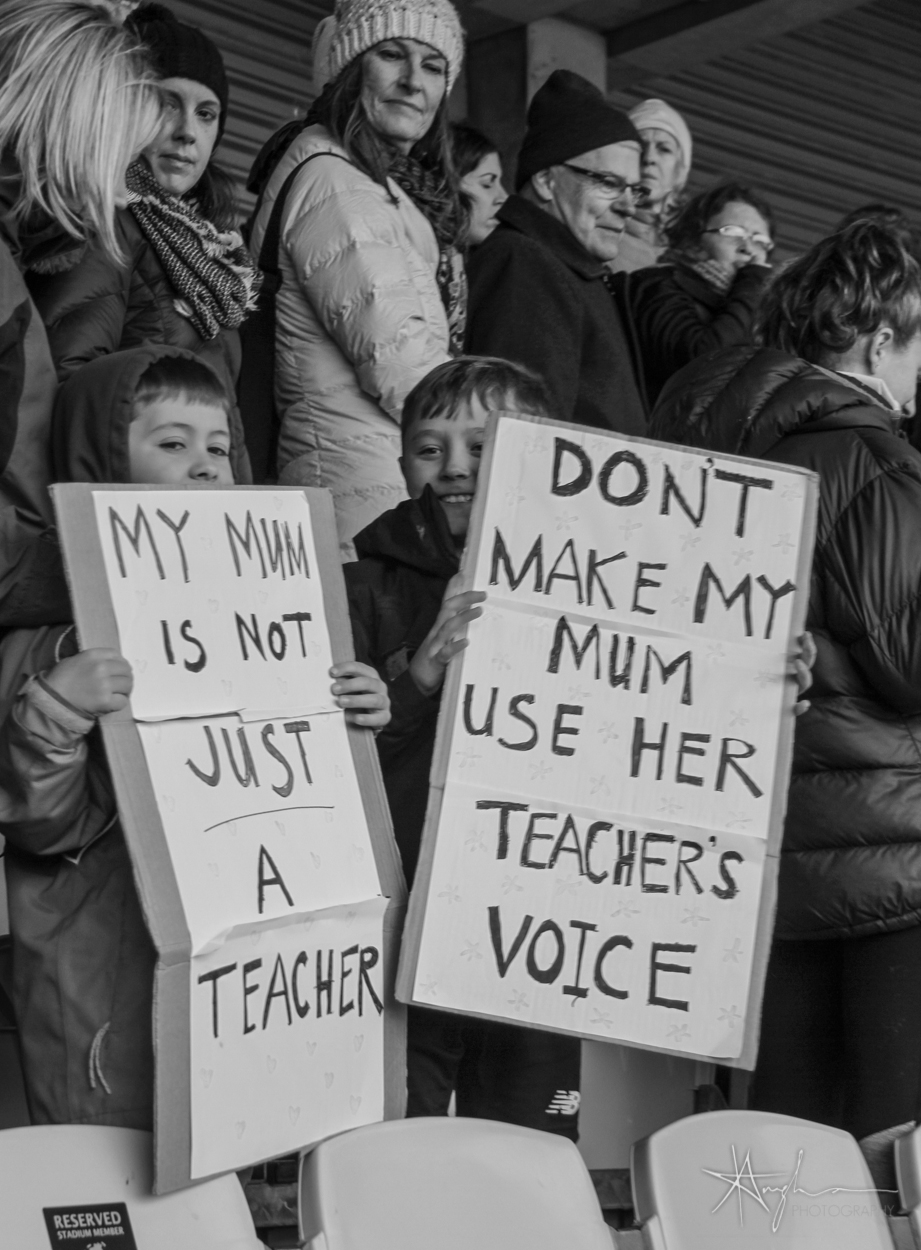
    Ths strike, on May 29, will involve almost 50,000 primary and secondary teachers and primary principals, and will affect hundreds of thousands of students in more than 2000 schools.

    https://www.stuff.co.nz/national/education/112655087/teachers-have-voted-to-strike-on-may-29


    The Conversation

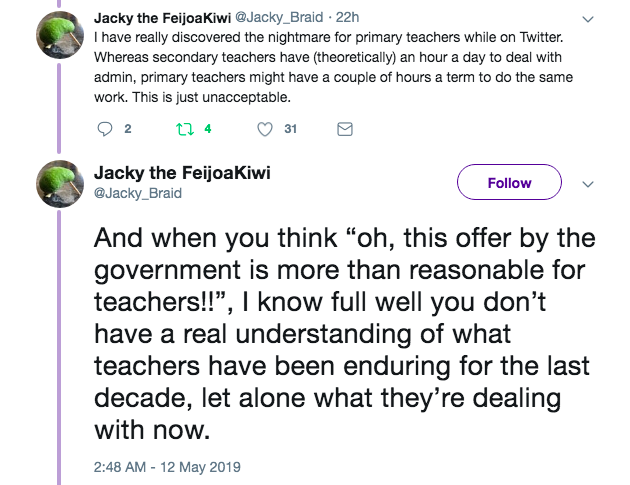
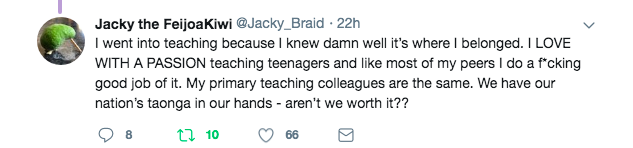
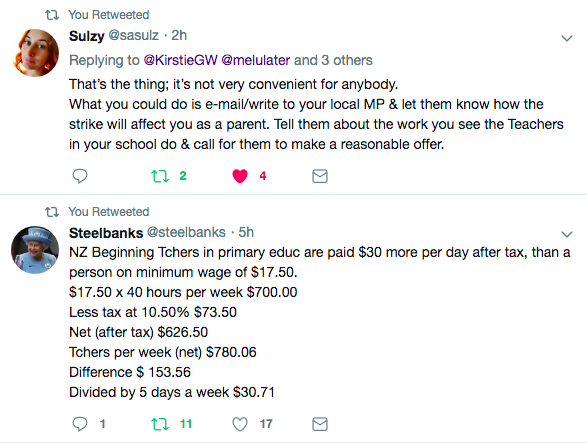
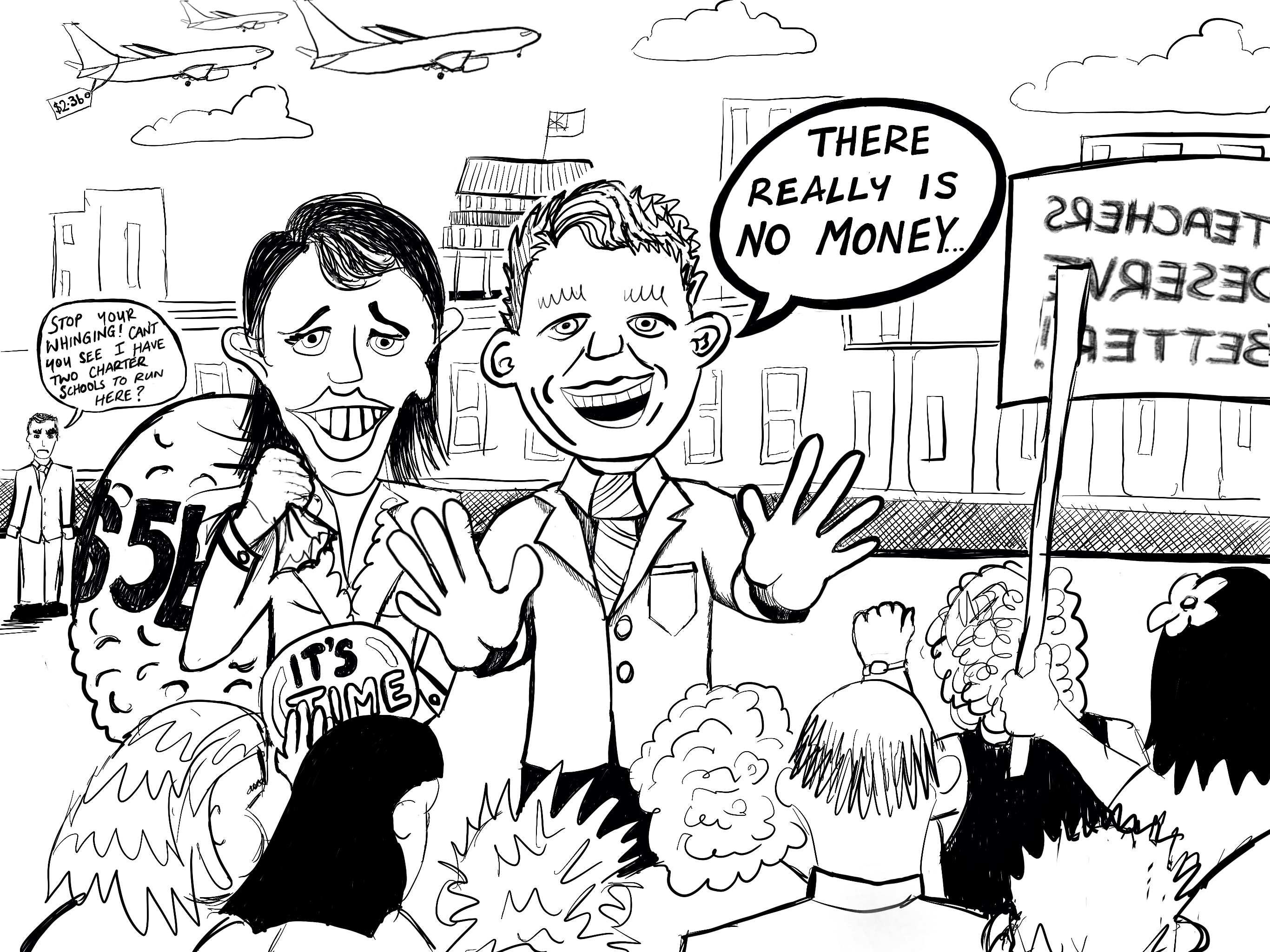
    Obviously there has been a lot of reaction to the recent vote to hold a mega strike, and a lot of this reaction has been documented on Twitter. I wanted to collect this reaction and keep a record of it in our blog. I have come to realise that I value the posts on this site, but often a lot of conversation happens on Twitter and then falls off into the Twittersphere.


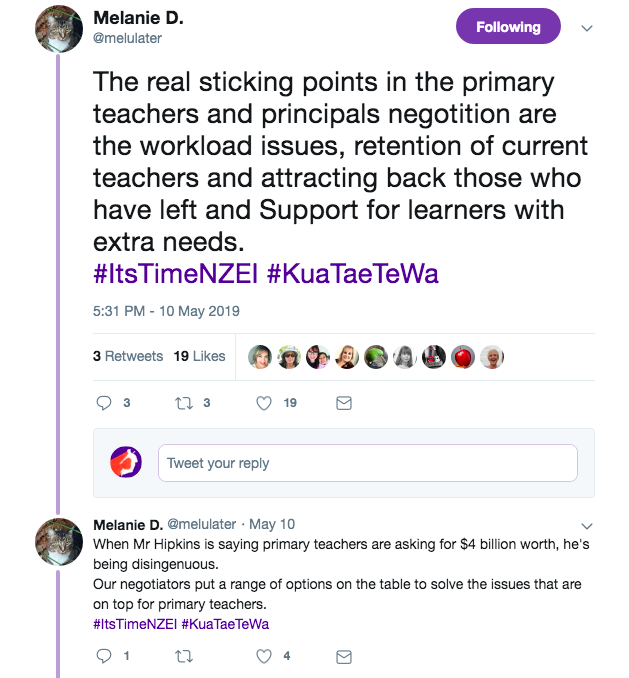
    • The crisis is real, and it’s spreading. And the more who leave, the more work has to be picked up by other all-ready-stressed teachers. And thus the crisis is exponentially growing. And all the government is prepared to do is start training replacements!?
    • In all of these pay negotiations, not once have teachers been asking for anything that is unreasonable… It’s not like we’re asking for a slushy machine in every school!
    • Come on … Make history. Be the one MP to stand up for teachers and get them what they deserve. Show the public the importance of education in this country. Go on. I dare you!
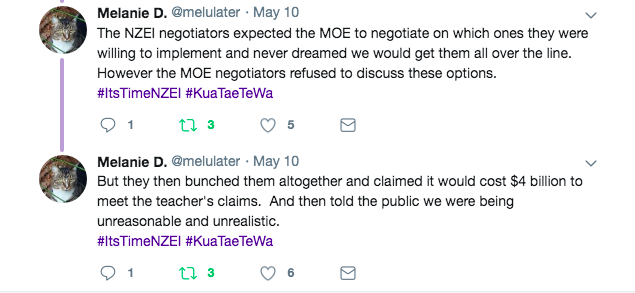
    • So it’s not that the government CAN’T meet what we’re asking for…. it’s that they WON’T.
    • Kinda think that the Teacher Unions need to start playing hardball. Indefinite strike would soon get some results. Look at the bus drivers….

    • Started putting my thoughts down about teacher workload into a tweet…. ran out of characters and lost all energy and enthusiasm for continuing. A story all too common for lots of teachers at the moment!
    • Essentially here’s what would solve a lot of problems: • Pay Teachers more, because we’re worth it and we deserve it. • Shrink class sizes, because with less students comes less work but more teaching. • More SENCO resourcing, because there are more needs than ever before.
    • Shrinking class sizes is key. Less reports to write, less assessments to do, less paperwork to compile. More time for each student. More genuine relationships. More teaching. More jobs available for the additional teachers that come back into the workforce!
    • For me; class size plays a huge role on the teacher. For the last few years I’ve consistently had over 31 students in my class. Believe me; when there are 6 away and the class is only 25; it makes a HUGE difference in the way the classroom feels, acts, and learns.
    • For me, having more time in itself doesn’t sort anything out; it means time out of class if anything. What I need is less students in front of me which will in turn give me more time for each one. It also lessens the time I need for assessments, reports, planning etc…. win win!

    • I left the union at the end of last year. Not regretting it. They should be doing a LOT more given the circumstances, and a clear plan seems to be lacking. Seem to be floundering in too many ideas rather than laying out a “game” plan for teachers and the government to follow!
    • So why did the Ministry turn up to the last round of negotiations with NZEI with no new offer? Took active teachers and leaders out of their classrooms, made them organise relievers, sort out transport… for what!? No new offer!? How disrespectful.

    • Let’s face it. I am a teacher. No government is ever going to be able to pay me what I’m worth. I knew this going into the profession. But come on… at least you could try and show me I’m valued
    • Quick question … Why has class size not been a major negotiating point as a way of reducing workload? Teachers are definitely asking for this!!!

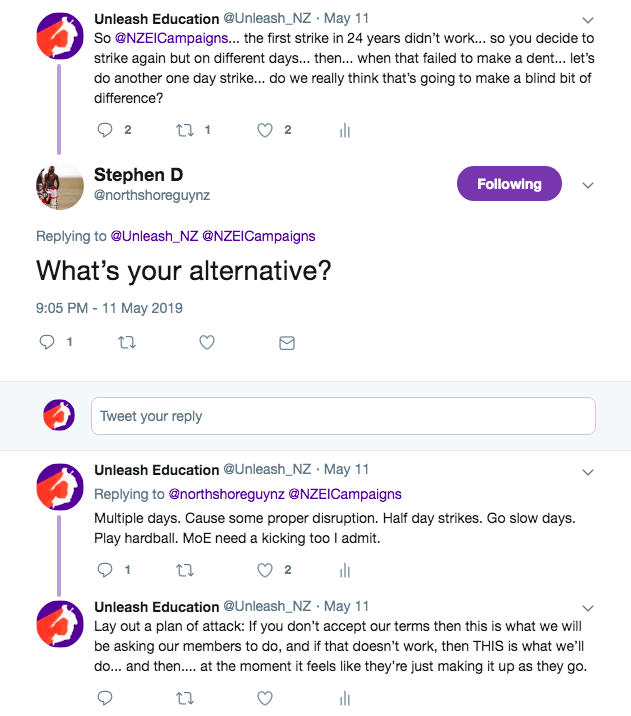
    • So … the first strike in 24 years didn’t work… so you decide to strike again but on different days… then… when that failed to make a dent… let’s do another one day strike… do we really think that’s going to make a blind bit of difference?
    • Multiple days. Cause some proper disruption. Half day strikes. Go slow days. Play hardball. MoE need a kicking too I admit.
    • Lay out a plan of attack: If you don’t accept our terms then this is what we will be asking our members to do, and if that doesn’t work, then THIS is what we’ll do… and then…. at the moment it feels like they’re just making it up as they go.


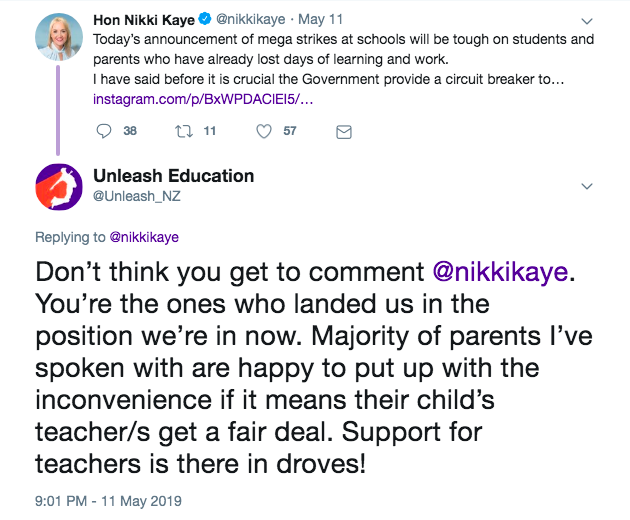
    • Don’t think you get to comment . You’re the ones who landed us in the position we’re in now. Majority of parents I’ve spoken with are happy to put up with the inconvenience if it means their child’s teacher/s get a fair deal. Support for teachers is there in droves!
    • But seeing as you do get to comment; what would National’s offer be if you were still in Govt?
    • I also find your teacher ratio comments hard to believe, given Hekia wanted to raise them through the roof. If I were you I’d be offering apologies and then begin making things right rather than trying to blame the ones who came after you for the monster you created.

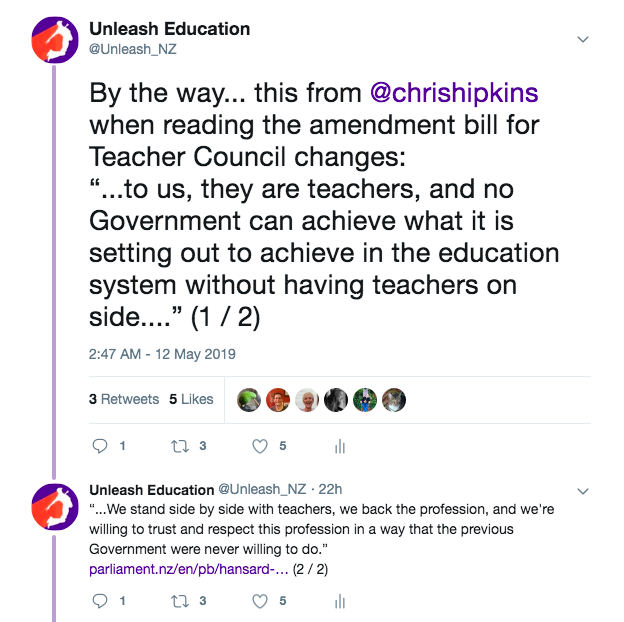
    • By the way… this from when reading the amendment bill for Teacher Council changes: “…to us, they are teachers, and no Government can achieve what it is setting out to achieve in the education system without having teachers on side….” (1 / 2)
    • “…We stand side by side with teachers, we back the profession, and we’re willing to trust and respect this profession in a way that the previous Government were never willing to do.” (2 / 2)


  • Secondary School Teachers to Strike

    Secondary teachers will go on strike next month after “running out of patience” with collective contract negotiations, their union’s president says.

    Thousands of teachers will walk off the job in a national day of action on April 3.

    At a Post Primary Teachers’ Association (PPTA) meeting in Rotorua on Saturday, president Jack Boyle said teachers hoped to receive “a realistic offer” from the Government before then. More talks are planned for March 7 and 8.

    “If we don’t, we will use the day to publicly protest the lack of progress,” Boyle said.

    “We have been negotiating with Government for a settlement to our collective agreement since August last year and our members are running out of patience.”

    In November, PPTA members voted against the Ministry of Education’s second offer of a 9 per cent pay rise over three years.

    Members authorised a one-day strike at that time, but were willing to call off the strike if they received a better offer.

    Read Full Article: https://www.stuff.co.nz/national/110979827/secondary-school-teachers-to-strike


  • Understanding the Teacher Crisis

    The Side Eye: Everything to Everyone – understanding the teacher crisis:

    A unique take on the Teacher Crisis put into a visual narrative succinctly and accurately by Toby Morris.

    Be sure to check it out over at The Spinoff – The Side Eye.

    For the rest of the story, please head over to the original article here.

    https://thespinoff.co.nz/society/the-side-eye/03-12-2018/the-side-eye-everything-to-everyone-understanding-the-teacher-crisis/?fbclid=IwAR04F0_Wj102NUYIFSY1Th7SJhbX99I83ZLJJwidKkSEwdKfAnvlkLkycqY

  • Why didn’t teachers strike under National? They were fighting to save education itself.

    Earlier this week a trade unionist wrote for The Spinoff about the rise of public service strike action under the Labour government. Today former Green Party education spokesperson Catherine Delahunty shares her perspective.

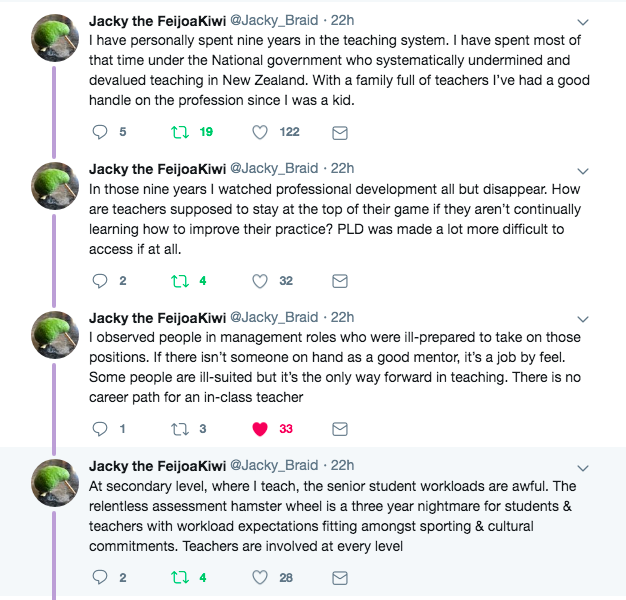
    I have heard more than a few complaints that teachers did not strike under National, so why are they doing it now? As education spokesperson for the Green Party for nearly nine years, I spent many hours with teachers and their unions, examining legislation which undermined the quality public education system. It wouldn’t be an exaggeration to say that over the last nine years the teaching profession was punchdrunk by a sustained political assault on their mission. Hence the exodus, and the struggle to replace the workforce. The recent teachers strikes are a last-ditch effort from a profession with legitimate expectations of fundamental change, relief and reward.

    At the very beginning of the Key government we went straight into urgency to debate their National Standards legislation. This was a disastrous policy which attacked the core principles of teaching and immediately teachers and their unions were forced into battle. Some schools resisted it, and many protested, but the policy of measuring and comparing primary students and schools via league tables became the norm. The damage was done. Remember: National Standards was never debated or discussed with schools and was passed into law under urgency.

    Then came Education Minister Hekia Parata’s attempt to increase class size, on the grounds that size doesn’t matter. This was resisted by parents as well as teachers, who knew that larger classes would mean teachers had less time with each child. The combined effort of both groups led to a humiliating back down by the minister, but the fight took up a lot of energy. In the middle of these debacles the Christchurch earthquakes struck and schools became hubs for communities and for children in shock. The government took the opportunity to impose a reform on Christchurch schools which went way beyond closing or repairing the damaged schools and a battle for survival took place, characterised by official mismanagement and insensitivity towards a traumatised school network.

    But this was just the beginning of the relentless changes and ideologically driven “reforms”. The charter schools championed by ACT and National were provided with resources other schools could only dream of and a range of experiments of highly variable value were begun. Military school and privatisation at public expense were put in the same basket as tangata whenua efforts for educational self determination, while 90% of Māori students remained in underfunded local English-medium schools. Teachers’ major focus was privatisation rather than wages and conditions.

    This all happened while house prices in Auckland went nuts and teacher aides did not get centralised wage funding. Early childhood education was a privatised mess and franchises created baby barns with government encouragement, while Kohanga Reo and Playcentre struggled.

    At the Education and Science Select Committee some seemingly random government bills kept turning up but they all facilitated reduced student and teacher representation in the tertiary sector, school boards being able to run several schools, the replacement of the Teachers Council by a new less representative body, the Teachers Code of Ethics becoming the Code of Conduct… on it went. This all took place in a global context of educational “reform” known as the GERM (Global Education Reform Movement), which led to a rewrite of the Education Act and an Update Bill to incorporate the COOL (Communities of Online Learning) concept – basically a digital replacement of the teacher.

    The actual rewrites were without vision and did not reflect many student or teacher ideas or a common purpose that lifted the debate. They generated deep concern from people like the Children’s Commissioner and the Ombudsman from a children’s voice and rights perspective. Meanwhile the learning support system continued to be broken and teachers were leaving the profession in despair.

    Read original article

  • Sufferage: The Sideways Movement

    This year we celebrate 125 years since the Women’s Suffrage movement. In New Zealand, Kate Sheppard lead the charge to get women the vote.

    “Speaking for a new generation, she argued, ‘We are tired of having a “sphere” doled out to us, and of being told that anything outside that sphere is “unwomanly”.’

    Sheppard travelled the country, writing to newspapers, holding public meetings and lobbying members of Parliament. Opposition was fierce. As Wellington resident Henry Wright wrote, women were ‘recommended to go home, look after their children, cook their husbands’ dinners, empty the slops, and generally attend to the domestic affairs for which Nature designed them’; they should give up ‘meddling in masculine concerns of which they are profoundly ignorant’.

    In 1893 Kate Sheppard and her fellow suffragists gathered the signatures of nearly 32,000 women to demonstrate the groundswell of support for their cause. A 270-m-long petition – then the largest ever presented to Parliament – was unrolled across the chamber of the House with dramatic effect. Despite the opposition of Premier Richard Seddon, the Electoral Act 1893 was passed by both houses of Parliament and became law on 19 September. The news took New Zealand by storm and inspired suffrage movements all over the world.”

    NZ History

    But how far have we actually come. I’m not talking about a bunch of young women holding their own comedy special on TV3 and making it out that they still have it bad or celebrating their womanhood.

    I’m talking about two unions representing jobs that are mainly made up of women that both decided to go on strike this year. In August, NZEI members voted to strike amid their pay negotiations. 75% of Primary school teachers are female (2017, Education Counts). A month earlier, the Nurses also went on strike. 95% of Nurses are female (2015, NZNO) I’m talking about both these professions, predominantly female, feeling like they are under-valued and over-worked in New Zealand society today.

    I’m not for a second suggesting that they are under-valued because they are traditionally and predominantly female based professions. I’m just saying, it is a very interesting point of time in our history, and it might pay to reflect and review where we are as a country a little bit further than pretty smiles and celebrations on the news channels and hyped up comedy galas featuring female comedians.