Tag: support

  • Daily 5 – Reading or Writing Student Conference

    I have just made this resource to assist my Teacher Aide(s) in meeting with regular students during Daily 5. It outlines various questions and learning based conversations to have as to what the student has chosen to meet with them about (either Reading or Writing). This helps support the student to make choices, and depending on what stage they are up to with their writing or reading determines the kind of responses and coaching the teacher aide will provide.

    While this has been developed for a Teacher Aide to use, it can also be used by Teachers as well. It largely follows the same kind of conference I have with my students when I meet with them.

    The idea behind this would be to fold it in half and laminate it. Then it can sit in a folder in class, or be stuck to the wall somewhere and depending on what the student chooses, the resource can just be flipped to the relevent side. It can sit along side the Teacher or Teacher Aide as they conference with the student.

    Teacher Aide Daily 5.pdf (143 kb)


  • How can teachers support vulnerable children at school?

    In almost every class, there will also be those who find learning a challenge – the children who perhaps cause teachers to wake in the night, or to feel that they are having to manage certain behaviours beyond their usual areas of expertise.

    In my role working to improve the educational outcomes of vulnerable children and young people – specifically those in care and looked-after by the local authority – I have become aware that many will not be in a good place, emotionally, socially or developmentally, to learn. Although the children I work with represent the tip of the “vulnerable” iceberg, there are numerous other children who are on protection plans or identified as children in need. There will be those, too, who are not known to any service but come to school every day having faced significant hardships.

    Teachers I work with often report that schools’ more general behaviour policies don’t seem to work for these particular students – so what can we do to best support these children? Here are some pointers.

    Focus on why

    Behaviour is always a communication, even though we may not always realise it. Imagine a really bad day – you go home and within minutes you find yourself arguing with someone in your family. You probably didn’t plan to take out your frustration on those closest to you, but that’s effectively what happened.

    Many vulnerable students are likely to have had times when they haven’t felt safe – and end up reacting to all sorts of triggers in order to keep themselves safe or feel safe (which of course may be very different things). Similarly, they’ve often experienced multiple rejections.

    Many will have accompanying attachment issues and sometimes will “reject” before they can be rejected. They may push you away because this may be less painful than allowing you to reject them. Or it may be that certain behaviours give them access to a person they are developing an attachment to, so their message is “I need that person”. By acknowledging this, and recognising that what a student needs more than anything is to build relationships that help them feel safe, we may be able to adjust our reactions appropriately.

    Consider their age and stage

    Social and emotional levels of development and maturity in vulnerable children often won’t match their chronological age. In schools, we’re usually good at supporting children when they have gaps in their academic learning – and many of the vulnerable students will have these – but they will almost all have some gaps in their social and emotional development.

    They may not have developed the skills their peers have, and also by virtue of their experiences have developed certain “street-wise” skills that can lead a teacher to think they are much more mature than they are.

    Read more here.

    Source: https://www.theguardian.com/teacher-network/2017/sep/28/how-can-teachers-support-vulnerable-children-at-school

  • Welsh schoolchildren to receive early help with mental health problems

    Children with emotional and mental health problems are to receive early help at school from teams of experts as part of a “unique” initiative being set up by the Welsh government. Pupils at more than 200 schools in Wales will be able to access on-site help as part of the £1.4m pilot scheme.

    The Welsh government’s announcement comes as concern grows about the ability of schools to look after children with mental health problems. Research published last week found that more than half of primary school teachers in England do not feel adequately trained to support pupils with mental health problems.

    NHS data for England gathered by the Guardian showed girls and young women are experiencing a “gathering crisis” in their mental health linked to conflict with friends, fears about their body image and pressures created by social media.

    The Welsh government said on Monday that its scheme was unique in the UK. It will cover 28 secondary schools, six middle schools and 190 primary schools in three pilot areas in north-east, south-east and west Wales.

    Dedicated child and adolescent mental health services (CAMHS) practitioners will be recruited to work with pilot schools.

    The practitioners will provide teachers with on-site help and advice to try to ensure pupils experiencing difficulties such as anxiety, low mood and compulsive self-harm or conduct disorders receive early help in schools from trained staff. It is not known yet how many staff will be recruited.

    The Welsh health secretary, Vaughan Gething, said: “One in four people in Wales will experience mental health problems at some point in their lives. Getting the right treatment at an early stage can in many cases prevent long-term adverse impacts.

    Read more here.

    Imagine if the NZ Government had the same sort of commitment?

    Source: https://www.theguardian.com/uk-news/2017/sep/25/wales-schoolchildren-receive-early-help-mental-health-problems

  • Dyslexia in New Zealand Schools

    The current support for dyslexic students in New Zealand schools is a joke. An absolute joke.

    When there is a reportedly 7% of students in New Zealand Schools have Dyslexia, it doesn’t sound like much. However, in a class of 28 students (the funded class size), that’s 2 students who will be struggling with dyslexia. Statistics say that as many as 20% of students will have learning disabilities, and it’s been noted that overall, dyslexia makes up about half of those disabilities. This means it could be even 3 students in your class that will be struggling with dyslexia.

    I also suspect, that the aforementioned 7%-10% is just those that have been diagnosed, and as a teacher, there are many more that are never picked up for a number of reasons.

    That’s not good enough.

    What’s more, is the Ministry of Education, Ministry of Health, and the Government all turn a blind eye about dyslexia support in schools – mainly because if they admit that it is a problem in New Zealand schools that dyslexia affects student’s learning, then they’ll be called upon to do something about it and support schools to address the problem. That comes at a cost to the Government. Essentially, what this has led to is a bunch of private organisations filling this void. However, this of course, comes at a cost.

    From the figures I have heard, to just get assessed for dyslexia, it will cost schools or families anywhere from $250-$400. This goes some way to explaining why so many more students are not picked up and struggle their way through the system with little or no support for them, their teacher, or their parents.

    Go figure.

    As a teacher, I am passionate about this. Not to find a reason for under-achievement or raise excuses, but to get support for these students who are struggling. It frustrates me to see these kids come in, and feel like I have nowhere to turn to get support for them, and if there is, how it always seems to come to a dead-end.

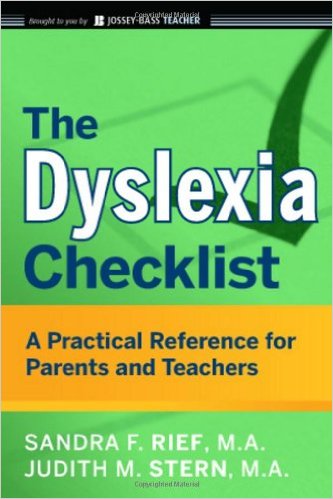
    In trying to understand dyslexia a bit more, and hopefully be able to support dyslexic students within my classroom myself (seeing as I’m getting no support), I have purchased a couple of books. One is ‘The Gift of Dyslexia’ by Ronald D. Davis (which I have leant to a friend when her child was diagnosed), and the other is ‘The Dyslexia Checklist’ by Sandra F. Rief and Judith M. Stern.  Hopefully they both offer some insight into how I can better support learners with dyslexia in my classroom.

     

  • How should teachers be rewarded?

    Education reformers (or deformers) have begun using the idea of ‘rewarding’ good teachers to whittle out the ‘bad’ teachers by using student data, achievement rates, and other variables that are almost completely removed from the ability of a teacher to effectively teach. The notion of ‘reward’ is hard to argue against. Yes – good teachers should be recognised for their ability.

    But should they.

    I read a quote by Alfie Kohn. It reads like this:

    “So how should we reward teachers? We shouldn’t. They’re not pets. Rather, teachers should be paid well, freed from misguided mandate, treated with respect and provided with support they need to help their students to become increasingly proficient and enthusiastic learners.”

    The quote inspired me so much, that I turned it into an impact graphic. I added some of my own personal thoughts on the right hand side. Please feel free to download and distribute the graphic, tweet it, facebook it, share it on pinterest; whatever you need to do to spread the word.