Tag: union

  • Valuing Teachers: Teacher Salaries Compared

    A pay deal offered to teachers would put some among the country’s top earners.

    Teachers are stuck in a stand-off with the Government over its latest pay offer.

    What’s been offered – and rejected – looks something like this.

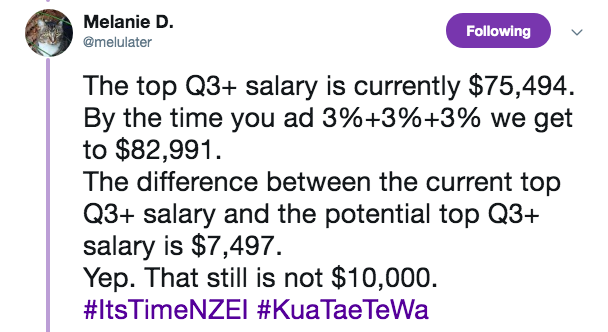
    Primary teachers with a degree, or advanced diploma, would have their base salaries increase to a range of $52,429 to $82,992, from $47,980 to $71,891 currently. Primary teachers with teaching qualifications and a specialist subject degree would get a bit more — $54,186 to $85,481.

    A beginner secondary teacher’s base salary would increase from $51,200 to $55,948 if they were to start teaching in 2021.

    More than 10,000 primary teachers, or about a third, get more than the top of the base scale (currently $71,891) because they receive extra payments in recognition of management or leadership responsibilities.

    The latest rejected offer would put a primary teacher with one unit for extra responsibilities at $89,481 a year by 2021.

     Almost 60 per cent, or 12,000 secondary teachers, are paid above the top of their base scale.


    Full Article: https://www.stuff.co.nz/business/113366626/valuing-teachers-does-pay-deal-stack-up

  • A Twitter Conversation: May 2019

    A Twitter Conversation: May 2019

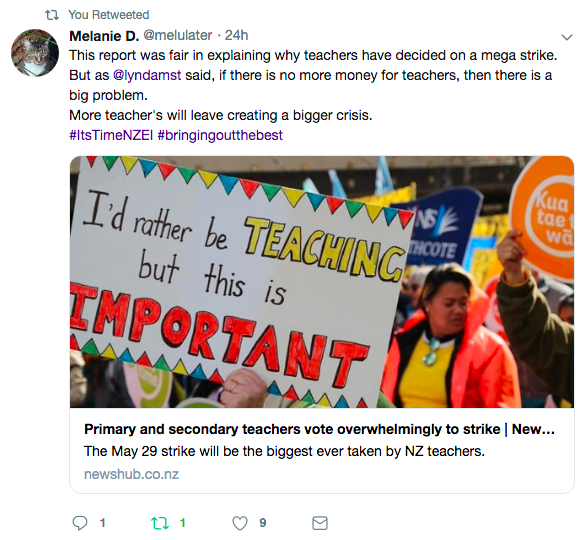
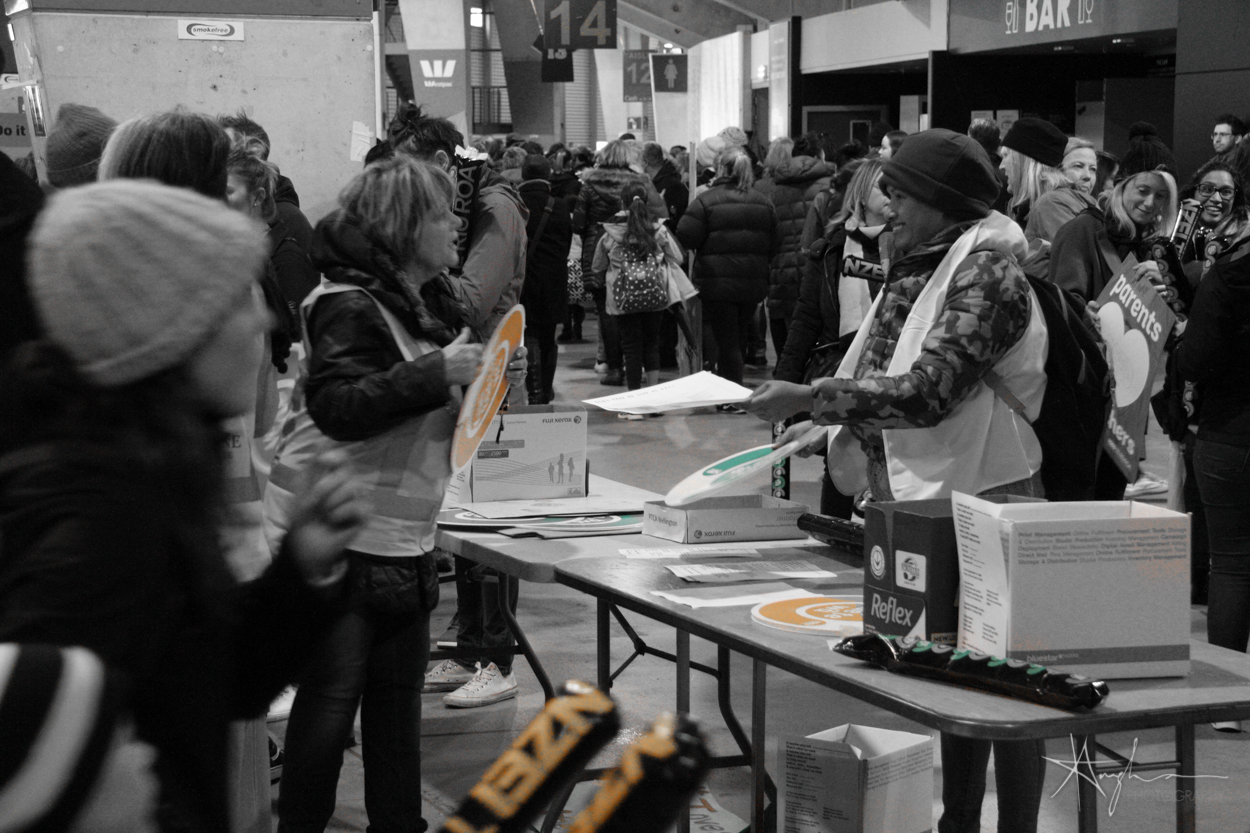
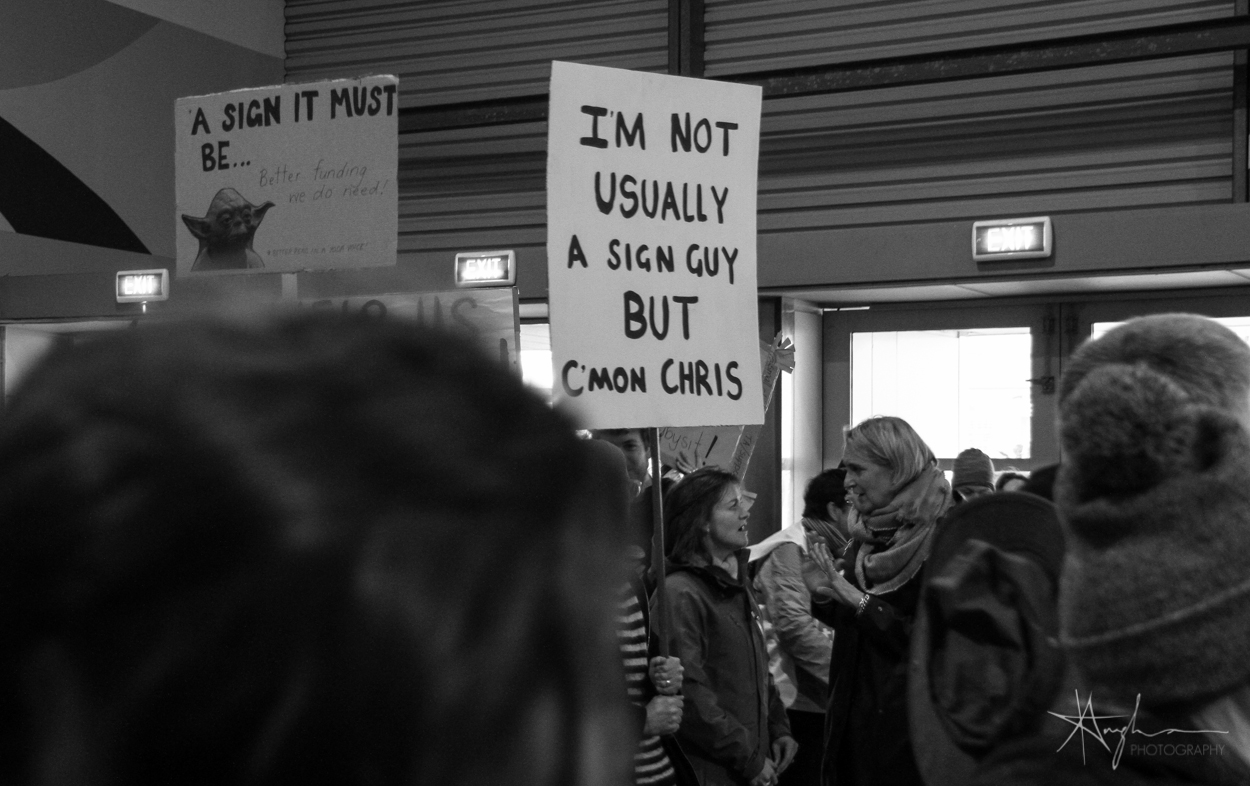
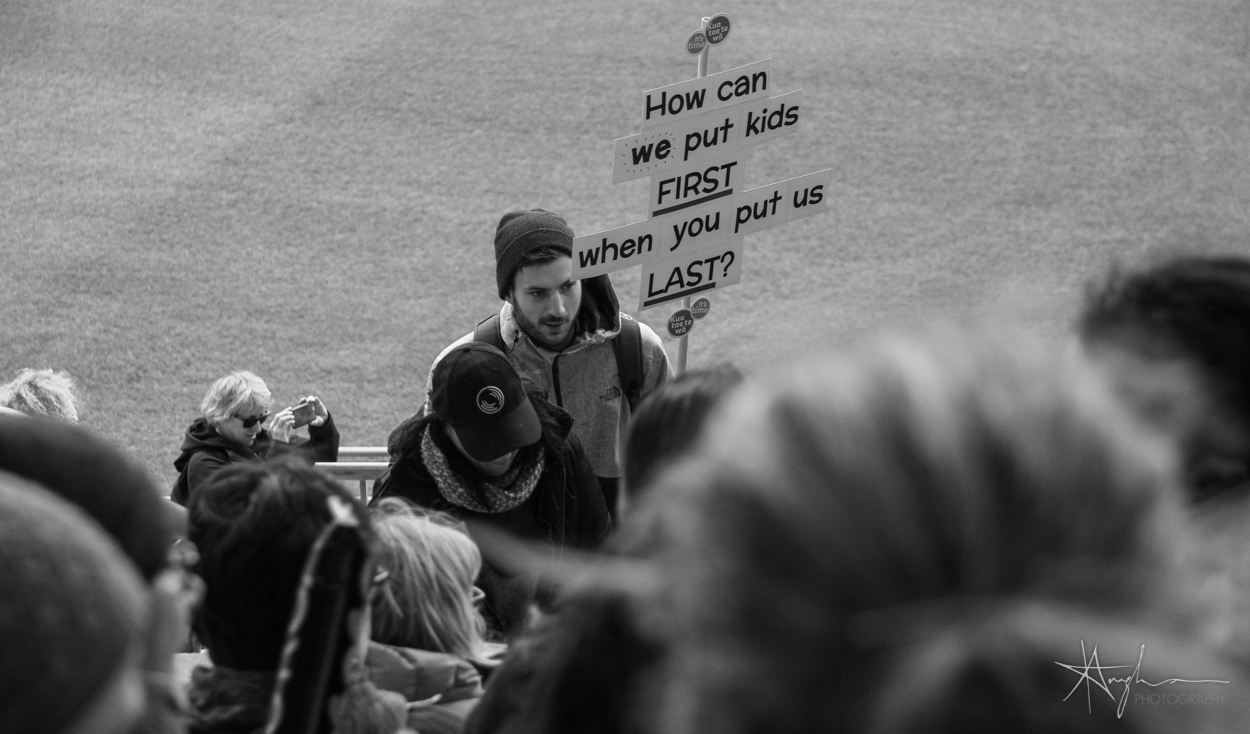
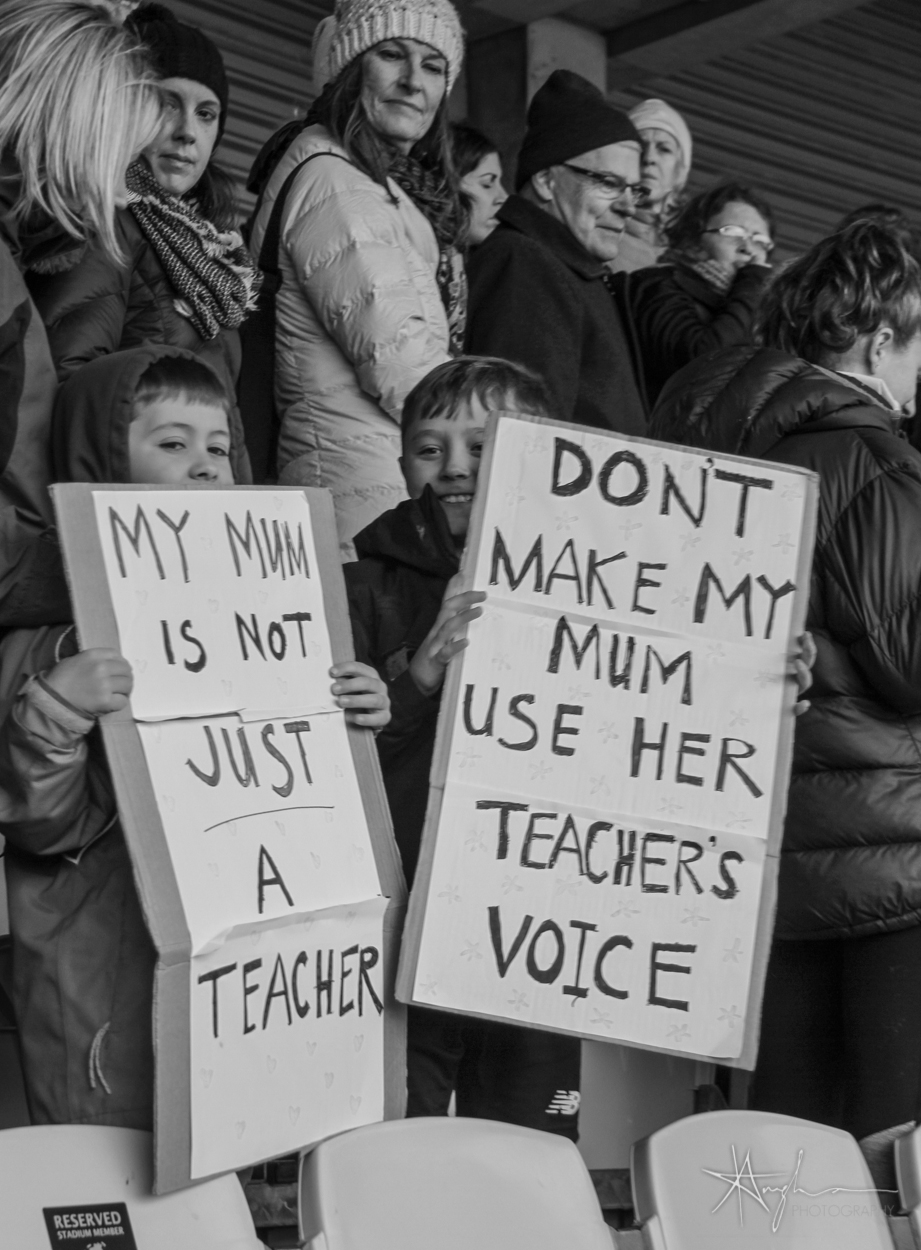
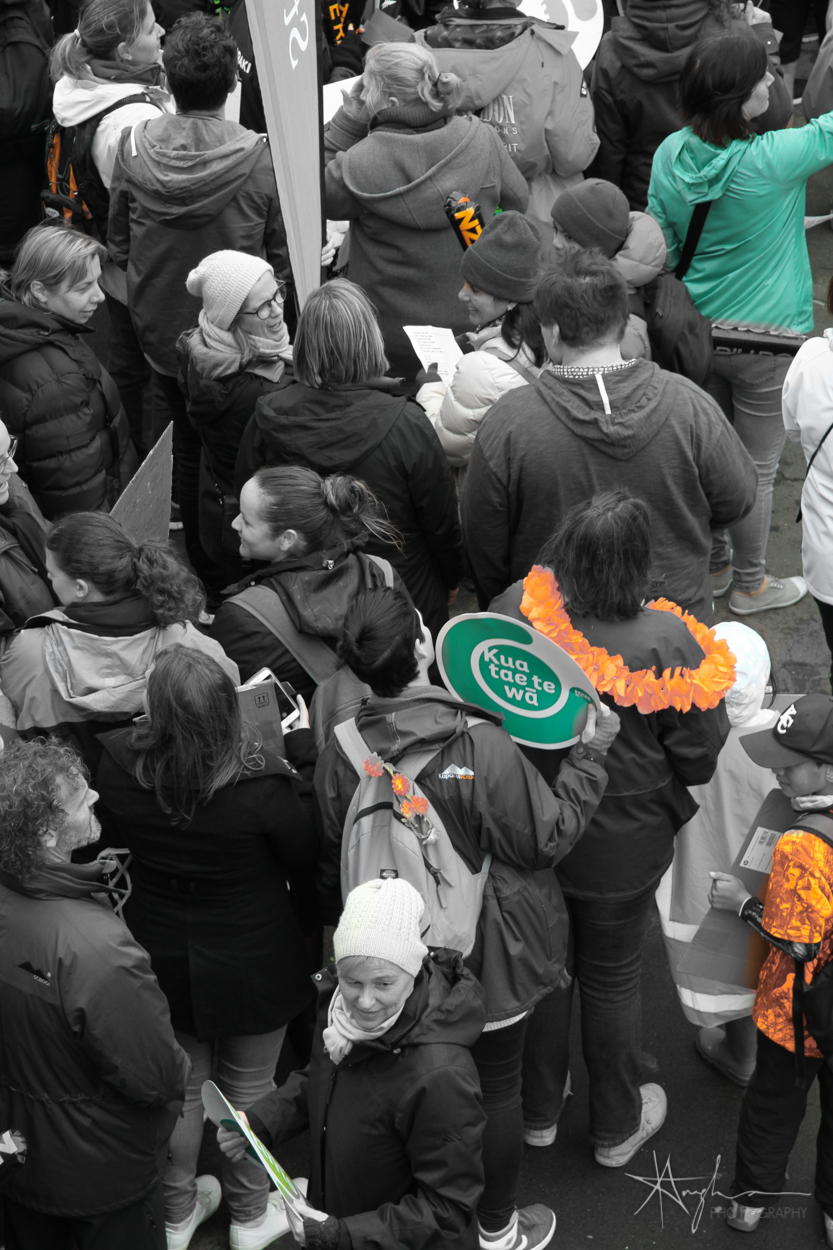
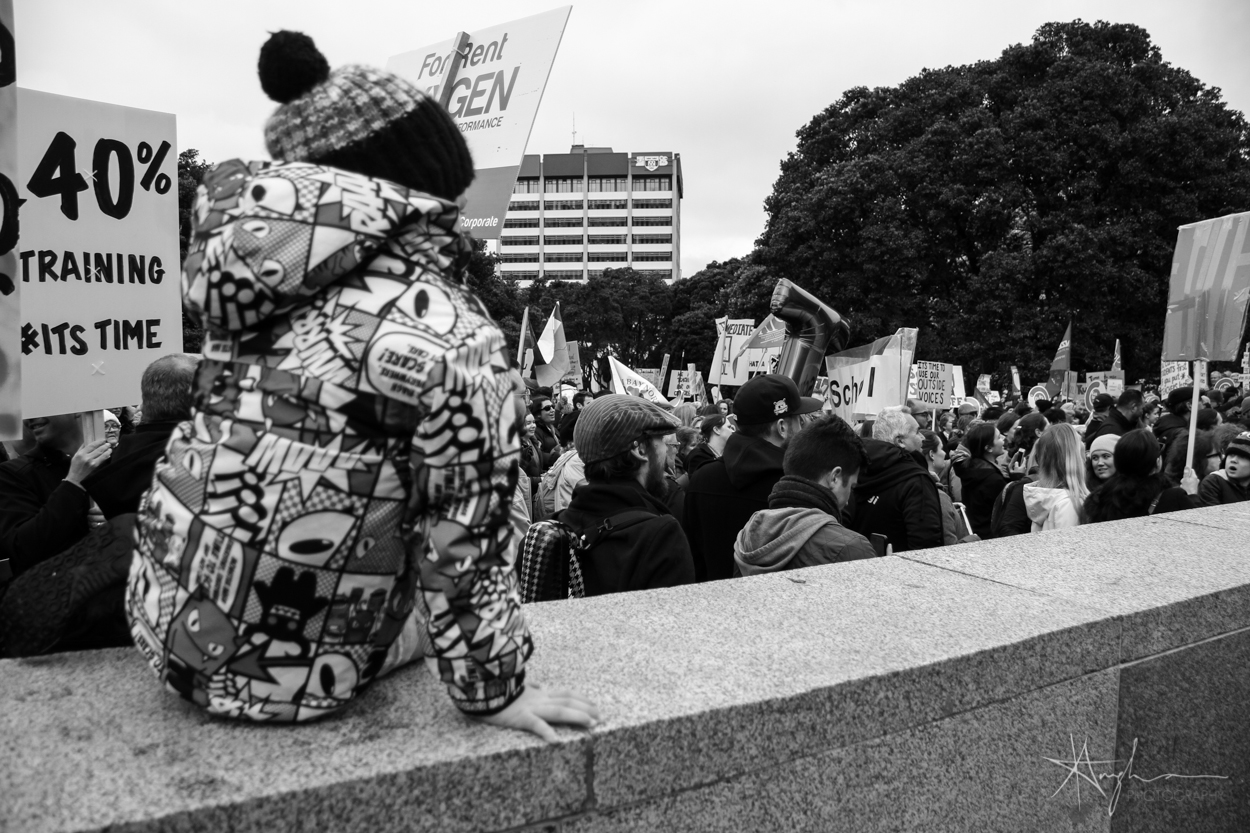
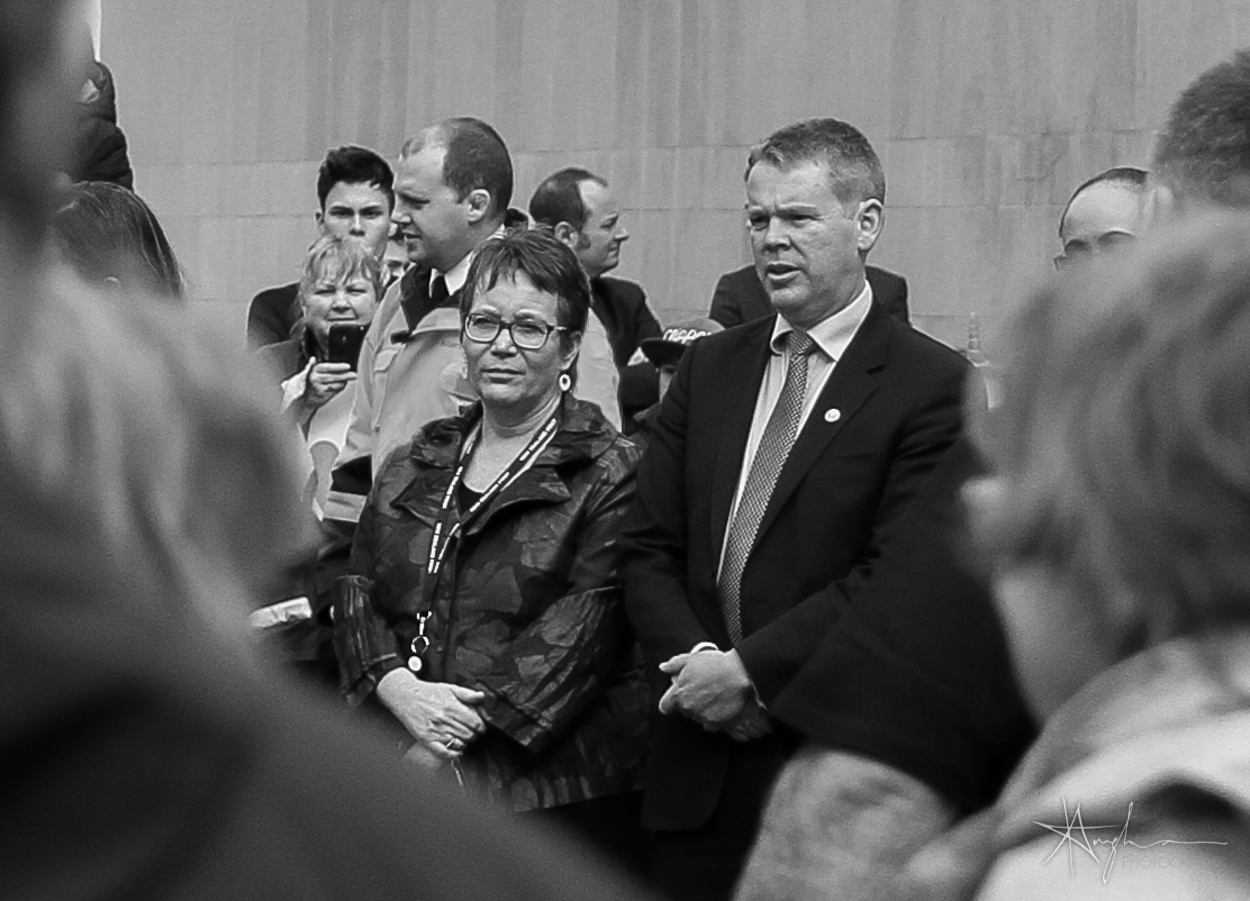
    ​School teachers and principals across the country have agreed to stage New Zealand’s largest-ever strike as negotiations with the Ministry of Education continue to stall.

    The Post Primary Teachers’ Association (PPTA) and New Zealand Educational Institute (NZEI) Te Rui Roa announced the move on Sunday, and said rolling strike action was also possible.

    Ths strike, on May 29, will involve almost 50,000 primary and secondary teachers and primary principals, and will affect hundreds of thousands of students in more than 2000 schools.

    https://www.stuff.co.nz/national/education/112655087/teachers-have-voted-to-strike-on-may-29


    The Conversation

    Obviously there has been a lot of reaction to the recent vote to hold a mega strike, and a lot of this reaction has been documented on Twitter. I wanted to collect this reaction and keep a record of it in our blog. I have come to realise that I value the posts on this site, but often a lot of conversation happens on Twitter and then falls off into the Twittersphere.


    • The crisis is real, and it’s spreading. And the more who leave, the more work has to be picked up by other all-ready-stressed teachers. And thus the crisis is exponentially growing. And all the government is prepared to do is start training replacements!?
    • In all of these pay negotiations, not once have teachers been asking for anything that is unreasonable… It’s not like we’re asking for a slushy machine in every school!
    • Come on … Make history. Be the one MP to stand up for teachers and get them what they deserve. Show the public the importance of education in this country. Go on. I dare you!
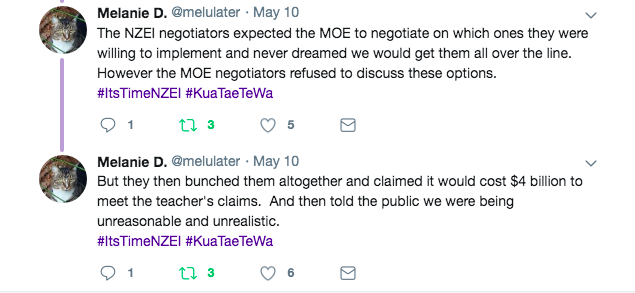
    • So it’s not that the government CAN’T meet what we’re asking for…. it’s that they WON’T.
    • Kinda think that the Teacher Unions need to start playing hardball. Indefinite strike would soon get some results. Look at the bus drivers….

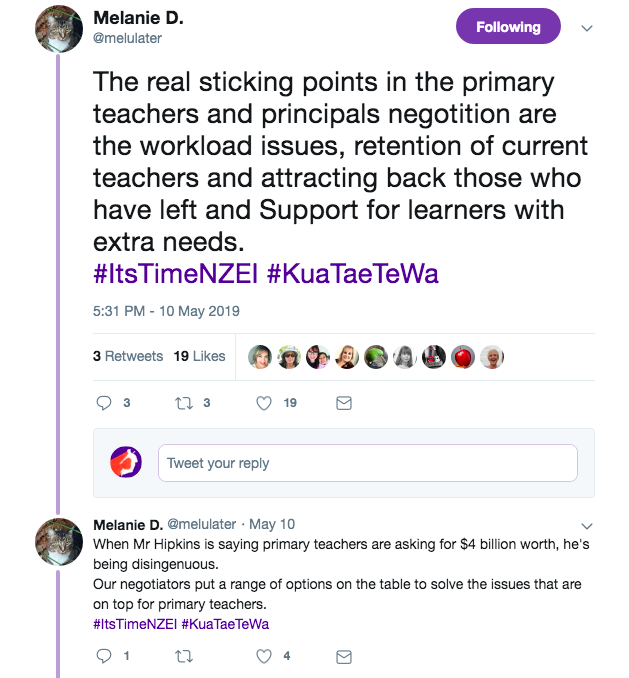
    • Started putting my thoughts down about teacher workload into a tweet…. ran out of characters and lost all energy and enthusiasm for continuing. A story all too common for lots of teachers at the moment!
    • Essentially here’s what would solve a lot of problems: • Pay Teachers more, because we’re worth it and we deserve it. • Shrink class sizes, because with less students comes less work but more teaching. • More SENCO resourcing, because there are more needs than ever before.
    • Shrinking class sizes is key. Less reports to write, less assessments to do, less paperwork to compile. More time for each student. More genuine relationships. More teaching. More jobs available for the additional teachers that come back into the workforce!

    • For me; class size plays a huge role on the teacher. For the last few years I’ve consistently had over 31 students in my class. Believe me; when there are 6 away and the class is only 25; it makes a HUGE difference in the way the classroom feels, acts, and learns.
    • For me, having more time in itself doesn’t sort anything out; it means time out of class if anything. What I need is less students in front of me which will in turn give me more time for each one. It also lessens the time I need for assessments, reports, planning etc…. win win!

    • I left the union at the end of last year. Not regretting it. They should be doing a LOT more given the circumstances, and a clear plan seems to be lacking. Seem to be floundering in too many ideas rather than laying out a “game” plan for teachers and the government to follow!
    • So why did the Ministry turn up to the last round of negotiations with NZEI with no new offer? Took active teachers and leaders out of their classrooms, made them organise relievers, sort out transport… for what!? No new offer!? How disrespectful.

    • Let’s face it. I am a teacher. No government is ever going to be able to pay me what I’m worth. I knew this going into the profession. But come on… at least you could try and show me I’m valued
    • Quick question … Why has class size not been a major negotiating point as a way of reducing workload? Teachers are definitely asking for this!!!

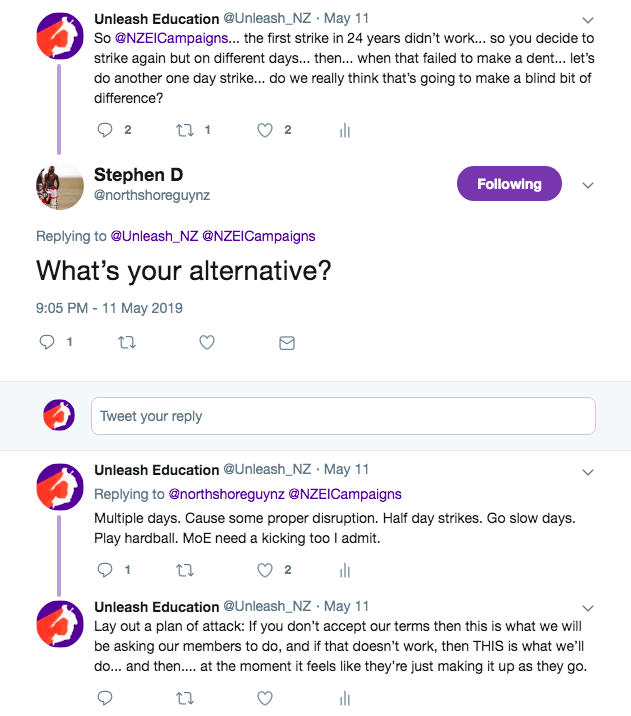
    • So … the first strike in 24 years didn’t work… so you decide to strike again but on different days… then… when that failed to make a dent… let’s do another one day strike… do we really think that’s going to make a blind bit of difference?
    • Multiple days. Cause some proper disruption. Half day strikes. Go slow days. Play hardball. MoE need a kicking too I admit.
    • Lay out a plan of attack: If you don’t accept our terms then this is what we will be asking our members to do, and if that doesn’t work, then THIS is what we’ll do… and then…. at the moment it feels like they’re just making it up as they go.


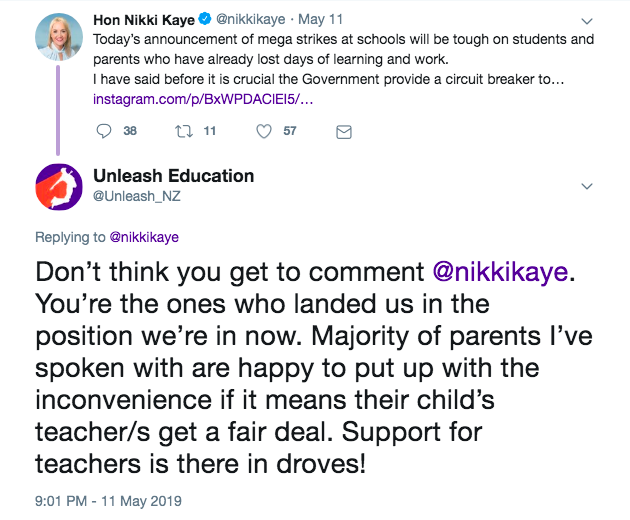
    • Don’t think you get to comment . You’re the ones who landed us in the position we’re in now. Majority of parents I’ve spoken with are happy to put up with the inconvenience if it means their child’s teacher/s get a fair deal. Support for teachers is there in droves!
    • But seeing as you do get to comment; what would National’s offer be if you were still in Govt?
    • I also find your teacher ratio comments hard to believe, given Hekia wanted to raise them through the roof. If I were you I’d be offering apologies and then begin making things right rather than trying to blame the ones who came after you for the monster you created.

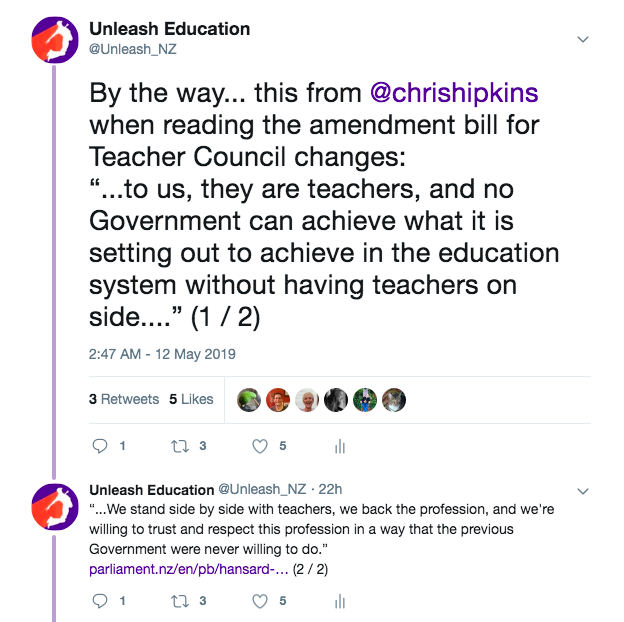
    • By the way… this from when reading the amendment bill for Teacher Council changes: “…to us, they are teachers, and no Government can achieve what it is setting out to achieve in the education system without having teachers on side….” (1 / 2)
    • “…We stand side by side with teachers, we back the profession, and we’re willing to trust and respect this profession in a way that the previous Government were never willing to do.” (2 / 2)


  • No More Sense from Seymour

    And so it begins.

    The non-sensical dribble spews forth from the under-secretary of Education, who gets into a lucrative position on the back of one electorate described on Wikipedia as an “exclusive, affluent suburb of Auckland”.

    That’s right. Mr. Seymour is at it again as he launches the ACT Party campaign.

    We will pay good teachers more. And great ones even more. No doubt David will be the judge as to which teachers make good teachers and which ones make great ones. I would put money on schools not being able to decide that themselves, and even more money on it being based on student results i.e. National Standards ala Performance Pay.

    Of course, one can see his point when he opens with the statement that the average teacher is paid a pittance, and deserve to be paid more.

    To fix that, the party is proposing an extra $1 billion in funding for education. “ACT’s proposed good teacher grants will give your average teacher a pay rise of $20,000 per year,” Mr Seymour claimed.

    But to receive the extra money, schools “need to opt out of the centralised payroll system and collective agreements”.

    This has rubbed a lot of people (in particular teachers) up the wrong way. No surprises there.

    But here’s why his solution makes no sense.

    Hypothetically Synonymous Seymoronous

    Let’s assume that schools go for this, and EVERY school in the country pays their teachers an average of $20,000 per year more than they are already. That is going to cost a lot.

    However, none of that has anything to do with collective agreements, the unions, or any centralised payroll system. They are not synonymous with each other.

    It’s illogical.

    In fact, under Seymour’s scheme, teachers could stay in the union with the collective agreement, and they could still get paid $20,000 more if he really means it; just get a new collective agreement ratified between the government and the union, or have both – give a bit more to schools to ‘top up’ teacher salaries that are paid through the collective agreement. It’s only because ACT are notoriously anti-union that he is dangling the carrot for principals and teachers to consider.

    Pay more Seymour

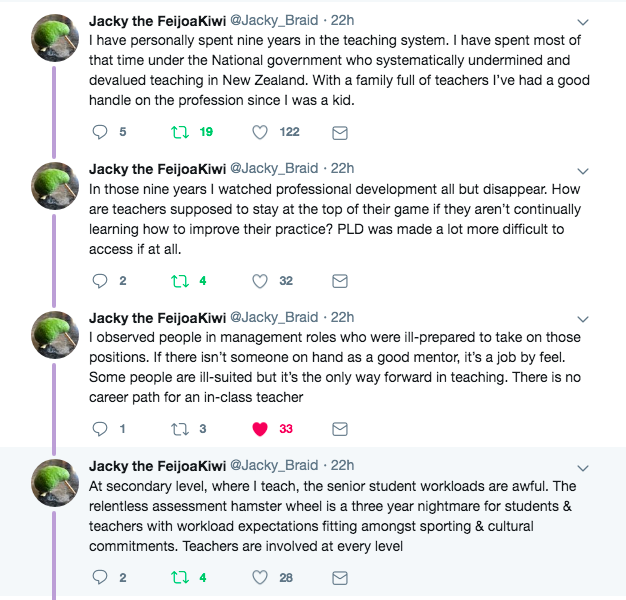
    The second factor is that given the current climate in education, there are teachers leaving in droves, and not always because they aren’t being paid enough. On many occasions, the workload is too much. Refer to this article in March. As a teacher, like many others, I would probably take less workload over getting paid more to ‘compensate’ for the increased workload that is currently expected of us.

    In Conclusion

    While paying teachers more is a genuinely nice touch, Mr. S, if you really cared and were really in touch with the education sector, and you actually wanted to value teachers, then maybe the first step is to work with the union rather than trying to sabotage it into non-existence.

    Illogical. Blackmail. Numpty.


  • NZEI: Not Zealous Enough. Ick.

    Three years ago the government announced their latest plan for collectives of schools to get together and share in the pot of $359 Million to share teachers, resources, and knowledge. Naturally, and rightly, NZEI took the initiative to their members. The following was the result:

    Primary Teachers and Principals vote to put kids first… 21 August 2014

    “Teachers and principals have voted overwhelmingly against the Government’s controversial “Investing in Educational Success” policy, including proposed highly-paid principal and teacher roles.

    A resounding 93 percent of teachers and principals voted “no confidence” in the government’s plan.

    When asked whether they wanted to try to reshape the policy or start again, 73 percent voted to reject the proposed new roles outright rather than try to change the policy through negotiation.”


    Since then, despite 93% of its members saying no thanks, NZEI have gone into negotiations with the Government, and come up with a revised outline for the IES, and a new label called “Communities of Learning”. But essentially they’ve ended up with the same turd, it’s just slightly more polished – as I wrote about here.


    Now, with the arrival of an election in September, the latest campaign from NZEI is to get more people in to vote, assuming that the more people they get in to vote, the more likely they are to get votes in ‘Teachers’ favour. The initiative is not targeting parents, it is in fact, targeting the students to get them to bring their parents along to vote.

    Quite frankly, I’m disgusted by this approach to working for Teachers.

    It is less than amicable, and has a range of issues that all lead to NZEI losing face. Big time.

    For a much more succinct account of these issues, head over to Whale Oil’s take on things. The fact that this has been picked up by Whale Oil, should be reason enough to look at this skeptically.


    As a teacher, I don’t pay NZEI to meddle in politics. I pay them to support me. To listen when we have a vote and do what we ask them to do (since they asked us what we wanted them to do). I pay them to negotiate on my behalf with the government, not go into political propaganda against them and try and influence votes through children. I find that intolerable.

    Some will say that if I don’t like it, then I should cease membership with them.

    While that’s fine in theory, I’m caught in a rock and a hard place. Don’t forget – I am a male primary school teacher. Few and far between – for a reason. It’s an incredibly risky workplace, and while I can safely say nothing is ever going to happen, I prefer to have the backing of NZEI’s lawyers than having to wrangle myself out of any false accusations. So unlike many who can, and have, and will, I can not just simply cease paying my membership, as it is security for me in my position as a male teacher.

    In conclusion; NZEI have lost any mana they might have had. I have no confidence in them, and will not be supporting them in any future plans.

  • Untrained Teachers Coming to a School Near You.

    There’s been quite a lot on the go this week in educational politics.

    But this one is one that should have every parent, school, and child very concerned.

    Education Minister Hekia Parata defends trainee teachers in new legislation

    At the release of the plans for partnership schools, there was very little surprise that they could hire who ever they liked as teachers, so that specially skilled and experts in different fields could work in these schools. It was advertised for the likes of Willie Apirana or Tana Umaga could be in front of a classroom and motivate and inspire children across a range of contexts and learning. Quite why they would want to be in a classroom instead of what they already do quite well, I don’t know.

    However, at the same time, the Minister tightened the reigns over the Education Council, and the regulations around appraisal and registration were put under the spotlight.

    This week however, the Minister has made a quick amendment to the Education Legislation Bill, that will essentially allow unqualified people to teach in state schools.

    “The proposed amendment to the Education Legislation Bill allows schools to establish a “trainee teaching” position for a school.

    According to NZEI, the primary teachers’ union, a “last-minute” change lets schools cheaply hire an “unqualified person in an unsupervised teaching role” while they did an initial teacher training programme.

    There has already been a lot made of the Teach First programme, where after a ridiculously short training period, teachers are pushed out into the real world with qualification to teach in the classroom, and many criticisms have been made of it.

    But why does the Minister suddenly need more teachers? We’re told that only 15% of graduates land a full time job.

    It’s simple.

    Experienced teachers cost money through salary to keep on staff. By reducing the number of experienced staff with jobs (through whatever method) they can be replaced by beginning staff who are paid less, due to the step that they will be starting on.

    At a recent meeting, when discussing the negotiations between NZEI and the Ministry for the latest collective agreement where the Education Council will be paying for the registration of teachers, Hekia Parata mentioned that she finds it strange that teachers don’t want to pay money into the Education Council; and that instead of paying into the union (NZEI) we should be paying into the Education Council.

    (Side Note: I might actually consider this if I had some kind of say on the Education Council; but if all the members on the council are simply appointed by the minister herself, then it is undemocratic and does not warrant my ‘subscription’.)

    In addition to this, David Seymour has weighed in on a different factor, but also brought into question the place of unions in the Secondary sector. “But what I would say is that all good, hard working teachers up and down the country might want to ask themselves if they want to be a member of an organisation that puts ideology ahead of kids like this.” – David Seymour

    What does this mean? Well, quite clearly, Hekia and her understudy don’t want the unions to exist. If teachers began paying into the Education Council instead of NZEI, then the union would cease to exist. If teachers leave unions on ‘moral’ grounds, then they will cease to exist. With all the control held within the Education Council, the Ministry can begin to tighten the screws even more on registration, and essentially drive out existing teachers. This has already begun to happen by using the whole vulnerable children act and finding “predators” that exist in the system. Each new case of child abuse from teachers or workers in schools as fuel to the fire of tightening the registration process, until even those of us who are great teachers, trained fully, and have a wealth of experience will be forced out as well.

    But it’s okay. Because even before they have completed training (which is already so minimal it’s under question) those enrolled in the Teach First programme can begin teaching in permanent positions around the country to replace the teachers who leave.

    No doubt, Hekia will come out with her standard response “It’s simply not true”, and the fact that there is no evidence to suggest this will happen is not a reason to ignore this as a threat in the future. The logical steps and the progression of this thing called GERM is taking place, and we’re seeing it happen right in front of it. They are put in for good reason, such as the registration process to weed out ‘those’ teachers, but their bigger mission opens it up to much more deviant possibilities.

    Watch this space people. Watch this space!