Category: Archived

All the old posts from years gone by.

  • 4 teaching mistakes that drained my energy | The Cornerstone for Teachers

    Original article found here: The Cornerstone for Teachers.com

    I am always looking for ways to save energy. I shared in my book Unshakeable that energy is one of our most precious resources because unlike time, energy does not naturally replenish itself. We have to be intentional about how we use our energy. If we don’t pay attention to the things that drain it and do less of those things and pay attention to things that are energy-giving and do more of those things, we’ll find ourselves feeling depleted all the time.

    Today I’m going to share with you four habits and practices that drained my energy as a teacher for years, and I’ll share the solutions I uncovered that completely transformed the way I approached my work.

    1) I. Talked. Nonstop.

    I ran my mouth so much as a rookie teacher that I lost my voice every fall for the first five years I was in the classroom. I’d explain, re-explain, explain again in different words, and then recap with yet another explanation. The only time I’d stop talking was to give the evil eye and deadly silence to students who dared to steal my thunder by saying something themselves.

    In retrospect, I think I felt like my talking was the glue that held the classroom together and without my constant narration of everything happening, the momentum of student learning would somehow wane. I couldn’t just give a direction and let students follow it; I had to praise the students who were on task, redirect the ones who were off, and fill every moment of a transition with my voice so that students wouldn’t fill it with their own talking.

    If we had a class discussion, I’d feel the need to repeat and affirm everything the kids said to make sure everyone else heard it and was learning from it, instead of just letting students’ words stand on their own. It was as if I thought kids couldn’t learn from one another unless I was there to repeat it back more loudly and word things with a larger vocabulary and greater precision.

    It was all just too much: too much talking, too much information for kids, and too much effort on my part that left the kids with no role to play other than quiet passivity. With all the energy I expended prattling on and on, I would have probably collapsed in a heap by 3 pm every day if I hadn’t been 22 years old and had a 22-year old’s energy level. I’m amazed that my kids internalized anything I taught, considering how much filtering out they had to do while listening, and how few opportunities they had to ever discuss or process their learning.

    Solution: Sit with the discomfort of the silence and give kids the opportunity to talk more.

    I’m not sure if I would have ever changed in this area if I hadn’t ended every day utterly exhausted and with a sore throat. I wasn’t sure what to do differently at first, but I started experimenting.

    I spent less time standing at the front of the classroom, for example. It’s easy to get in an instructional rut when you stand at the same place near the board all day long. So I’d occasionally sit on the side of the classroom or in an absent student’s desk and say, “I need someone to go up and demonstrate ___ for us.” It was so nice to SIT and SAY NOTHING that I then tried staying there, sitting among the class once the student was done demonstrating and ask follow-up questions from other students instead of commenting on the students’ demo myself (“What do you all think? Is that an effective method — how do you know? Does anyone use a different strategy?”).

    I also forced myself to get comfortable with think time and pushed against the feeling that I would lose students’ attention if I didn’t jump in with follow-up questions because I knew providing wait time can actually increase the length and quality of their responses.

    Additionally, I looked for ways to turn my summaries and narrations into questions that would prompt students to think. Instead of saying to a group, “Nice work over here, I like the strategy you used for ___”, I’d ask the kids to reflect on their own work: “Tell me how your group has chosen to solve ___.” Instead of telling a kid, “Take a look at #3, that answer is incorrect,” I’d say, “Would you tell me how you got the answer for #3?”

    Slowly over time, I began guiding more instead of directing, and facilitating instead of instructing.

    When I started discovering active learning techniques, it felt like the heavens had opened up and the angels were singing. Finally, I had a different approach to teaching that would keep students engaged and make sure they were learning without doing all the work myself. And they were actually learning more than when I was in charge! I could walk quietly around the classroom as students talked to one another, listening in on conversations instead of lecturing.

    If I hadn’t changed the way I taught and shifted my perception of the teacher’s role in the classroom so that it was no longer necessary for me to talk constantly, I would have almost certainly burned myself out.

    2) I didn’t make time to really enjoy my students.

    As an introvert and serious person by nature, my definition of “having fun” just isn’t the same as many other people’s. I had a very hard time being fully present with kids and enjoying them because I was simultaneously focused on trying to manage the classroom, keep the noise level down, and make sure the whole show was running smoothly.

    During center time, a child would be telling me about something incredible she’d learned, her face all lit up with delight as she’s looking at up at me, and I wasn’t really focused on her. I’d smile and nod, while looking out of the corner of my eye to make sure that all the kids in the rest of the centers were on-task.

    Interestingly, I thought this was the right thing to do. I’d learned in college about with-it-ness, the ability of a teacher to be aware of everything that’s going on in the classroom and I thought that was somehow more important than actually connecting with the kids.

    When a student was experiencing a lightbulb moment, I couldn’t fully take in the joy of having all that hard work pay off because I was annoyed that on the other side of the room, one of the kids was flicking pencil shavings at another child. I felt like I couldn’t fully enjoy my students unless everyone was on task and the classroom was running smoothly. And so I was constantly slipping in and out of this state of presence, and one child misbehaving had the power to throw me off.

    Solution: Be present and actively look for small moments to enjoy the kids more.

    My thinking changed on the last day of school during my fourth year of teaching. The kids were playing Four Corners and begged me to play with them. Normally I felt like I couldn’t possibly join in, as I needed to make sure no one was cheating or running and everyone was following the rules appropriately. But since it was the last day of school, I figured, what the heck, and I joined in.

    I had so much fun that I remember that game to this day and it changed the way I taught forever. Giving up control was a long, slow process for me, but I never forgot how it felt to learn and play WITH my students and the memory of that fueled my motivation to improve and became my goal moving forward. I’d always known this was a weakness of mine, but it wasn’t until that day that I really saw the power of being fully present and enjoying my students.

    Another incident that made a big impression on me was several years later when I was attending the winter concert for our school at night. I sat next to one of my students and his family. It happened to be a kid who was super sweet, but incredibly unfocused in class — the type of child I devoted a lot of time and energy to nagging. I would tell him all day long, “Focus, get to work, pay attention.”

    That night at the concert, he couldn’t see the stage well and climbed up on his uncle’s lap to watch. I was stunned to see him sitting on a family member’s lap, giggling and pointing and looking every single bit like the eight-year-old he was. The learning standards and classroom expectations might have been incredibly demanding and grown up, but he was still a child….sweet, happy, fun-loving, and young. Once I saw him in that light, it changed my interactions with him and softened my attitude toward my students.

    I realized that even though I had a LOT on my plate as a teacher, I didn’t need to weigh my students down with that burden of responsibility all the time. I had to practice being in the present moment and actively looking for those opportunities to enjoy and appreciate my kids for who they were as individuals. This became easier and easier over time until it actually became my second nature. It was an intentional shift that I made with practice.

    Read more here.

    Source: https://thecornerstoneforteachers.com/truth-for-teachers-podcast/mistakes-drained-energy/

  • How Canada became an education superpower | BBC

    I found this article and was amazed by it, given the fact that Canada actually approached New Zealand and borrowed aspects of our Curriculum for their use. They developed a selection of ideas from it, but largely, their education curriculum is modelled off ours.

    Then, it would seem, we brought in National Standards, and they didn’t. Look what happened!


    When there are debates about the world’s top performing education systems, the names that usually get mentioned are the Asian powerhouses such as Singapore and South Korea or the Nordic know-alls, such as Finland or Norway.

    But with much less recognition, Canada has climbed into the top tier of international rankings.

    In the most recent round of international Pisa tests, Canada was one of a handful of countries to appear in the top 10 for maths, science and reading.

    The tests, run by the Organisation for Economic Co-operation and Development (OECD), are a major study of educational performance and show Canada’s teenagers as among the best educated in the world.

    They are far ahead of geographical neighbours such as the US and European countries with strong cultural ties like the UK and France.

    At university level, Canada has the world’s highest proportion of working-age adults who have been through higher education – 55% compared with an average in OECD countries of 35%.

    Migrant students

    Canada’s success in school tests is also very unusual compared with other international trends.

    The top performers are often cohesive, compact societies and the current highest achiever, Singapore, has been seen as a model of systematic progress, with each part of the education system integrated into an overarching national strategy.

    Canada does not even really have a national education system, it is based on autonomous provinces and it is hard to think of a bigger contrast between a city state such as Singapore and a sprawling land mass such as Canada.

    The OECD, trying to understand Canada’s success in education, described the role of the federal government as “limited and sometimes non-existent”.

    Also not widely recognised is that Canada has a high level of migrants in its school population.

    More than a third of young adults in Canada are from families where both parents are from another country.

    But the children of newly-arrived, migrant families seem to integrate rapidly enough to perform at the same high level as their classmates.

    Read more here.

    Source: http://www.bbc.com/news/business-40708421


  • Modern Learning Environments become Innovative

    What’s in a name?

    • Community of Schools = Community of Learning
    • Charter Schools = Partnership Schools
    • Modern Learning Environment = Innovative Learning Environment

    Given that the Ministry of Education has launched it’s latest site as ile.education.govt.nz I suspect it is here to say.
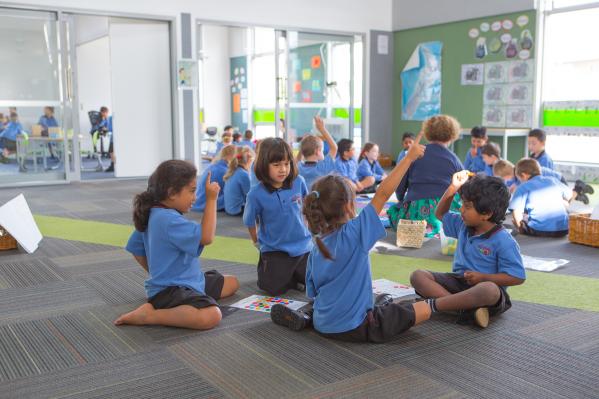
    I still think it is a fad though.


    Here are some additional reasons why, apart from cyclical nature of schools and education, what is popular now won’t be in 10 years, and what was popular 10 years ago isn’t popular now, and what was introduced 20 years ago is coming back into fashion now.

    In my article ‘Are Modern Learning Environments a Fad?‘ I looked at what MLE’s (now ILE’s) are, and what some of their pitfalls are.

    Recently, my current school has undergone a serious upgrade of its classrooms, which bear the resemblance of how they did when they were built in the 1960’s, maybe with a coat of extra paint. Other than that, not much changed. The cabinetry for example, is all solid rimu sacrilegiously painted over with enamel white paint. So the board has been making plans to begin to upgrade these spaces, and we were lucky to visit a series of schools, as well as gain perspectives on the latest trends from our property manager.

    We were shown the latest and greatest and encouraged to put glass sliding doors between the classrooms. We were told of the flexibility this space would then have, where teachers could open up the doors and combine classes, work closer together, team teach, as well as have flexibility in furniture spaces as well. We were told the distractions from the other class with kids peering through soon dissipated as the children got used to it.

    However, our teaching staff resisted. For several reasons.

    1. Wall space. Putting sliding doors between classes knocks out a large space from which to display work, reminders, posters and other important learning prompts in the class. Given that the other walls consist of windows down both sides, and the new whiteboard wall on the other, we wanted to preserve as much wall space as possible.
    2. Distraction. Despite assurances that students got used to the windows between the classrooms, or the possibility of adding frosting, we felt that students would get easily distracted by the goings on in the other classroom. Given that recently we had doors installed with glass panels going to the floor, and the tendency of students to look out the door while sitting on the mat, we figured that our students would take a longer time to get used to the doors.
    3. Cost. Added cost of the doors onto an already inflated cost (and more than the Ministry would provide us with) helped with our decision not to allow the classrooms to be joined.
    4. Behaviour. Each year our school works out the classes students will be in for the following year based on a myriad of different properties. One of those properties is student behaviour: which students don’t work well together, which students clash, and how many ‘difficult’ students a classroom teacher has. Because of this, many of our most challenging students are kept separate through assigning them to different classes within the same year level. Opening up the adjoining classrooms would bring those students who we tried to separate back together, and open us up to issues.
    5. Size. We have had some schools say that they have some students working in flexible spaces and open classrooms up, but those that have problems learning like this (demonstrated through their behaviour) are kept in more traditional classroom setups. Our school simply isn’t big enough to do this. We have two classes at each year level, and use these, as mentioned, to alleviate behavioural problems as it is. Assigning a ‘well-behaved’ class to a MLE or open plan classroom isn’t going to happen because we only have two classes at each year level and we’d be opening those two classes onto each other.

    Thankfully, the Board agreed and we are remaining with single cell learning spaces, with upgraded walls, windows, and carpets, and hopefully some furniture as well.

    Luckily they did so, as when the builders were pulling the lining off the walls, they found a large black cable running through where the sliding doors would go. We were told by the electrician on site that the large black cable was in fact the main power line for the entire school, and we really didn’t want to know the cost involved in relocating this to accommodate for the doors.


  • Māori Language Resources for Teachers | SchoolNews

    Original article: https://www.schoolnews.co.nz/2017/08/maori-language-resources-for-teachers/

    Resources to help teachers prepare for Māori Language Week and to normalise use of Te Reo in the classroom.

    He uri nō Koterana e mihi nei. Ko Benechie te maunga. Ko Dee te awa. Ko North te moana. Engari, he Māori āku tamariki, nō Ngāti Awa. Aku taura here ki te kaupapa o te reo Māori me te mātauranga Māori ko rātou ko āku mokopuna.

    Background 
    It is 16 years since the paucity of Māori language resources was highlighted by educator Ian Christensen in his PhD dissertation (2001) on Māori language revitalisation. At the same time, an audit by Te Puni Kōkiri reached a similar conclusion. In 2007, the Education Review Office (ERO) reviewed curriculum materials that support the teaching and learning of te reo in the English medium sector. They acknowledged that resources were limited – a situation that was both disempowering for teachers and limiting for learners. ERO recommended that future resources should:

    1. support the range of English medium students’ proficiency levels;
    2. be informed by the Māori language curriculum guidelines (Te Aho Arataki Marau); and reflect current second language teaching and learning theories.

    The audit by TPK and the review by ERO also drew attention to a lack of professional development to help teachers use the ministry’s Māori language resources.

    More recently, the Waitangi Tribunal expressed concern about the lack of Māori language resources. And, in an unpublished thesis, Jackman discussed the reality of student disengagement due to the lack of suitable Māori language materials. Jackman found that children were hōhā having to do the same worksheets each year during Māori Language Week.

    Professional development to support the teaching and learning of Māori  
    There are two core MoE resources for the teaching and learning of Māori language in English medium primary schools (years one to six); namely:

    • – Te Aho Arataki Marau mō te Ako i te reo Māori – Kura Auraki (2009), the Māori language curriculum guidelines for years one to 13; and
    • – He Reo Tupu He Reo Ora (2011), the multimedia resource for the teaching of te reo Māori in years one to six.

    There is a (relatively new) process for schools who want to access centrally-funded PD around these resources – and indeed any associated kaupapa e.g. upskilling teachers’ Māori language proficiency; teaching in a culturally responsive way; unpacking the principles in Ka Hikitia; exploring the cultural competencies in Tātaiako.

    Firstly, having identified a need for the PD, schools must submit a proposal, to express interest in accessing such training. Then, if successful, schools will choose from a list of preferred PD providers – currently published on the Ministry of Education (MoE) website, with a two-page summary of their relevant knowledge and experience.

    Thereafter, the provider and the school will co-construct a delivery plan – setting out the desired outcomes of the PD, with progress measures. For example, one of the outcomes could be for staff to use Māori language resources in the classroom in a meaningful way – to enhance students’ learning of te reo Māori.

    Hitherto, this funding process has been handled by the MoE. However, the new education minister has recently announced that teachers’ access to PD will now be managed by the Education Council, a body that is independent from the Ministry.

    Te reo Māori – a core curriculum subject or not? 
    Also topical at the moment is the fact that NZCER has just published a report (commissioned by the Māori Language Commission) recommending that te reo Māori should be a core curriculum subject – beginning with Year 1 students in 2020, until it is being taught at all levels by 2037.

    NZEI has responded to this proposal with caution, even though the professional body recognises wholeheartedly the importance of valuing the indigenous language of this country and acknowledges the positive impact for Māori students. Teachers’ reservations emanate from their feelings of inadequacy and lack of confidence. Hence their plea to the Ministry for increased support and resources.

    Read more here.

    Original Source: https://www.schoolnews.co.nz/2017/08/maori-language-resources-for-teachers/

  • Our world is changing, but what about our schools? | SchoolNews

    Original article: https://www.schoolnews.co.nz/2017/08/our-world-is-changing-but-what-about-our-schools/

    When we think about the purpose of education and the relevance of what we are teaching, what are our answers?

    Why do teachers need to upskill, reinvigorate their teaching and ignite new passions towards their teaching practice?

    The traditional learning style in the classroom will become less and less relevant to the lives of our students, and to the needs they have going forward into an uncertain future. Today the most up to date information, access to knowledge, research and innovation can be found online, by anyone, all of the time. We need to embrace this change in the way we access information and knowledge. We need to use new and emerging technologies to empower our students, our learning and ourselves.

    Understanding how to use digital technologies in the classroom in a relevant and integrated approach is essential if we are to equip the young people of New Zealand with the skills they need to live, work and thrive in the world. It is critical that teachers and students alike can navigate and learn in a digital landscape and be a part of the technological world. With the aid of current and emerging digital technologies we have the power to transform our teaching and learning. To stay abreast of the changes in education and the world we need to commit to new ways of learning, new practices and new pedagogies.

    Pressures on principals and school leaders to raise achievement, and the focus on priority learners, has often meant blanket approach to the professional learning and development for educators, and delivered curriculum-based to all teachers in the school or department.

    With the Government’s recent announcement to make the curriculum more digitally oriented, schools and teachers now have more opportunities to choose what they want to learn about and how they would like to upskill.

    Read more here.

    Source: https://www.schoolnews.co.nz/2017/08/our-world-is-changing-but-what-about-our-schools/

  • On the steps of parliament: protest against ERO | Network on Net

    Original article: https://networkonnet.wordpress.com/2017/08/14/on-the-steps-of-parliament-protest-against-ero/

    Timed for the opening of parliament 1996: New Zealand First in coalition with National

    On Wednesday, 11 December, I pointed my car down my driveway in Cambridge, turned right, and right again, and headed south.

    It was my appreciation that the present represented a defining moment in primary education – either education was going to be controlled by ERO through bureaucratic managerialism, or by all major participants in the spirit of democracy. As a result, it was not so much the present I was fighting against, but the future I was fighting for.

    The flux caused by the MMP elections and the coalition talks; the feistiness of the present Principals Federation executive; the concern about education directions in academic circles; the indications by the news media they were starting to understand the situation; the greater willingness of schools to take a stand; and the general alarm caused by ERO’s continued efforts to increase its powers – all combined to make this, from my perspective, a decisive moment. I had decided to give two months to the anti-bureaucratic campaign (ABC). The petition had been launched, and the returns were coming in strongly. I had hoped schools would, in their deliberations, rise above matters relating to whether they had just received a good ERO report or not, and see the role of the review office in the overall education culture; see the review office as at the centre of promoting and imposing the bureaucratic demands so widely complained about. The evidence, gratifyingly, was that schools were, indeed, seeing the wider picture.

    After launching the petition, my task, as I saw it, was to keep the issue, to the forefront, and to keep in touch with key people in education. My tactic each week was to develop a news release then sit in front of my fax, and fax for hours. In a way it was like fly fishing, you cast your line out a large number of times, and, every now and then, you have a strike. I can assure you, though, no matter how small the catch, I never threw one back. So I’d start with the big fish of the TV and metropolitan newspapers, then radio, the magazines, then moved on to the provincial newspapers and, time permitting local and suburban newspapers. I learnt a lot about the news media in the process.

    As in any campaign, the purpose is to get the message right, and then to find different ways of saying the same thing. Whether I got the message right, I don’t know, but I certainly found a lot of different ways to say the same thing. The message I tried to communicate was of a crisis in education – a structural crisis deriving from Tomorrow’s Schools allocation of increased powers to layers of bureaucracy at the expense of teachers’ sense of control over things important to them. And that a structural crisis could only be resolved through a structural response – tinkering would not do. For this reason, in respect to school reviewing, I favoured the idea of schools having a range of accredited reviewers to choose from. Such a change would free up education in all sorts of ways.

    Anyway, as I pressed on to Wellington, that was all behind me.

    About four weeks before I had received a call from Derek Gordon of Dunedin whose professional name as a storyteller to schools is Derek Bringwonder. He expressed his alarm, derived from his experience of visiting schools throughout New Zealand, at the harm ERO was inflicting on New Zealand schools. In other words, he had developed the same point of view as me from a different perspective. Derek also expressed wider concerns about the relations between the governed and those who govern – ERO’s behaviours simply being a prime example of those concerns.

    ‘I’ve heard about your petition,’ he said, ‘is there anything I could do to help?’

    ‘Thanks for the offer, I’ll think about it.’

    Two days later it came to me: those pages at the beginning of Hard Times in which the character Gradgrind insisted on reducing human behaviour to numbers, that would be just the ticket. I contemplated the matter for a few days – the idea had the capacity to be the most appalling flop, and would I have the energy? What appealed to me and tipped me in favour of ringing Derek was the opportunity to make a public statement about my concerns. For better or worse, whether the ABC petition was a success or not, I wanted to have the feeling that I had given it a lash – the best I could.

    So I rang Derek. We delegated responsibilities: he would brush up on Hard Times, do the banner, arrange for a Dickensian costume; I would try to entice along a small audience, gain the attendance of some parliamentary spokespeople, try and interest the news media, get permission from the clerk of the house for a protest on the steps of parliament, and organise material to hand out to those present.

    The following was part of the invitation to the members of parliament and others.

    Kelvin Smythe

    Developmental Publications Ltd

    PO Box 4082, Hamilton

    An invitation

    On Thursday, I2 December, at 12.20 p.m., a small meeting will be held in front of parliament allowing Derek Bringwonder, storyteller, to make a personal statement about the need to nurture the human spirit, and about his concern, developed as a result of working in schools throughout New Zealand, at the harmful effects on schools and teachers of review office practices and philosophy. (He will, as part of this, be dressed as Charles Dickens’ Gradgrind, and orate the philosophy of that character from Hard Times.) 

    I am delighted, as the organiser of the education anti-bureaucratic campaign (ABC) and petition, to support Derek Bringwonder in these purposes.

    If you could be there as an expression of your own support, it would be greatly appreciated. It will go ahead rain, hail, hurricane or shine. If you do think you can attend, please let me know.

    Best wishes

    Kelvin Smythe

    One of the difficulties was to find a day and a time when the members of parliament would be able to attend. We chose Thursday, 12 December, as a tentative date. But would that conflict with the swearing in of the new parliament? The swearing in date moved around, and sure enough, after all those weeks of coalition talks, the swearing in was Thursday, 12 December. I suggested to Liz Gordon, the newly elected Alliance member, that that might be for the best as it meant that at least they’d all be there, and that would be good; she said no, there’d be lots of other things going on, and that would be bad. However, Brian Donnelly said the swearing in would be over by 12 p.m. – as a result we adjusted the time to 12.20. When I visited National’s Tony Steel in his Hamilton electorate office he said he’d do his best to be there, and Trevor Mallard’s secretary said Trevor had noted it in his diary. Liz Gordon said there was no need for another fax, she’d be there if she could.

    So here I was heading to Wellington rather fearfully. Would my 20 or so invitees be there? Would the spokespeople be there? Would the idea be a good one in concept, irrespective of how everything else went? What would the weather be like? Though, on this, I was ambivalent. I rather liked, what was to me, the romantic notion of a howling gale, Charles Dickens and me and, of course, a back-turned Richard John Seddon, and no-one else, standing out there in howling wind and rain. We would proclaim to the elements.

    I booked in at a hotel near parliament, then walked down to it for a reconnoitre. As most people know, traffic goes round parliament in a frenzied circle. I had fears that tomorrow, in transporting the sound system in my car, of getting on this merry-go-round and not being able to get off. But there was the entrance near the cenotaph and a road looping gently to the paved area in front of the main steps with Richard John Seddon facing away. So it was back to the hotel for a sleep – of sorts.

    The coalition talks had come and gone. Information I was receiving indicated the review office was, indeed, a coalition issue, but there had not been, and there still wasn’t, any confirmation of this. I feared the worst – that in the rush to complete the talks, the matter would drop off the negotiating table.

    I went to the door to get the Dominion. On page 3 was an article about the coalition and what had been agreed. I ran my eye down the list, hoping, but not expecting, to see the review of the review office listed.

    But there it was, linked in with another review, and with the briefest possible reference. Now, how do they express this in the media? I was visibly moved.

    After years of plugging away, on the morning of a protest to be made on the steps of parliament – there it was in black and white. Wow! This was only a first step, the review office would fight a wily fight, but this was a moment to relish.

    I drove round to the hotel to pick up Derek and his wife Pamela. When he opened the door, top hat, red vest, black formal pants, and all – I felt immediately at ease. Hey! This had the makings of a memorable day.

    In picking up the sound system I found there wasn’t room in my car for an office chair I’d brought down for Derek to stand on if he needed some height to perform better. No – he didn’t need it. What to do with the chair? To this day I like to think of it still sitting in the entrance way of the shop I dumped it in.

    We made our way through the iron gates and parked on the parliamentary forefront. The day was fine (though breezy), so no Lear on the heath heroics. The parliamentary officials checked our permission papers; pointed us to our assigned place; assured us the sound system would be fine as long as we didn’t point it directly towards parliament; and, were generally very helpful. We set up the banner, the sound system, composed ourselves, and waited.

    The parliamentary scene to the north of us on the steps was one of remarkable vibrancy. The first time mps clearly identifiable by their cheerful, expectant expressions, the old hands by their here-we-go-again demeanour. Especially notable were the new Maori mps with their families and elders, hugging, laughing and singing. TV and radio reporters were everywhere. The chief justice and entourage swept past us in full regalia.

    Read full article here.

    Source: https://networkonnet.wordpress.com/2017/08/14/on-the-steps-of-parliament-protest-against-ero/


  • The pendulum swings back on school tests | BBC

    Let’s hope that NZ Government can make the change before they have to go back on this. Let’s ditch any National based assessment for primary schoolers. It’s too much. Too much pressure on the children. Too much pressure on the teachers. All for what? Thankfully the UK Government are beginning to see that what they’re doing isn’t helping…


    30 March 2017

    If news stories could have a soundtrack, then this scrapping of tests in the early years of primary school would have the creaking sound of a pendulum slowly swinging back.

    The Department for Education is proposing that national curriculum tests taken by seven-year-olds in England could be ditched.

    Instead there would be an assessment of five-year-olds by a teacher – a so-called “baseline test” – which would be used as a starting point for measuring progress through primary school.

    It represents a step backwards from more and more testing – a shift in attitude as much as policy.

    And it raises again the thorny question of what kind of tests young children should face in primary school.

    Are such tests a helpful indicator for identifying pupils’ needs? Or are they an unnecessary pressure – a case of too much, too young? And are such tests going to mean a paper mountain of extra bureaucracy for teachers, hindering rather than helping learning?

    ‘Hope over experience’

    The teachers’ unions have broadly given their support to the government’s announcement to row back on the tests for seven year olds in reading, writing, maths and science.

    But the National Union of Teachers still says the idea of a baseline test for four or five-year-olds remains a “triumph of hope over experience”.

    The teachers’ union questions whether this can ever be a sufficiently reliable test to be used as a fixed point against which to measure all the following years of a child’s progress.

    But the counter-argument to this is that you have to start somewhere.

    If schools are to be held to account for how much progress children have made by the age of 11 – then it has to be measured against a starting point.

    And isn’t the natural starting point in the first year?

    There is also a strong argument that it is the low achievers and the disadvantaged who will be most in need of the extra help that a test might identify.

    And at the last general election, all three main political parties were sympathetic to the principle of baseline testing.

    But the announcement on testing also raises another great back and forth of the education pendulum. How much data is too much?

    Parents’ evenings, with spreadsheets and targets, can feel like a chat with the accountants.

    And for the schools themselves, the accumulation and analysis of data has become a major part of their working lives.

    Read more here.

    Source: http://www.bbc.com/news/education-39444999

  • Stop Teaching Students What to Think. Teach Them How to Think

    Original article here: http://www.edweek.org/ew/articles/2017/09/27/stop-teaching-students-what-to-think.html

    For more than a century, we’ve been creating an industrial workforce of human automatons, built for the purpose of performing routine labor not yet doable by machines. And we’ve been operating with the mindset that we should teach students the same way we program actual machines. In the 20th century, schooling became a process of information upload in which students are to be filled with all the appropriate data and applications to function as cogs in the machinery of factories and offices, or in the parlance of today, as walking hard drives.

    Modern mass production did more than increase efficiency. It chopped up work into simpler components in which one small task could be repeated day in and day out without thought and without knowledge of the whole. Centuries ago, shoes were made by hand, by one skilled person who made the entire shoe. And then hundreds of people became involved in making one shoe with one relatively unskilled person doing nothing but attaching soles all day, every day. Now that machines can perform all the tasks in making an entire shoe, what happens to the humans who were programmed to operate the machines?

    Human-automaton creation must end. To succeed in a world of automation will require being as unmachinelike as possible. The entire education system will need to be retooled around no longer teaching kids what to think but how to think. Memorization of facts is pointless in a world where everyone carries around the entire knowledge base of the human species on their person.

    The challenge is not information storage but information processing. It’s not about information itself but how to use information. The teaching of creativity, curiosity, critical thinking, analytical thinking, problem-solving, and a love of learning itself will be critical to transitioning from the industrial age to the automated age. Learning how to collaborate and empathize with others will be key. To be human is not to be a lone robot performing a singular task in a vacuum but to be a member of the whole of humanity contributing in countless interdependent ways, including even entirely unpaid ways. This will require nothing less than a redefinition of work itself.

    Most people when they talk about the future of work are talking about the future of paid work. But the future of work must recognize all work. Take, for example, someone editing Wikipedia, or contributing code to the open-source code-sharing platform GitHub, or even simply taking care of a family member in the same way any paid care worker would. All of that is important work but would be done for purpose, not pay.

    It is for this reason that unconditional basic income—a cash stipend starting everyone above the poverty line each month—needs to be a key characteristic of the future of work. That way, as paid work is automated, humans can focus more on all the work that needs to be done, in the ways that most engage them.


    Read more here.

    Source: http://www.edweek.org/ew/articles/2017/09/27/stop-teaching-students-what-to-think.html

  • ‘Tired of trying to hold the system together when it’s broken’ – NZ teachers prepared to strike for pay hike | 1 NEWS NOW | TVNZ

    Primary school teachers have today announced they are prepared to strike to get a significant pay hike.

    A pay deal with the government ends next year, but teachers say they aren’t prepared to accept a raise of between just one and two per cent.

    At a conference in Rotorua this morning, teacher representatives from the NZ Education Institute Te Riu Roa union voted to take action if they don’t get what they want.

    “Right now, children are missing out on some opportunities to learn because their teachers are bogged down in administration and testing, or are struggling to get support for children with additional needs,” NZEI president Lynda Stuart said.

    “To make matters worse, children are increasingly in doubled up classes because their school can’t find enough teachers.

    “Teachers and principals are fed up with seeing children miss out on the education they deserve and we’re tired of trying to hold the system together when it’s broken.”

    Collective agreements for primary principals and teachers are up for negotiation in the middle of next year.

    NZEI Te Riu Roa members will begin paid union meetings to form a claim from term from next year.

    View Video here.

    Source: https://www.tvnz.co.nz/one-news/new-zealand/tired-trying-hold-system-together-its-broken-nz-teachers-prepared-strike-pay-hike

  • Disobedient Thinking: Welby Ings – TEDx Auckland

    Welby Ings is an award winning designer, filmmaker and playwright, with his short film ‘Boy’ short listed for the 2006 Academy Awards. An elected Fellow of the British Royal Society of Arts and consultant to many international organisations on issues of creativity and learning, Welby is now a Professor in Design at Auckland University of Technology. Having taught at all levels of the New Zealand education system, he has remained an outspoken critic of dehumanised systems of learning. In 2001 he was awarded the Prime Minister’s inaugural Supreme Award for Tertiary Teaching Excellence.