Tag: classroom

  • The Foundation: An Introduction

    A man began building a multi-storey high rise in the centre of the city. He worked furiously away at his dream building. He wanted a glorious penthouse at the top, with panoramic views overlooking the city. Luxurious furnishings and fittings, the gold standard in design and comfort. He began at the top, laying tiles over the top of each other and then raising them up on a slope so the rain could run off. He built the penthouse ceiling under it, before constructing the walls, windows and doors. Before long he was carpeting the floor and installing the plumbing for the grand en-suite. The patio decking stretched out from the large living area. He furnished the penthouse with expansive sofas and designer tables. The kitchenette had the latest in appliances and the reflection off the white marble was near blinding. It was a perfect example of a presidential penthouse.

    Then came the moment to build the floor below. He hired cranes to get the penthouse lifted, and began building the walls down. Each additional floor was the same, lifting the top higher and building the floor below. Eventually he had the desired number of floors and was able to start laying down the foundation.

    Something tells me that this is a slightly more difficult way of building. Needless to say that by the time he had finished, repairs and damages to the existing penthouse were extensive. The marble slabs each had a large winding crack through the middle of them, and many of the windows had long become shards. Several roof tiles fell to the ground with each subsequent level of the build.


    A teacher walked into the classroom on the first day of the year and stood at the front. He began teaching his dream lesson that was designed to fill his students with knowledge, awe, and excitement. It was engaging, collaborative and included everything a perfect lesson for learning needs…

    Next Part:

    The Foundation: Relationships Matter


  • Letter Keepsafe

    Need somewhere to keep all your classroom display letters? Sick of re-making letters all the time. Keep them safe in this Top Teacher Tip.

  • Sticky Labels

    Always needing labels or needing to stick paper print outs to things? Use this Top Teacher Tip to make your life easier! #FlipTheTape #TooEasy

  • Repeatable Centres

    Need to label a bunch of cubby holes in your class, but don’t want to measure each time to find the centre? Use this Top Teacher Tip to make the whole process easier!

  • 4 teaching mistakes that drained my energy | The Cornerstone for Teachers

    Original article found here: The Cornerstone for Teachers.com

    I am always looking for ways to save energy. I shared in my book Unshakeable that energy is one of our most precious resources because unlike time, energy does not naturally replenish itself. We have to be intentional about how we use our energy. If we don’t pay attention to the things that drain it and do less of those things and pay attention to things that are energy-giving and do more of those things, we’ll find ourselves feeling depleted all the time.

    Today I’m going to share with you four habits and practices that drained my energy as a teacher for years, and I’ll share the solutions I uncovered that completely transformed the way I approached my work.

    1) I. Talked. Nonstop.

    I ran my mouth so much as a rookie teacher that I lost my voice every fall for the first five years I was in the classroom. I’d explain, re-explain, explain again in different words, and then recap with yet another explanation. The only time I’d stop talking was to give the evil eye and deadly silence to students who dared to steal my thunder by saying something themselves.

    In retrospect, I think I felt like my talking was the glue that held the classroom together and without my constant narration of everything happening, the momentum of student learning would somehow wane. I couldn’t just give a direction and let students follow it; I had to praise the students who were on task, redirect the ones who were off, and fill every moment of a transition with my voice so that students wouldn’t fill it with their own talking.

    If we had a class discussion, I’d feel the need to repeat and affirm everything the kids said to make sure everyone else heard it and was learning from it, instead of just letting students’ words stand on their own. It was as if I thought kids couldn’t learn from one another unless I was there to repeat it back more loudly and word things with a larger vocabulary and greater precision.

    It was all just too much: too much talking, too much information for kids, and too much effort on my part that left the kids with no role to play other than quiet passivity. With all the energy I expended prattling on and on, I would have probably collapsed in a heap by 3 pm every day if I hadn’t been 22 years old and had a 22-year old’s energy level. I’m amazed that my kids internalized anything I taught, considering how much filtering out they had to do while listening, and how few opportunities they had to ever discuss or process their learning.

    Solution: Sit with the discomfort of the silence and give kids the opportunity to talk more.

    I’m not sure if I would have ever changed in this area if I hadn’t ended every day utterly exhausted and with a sore throat. I wasn’t sure what to do differently at first, but I started experimenting.

    I spent less time standing at the front of the classroom, for example. It’s easy to get in an instructional rut when you stand at the same place near the board all day long. So I’d occasionally sit on the side of the classroom or in an absent student’s desk and say, “I need someone to go up and demonstrate ___ for us.” It was so nice to SIT and SAY NOTHING that I then tried staying there, sitting among the class once the student was done demonstrating and ask follow-up questions from other students instead of commenting on the students’ demo myself (“What do you all think? Is that an effective method — how do you know? Does anyone use a different strategy?”).

    I also forced myself to get comfortable with think time and pushed against the feeling that I would lose students’ attention if I didn’t jump in with follow-up questions because I knew providing wait time can actually increase the length and quality of their responses.

    Additionally, I looked for ways to turn my summaries and narrations into questions that would prompt students to think. Instead of saying to a group, “Nice work over here, I like the strategy you used for ___”, I’d ask the kids to reflect on their own work: “Tell me how your group has chosen to solve ___.” Instead of telling a kid, “Take a look at #3, that answer is incorrect,” I’d say, “Would you tell me how you got the answer for #3?”

    Slowly over time, I began guiding more instead of directing, and facilitating instead of instructing.

    When I started discovering active learning techniques, it felt like the heavens had opened up and the angels were singing. Finally, I had a different approach to teaching that would keep students engaged and make sure they were learning without doing all the work myself. And they were actually learning more than when I was in charge! I could walk quietly around the classroom as students talked to one another, listening in on conversations instead of lecturing.

    If I hadn’t changed the way I taught and shifted my perception of the teacher’s role in the classroom so that it was no longer necessary for me to talk constantly, I would have almost certainly burned myself out.

    2) I didn’t make time to really enjoy my students.

    As an introvert and serious person by nature, my definition of “having fun” just isn’t the same as many other people’s. I had a very hard time being fully present with kids and enjoying them because I was simultaneously focused on trying to manage the classroom, keep the noise level down, and make sure the whole show was running smoothly.

    During center time, a child would be telling me about something incredible she’d learned, her face all lit up with delight as she’s looking at up at me, and I wasn’t really focused on her. I’d smile and nod, while looking out of the corner of my eye to make sure that all the kids in the rest of the centers were on-task.

    Interestingly, I thought this was the right thing to do. I’d learned in college about with-it-ness, the ability of a teacher to be aware of everything that’s going on in the classroom and I thought that was somehow more important than actually connecting with the kids.

    When a student was experiencing a lightbulb moment, I couldn’t fully take in the joy of having all that hard work pay off because I was annoyed that on the other side of the room, one of the kids was flicking pencil shavings at another child. I felt like I couldn’t fully enjoy my students unless everyone was on task and the classroom was running smoothly. And so I was constantly slipping in and out of this state of presence, and one child misbehaving had the power to throw me off.

    Solution: Be present and actively look for small moments to enjoy the kids more.

    My thinking changed on the last day of school during my fourth year of teaching. The kids were playing Four Corners and begged me to play with them. Normally I felt like I couldn’t possibly join in, as I needed to make sure no one was cheating or running and everyone was following the rules appropriately. But since it was the last day of school, I figured, what the heck, and I joined in.

    I had so much fun that I remember that game to this day and it changed the way I taught forever. Giving up control was a long, slow process for me, but I never forgot how it felt to learn and play WITH my students and the memory of that fueled my motivation to improve and became my goal moving forward. I’d always known this was a weakness of mine, but it wasn’t until that day that I really saw the power of being fully present and enjoying my students.

    Another incident that made a big impression on me was several years later when I was attending the winter concert for our school at night. I sat next to one of my students and his family. It happened to be a kid who was super sweet, but incredibly unfocused in class — the type of child I devoted a lot of time and energy to nagging. I would tell him all day long, “Focus, get to work, pay attention.”

    That night at the concert, he couldn’t see the stage well and climbed up on his uncle’s lap to watch. I was stunned to see him sitting on a family member’s lap, giggling and pointing and looking every single bit like the eight-year-old he was. The learning standards and classroom expectations might have been incredibly demanding and grown up, but he was still a child….sweet, happy, fun-loving, and young. Once I saw him in that light, it changed my interactions with him and softened my attitude toward my students.

    I realized that even though I had a LOT on my plate as a teacher, I didn’t need to weigh my students down with that burden of responsibility all the time. I had to practice being in the present moment and actively looking for those opportunities to enjoy and appreciate my kids for who they were as individuals. This became easier and easier over time until it actually became my second nature. It was an intentional shift that I made with practice.

    Read more here.

    Source: https://thecornerstoneforteachers.com/truth-for-teachers-podcast/mistakes-drained-energy/

  • Modern Learning Environments become Innovative

    What’s in a name?

    • Community of Schools = Community of Learning
    • Charter Schools = Partnership Schools
    • Modern Learning Environment = Innovative Learning Environment

    Given that the Ministry of Education has launched it’s latest site as ile.education.govt.nz I suspect it is here to say.
    I still think it is a fad though.


    Here are some additional reasons why, apart from cyclical nature of schools and education, what is popular now won’t be in 10 years, and what was popular 10 years ago isn’t popular now, and what was introduced 20 years ago is coming back into fashion now.

    In my article ‘Are Modern Learning Environments a Fad?‘ I looked at what MLE’s (now ILE’s) are, and what some of their pitfalls are.

    Recently, my current school has undergone a serious upgrade of its classrooms, which bear the resemblance of how they did when they were built in the 1960’s, maybe with a coat of extra paint. Other than that, not much changed. The cabinetry for example, is all solid rimu sacrilegiously painted over with enamel white paint. So the board has been making plans to begin to upgrade these spaces, and we were lucky to visit a series of schools, as well as gain perspectives on the latest trends from our property manager.

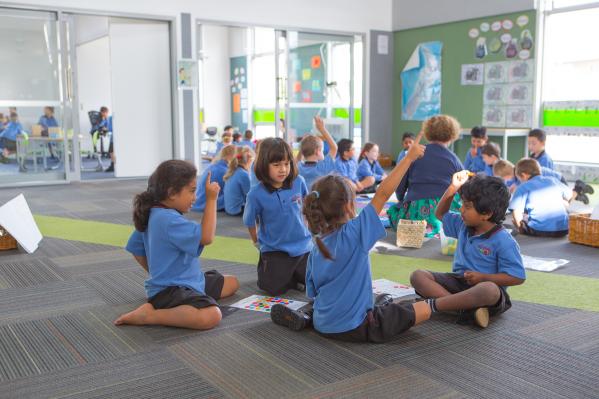
    We were shown the latest and greatest and encouraged to put glass sliding doors between the classrooms. We were told of the flexibility this space would then have, where teachers could open up the doors and combine classes, work closer together, team teach, as well as have flexibility in furniture spaces as well. We were told the distractions from the other class with kids peering through soon dissipated as the children got used to it.

    However, our teaching staff resisted. For several reasons.

    1. Wall space. Putting sliding doors between classes knocks out a large space from which to display work, reminders, posters and other important learning prompts in the class. Given that the other walls consist of windows down both sides, and the new whiteboard wall on the other, we wanted to preserve as much wall space as possible.
    2. Distraction. Despite assurances that students got used to the windows between the classrooms, or the possibility of adding frosting, we felt that students would get easily distracted by the goings on in the other classroom. Given that recently we had doors installed with glass panels going to the floor, and the tendency of students to look out the door while sitting on the mat, we figured that our students would take a longer time to get used to the doors.
    3. Cost. Added cost of the doors onto an already inflated cost (and more than the Ministry would provide us with) helped with our decision not to allow the classrooms to be joined.
    4. Behaviour. Each year our school works out the classes students will be in for the following year based on a myriad of different properties. One of those properties is student behaviour: which students don’t work well together, which students clash, and how many ‘difficult’ students a classroom teacher has. Because of this, many of our most challenging students are kept separate through assigning them to different classes within the same year level. Opening up the adjoining classrooms would bring those students who we tried to separate back together, and open us up to issues.
    5. Size. We have had some schools say that they have some students working in flexible spaces and open classrooms up, but those that have problems learning like this (demonstrated through their behaviour) are kept in more traditional classroom setups. Our school simply isn’t big enough to do this. We have two classes at each year level, and use these, as mentioned, to alleviate behavioural problems as it is. Assigning a ‘well-behaved’ class to a MLE or open plan classroom isn’t going to happen because we only have two classes at each year level and we’d be opening those two classes onto each other.

    Thankfully, the Board agreed and we are remaining with single cell learning spaces, with upgraded walls, windows, and carpets, and hopefully some furniture as well.

    Luckily they did so, as when the builders were pulling the lining off the walls, they found a large black cable running through where the sliding doors would go. We were told by the electrician on site that the large black cable was in fact the main power line for the entire school, and we really didn’t want to know the cost involved in relocating this to accommodate for the doors.


  • Mouldy cheese and minibeasts: tips for teaching science in primary schools

    Research from the Wellcome Trust shows that science is losing out to other subjects at primary level. So what can teachers do to bring it into the classroom?

    Scientific investigation develops flexible thinking and problem-solving abilities, alongside more obvious science-specific skills and knowledge. Yet science is taught relatively little in UK primary schools (typically for one hour and 24 minutes a week compared with an international average of two hours a week for OECD countries).

    It also receives much less attention than English and maths. According to new research from the Wellcome Trust, part of the reason is that its perceived importance is comparatively low: more than eight in 10 teachers say that maths (84%) and English (83%) are “very important” to the senior leadership team of their school, compared to just three in ten (30%) when it comes to science. In addition, it may have something to do with the fact that schools are not held to account for science provision in the same way as they are for English and maths.

    Classroom teachers have a lot of freedom to teach investigative science frequently and creatively, and some do so beautifully. However, in general, there is not enough help for teachers in this area, with just under a third of primary school teachers saying they had no support for science in the past year, and a quarter saying they were concerned they might not be able to answer pupils’ science questions. So what can teachers do to increase the focus on science at primary level?

    Don’t get hung up on what you don’t know

    Science is often seen as content-heavy, and reliant on the understanding of complex ideas. It’s not surprising, then, that some teachers lack confidence in teaching some aspects of science, including enquiry.

    But you don’t need a science degree to be a brilliant primary science teacher– it’s about finding ways to engage pupils with the heart of the subject: curiosity, observation and discovery. At the Wellcome Trust, one of the ways we want to help teachers to do this is through our Explorify platform, which offers activities to spark pupils’ curiosity and develop their thinking skills.

    In general, teachers should look for activities that are inclusive and discursive, using conversation starters to spark curiosity. Crucially, it’s not about anyone (including the teacher) knowing the “right answers”.

    Ask your class questions

    Simple “What if?” activities are a brilliant way to inject creative thinking into lessons with minimal preparation. We spoke to a teacher who asked her class what would happen if plants could talk and was amazed that one child wondered whether plants would have their own language or pick it up from their surroundings – meaning forest trees might talk like a bird and playground trees might talk like children. The exercise brought out some fantastic imaginative ideas.

    Not being frightened to ask big questions – such as “Does colour affect how we taste food?” – is important and helps to prompt interesting discussions. This type of approach is also a great way to develop literacy; think of all the fantastic vocabulary around taste and colour.

    Ask yourself what your pupils already know, and how the class could approach the question. Could you work together to create a plan of action, and then decide how to share it with the rest of the school?

    Get stuck in

    Hands-on science might be viewed as messy, expensive and time-consuming, and teachers may be worried about things going wrong. But we must make sure that pupils learn about science by doing it themselves rather than by watching demonstrations. Without this element, pupils are likely to be less engaged and think that science is something for learning rather than doing. Our answer is to get out and make your own science.

    Use the world around you to inspire scientific discovery. Simple observations could be spotting the odd one out in a group of objects in a playground – perhaps learning about different materials – or peering into a pond to see the mini beasts congregating there, and taking a closer look at organisms and ecosystems.

    And if you are being more experimentally ambitious, don’t get frustrated if things don’t go as planned. Science is famous for significant events linked to mistakes or the unexpected, from mouldy cheese producing penicillin to how an attempt at inventing super-strong glue actually ended up creating the first sticky post-it notes, now used in offices.

    Read more here.

    Source: https://www.theguardian.com/teacher-network/2017/sep/19/mouldy-cheese-and-minibeasts-tips-for-teaching-science-in-primary-schools

  • 10 Things I Wish I Knew My First Year Of Teaching

    Original article by Terry Heick on TeachThought

    My first year of teaching was a blur.

    At the time, it didn’t feel like a blur. It felt a joyous, adrenaline-fueled rush of lessons, meetings, and new relationships. But in hindsight, it was definitely a blur. And now, years later, I can see a few simple tweaks would’ve gone a long way.

    1. Prioritize—and then prioritize again.

    You can’t do it all. You can’t save everyone. You can’t change the world, your school, department, or even (the entirety of) your classroom in one year.

    If I’d have known that, I’d have started with what I absolutely had to get done, and worked backwards from there.

    2. It’s not your classroom.

    It felt like my classroom. Name on the doorway, students coming to my room, my name on the rotation for bus duty, district walkthroughs holding me accountable.

    Philosophically, it was really more the classroom for the students, but even that isn’t entirely correct. It’s really the state or district’s classroom. At the end of the day, in lieu of all of your training, development, and instincts, your job—or my job, rather—was to implement the school and district’s policies to the best of my ability while leading the students to mastery of the national standards.

    Not endearing, but true.

    That doesn’t mean you can’t–or aren’t expected to–do all that you can to provide a compelling and progressive learning experience for your students, but if pursuit of that started to collide with school and district “non-negotiables”–as it often did–that perspective would’ve helped.

    It wouldn’t have dismissed me from personal or professional accountability, but it’d have helped me internalize that friction much more fluidly.

    3. Students won’t always remember the content, but many will never forget how you made them feel.

    One day, you’ll just be the blurry face in an adult’s memory. They’ll likely not remember how a poet used symbolism to establish a harsh tone in a poem, and they may not remember you, but they’ll never forget how you made them feel about themselves.

    4. Get cozy with the school custodians, secretary, librarian.

    You’ll need them.

    5. Longer hours isn’t sustainable.

    Change your habits and workflow instead. But you couldn’t have convinced me. All the teachers I saw lugged papers and gradebooks with them everywhere, so I thought I had to as well. Silly me.

    6. Student behavior is a product.

    Classroom management is more about the design of learning experiences than it is behavior. I was given several trainings in the school “classroom management system,” but didn’t understand that “behavior” was almost always a product of the way I designed learning experiences mixed with my relationship with the students.

    That’d have been nice to know.

    7. Don’t get sucked into doing too much outside of your class.

    But if you feel the need to be involved, do so with both feet. I did the best I could with Academic Team my first year of teaching, but in reality, the students deserved ten times the support I gave them.

    8. Help other teachers.

    Because you’re going to need them. So much is beyond your control, and it is your relationship with your colleagues that will sustain you when you’re behind or confused. I focused so much on curriculum, instruction, and the students themselves that I neglected this part.

    If you want to go fast, go alone; if you want to go far, go together.

    9. Reaching students emotionally matters. A lot.

    Relationships start with being authentic to students and helping them to feel understood–not respect, clear rules, and seating arrangements. Yay for having things completely backwards!

    10. Literacy is everything for academic performance.

    If students struggle reading and writing, everything else is a challenge.

    Read original article here.

    Source: https://www.teachthought.com/pedagogy/10-things-i-wish-i-knew-my-first-year-of-teaching/

  • 5 ways teachers can challenge inequality in the classroom

    Research shows that everyday teaching practices exclude already marginalised groups of students, but teachers can take steps to redress the balance.

    Schools produce inequality. Work carried out by educational sociologists such as Kalwant Bhopal, David Gillborn and Deborah Youdell shows that the everyday practices of teaching and learning exclude already marginalised groups of students while guaranteeing success for others.

    My own research found that in a climate where teachers are under extreme pressure to produce results, practices such as ability setting, continual student assessments, shaming behaviour management approaches and short-hand descriptors of students – such as “low ability” or “SEN” – are commonplace. Students who are already part of minority groups in society – for instance, due to race, class, gender or a disability – are disproportionately represented in so-called low ability groups; often score below average in tests (because of the system rather than the students); and are frequently misrepresented or underrepresented in curriculum material presented in class.

    So how can we address educational inequalities from inside the classroom? I spent a year working as a class teacher to find out – observing and recording what happened when I attempted to intervene in the production of inequalities in my primary school classroom. Here are some different approaches I explored, which teachers could try in their own schools.

    Rethink ability grouping

    Is ability grouping necessary? Try different ways of organising groups of students in the classroom. Rather than creating separate activities based on a preconceived idea of ability, students could work through tasks with differing levels of challenge. This allows them to think about what they can achieve and does not label anyone incapable.

    Try providing more open-ended activities that require the students to problem-solve and draw on a range of skills. For example, see if they can make a tower strong enough to hold a marble with a given set of materials, or invite students to plan a class party that needs invitations, decorations and food.

    Allow them to work together – one student may be good at writing while another may be more creative. Students can support each other and surprise themselves and you. Sometimes they will all be given the same task and will produce something different from it (writing stories of different lengths and complexities, for example). The important thing is not to predetermine what students can achieve before they have started.

    Check your language

    Interrogate the language you use to describe your pupils and the language used by students themselves in the classroom. Nobody is inherently low ability, discourses of “boys will be boys” or “hardworking, helpful girls” limit everyone in the class, as do ideas about “lads” and “bitchy girls” – such double standards need challenging.

    Some students still use the term “gay” to describe something negative, which can cause those exploring their own sexuality or who come from queer families to feel unsafe. Using labels such as “naughty” or “silly” to describe pupils, even if not used in front of the students themselves, can quickly stick and alter how students are perceived.

    Make the curriculum relevant

    Who decides the curriculum? Is it representative of the students in the class, reflecting their experiences, histories and questions? It isn’t possible to make the curriculum relevant to all of the students all the time, but consider asking them what they would like to learn about. When I did this with the class of six- and seven-year-olds, we planned out a whole term of activities around the topic of babies, through film, writing and other activities – linking together subjects across the curriculum, and reflecting some of the students’ own experiences.

    Where it’s not possible to alter curriculum material, critical conversations could be started around the points of view represented in lessons from history, science or literature. I’ve changed my questioning to encourage students to think about whose point of view we are hearing. For example, drawing children’s attention to the gender of scientists and suggesting they find out about female scientists; or when we learn about kings and queens, who are we not learning about? – if school resources show only white people in Tudor times, for instance, encourage students to ask questions about why people of colour are not represented.

    Avoid quick-fix punishments

    Many behaviour management systems in schools are incredibly shaming for students. Having your name written under a sad face, being made to stand up during assembly, or being asked to sit on the floor in another classroom, are publicly humiliating practices that would seem shocking if carried out in an adult place of work.

    Such practices are a quick fix in a busy school day but, in the long run, rarely result in behavioural changes from a student. Consider where space could be opened up for conversation rather than punishment. Can the language around bad behaviour be challenged to make room for more compassionate understanding of students who don’t so easily conform?

    Nurture relationships

    Ultimately, all of these methods aim to help prioritise teacher-student relationships and the relationships between students in the classroom. It’s these relationships that allow the student to be seen as a person, as opposed to, for instance, a middle-ability child.

    When we connect with the students in front of us by respecting them as people, listening to their point of view, acknowledging their difficulties and acting from a place of compassion, we end up being able to critique the assessments the students take, rather than the students themselves. It is from here that we build a classroom, a school and an education system that is more inclusive of everyone.

  • Mannequin Challenge – Daily 5

    As a bit of End of Year fun, I got my students to make a quick video of our favourite part of each day – the Daily 5. In the video you’ll get a glimpse of what the Daily 5 are, what happens during Daily 5, and why the kids love it so much.

    Enjoy!