Tag: education

  • Uncertainty

    Uncertainty

    Teachers and Schools are facing an uphill battle; one that is seemingly never ending in the current climate.

    We have a government hell-bent on reforming every aspect of education. Thankfully for them, they inherited the beginnings of a curriculum change from the previous government. However, rather than continuing in the same vain, they chopped it up and replaced it with their own ideology, jumping on the “structured literacy” bandwagon that many schools had begun moving to, invented a phrase “structured maths” to fake legitimacy in the idea and rewrote the curriculum in both areas, somewhat overnight with very little consultation. It comes as no surprise to those who have unpacked the new new curriculum that it was heavily written by AI and this explains the speed in which the revision happened.

    I could spend a whole series of essays outlining the motivation behind these changes, but that is not the objective of writing this.

    No. This article is to outline the plight of the teacher.

    Teachers got told about the changes to the draft curriculum at the end of August of 2024, whilst of course, we were still familiarising ourselves with the ‘old’ draft curriculum. Somewhat hilariously, schools were still receiving professional development from the Ministry of Education around the Mathematicss curriculum when the curriculum changed. During the course of Term 3, teachers were somehow expected to continue teaching from the old curriculum, prepare for reports, carry out assessments, and now review and give feedback about the new draft curriculum.  The shut off for consultation happened and in October 2024 the ‘draft’ was finalised. 

    It was then announced that primary schools would have to begin teaching Reading, Writing and Mathematics from the new curriculum in Term 1 of 2025, giving mere months for the changes to be implemented school-wide. In those months, teachers would be focussed on end of year activities, conducting final assessments, finalising reports, organising end of year activities, organising transition to next years classes, prize givings and senior end of year functions, finishing off the year and farewelling the students leaving. Add in the only ACTUAL break teachers have due to rules around when leave is allowed to be taken, with Christmas and New Year taking priority. If teachers granted themselves two weeks “off”, this would leave a mere 3 weeks before beginning school. Thats three weeks to get your new class organised, synthesise assessment to get an understanding on where your class sits, read notes on the students in your class, arrange desks and implement new or better refined routines, class lists, seating plans, wall displays, and begin to formulate unit plans for the first term.

    Somewhere in all of that, teachers were expected to read and implement a new curriculum for the two biggest subjects in the curriculum. Let’s not forget as well, that not only did the content of the curriculum change, but how it is formatted changed as well. Curriculum Levels are out and ‘Phases’ are in. No longer did we have a curriculum that spanned two years per level, but now every single year had a series of expectations of what was to be taught (despite most schools in the country running composite year classes). On top of this, for the first time in recent history (this century at least!) the curriculum not only outlined WHAT teachers had to teach, but HOW they were to teach it. Whole class, explicit instruction, exposure to many concepts instead of mastery of a few, all methods inspired by the ‘Science’ of Learning ideology that is the latest concoction of pedagogy. If you could ever set up an entire workforce to “learn on the job”, the government had just done it with the entire primary school sector. Teachers were literally teaching from a curriculum that they were still reading and coming to grips with. It is no wonder that teachers were ill equipped for this change, and there was zero confidence in what they were teaching or how they were teaching it, relying heavily on intuition if they had any left, and additional hours spent watching webinars and video clips to try and best follow the curriculum they’d been dealt. 

    Before you knew it, the next lot of curriculum changes were being pushed into draft, and suddenly the ball continued rolling, as well as expanding the existing new curriculum to include Years 7 – 10, completely confusing the entire procedure. Furthermore, with the expansion of the English and Maths curriculum for Year 0-10 came with it amendments and changes to the existing curriculum that Year 0-6 had already been teaching from! So now teachers had a new, new curriculum to unpack; but now they had to figure out what the changes were and make the changes themselves to what they had been teaching. 

    Why would teachers invest their energy in getting to know a curriculum and implement it if there is a high likelihood it is just going to change on them as soon as they do?

    The uncertainty of this very thing leaves teachers in no man’s land.

    Then there’s the uncertainty around the messaging schools receive from the Minister and the Ministry of Education.

    When ‘Structured Maths’ was dreamt up on the coattails of ‘Structured Literacy’, the Minister announced four providers that schools could choose from to implement this new venture. 

    Certain programmes schools were using were discarded and millions upon millions of dollars went into providing workbooks and teacher guides and online subscriptions around the country. Schools didn’t want to miss out on the funding for these resources, and had to decide fairly quickly as to which provider they were going to go with.

    However, looking into it, this was never mandated. The language used was never legally binding, instead this was announced at the same time as Minister Stanford gazetted the implementation of the new Maths Curriculum for Term 1 2025. It was stated that the Ministry would provide supplementary, Ministry-funded classroom workbooks, sourced from four suppliers. So you can see how it would appear that use of the resources was mandated, when in actuality, it was not. They were merely provided to support the mandate that was made regarding the curriculum.

    This has lead many principals to now check with any of the changes being made (mostly to protect themselves, their staff and their schools from unnecessary changes given the sheer volume of changes there have been) whether the change has been gazetted (mandated) or is it merely a suggestion or recommendation by the Ministry?

    The mere fact that this due diligence needs to be done over Ministry announcements just goes to show the complete distrust, lack of faith and complete uncertainty that exists throughout the sector.

    The Minister announced in Term 2 of 2026 that she has pushed back the roll out of the other curriculum areas, to give teachers the time that they have been asking for.

    Unfortunately, this does nothing except delay the inevitable. It doesn’t give teachers more time to study the curriculum and get their heads around it. Why would any teacher do that when the track record would suggest that they’re just as likely to change it between now and then. So instead, just as with the current changes that have already been implemented, teachers will simply have to continue to learn on the job, teach on the fly, given they complete uncertainty and zero faith they can have in the curriculum changes. 

    The uncertainty that exists is stress inducing. It’s additional workload and time-based pressure that could all be alleviated with proper implementation plans that aren’t being rushed through. Carefully implemented plans that work with the sector would go a long way in actually making a difference. However, the whole process has been forced and rushed, and an insurmountable about of pressure out on schools and teachers to just get on and do it.

    Solution Focussed

    A more considered approach is required.

    Measured steps need to be taken instead of rushing widespread changes.

    The changes in curriculum implementation I want to see are as follows:

    Draft curriculum released in its entirety for all to see. 

    Appropriate avenues of feedback provided and actively engaged with the sector – not just giving deadlines for feedback that are adverse to what else teachers are required to do.

    Once a draft is finalised, provide the sector with the finalised version. It should be legalised that this then needs to be in printed form. (One of the reasons I believe they are so prolific with changes is that it doesn’t cost anything much to update content on a website, which is currently all they have to do to change the curriculum. By having to print it, the Ministry will be less likely to make changes, given the cost that it would take)

    Once the curriculum is finalised, give the sector a year to begin exploring the curriculum and implement it during that year if they’re comfortable with it, and only mandate teaching from it in the following year.

    That would provide a clear, and certain plan for schools and teachers to work to. It provides fair and legitimate time for implementation and confidence can return to the sector because of the lack of uncertainty. 

  • Tomorrow Schools and the Equity Gap

    It’s interesting to see that word “review” and “reform” getting bandied about.

    At one point, reform was an issue as we fought off “GERM”…

    Now, a review is taking place of our school system, and some suggestions being made, and suddenly those that may have been encouraging GERM are now questioning this review.

    The main objection to the review is stemming from the education elite; those sizeable schools who have clawed in students and money and status through whatever means possible. The bigger the school, the more influence you’re seen to have, as the more students you have, the more parents you have, and usually, the more chances of having very rich or important parents. The sphere of influence grows and it becomes all about who you know, not what you know.

    Take the article They’ve Seen the Future for instance; Martin Thrupp has some very good points that he makes in the article. He says…

    “It is a kind of view that runs through New Zealand society; this great concern about inequality, poverty and so on, but at the same time people who are on the advantaged side of it don’t necessarily want to share their resources.

    “Because of that, we do see principals of high socio-economic schools not particularly supportive of redistribution efforts and greater equity funding for low socio-economic schools.”

    He goes on to say that parents are the same, clustering together to improve their status, keeping up with the joneses, purchasing houses in specific zones (Look at the marketing done in the season of the Block where one house was in zone for a particular Auckland school). They work together to all jostle for position, and not only demand, but provide resources to ensure, that their child gets the best possible education. This carries on at home.
    Thrupp says that this doesn’t always happen in low-socio economic communities.

    We see what money means to those schools as well.

    Wellington College Principal says that with the donations his school receives, he is able… “to make decisions around overstaffing, to pay for a teacher’s salary beyond the [roll-related] staffing. It’s enabled us to sometimes have smaller classes, start new subjects, retain high-quality staff.”

    Now, that’s all well and good, and a great luxury to have. But there is always another side of the coin.

    This kind of luxury is simply not available to schools in low socio-economic  areas – places where smaller classes and decisions on overstaffing would be very much beneficial. These schools have high-quality staff, but they often get burnt out managing classes of 30+ pupils, or leave for greener pastures at schools that might be able to offer smaller classes, better resourcing, or other incentives for them. Needless to say, this also means that any high quality staff these schools have, won’t have the same effectiveness due to their larger class sizes. I don’t really care for what Hattie’s research (however bogus or biased it is) says about class size; if you take a great teacher and put them in front of 30 students, and then put them in front of 20 students, they are going to have better success (not to mention overall better well-being) in the class of 20 students.

    Okay. Time for some maths.

    In the article, it states that Wellington College received $5.7 million in donations in 2017, the most for any school. It’s roll is around 1750 students.

    So taking that $5.7million, and calculating how much that amounts per student, we end up with a figure of $3,257 per student. PER STUDENT.

    I can guarantee, that is more for one student than most schools receive in donations for their whole school. Add to that the notion that the Government suggested during their election run that they would subsidise schools $150 per student if they dropped their school donations for parents. This has yet to happen, but I know of several schools that have waived asking for school donations from their communities, because of this, but also because they know the burden it puts on some of their families.

    Three and a quarter thousand dollars per student is a long way from a mythical $150.

    No wonder these schools don’t want the review suggestions to be implemented.

    I wonder what would happen if, just for a week, those principals in the lofty heights of the wealth and famous, got to see the otherside of the coin, and got to see that we are all here for one reason – to educate our young people, and begin seeing this as a New Zealand wide system rather than just from their ivory insulated tower. Maybe, just maybe, they’d see things in a different light, and hopefully be able to see the disparity that exists and that this taskforce are trying to address.

    How can education in New Zealand provide the same opportunities for every child when there is such a massive gap between the rich and privileged and the rest who are doing the best they can with what they’ve got?


    Original Article: https://www.stuff.co.nz/national/education/110421061/theyve-seen-future–its-not-tomorrows-schools


  • BYOD: It’s not as compulsory as you think

    As a bit of a tech guru, it saddens me to see parents trapped in the psyche that they need to not only “Keep up with the Joneses”, but need to provide their child with a $300+ device to use at school. Let alone stationery, let alone uniforms.

    The reality is that schools should be providing the devices for the students, but this runs into many issues. One is the ongoing costs to the school which many simply don’t want to budget for or have other priorities and are not funded adequately enough to provide for one-to-one devices in their school. Then there’s the requirement to maintain these devices and issues surrounding damages and repairs and whose responsibility that is, along with many others. So instead of dealing with this, schools have been farming this cost off onto their community and expectations land on the parents to provide these.

    Here’s the other reality though. If you can’t provide one, because of whatever reason (including any moralistic ones), then you do not have to. Schools cannot enforce it, and it says so in the following article. It’s against the law. Schools can’t even demand a particular kind of device – they can’t demand any device. These are only recommendations so that they have devices that are all similar and therefore easier to manage within the classroom so that unskilled teachers don’t have to learn how to use a range of device types in order to assist and help with any technological problems.
    But, as we’ve come to know, most devices are usable by the general population and are rarely so dissimilar that they become problematic. Add to this the fact most schools are running Google Apps, which operate on the big cloud in the sky and runs off the internet – therefore look, run, and work all the same regardless of the device being used (allowing for differences between tablet apps and browser based versions).
    Simply put, any device will do. Shop around, and select one that matches your budget, and then your needs, not the other way around.

    Parents who aren’t in the position to splash out for a device that will likely only last 3 years and then you’re up for another one,  should swallow their pride and go and talk to the school. If the school is worth their weight, they’ll explain, discuss, and come to some arrangement for you. It is more than likely some compensation can be made, and in most cases, schools will have a (albeit limited) supply of devices available for student use.

    If not, then it’s more a reflection on the school than you as a parent.

    Don’t just accept it and remortgage your house or go without food for a week to pay for it. It sickens me that this happens because parents don’t want to go to the school.
    Go and talk to the school. Yes they are closed at the moment, but they’ll be open soon enough. Go and have a chat and explain your position. Yes, there may be shame, but it’s not worth just going along with the list of demands, complaining about it later, and missing out on other more important things. Like school lunches.

    I’ve always said schools need to sort out BYOL before they sort out BYOD. If every student is a “Bring Your Own Lunch” student, THEN, and only then, should you start thinking about becoming a “Bring Your Own Device” school.

    Original Article: https://www.stuff.co.nz/business/money/88562690/schools-byod-or-bring-your-own-device-demands-are-a-rising-cost-to-parents?rm=m

    For many parents, preparing their children for the school year means finding ways to cope with the costs of BYOD.

    BYOD stands for “bring your own device”, and refers to pupils owning devices like laptops, iPads and Chromebooks for use in the classroom, and for homework.

    Prices quoted by electronics retailer PB Tech, which has built a “shop by school” search tool, show the costs of devices expected at schools vary from Chromebooks starting at just over $300 up laptops costing $2000 or more.

    In both cases there can be extra costs for shock-proof, waterproof cases, and accidental damage insurance.

    Schools have worked hard to negotiate deals, and affordable payment plans for families, knowing the extra pressure BYOD policies can put on hard-pressed families.

    But parents without ready cash can find themselves being steered by schools towards finance companies, or even Work and Income.

    It’s not clear exactly how many people do get government help to cope with BYOD costs, but the first three months of last year, covering the back-to-school period, saw 24,278 instances of “hardship assistance” made by Work and Income, adding up to just under $5.3 million in payments.

    DEBATE OVER

    The debate over whether devices have a place is the classroom is largely settled at intermediate and high school level.

    But some primary schools have introduced BYOD for their older pupils, and retailers like PB Tech sometimes pictures of primary-age children on their website.

    The Ministry of Education says ultrafast broadband is transforming education, and has invested heavily in helping schools and teachers to “equip students with the necessary digital skills to take part, create and thrive in a fast-evolving world”.

    Schools cannot legally force families to buy their children devices, but it’s now common practice for them to use words like “require” and “expect” in their BYOD policies and menus of devices.

    Intermediate and high school parents may feel they have no choice but to fund BYOD, and there’s even signs of pressure on some parents of primary school children.

    Primary schools often own a number of devices, but as Buckland Beach Primary School tells parents: “Parents are now offered the chance to improve the access their child has to ipads. This is offered through BYOD where students bring an ipad from home.”

    Other Articles: https://www.stuff.co.nz/business/money/88562690/schools-byod-or-bring-your-own-device-demands-are-a-rising-cost-to-parents?rm=m

  • School Donations: Rich get Richer…

    Original Article: https://www.stuff.co.nz/national/education/109937537/rich-school-poor-school-top-schools-get-millions-in-donations-while-others-get-0

    About $140 million was donated to New Zealand schools in 2017 – and more than half of that went to just 10 per cent of schools.

    Wellington College received the most money of any state school, banking almost $5.7m.

    Coming in second was St Peter’s College in the Auckland suburb of Epsom, which received more than $3m in donations.

    At Auckland Grammar School, just 350 metres down the road, donations topped $2.2m.

    And a three-minute drive away at Epsom Girls’ Grammar School, the figure was almost $1.8m.

    Between them, the three Epsom schools received just shy of $7m.

    By contrast, 37 schools recorded no donations for 2017, and a further 79 received $1000 or less.

    The data, supplied by the Ministry of Education, included all donations to a school, whether from parents or other sources.

    Wellington College had a bumper year for donations in 2017 because donors contributed to a new performing arts centre, principal Gregor Fountain said.

    Some schools have scrapped parental donations to ease the financial burden on families.

    In its election manifesto, Labour pledged an additional $150 per student for schools that did not ask parents for donations.

    Little has been said about the policy since, with Education Minister Chris Hipkins saying it was “Budget sensitive”, so he could not talk about it.

    Capping the amount schools could ask for was one of the suggestions to come out of the Tomorrow’s Schools review.

    The taskforce heard some families could be “put off” sending their children to a particular school due to high donation levels.

    Limiting the amount schools could request would mean all families had equity of choice, the report said.

    A donation was, by definition, voluntary. However, Post-Primary Teachers’ Association (PPTA) president Jack Boyle said there were many schools where it “isn’t voluntary, nor is it a donation. It’s a compulsory fee”.

    Read Original Article Here

  • The Teacher Crisis as it is.

    Recently there has been a lot in the media about teachers pay, and current issues in education. This was somewhat heightened by the August strike – the first primary teachers have been on since 1994.

    But why? What’s it all about?

    It boils down to one issue.

    Workload.

    You see; many think (and has been reported on) that it is about pay. To some degree, it has to be about pay. It’s illegal to strike otherwise. But the underlying issue comes down to other factors.

    I wouldn’t hesitate to say that there isn’t a single teacher in the country who is in the job for the money. There are a number of reasons for this. Firstly, the job as it currently stands is tough, stressful and does not match the pay. Secondly, most of us have tertiary level and post-grad qualifications and would waltz into other jobs, be it within education, or further afield.

    No. We do it for love. We do it because it’s what we love. It might be what we’re good at. It might even be what you’d say a calling.

    But it’s not the pay.

    But here’s the kicker. The current work conditions are untenable. There are rising needs across the country, lower ability students, learning difficulties, additional needs, more behavioural issues than ever before. An epidemic if you will.

    Add to this, there are teachers leaving in droves, and class sizes are going up. This brings more workload, less teaching time, more administration time, more reports, more parents to meet, and more stress.

    Classes are being split across the country as relievers become harder and harder to come by. Sick teachers feel they have to come into school to teach.

    Add to this current problems in larger city centres where schools can’t get enough teachers for their classes due to travel or property costs.

    So, how do we fix this?

    Well; what has to happen just to keep the current workforce, is to make it a manageable job and career. Classes of over 30 aren’t going to help this, and so classes need to be no more than 25; preferably closer to 20 than anything else. This will make the job more manageable in terms of time; time with students, time to teach, time to test, and time on admin (reports, meetings and the like). Students will finally get the time and attention they need rather than being lost in the crowd of 30+ others, of which the only way to get attention sometimes is by being the loudest, or by creating trouble and being “out of line”. Students with additional needs often require more support than just what the teachers can currently give them. It was pleasing to see the announcement from Tracy Martin this week some suggested changes to this, including specialist SENCO teachers in each school and screening for learning difficulties such as dyslexia (which has been a long time coming!) Both of these initiatives will assist teachers with dealing with the multitudes of additional needs in their classes, and alleviate some but not all of the workload.

    The only way to decrease class sizes is by increasing the number of teachers in each school. Suddenly we not only have to try and retain the current workforce, but we have to recruit or entice ex-teachers back to the job. While some are called to the profession, there is one obvious way to bring more people into this career path.

    Show publicly that the profession is valued.

    How you do that is up to others in power, but it has been suggested that a salary increase might be one way in which to do this.

    And so, in a very round about way we can see that the strike wasn’t just about pay, but also very much more about workload and working conditions in schools that current teachers are facing, and what needs to happen to not only to maintain the numbers in their ranks, but also to be an viable and more importantly, an attractive option and career path for the future.

  • Trainee teachers share aspirations, apprehensions | Stuff.co.nz

    Alexia Cochrane has wanted to be a teacher since she was five years old.

    Dedication, numerous part-time jobs and a $65,000 student loan helped get her through years of study and within reach of teaching her own class of young minds.

    But like many aspiring teachers, the 22-year-old Waikato University master’s student says recent teacher strikes and talk of a crisis in education have her questioning her career path.

    “I’ve met people with such a passion and drive for teaching who, once they go teaching, say they may only last three or four years,” Cochrane said.

    “That’s devastating, because kids deserve people who are fully invested in them.”

    “Teaching as a profession seems to be undervalued and I keep asking myself how long can I keep defending my passion?”

    Source: Trainee teachers share aspirations, apprehensions | Stuff.co.nz

  • Over the Bridges and around the Roundabouts

    Hekia did a U-Turn on class sizes back in 2012 when she announced National would be increasing class sizes.

    John Key himself stated that he sent his children to private schools because of the smaller class sizes.

    Yesterday Simon Bridges sent National back down the road, but this time after heading around the round-about and back in the complete opposite direction to his former leaders. In fact, it appears that he’s even driving on the wrong side of the road.

    “In a fiery speech to the National Party annual conference on Sunday, Bridges promised National would increase the number of primary teachers to reduce class sizes and give kids “more teacher time”.

    “With the right education we can overcome the challenges that some children face purely because of the circumstances they were born into,” he said.”

    Stuff.co.nz – https://www.stuff.co.nz/national/politics/105832210/smaller-class-sizes-under-nats-says-simon-bridges-in-major-speech

    It has left many of us scratching our heads, dazed and confused. Isn’t this what Teacher’s all around the country were asking for back when National was in power?

    It would seem easy to make such promises when you’re not held to account, or when you’re not in driving seat or in charge of the books.

    Of course, this gives Labour the mandate to lower class sizes and not have any opposition to such a proposal – least of all from the teachers around the country, backed (I’m assuming) by Simon Bridges himself.

    It won’t happen though. And here’s why.

    To lower the class sizes there are several things that need to change.

    Either there needs to be more teachers. Or there needs to be less children.

    Let’s assume that infanticide won’t go down well in 21st Century New Zealand, the government is forced into the first option.

    Please be advised: There are a lot of links to news articles in this article. I encourage you to read each article in full to gain a better perspective on the issues at hand. There is more than just one factor in all of this, and having a full picture of it all will assist you in understanding the complex array of issues raised.

    As I write this article, NZEI have just released a damning report regarding student numbers and the teaching profession, saying a crisis will hit by 2030 – a date that I bring up later on in this article as well!

    Point one.

    We’re already losing teachers by the bucket load. Earlier this year it was reported that half… HALF of all high school teachers quit within the first five years. That means that every five years we have to replace half of all the high school teachers. And that’s just to maintain the current teaching workforce. Similarly, 17% of all new ECE and primary graduates EXPECTED to leave within the first five years into their careers.

    “They often leave because they are burnt out by the demands of teaching, an increasingly narrow and prescriptive curriculum, and by policy initiatives that promise much, deliver very little, and are quickly replaced by some “new” policy that is equally ineffective and short term.”

    – Stephen May, January 22 2018

    Point two.

    We’re losing not only good teachers, but experienced ones, by the bucket load. I’m not talking about teachers with 10 years of experience. We’re talking deputy principals with 30 years of experience. We’re talking teachers with 23 years of experience as a principal, and 40 years in teaching. That kind of experience doesn’t just grow on trees. Simon Bridges was two when this principal BEGAN teaching.

    Point three.

    To try and address the dwindling education workforce, the National government sent an ambulance to the bottom of the cliff. From the ambulance came the idea that we’d just train new teachers, rather than trying to stem the flow of valuable, dedicated, and experienced teachers jumping from the top of the cliff face.  We all know why they did this – paying beginning teachers is a lot cheaper than continuing to pay experienced ones. But needless to say, the results are as expected.

    The course was introduced and graduates rushed through in record time. I trained for four years to become a teacher, and I was nowhere near prepared enough for the daily rigors of school life. Furthermore, while the introduction of this was (in my opinion) a good one with a step in the right direction towards ongoing apprenticeship where teaching students are placed in a school and get used to “the grind” with some real-life practice, it only had room for 20 applicants in it’s first year in 2016.

    Nine MILLION dollars was injected into “a raft of new initiatives” to help address the shortage in 2016. Money well spent by Hekia and the National Government? I guess proof will be in the pudding.

    On top of this, the numbers getting trained are subsiding as well. I’m not at all surprised. The number going through education training at the moment is a third of what it was when I trained in 2010. Continuing that trend we will no longer be training any new teachers by 2034. Poor pay, high stress, and better career options in other professions are being blamed.

    In addition to this, we’re not even getting the brightest or best for the profession. Just read this article from 2016 which states that graduates accepted into teaching degrees were some of the lowest scores across ALL bachelor programmes. It also explains saying that “The number of entrants into teaching has dropped by 25 per cent in five years, putting pressure on universities to accept even lower entry grades to maintain numbers”.

    Point four.

    So as we can see, getting more teacher’s isn’t working. Why not?

    Well – as a teacher, I’m certainly not recommending that anyone choose the career over any other. I’ve heard it on good authority that at least one local principal discouraged his own children from becoming teachers, stating that it isn’t like it used to be when he was a teacher while raising them in the 90’s.

    As stated: Poor pay, high stress, and better career options exist out there for anyone wanting to earn a living in this world. We’ve already seen a teacher shortage in Auckland, not just because of the lack of teachers, but because of the cost of living, the cost of housing (renting or owning) in Auckland (and elsewhere around the country) is beyond their means. Even those that moved in to try and plug the gap are now looking at leaving.

    Put simply, Teaching is no longer valued as it once was. And it is a detriment to our society.

    So how do we show value in Teaching as a profession? Well. Pay is one way. If the job is paid well, there will naturally be more interest in it as it becomes a viable career on par with other options that are out there.

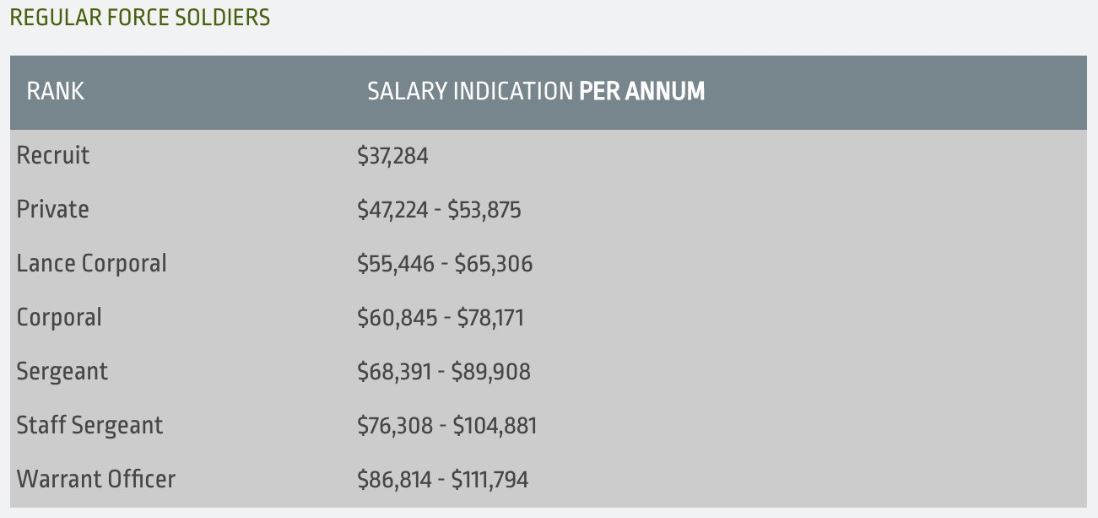
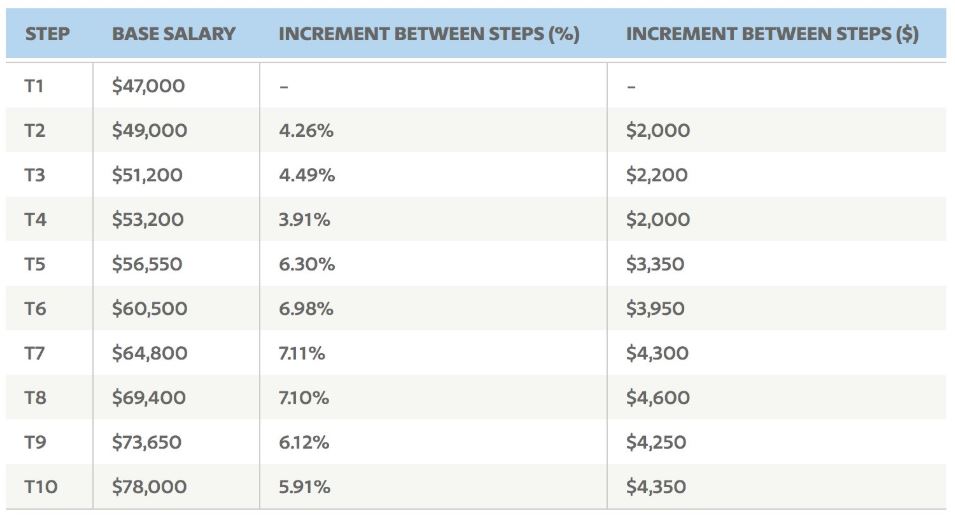
    Check out these stats from a bit of research a Twitter follower did:

    When a Corporal in the New Zealand Army can earn as much as the TOP tier experienced teachers (besides units, or senior management), then it speaks volumes. And don’t for a second think I am belittling Corporals in the New Zealand Military.

    Heck; just look at the salaries of members of parliament. You have to go back to 1979 since the pay for a back-bench MP was the same as a Teacher’s salary. Now, a Back-bench MP brings home $168K worth of bacon each year – and then vote to increase their wages which gets passed almost before the Yay’s can say ‘Y’.

    That’s a 40% difference, in nigh on 40 years. There’s no way that we’ll get back to where the pay scales will be anywhere near the same.

    It can’t happen, I hear you say…

    It did. Back in 1985, under a Lange led Labour government, a 40.17% pay hike was given to secondary teachers across the country.

    I’m not saying that it will happen again. But if the government (and the people the MP’s represent) are serious about the future of the country, then they need to get serious about making Teaching a viable career.

    You can come out and say that you want smaller class sizes, but to get to smaller class sizes, you need more teachers. And to get more teachers you have to make it a job worth staying in (less work pressure) and pay them more so that teaching is on par with other careers.

    Everyone knows, thanks to Whitney Houston, that children are our future, and we’ve all had a teacher who has inspired us to be more than we are, or more than we were. You put money into education, and you get it back in droves in the generations to come.


    The good news is, Minister Hipkins is aware of it and is doing something about it. Quite what it is that’s doing is largely unknown – given the latest purchase in the Defense force, but hey… at least it’s not a U-turn.


  • Parents want teachers parenting

    Care provider. Call centre operator. Kitchen hand. Negotiator. Detective. Judge. Medic. Counsellor. Social worker. Psychologist. Personal trainer. Caretaker. Cleaner. Don’t get me started on the numerous things that teachers have to do each and every day. That’s even before they have to teach a class full of students some Maths, English, Science, Technology, Music, Art, Dance, Drama, Social Science, and Languages.

    Original article: New Zealand schools need to teach more life skills.

    Kiwi parents want more life skills taught in school, a new survey shows.

    From cyber safety to sex education and manners, two-thirds of parents believed it was the responsibility of teachers to impart lessons traditionally handled at home, according to a survey of 500 New Zealand families.

    Ethnicity played a role in what parents regarded as important in a public education, with Asian parents more likely to want schools to handle the teaching of life skills.

    Parents perceived schools’ responsibilities increased in secondary school.

    But Post Primary Teachers’ Association (PPTA) junior vice president Melanie Webber said that while teachers were role models, it would be difficult to fit more life skills into the curriculum.

    The study by the Australian Scholarships Group (ASG) and Melbourne’s Monash University found a “social shift” away from valuing scholastic success towards a more holistic education, ASG chief executive John Velegrinis said.

    “There are increasingly blurred lines as to where (teacher responsibility begins and ends as parents’ perceptions of their traditional roles and responsibilities change.”

    Asian amilies viewed education more traditionally and set higher standards for their children’s academic success than Pākehā parents.

    About 92 per cent believed a degree would help their child achieve their ambitions and 38 per cent did not think their child could be distracted from learning.

    Just 18 per cent of Pākehā families felt that way about distractions and only 66 per cent said they set “high standards” for their child’s education or agreed a degree was important to their success.

    Asian families overwhelmingly supported schools teaching more about social skills and public behaviour (91 and 88 per cent respectively), with about 42 per cent of Pākehā parents on board.

    Christchurch mother Michele Fantham said she wanted daughters Bella, 10, and Neve, 6, to be taught social skills and financial literacy at their school, Fernside.

    “I think the curriculum is pretty cram-packed full of lots of things the school or Ministry (of Education) think are really important that are just not going to benefit them in the real world.”

    She was concerned technology impacted children’s ability to “use manners and communicate properly”. She was among a third of Kiwi parents who believed teaching cyber safety was a school’s responsibility.

    Read more.

    Source: https://www.stuff.co.nz/national/education/97798269/new-zealand-schools-need-to-teach-more-life-skills-parents-say


  • How Canada became an education superpower | BBC

    I found this article and was amazed by it, given the fact that Canada actually approached New Zealand and borrowed aspects of our Curriculum for their use. They developed a selection of ideas from it, but largely, their education curriculum is modelled off ours.

    Then, it would seem, we brought in National Standards, and they didn’t. Look what happened!


    When there are debates about the world’s top performing education systems, the names that usually get mentioned are the Asian powerhouses such as Singapore and South Korea or the Nordic know-alls, such as Finland or Norway.

    But with much less recognition, Canada has climbed into the top tier of international rankings.

    In the most recent round of international Pisa tests, Canada was one of a handful of countries to appear in the top 10 for maths, science and reading.

    The tests, run by the Organisation for Economic Co-operation and Development (OECD), are a major study of educational performance and show Canada’s teenagers as among the best educated in the world.

    They are far ahead of geographical neighbours such as the US and European countries with strong cultural ties like the UK and France.

    At university level, Canada has the world’s highest proportion of working-age adults who have been through higher education – 55% compared with an average in OECD countries of 35%.

    Migrant students

    Canada’s success in school tests is also very unusual compared with other international trends.

    The top performers are often cohesive, compact societies and the current highest achiever, Singapore, has been seen as a model of systematic progress, with each part of the education system integrated into an overarching national strategy.

    Canada does not even really have a national education system, it is based on autonomous provinces and it is hard to think of a bigger contrast between a city state such as Singapore and a sprawling land mass such as Canada.

    The OECD, trying to understand Canada’s success in education, described the role of the federal government as “limited and sometimes non-existent”.

    Also not widely recognised is that Canada has a high level of migrants in its school population.

    More than a third of young adults in Canada are from families where both parents are from another country.

    But the children of newly-arrived, migrant families seem to integrate rapidly enough to perform at the same high level as their classmates.

    Read more here.

    Source: http://www.bbc.com/news/business-40708421


  • The pendulum swings back on school tests | BBC

    Let’s hope that NZ Government can make the change before they have to go back on this. Let’s ditch any National based assessment for primary schoolers. It’s too much. Too much pressure on the children. Too much pressure on the teachers. All for what? Thankfully the UK Government are beginning to see that what they’re doing isn’t helping…


    30 March 2017

    If news stories could have a soundtrack, then this scrapping of tests in the early years of primary school would have the creaking sound of a pendulum slowly swinging back.

    The Department for Education is proposing that national curriculum tests taken by seven-year-olds in England could be ditched.

    Instead there would be an assessment of five-year-olds by a teacher – a so-called “baseline test” – which would be used as a starting point for measuring progress through primary school.

    It represents a step backwards from more and more testing – a shift in attitude as much as policy.

    And it raises again the thorny question of what kind of tests young children should face in primary school.

    Are such tests a helpful indicator for identifying pupils’ needs? Or are they an unnecessary pressure – a case of too much, too young? And are such tests going to mean a paper mountain of extra bureaucracy for teachers, hindering rather than helping learning?

    ‘Hope over experience’

    The teachers’ unions have broadly given their support to the government’s announcement to row back on the tests for seven year olds in reading, writing, maths and science.

    But the National Union of Teachers still says the idea of a baseline test for four or five-year-olds remains a “triumph of hope over experience”.

    The teachers’ union questions whether this can ever be a sufficiently reliable test to be used as a fixed point against which to measure all the following years of a child’s progress.

    But the counter-argument to this is that you have to start somewhere.

    If schools are to be held to account for how much progress children have made by the age of 11 – then it has to be measured against a starting point.

    And isn’t the natural starting point in the first year?

    There is also a strong argument that it is the low achievers and the disadvantaged who will be most in need of the extra help that a test might identify.

    And at the last general election, all three main political parties were sympathetic to the principle of baseline testing.

    But the announcement on testing also raises another great back and forth of the education pendulum. How much data is too much?

    Parents’ evenings, with spreadsheets and targets, can feel like a chat with the accountants.

    And for the schools themselves, the accumulation and analysis of data has become a major part of their working lives.

    Read more here.

    Source: http://www.bbc.com/news/education-39444999