Tag: learning

  • Coding in the Curriculum

    In 2018, the New Zealand Curriculum is destined to have a new addition to its subjects.

    From the age of five, children will now be taught about coding, logic, problem solving, if-else statements, app making, social media analytics, and probably hacking as well.

    But there is a lot, a LOT, of apprehension about this, even as a techie myself (for instance – I design websites, and have coded for much of my adult life). Put it this way; I’m not jumping up and down about this announcement.

    Who?

    I don’t know about you, but the first thing I asked was who is going to do this? I have met many a good soul who dedicate their lives to teaching students, but who’s computer literacy is extremely limited.

    And while the content knowledge required to for Level 1 of the curriculum will be very basic, it still requires a great deal more teaching knowledge to be able to teach it effectively. What are students getting stuck on? What are the next steps? How do I solve the next problem?

    Take for example Level 1 of the Reading curriculum. It’s fairly straight forward. Most, if not all (fairly presumptive, I know) adults could achieve this. Now think of the teaching knowledge you would need in order to teach it effectively. The sounds, the blends, the phonics, digraphs, vowel sounds and rules around their usage, the common pitfalls and sticking points as well as the various strategies required to assist and help students to progress to level two. And that’s just scraping the surface of teaching students to read.

    Imagine the level of teaching knowledge that is going to be required to effectively teach digital literacy.

    And now take that to level two, and level three of the curriculum.

    My current estimate, based on my current place of employment and the various other schools I have worked in, would be that about 10% of teachers would have the skill set required to teach digital literacy if it was introduced tomorrow. And that 10% is probably generous. Most of what makes a good programmer, coder, or even just a ‘tech guru’ is the ability to solve problems. When something goes wrong, you need to know what to do to fix it, systematically, step by step, eliminating variables as you go. From experience, many teachers struggle to problem solve why their projector isn’t connecting, or why the sound isn’t working on their laptop. How do we then get to a place where teachers are teaching students even more complex problem solving when you introduce if-else statements that don’t work!

    Many non-tech-savvy people turn to one demographic for help. Young people. Why? Because they’re already up with the play on technology. Their desire to explore, to learn, to develop skills with technology seems to happen automagically, and I can only see teachers and schools getting in the way of that. As well as this, I read an interesting post about ‘future-proof’ learning, predicting what the future holds for our students, and how we can’t and shouldn’t be including things in the curriculum that are a phase, or a fad.

    (Note: I realise that schooling exists past primary school; but we already have specialist subject teachers at Intermediate and High School level, and so schools would merely employ a specialist ‘digital literacy’ teacher.)

    How?

    Another aspect that may or may not have been considered is how schools are going to teach it. You know, the practical side of it. You see; I’ve only once had to write down a piece of code on paper (during a Comp101 exam I took in Uni). It was nigh on impossible not being able to check and edit the code to improve it or to see if it worked. A lot of coding is trial and error.

    Essentially, if digital literacy is to be taught, then students will need devices. Doing it with pencil and paper will only last so long.

    Now I’m not sure about your school; but our decile 2 school has only just got to the point of having 1 device between 2 in the senior school, and 1 to 4 in the junior school. Yes; we can combine sets of these devices to allow every student to have access to one, but my point is, there are lots of schools out there who wouldn’t have this level of technology in their school yet.

    With more devices comes more problems. More students who run into connection issues, which in turn requires the teacher to know how to solve that problem (many of which once again, don’t know how to go about doing this on their own laptops as it is).

    When?

    Ultimately though, when are teachers going to fit this in? Or is it going to be integrated throughout the day? I guess that comes down to the individual teacher. But I know for one, I would love to spend more time teaching students how to use the Chromebooks, how to code a website, and more; but the reality is that I have a hard enough job covering the rest of the curriculum sufficiently, as well as the ever increasing demand on Maths, Reading, and Writing, without adding more to that workload.

    Gripe

    Don’t get me wrong. I’m not having a go at my colleagues or other teachers. They all have strengths and are all marvellous teachers. I merely see a massive gap between adding a subject to the curriculum and the current knowledge of those that have to deliver content about that subject. Massive gap.

    I can see my job as a tech-savvy teacher becoming more than it already is, as I can see me having to assist with other classes tech problems more than I already do, provide support for when tech devices go wrong, and provide ongoing P.D. as teachers encounter problems or inspiration that they want to explore.

    Once again – not sure when I’m going to actually get to teach my own class.

  • David Seymour’s Crying Baby

    Waaaa. Waaaa. Stop picking on my baby.

    David Seymour sure is a whiney wet fish when he comes out to defend his precious little charter schools.

    This came about as a charter school approached a nearby state school (after potentially pinching some of their kids so they could open) and asked to use their science laboratories (Essentially they just want the fume hoods, but lets face it, you’re going to end up using the whole space, not just the fume hood!).

    While the school agreed out of good will, they were quickly advised by the Secondary school union ‘PPTA’, that any such arrangement with charter schools was something that was discussed and would not be entered into by state schools.

    In steps David Seymour to fling dirt on the PPTA and try to undermine the PPTA’s credibility.

    Unfortunately (for him at least) he’s come out like a pathetic parent who has no spine “Oh pretty please stop picking on my little child. Okay, well, maybe instead of punching and kicking it, you could just punch it. Okay, but just one kick.”.

    Wet fish.

    Watch the video.

    “I think the critical thing here is that we’ve said for a long time there’s an orchestrated bullying campaign from the PPTA towards partnership schools – and it’s been particularly strong in Northland. It’s never been documented like this, it’s never been explicit.”

    He said there was a “relentless, and frankly insidious campaign” to make life uncomfortable for charter schools.

    “But what I would say is that all good, hard working teachers up and down the country might want to ask themselves if they want to be a member of an organisation that puts ideology ahead of kids like this. ”

    As both the PPTA and the Labour leader point out, Charter Schools get much more funding than state schools could ever hope for.

    “Labour leader Andrew Little says there is a legitimate question about whether charter schools should be getting help from state schools.
    Especially when charter schools have roughly five times more funding for each student than state schools.
    Mr Little says most people would say that’s pretty rough when state schools’ operational funding is being frozen.” – TVNZ

    “Roberts rejected Seymour’s comments.

    “I think it’s a bit cheeky to expect the state system to prop them up even more than they are already.

    “So our members have been very clear from the outset that charter schools – because of the way they pull resourcing away from state schools, and they make vulnerable schools and communities even more vulnerable – that we don’t support them.

    “We will not prop them up because our commitment is to the students in the state system,” she said.

    Roberts said a fume cupboard cost around a $15,000 – “I’m pretty sure that if they’re really careful about the way they cut their costs, they’ll be able to find the resourcing for it”.

    “My understanding is Mr Seymour thinks we’ve pulled out the big guns and gone up there to try and bully them, but actually I met with my members, which I’m more than entitled to do, and we’ve done this on more than one occasion.

    “I guess the issue is more broadly, charter schools have got the luxury of just thinking about the kids in their school, but we’ve got a commitment to all of the kids in the system.” – Stuff

  • Using Google Classroom

    In 2014 Google released it’s LMS to the world. Aptly called “Google Classroom”, it was little more than a Google Plus type newsfeed for classes. Teachers could sign up student accounts, and set assignments and post announcements.

    Read more: About Google Classroom

    Since it’s release, it continues to be developed. There are now polls, feedback, assignment documents. It even integrates with Google Calendar to keep students on top of the upcoming and due assignments that teachers set.

    Obviously, the target audience for Classroom is for use in High Schools. However, I have also used it rather successfully in upper primary school as well.

    Using Google Classroom in the Classroom

    First, go to http://classroom.google.com. It will then ask you to either sign in using your Google Account (Education), or if you’re already signed in, then you can Create or Join a class. You’ll want to Create one. Click on the plus, and click on Create.

    Of course, you can create as many classes as you need. One for each year level, subject or whatever. As a primary school teacher, I create one class for each year I teach.

    The great thing is, Google Classroom integrates straight with Google Drive, and creates a “class folder” for students work, posts, documents and everything else.

    For my class, each student has a school Google Account. I then put up the unique class code on the whiteboard and ask each student next time they log onto the Chromebooks to join the class.

    Once this is done, it is relatively simple to add assignments, projects, and ideas to the ‘news feed’ for the Classroom.
    For instance, if there is a particular video that I want the students to watch for a lesson, I can create a new post, and share the link. Students will then look at the Google Classroom and see the video link, and in time, watch it. Much like a newsfeed, they can comment and share their thoughts (though mostly comments turn to “wassup au” and the like) as they find themselves in a new social environment and explore communicating with each other in different ways!

    Once you have setup your class, it’s easy to manage assignments. Let’s say an afternoon’s work requires students to research and answer a few questions; you could set up a Google Document that has the questions on it. Each student gets a copy of this, and fills it in as they work through the afternoon, and at the end, they click on “Turn in”. This submits the work to the teacher, who can then provide feedback as necessary. The great thing about it is that it keeps students motivated; much more than just printing off a worksheet of questions and getting them to hand it in on your desk at the end of the day!

    There are a number of settings which are pretty straight forward which will help you set up your Google Classroom to your own preference. Things like whether students can comment or post, who can see what, and the look and feel of the site.

    There’s a heap more going on, and more is being developed each day, but as I always try and encourage – get in there and play around yourself. You learn more by doing anyway!

    Related Links

  • Teacher graduates to be bonded to schools | Stuff.co.nz

    Labour says “on the job” placements should be a bigger focus across all teacher training courses.

    Source: Labour is keen for all teacher graduates to be bonded to schools | Stuff.co.nz

    There is a certain degree of irony as we walked the uni halls going from drab lecture to drab lecture as the guiding lecturers encouraged us in the art of teaching and using different teaching styles, making it interesting, engaging our students, using cooperative groups, and yet maintained a ‘sit down, shut up, and listen’ teaching approach themselves.

    Therefore, when we were unleashed into the real world of classrooms, with 30 sets of eyes all looking at us like we’d fallen in from a different planet, we were all too eager to get stuck in and learn as much as we could.

    I still maintain, that the majority of learning that I did in my four year degree was largely, and even solely, from the practicums that were spread out over my time at teacher’s college. Nothing was more eye-opening, or realistic, than dealing with students, encouraging thinking, facilitating learning, and learning the ins and outs of actual schools, their rules, their expectations, and all that comes with them.

    Bonded to Schools

    I’m not really sure what Labour is hoping to achieve with this. Firstly, most schools are fully staffed. Taking on a student teacher, not only to be training them, but then supplying a job for them later on, is a little too much for schools to commit to, especially for first time teachers.

    Obviously there would need to be a generous amount of sorting this out, and will directly require universities to work a lot closer with the Ministry, and with the placement schools.

    What do you think? Are the current systems good enough? Will ‘bonding’ student teachers to schools lead to an equal opportunity for all applicants to positions?

  • Reading Recovery Outdated?

    Reading Recovery outdated

    Change seems to be addictive in today’s culture. We always want the latest and greatest, and tend to shun anything that is deemed too old. We strip back perfectly good wallpaper, desire the latest iDevice even though our current one is more than adequate, and as for the latest fashion trends – well we all know they go in circles.

    It’s somewhat controversial news that Reading Recovery is supposedly outdated; though I’m not sure why.

    Maybe it’s because it’s a well established teaching programme in our country now.

    Maybe it’s because so much money is poured into it.

    Maybe it’s because one to one teaching is the most ideal scenario.

    Maybe it’s because our reading recovery teacher is bordering on the perfect definition of “legendary” and “awesome” combined in one.

    I therefore am not going to debate the issue of whether reading recovery is outdated, or whether groups of five or six is better, as is outlined in the Quick60 programme.

    It’s a Numbers game

    When we look at these two programmes, they have one thing in common.
    They both have a small teacher to student ratio, allowing the teacher to offer quality, focussed, and individualised teaching for the students.

    They allow for targeted learning, often to address specific needs of each child.

    As we move further into the 21st Century, there seems to be an ever increasing demand to address all the different needs in the class, to meet each individual need, and to provide differentiated learning based on all of those needs. National Standards has all centred around where the individual child lines up against the whole country, and individualised testing and assessment has proven to be far more accurate, or understanding, about each child.

    Yet at the same time, teachers (and some parents) continue to fight the direction of the government to raise class sizes up to phenomenal levels based on whatever research they can get their hands on that supports their agenda.

    Add to this the ever increasing number of special needs requirements within the class, and you start to get the picture of a classroom teacher who is going to find it hard to individually meet the needs of their class.

    And so this is why programmes like Reading Recovery and Quick60 thrive. It’s learning at its most ideal level. It addresses the needs in front of them. It’s focussed. It’s individualised. It’s differentiated.

    And that is why it works; regardless of how much progress is made by those students. A teacher can only do so much; at some point the student will reach the point where their potential and their obstacles meet. They will require more than just a teacher, and more than just 6 hours a day, for some of those obstacles to be removed. It takes a concerted effort of all involved; the school, the parents, and the child, to overcome these and continue to make progress.

    I don’t believe we can label and programme a failure or “outdated” purely based on any kind of results or lack of achievement when they’re are obviously so many factors which contribute to it.

    Edit: Some background information

    I did some “on-the-ground” research of my own.

    Turns out, Massey do this at nearly every opportunity. You see; back in the late 70’s, early 80’s, when applying to the Government for the tender of a nationwide literacy programme from the Government for funding, the powers that be decided to go with University of Auckland’s “Reading Recovery” programme by Marie Clay.

    You see, another university also applied for the funding for a nationwide programme. You guessed it: Massey University.

    The bitter rivalry continues through to today; some thirty years later. Take a look at these recent articles, all quoting comments, research, and articles by Massey University professors, in particular Professor James Chapman, who is cited on numerous occasions.

    When pieces of research are conducted under such circumstances, it is hard not to see that they are under the duress of bias, and need to be somewhat disregarded, given that they are looking for the failings of Reading Recovery, rather than conducting independent and unbiased research.

  • Children gain book smarts by reading aloud to dogs | Stuff.co.nz


    Children are reading aloud to dogs to boost their book-smarts in an innovative project.

    Source: Children gain book smarts by reading aloud to dogs | Stuff.co.nz

    Is anyone else a little miffed by this article? I mean, good on them for thinking outside of the box and involving children in the process of animal rehabilitation and the inclusion of canine expertise in facilitating the practice of the juvenile reading process, but really?

    There is no doubt that reading aloud helps children improve their reading ability, their decoding skills, and their fluency. These are all things that are a feature of many primary school classrooms around the country. Daily 5, a literacy programme that I run in my class features this as a focus for students to do exactly that – practise reading out loud to someone. Students will read with emotion and try and read so that they make sense to their buddy. Their buddy can help with coaching and support.

    But at what stage did we replace reading to someone else with reading to dogs? At what point did reading to your Mum and Dad at night before bed become ancient history? Have we become so lazy or so busy and so self-indulged in our own life that we no longer put any time or effort into spending time nurturing, growing, and supporting our children? At what point did we relegate the task of reading out loud to dogs?

    And if the only “fun” in reading is in direct relation to hungry animals, then I suspect sales in “The Very Hungry Caterpillar” might spike during January.

    Next holidays however, there is going to be a relative shortage of dogs as they attend the National Writing Convention, and so I am going to be busy training houseplants how to listen to children read and offer support to them. I may even start by putting little bandanas around them so they know to calm down and stop running around like crazy trees.


  • The Collaborative Classroom

    The Collaborative Classroom

    Teaching environments and modern ways of reinventing knowledge.

    The silent classroom is a thing of the past. Long days at your desk, all facing north, with the teacher’s desk aligned in the opposite direction at the front have been relegated to the storage cupboard along with the typewriter and cassette tape.

    Instead, the class is a buzz. Students, while individual and unique, are working together to achieve a common goal. The key competencies of ‘Relating to Others’ and ‘Participating and Contributing’ both get ticks in their boxes. Motivated by their own choice, students are inquiring into the affects of bees or lack thereof on the environment.

    The Collaborative Classroom has come about to closely align with ‘Modern Learning Environments (MLE), and seeks to align the physical aspects of the classroom environment with the collaborative philosophy of today’s education standards. It is one thing to get students to work together, to have collaborative practises, to have a teamwork based curriculum, but if all the classroom isn’t set up for students to work together, then they won’t. Certain aspects of the ‘Collaborative Classroom’ leads students naturally to work together.

    But with the environment there needs to be shifts in the teaching that allows students to work together, to search, struggle, challenge, and extend each other, and hopefully, grow a deeper understanding in the topic, their peers, and themselves. In essence, the teaching environment leads to modern ways of reinventing the way we acquire knowledge.

    I do not think there are many modern day teachers who don’t incorporate some collaborative tasks into their daily programme. We are constantly reminded of the value of strategies like ‘Think, Pair, Share’ and ‘Reading Jigsaw’. Certainly, having recently gone through training college, the idea of ‘group work’ and collaboration are well ingrained in the pedagogy of how we were taught to teach.

    Now there is a move to ensure that such activity is not only expected, it flourishes and happens naturally purely because of the classroom layout. As this Government rolls out a selection of funds for schools to ‘modernise’ their learning environments, the collaborative classroom is immediately considered as the way forward. Larger open spaces which are customisable are favoured for this, as different tasks require different needs.

    1900
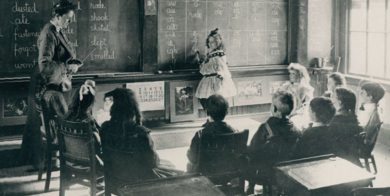
     

    Working in groups is not a new thing. As we can see in this old classroom photo, whilst individual desks are set apart, all facing the front, we can see the children of the class in a circle, participating in a lesson. Everyone doing the same thing so that they all left school fitting in a particular box was the aim.

    1990
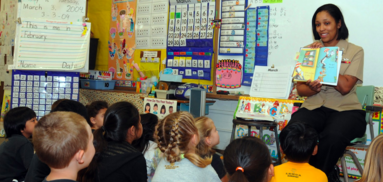
    In the 1990’s, desks were somewhat modernised, along with individual trays that have multiple uses. Large, often bulky ‘personal computers’ were all the range, and it wasn’t uncommon for each class to have at least one that sat in a corner, just waiting to be played with during a wet lunch time, or if you were lucky, publish a piece of writing.

    The introduction of a mat area also became popular, inviting students in closer to see details, but also participate in a lesson that was separate from the daily grind of staying in one place all the time. For the first time we see a dedicated wide open space in the classroom.

    2000
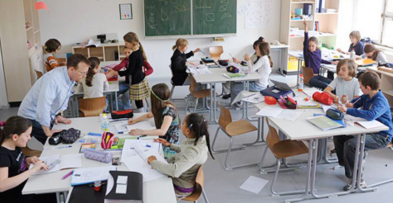
    Enter the year 2000, turn of the century, and educators are looking for ways to encourage student talk, real life learning, and discourse in the classroom. But without a budget, schools had to use what they had. Individual desks were kept, but placed into groups. Each child would still have their belongings, but they would also be part of a group to work with, discuss ideas, and work together as a team.

    It is around this time that the idea of a collaborative classroom came into play. Hubs of tables fill wide open space. The clutter is generally gone, but there is space for learning to happen. The walls are adorned with linked up screens that can be viewed from anywhere in the room.

    Roles and Relationships

    The role of both the student and the teacher has changed along with the physical space. In the 1900’s, the role of the teacher was that of a preacher. The fount of knowledge to fill the empty minds of the students. Repetition, repetition, and repetition was the key to learning, and if you didn’t get it first time, you’d keep doing it until you got it right.

    Take this through to today, we have a teacher who is a facilitator for learning. They pose questions that challenge and encourage wonderment. They inspire and engage. Students are the driving force for learning. They pick up an idea and take it further in the direction they want to take it. They work together to co-construct their success criteria, and figure out the how themselves. They rely not on the teacher for information, but on their own ability to go and find out. They are both collaborative, but independent, and the balance of these happens seamlessly. In an article written well before it’s time (1990), Tinzmann, MB et al. state that

    Effective communication and collaboration are essential to becoming a successful learner. It is primarily through dialogue and examining different perspectives that students become knowledgeable, strategic, self-determined, and empathetic. Moreover, involving students in real-world tasks and linking new information to prior knowledge requires effective communication and collaboration among teachers, students, and others.”

    The environment is only one part of the Collaborative Classroom. What is more important is the learning going on inside it. Rebecca Alber states:

    Learning, and higher-level learning such as synthesising information from several documents or analysing scientific data, can hit much deeper when done collaboratively. Let’s not forget Lev Vygotsky and his educational theory that proposes learning as a social process. And if he were alive today, he would most likely agree with the saying, Two minds are better than one. He might even add, “Better yet, how about three or four?”   

    It doesn’t matter if you are stuck in a 1960’s classroom with cupboards and storage, old flip-top lidded desks, and steel framed chairs; the way you go about teaching (or facilitating learning) is key.


    Is it any wonder then why the subtitle of this article spells out Teamwork with each first letter?

    Related Reading

    1. Tinzmann, MB et al. “What is the collaborative classroom.” Proceedings of NCREL (1990).
    2. “Deeper Learning: A Collaborative Classroom Is Key | Edutopia.” 2012. 29 Sep. 2015 http://www.edutopia.org/blog/deeper-learning-collaboration-key-rebecca-alber
  • Writers Workshop – Class flowchart

    Recently I began using Writers Workshop in the class to co-exist within the Daily 5 programme that I run. One of the first things I do whenever embarking on a new strategy for teaching is to create a resource that showcases the structure of the programme. Writers Workshop was no different.

    Writers Workshop Flowchart Posters

    Screen Shot 2015-09-13 at 9.33.15 PM


    For each of these posters, I cut them out and laminated them. Then I staple/pin them to the wall.

    Each child in the class gets a peg with their name on it, and depending on where they are up to in the writing process, they put their peg. This helps them to be aware of what they are working on, and also assists me as the teacher to work in with where the students are up to.

    What is Writer’s Workshop?

    There are a variety of webpages out there that will tell you all about Writers Workshop. Busy Teachers Cafe has a good outline. The main focus of the workshop approach though, is to get students writing. Allowing them to choose what they write about provides instant motivation. The only issue occurs when student’s don’t know what to write about; but there are a variety of ways to get around this in the teacher’s arsenal. Allowing students to monitor their own writing is another part. And limiting teaching to mini lessons is also a way to get students writing for longer periods of time. Practise makes perfect after all.

  • Growth Mindset: What’s it all about

    A lot has been made of this ‘new’ buzzword that is hitting our education shores. Any word with ‘Mind’ in it seems to be linked to being better as an individual. Growth mindset has been around for a while though. But what is it?

    What is Growth Mindset?

    Growth Mindset is the internal thoughts that you can always get better. Whether it is something you are good at, or something that you struggle with, through practise, hard work, training, or just sheer determination, we can all make improvements and progress towards whatever we set our minds to.

    The alternative is a ‘fixed mindset’. This thought pattern suggests to yourself that you are good at some things and excel at them, but are not good in other things. A common area that fixed mindset is applied to is creativity. “I don’t have a single creative bone in my body” is exclaimed by those who are ‘less practised’ in this area. They’ve used this as an excuse not to get better, or not to work hard and try to improve on their lack of natural ability.

    In terms of education, having a growth mindset is incredibly important. It provides students with the challenge to always do their best, and if at first they don’t succeed, then try, and try again.

    Our brains are always making connections, especially growing up; making the growth mindset at school even more important. Having the mindset that these connections can not only be made in varying ways with varying skills and abilities, but that they can be strengthened and developed, enables students to grow as individuals and as learners, and give things a go.

    I found this video incredibly helpful when looking into Growth Mindset.


    In Practise

    One way in which I use this mindset in my class every day is through the use of Daily 5. I regularly encourage students by using the key principle of ‘The only way to get better at reading is to practise reading’. The old adage of ‘practise makes perfect’ rings out loud and proud, and provides the students with motivation to strive for excellence. Whilst I haven’t expressly ‘taught’ the growth mindset, it is definitely an ingrained philosophy in my classroom; in the way that learning is encouraged, they way I teach, and the learning activities we do.

    17855652233_69f0cb6dc3_b_q9c4as


  • BYOD – Bring Your Own Distraction

    BYOD – standing for Bring Your Own Device, has been around for a while now; ever since schools opened up their networks and went wireless, students and teachers alike have been able to access the wealth of information that is available on the internet today.

    But as a speaker at Interface Xpo 2014 put it, BYOD is more aptly put as ‘Bring Your Own Distraction’.

    I chuckled, as I’m sure many of you have as well. Then I realised the truth in it.

    When I say ‘Then’; it did take a while. It took two terms of teaching in a 1-to-1 Chromebook classroom of Year 3-4 students to realise that for many the device in front of them was not a learning tool; it was a distraction.
    Instead of harbouring the potential wealth of knowledge available to them, the students were more enamored with watching youtube videos by the bucket load, changing their background picture, and making their Chromebook talk to them. The question “Are we going to use the Chromebooks today?” became almost as common as “Can I go to the bathroom?”. Searches changed from ANZAC Hero’s, to Superhero’s, to Iron Man, Marvel, and at one point which was bound to happen, ‘sexy girls’. Oh for the love of Pete!

    Unless absolute specific tasks are set, the devices become a source of fun and free time, and trouble.

    Let’s face it: these devices are a distraction. And it isn’t an age thing.

    I don’t know how many staff meetings I have ‘missed’ because I was on my laptop organising my calendar or checking emails. I don’t know one single time I have been given a wifi-password at a conference to listen to the speaker and follow their online notes without a Facebook tab opened in the background. All of these distractions are at the core of technology. Because it can do so much, and meet so many ‘needs’, we have become accustomed to accessing and integrating all of these different sources at once. Even as I sit here writing this, I have two other tabs open, my phone next to me with Facebook and Twitter updates coming through, and Stephen Fry Gadget Man playing on the TV in the background. And this has become my norm.

    Distractions.


    Upskill the Distractions

    I was then disheartened by the following report about tech in schools.

    In it, we hear from the Education Council about upskilling teachers to keep up with the technology. “A recent government survey showed only 14 percent of teachers felt they were up to speed on using digital devices for learning. The Education Council wants to see more opportunities for teachers to up-skill.”

    There are some initial issues with this. Firstly, many classrooms, schools, etc. do not have the resources for “tech” classrooms. I know for the class I am in with 1-to-1 Chromebooks, that large amounts of money have been put into making it a reality. The reason I got the task, is because I am tech savvy, much more so than any other teacher in the school. Without blowing a trumpet of any kind, I would put myself in that top 14% of teachers in terms of technology know-how or capability.

    So why does this article dishearten, rather than invigorate? Surely I should be at the forefront, championing the likes of Taupaki School?

    I find myself somewhat over it. Maybe I’ve just given up on the use of technology in the classroom. Maybe it’s just too big, too fast to keep up with. Maybe it is just because the age of students I am teaching, in that technology for practical use is a few years away for them. Maybe because most of my technology learning has been self taught, and most of our students are self taught with technology as well. Maybe I’m just coming at this from my primary school teacher point of view. I don’t know. At this stage in their life, technology is for entertainment purposes. Maybe for secondary teachers, the upskilling to use technology throughout their classes would be more beneficial, and might be what the article is really getting at. But for me, if these students are going to be using and learning the technology anyway, why should schools put financial pressure on themselves, why should teachers upskill to try and be cool for the kids by ‘speaking their language’. Are going too far to bend over backwards for students, rather than the other way around?

    But it concerns me when a teacher in the video says the kids don’t want to go outside at lunchtime. Does this not create further ammunition for the ‘childhood obesity epidemic’ scaremongers? This is a whole other debate which I won’t get into here.

    It concerns me that we know how quickly technology moves, and we have no idea where it will take us, or the skills that students will need in the future. But no doubt they’ll cope. Why does teaching need to be at the forefront of all things technology? For decades, teachers and classrooms have been decades behind the rest of the world. While offices were getting filled up with beautifully fast, glamourous Macbook Pro’s, schools were left back in the 90’s with iMacs clogging up desk space. A scientific calculator was about as BYOD as it would come. Why is there a sudden need to ‘keep up’ with the kids, rather than focussing on teaching (and them learning) the ‘basics’; such as spelling; such as handwriting; such as mixing paint colours, adding and subtracting in our heads, catching and throwing, or even how to make friends, keep friends, show resilience, or learn respect? Do we need an app to teach students to read? Will methods that have been tried and true for decades and decades, and taught us to read, work just as well for students? Or have students become too addicted to ‘entertainment’ that if it’s not a fun game, then I don’t want to do it.

    It concerns me when “This tsunami of digital kids just keeps coming through our system.” is referred to like a natural disaster. We are essentially creating this ourselves. We enable our students by providing these opportunities under the guise of engagement, when really, we’re creating dependency for screens, an addiction to devices. Do they need it? Or is it a distraction from real learning. Yes, I can show you evidence that technology in and of itself motivates and engages students. The very comment earlier about kids not wanting to go out demonstrates this. But at what cost? And is motivation and engagement enough if there is no learning, or not the right learning associated with it. I guess this comes back to having learning specific tasks.

    I always had a bit of a joke when someone would ask about whether we should go ‘BYOD’. I would respond with once students can bring their own lunch, then you can start to worry about them bringing their own device.

    I would appreciate some input on this issue. As you can probably tell, I’m still trying to formulate my standpoint on this one. On the one hand, I love technology and want to share that passion with my students. On the other hand, I have seen technology distract from real learning, and seen schools getting away from the basics of learning. Please feel free to comment your thoughts below and I will look into including more thoughts into this article.


    Related Reading