Tag: politics

  • Uncertainty

    Uncertainty

    Teachers and Schools are facing an uphill battle; one that is seemingly never ending in the current climate.

    We have a government hell-bent on reforming every aspect of education. Thankfully for them, they inherited the beginnings of a curriculum change from the previous government. However, rather than continuing in the same vain, they chopped it up and replaced it with their own ideology, jumping on the “structured literacy” bandwagon that many schools had begun moving to, invented a phrase “structured maths” to fake legitimacy in the idea and rewrote the curriculum in both areas, somewhat overnight with very little consultation. It comes as no surprise to those who have unpacked the new new curriculum that it was heavily written by AI and this explains the speed in which the revision happened.

    I could spend a whole series of essays outlining the motivation behind these changes, but that is not the objective of writing this.

    No. This article is to outline the plight of the teacher.

    Teachers got told about the changes to the draft curriculum at the end of August of 2024, whilst of course, we were still familiarising ourselves with the ‘old’ draft curriculum. Somewhat hilariously, schools were still receiving professional development from the Ministry of Education around the Mathematicss curriculum when the curriculum changed. During the course of Term 3, teachers were somehow expected to continue teaching from the old curriculum, prepare for reports, carry out assessments, and now review and give feedback about the new draft curriculum.  The shut off for consultation happened and in October 2024 the ‘draft’ was finalised. 

    It was then announced that primary schools would have to begin teaching Reading, Writing and Mathematics from the new curriculum in Term 1 of 2025, giving mere months for the changes to be implemented school-wide. In those months, teachers would be focussed on end of year activities, conducting final assessments, finalising reports, organising end of year activities, organising transition to next years classes, prize givings and senior end of year functions, finishing off the year and farewelling the students leaving. Add in the only ACTUAL break teachers have due to rules around when leave is allowed to be taken, with Christmas and New Year taking priority. If teachers granted themselves two weeks “off”, this would leave a mere 3 weeks before beginning school. Thats three weeks to get your new class organised, synthesise assessment to get an understanding on where your class sits, read notes on the students in your class, arrange desks and implement new or better refined routines, class lists, seating plans, wall displays, and begin to formulate unit plans for the first term.

    Somewhere in all of that, teachers were expected to read and implement a new curriculum for the two biggest subjects in the curriculum. Let’s not forget as well, that not only did the content of the curriculum change, but how it is formatted changed as well. Curriculum Levels are out and ‘Phases’ are in. No longer did we have a curriculum that spanned two years per level, but now every single year had a series of expectations of what was to be taught (despite most schools in the country running composite year classes). On top of this, for the first time in recent history (this century at least!) the curriculum not only outlined WHAT teachers had to teach, but HOW they were to teach it. Whole class, explicit instruction, exposure to many concepts instead of mastery of a few, all methods inspired by the ‘Science’ of Learning ideology that is the latest concoction of pedagogy. If you could ever set up an entire workforce to “learn on the job”, the government had just done it with the entire primary school sector. Teachers were literally teaching from a curriculum that they were still reading and coming to grips with. It is no wonder that teachers were ill equipped for this change, and there was zero confidence in what they were teaching or how they were teaching it, relying heavily on intuition if they had any left, and additional hours spent watching webinars and video clips to try and best follow the curriculum they’d been dealt. 

    Before you knew it, the next lot of curriculum changes were being pushed into draft, and suddenly the ball continued rolling, as well as expanding the existing new curriculum to include Years 7 – 10, completely confusing the entire procedure. Furthermore, with the expansion of the English and Maths curriculum for Year 0-10 came with it amendments and changes to the existing curriculum that Year 0-6 had already been teaching from! So now teachers had a new, new curriculum to unpack; but now they had to figure out what the changes were and make the changes themselves to what they had been teaching. 

    Why would teachers invest their energy in getting to know a curriculum and implement it if there is a high likelihood it is just going to change on them as soon as they do?

    The uncertainty of this very thing leaves teachers in no man’s land.

    Then there’s the uncertainty around the messaging schools receive from the Minister and the Ministry of Education.

    When ‘Structured Maths’ was dreamt up on the coattails of ‘Structured Literacy’, the Minister announced four providers that schools could choose from to implement this new venture. 

    Certain programmes schools were using were discarded and millions upon millions of dollars went into providing workbooks and teacher guides and online subscriptions around the country. Schools didn’t want to miss out on the funding for these resources, and had to decide fairly quickly as to which provider they were going to go with.

    However, looking into it, this was never mandated. The language used was never legally binding, instead this was announced at the same time as Minister Stanford gazetted the implementation of the new Maths Curriculum for Term 1 2025. It was stated that the Ministry would provide supplementary, Ministry-funded classroom workbooks, sourced from four suppliers. So you can see how it would appear that use of the resources was mandated, when in actuality, it was not. They were merely provided to support the mandate that was made regarding the curriculum.

    This has lead many principals to now check with any of the changes being made (mostly to protect themselves, their staff and their schools from unnecessary changes given the sheer volume of changes there have been) whether the change has been gazetted (mandated) or is it merely a suggestion or recommendation by the Ministry?

    The mere fact that this due diligence needs to be done over Ministry announcements just goes to show the complete distrust, lack of faith and complete uncertainty that exists throughout the sector.

    The Minister announced in Term 2 of 2026 that she has pushed back the roll out of the other curriculum areas, to give teachers the time that they have been asking for.

    Unfortunately, this does nothing except delay the inevitable. It doesn’t give teachers more time to study the curriculum and get their heads around it. Why would any teacher do that when the track record would suggest that they’re just as likely to change it between now and then. So instead, just as with the current changes that have already been implemented, teachers will simply have to continue to learn on the job, teach on the fly, given they complete uncertainty and zero faith they can have in the curriculum changes. 

    The uncertainty that exists is stress inducing. It’s additional workload and time-based pressure that could all be alleviated with proper implementation plans that aren’t being rushed through. Carefully implemented plans that work with the sector would go a long way in actually making a difference. However, the whole process has been forced and rushed, and an insurmountable about of pressure out on schools and teachers to just get on and do it.

    Solution Focussed

    A more considered approach is required.

    Measured steps need to be taken instead of rushing widespread changes.

    The changes in curriculum implementation I want to see are as follows:

    Draft curriculum released in its entirety for all to see. 

    Appropriate avenues of feedback provided and actively engaged with the sector – not just giving deadlines for feedback that are adverse to what else teachers are required to do.

    Once a draft is finalised, provide the sector with the finalised version. It should be legalised that this then needs to be in printed form. (One of the reasons I believe they are so prolific with changes is that it doesn’t cost anything much to update content on a website, which is currently all they have to do to change the curriculum. By having to print it, the Ministry will be less likely to make changes, given the cost that it would take)

    Once the curriculum is finalised, give the sector a year to begin exploring the curriculum and implement it during that year if they’re comfortable with it, and only mandate teaching from it in the following year.

    That would provide a clear, and certain plan for schools and teachers to work to. It provides fair and legitimate time for implementation and confidence can return to the sector because of the lack of uncertainty. 

  • ‘Why on earth would I want to teach in NZ?’ The Kiwi teachers staying overseas

    When Ben Drury was teaching at a New Zealand primary school, he was stressed, working at the weekends and “chasing his tail” in the evenings.

    After more than a decade in the classroom, friends started heading overseas to teach – and Drury followed suit, first to Singapore and then to Korea.

    Six years into teaching abroad, he has no plans to move back.

    With accommodation, annual flights home and private school tuition for his kids covered, it was a “pretty good gig”, he said.
    On top of that, his salary was enough for his wife to be a stay-at-home mum.
    “There’s no way we could have done that in New Zealand,” he said.

    While the lifestyle perks are attractive, it’s the shift in workload that has proved the real point of difference.

    In Korea, Drury gets about six hours of time away from his class every week.

    Back home in New Zealand, he got two days a term – or the equivalent of one hour a week.

    “Do I feel less stressed where I am now? Yes, for sure.”


    Read original article.

  • Why didn’t teachers strike under National? They were fighting to save education itself.

    Earlier this week a trade unionist wrote for The Spinoff about the rise of public service strike action under the Labour government. Today former Green Party education spokesperson Catherine Delahunty shares her perspective.

    I have heard more than a few complaints that teachers did not strike under National, so why are they doing it now? As education spokesperson for the Green Party for nearly nine years, I spent many hours with teachers and their unions, examining legislation which undermined the quality public education system. It wouldn’t be an exaggeration to say that over the last nine years the teaching profession was punchdrunk by a sustained political assault on their mission. Hence the exodus, and the struggle to replace the workforce. The recent teachers strikes are a last-ditch effort from a profession with legitimate expectations of fundamental change, relief and reward.

    At the very beginning of the Key government we went straight into urgency to debate their National Standards legislation. This was a disastrous policy which attacked the core principles of teaching and immediately teachers and their unions were forced into battle. Some schools resisted it, and many protested, but the policy of measuring and comparing primary students and schools via league tables became the norm. The damage was done. Remember: National Standards was never debated or discussed with schools and was passed into law under urgency.

    Then came Education Minister Hekia Parata’s attempt to increase class size, on the grounds that size doesn’t matter. This was resisted by parents as well as teachers, who knew that larger classes would mean teachers had less time with each child. The combined effort of both groups led to a humiliating back down by the minister, but the fight took up a lot of energy. In the middle of these debacles the Christchurch earthquakes struck and schools became hubs for communities and for children in shock. The government took the opportunity to impose a reform on Christchurch schools which went way beyond closing or repairing the damaged schools and a battle for survival took place, characterised by official mismanagement and insensitivity towards a traumatised school network.

    But this was just the beginning of the relentless changes and ideologically driven “reforms”. The charter schools championed by ACT and National were provided with resources other schools could only dream of and a range of experiments of highly variable value were begun. Military school and privatisation at public expense were put in the same basket as tangata whenua efforts for educational self determination, while 90% of Māori students remained in underfunded local English-medium schools. Teachers’ major focus was privatisation rather than wages and conditions.

    This all happened while house prices in Auckland went nuts and teacher aides did not get centralised wage funding. Early childhood education was a privatised mess and franchises created baby barns with government encouragement, while Kohanga Reo and Playcentre struggled.

    At the Education and Science Select Committee some seemingly random government bills kept turning up but they all facilitated reduced student and teacher representation in the tertiary sector, school boards being able to run several schools, the replacement of the Teachers Council by a new less representative body, the Teachers Code of Ethics becoming the Code of Conduct… on it went. This all took place in a global context of educational “reform” known as the GERM (Global Education Reform Movement), which led to a rewrite of the Education Act and an Update Bill to incorporate the COOL (Communities of Online Learning) concept – basically a digital replacement of the teacher.

    The actual rewrites were without vision and did not reflect many student or teacher ideas or a common purpose that lifted the debate. They generated deep concern from people like the Children’s Commissioner and the Ombudsman from a children’s voice and rights perspective. Meanwhile the learning support system continued to be broken and teachers were leaving the profession in despair.

    Read original article

  • A Rainy Day

    In relation to:

  • Sufferage: The Sideways Movement

    This year we celebrate 125 years since the Women’s Suffrage movement. In New Zealand, Kate Sheppard lead the charge to get women the vote.

    “Speaking for a new generation, she argued, ‘We are tired of having a “sphere” doled out to us, and of being told that anything outside that sphere is “unwomanly”.’

    Sheppard travelled the country, writing to newspapers, holding public meetings and lobbying members of Parliament. Opposition was fierce. As Wellington resident Henry Wright wrote, women were ‘recommended to go home, look after their children, cook their husbands’ dinners, empty the slops, and generally attend to the domestic affairs for which Nature designed them’; they should give up ‘meddling in masculine concerns of which they are profoundly ignorant’.

    In 1893 Kate Sheppard and her fellow suffragists gathered the signatures of nearly 32,000 women to demonstrate the groundswell of support for their cause. A 270-m-long petition – then the largest ever presented to Parliament – was unrolled across the chamber of the House with dramatic effect. Despite the opposition of Premier Richard Seddon, the Electoral Act 1893 was passed by both houses of Parliament and became law on 19 September. The news took New Zealand by storm and inspired suffrage movements all over the world.”

    NZ History

    But how far have we actually come. I’m not talking about a bunch of young women holding their own comedy special on TV3 and making it out that they still have it bad or celebrating their womanhood.

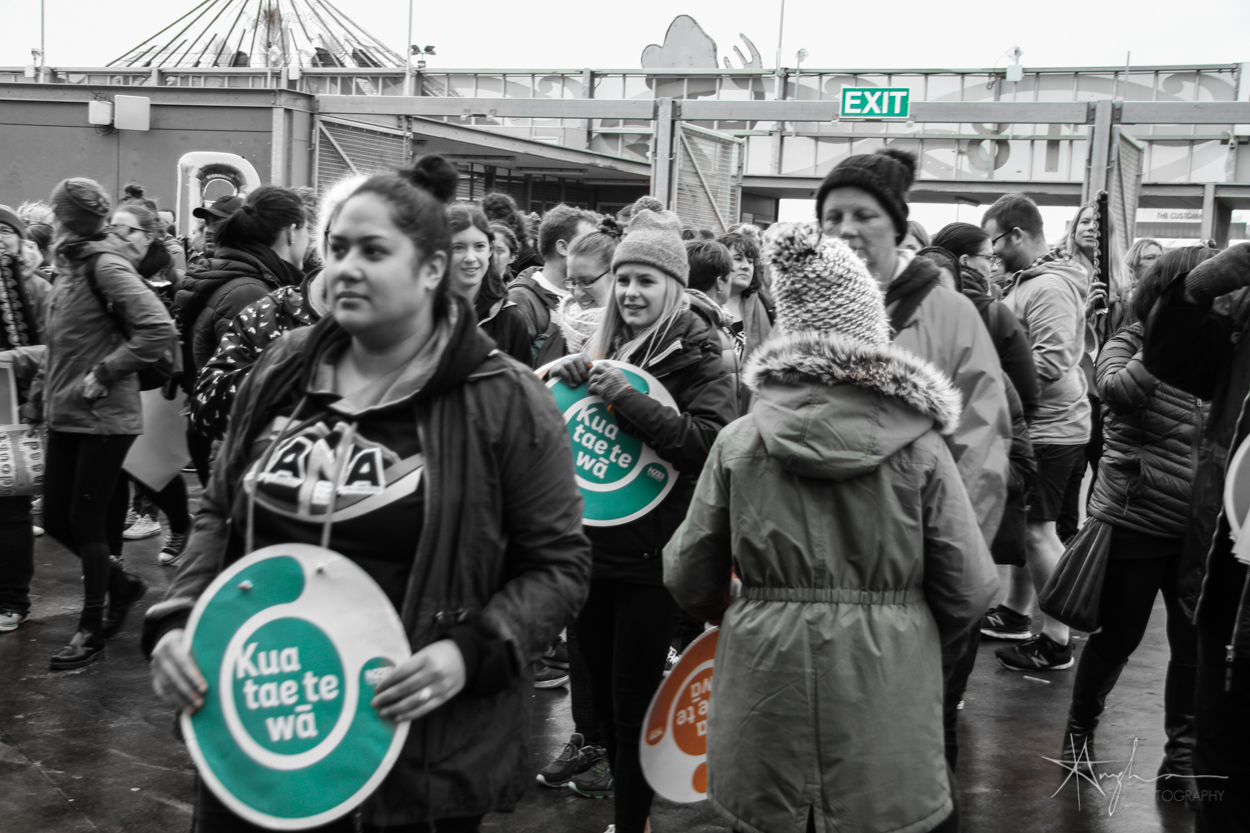
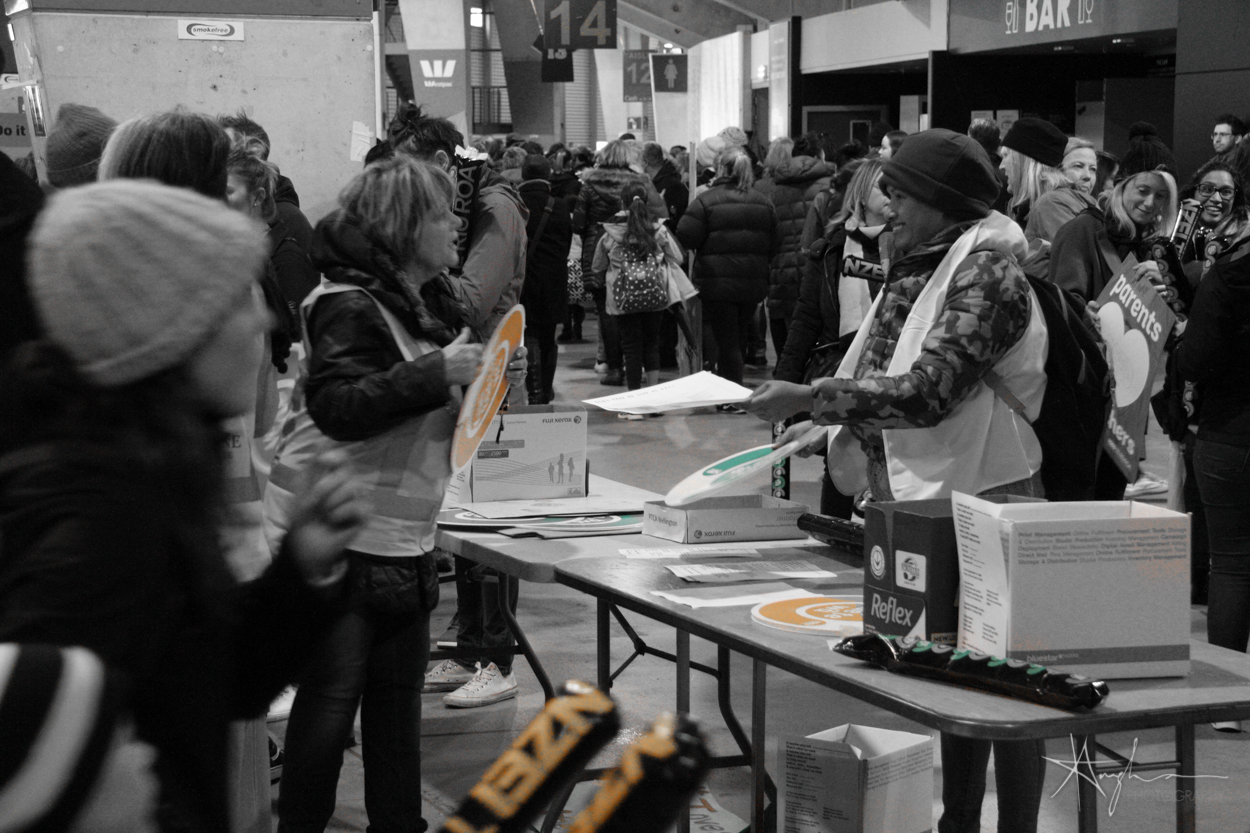
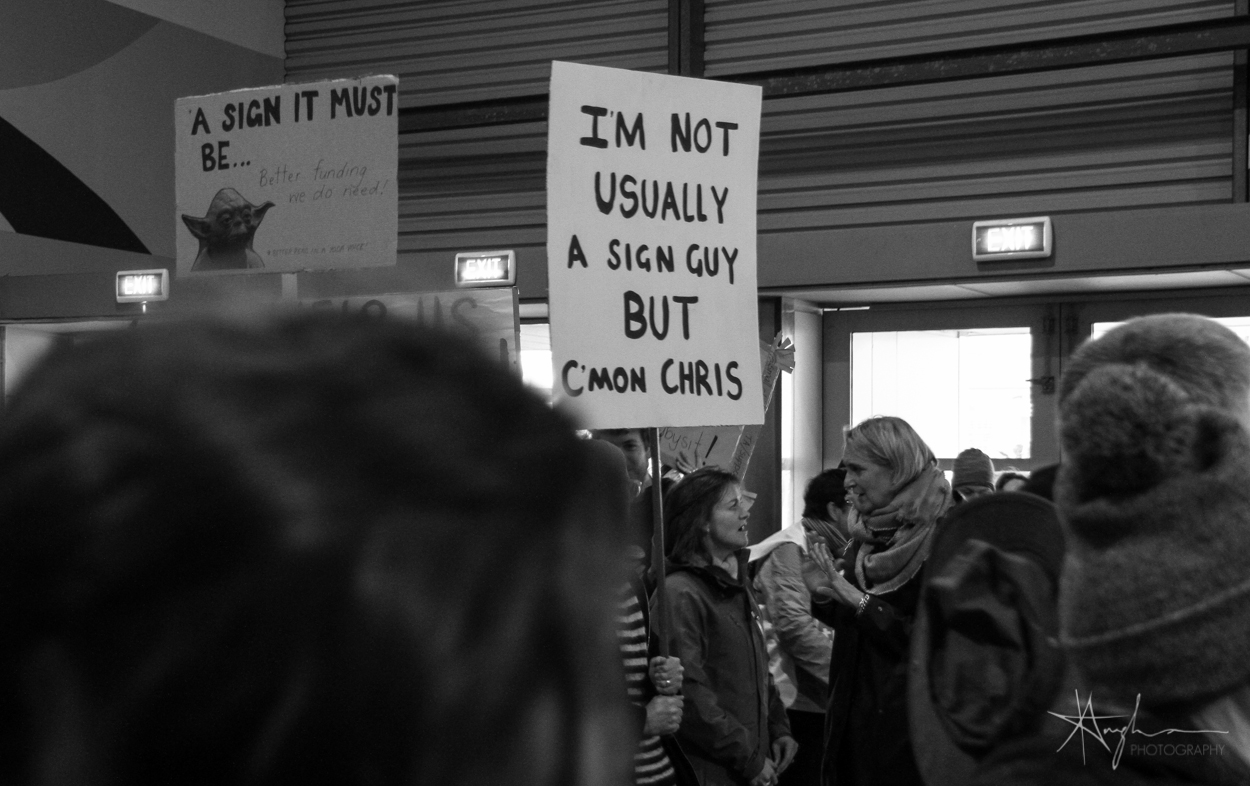
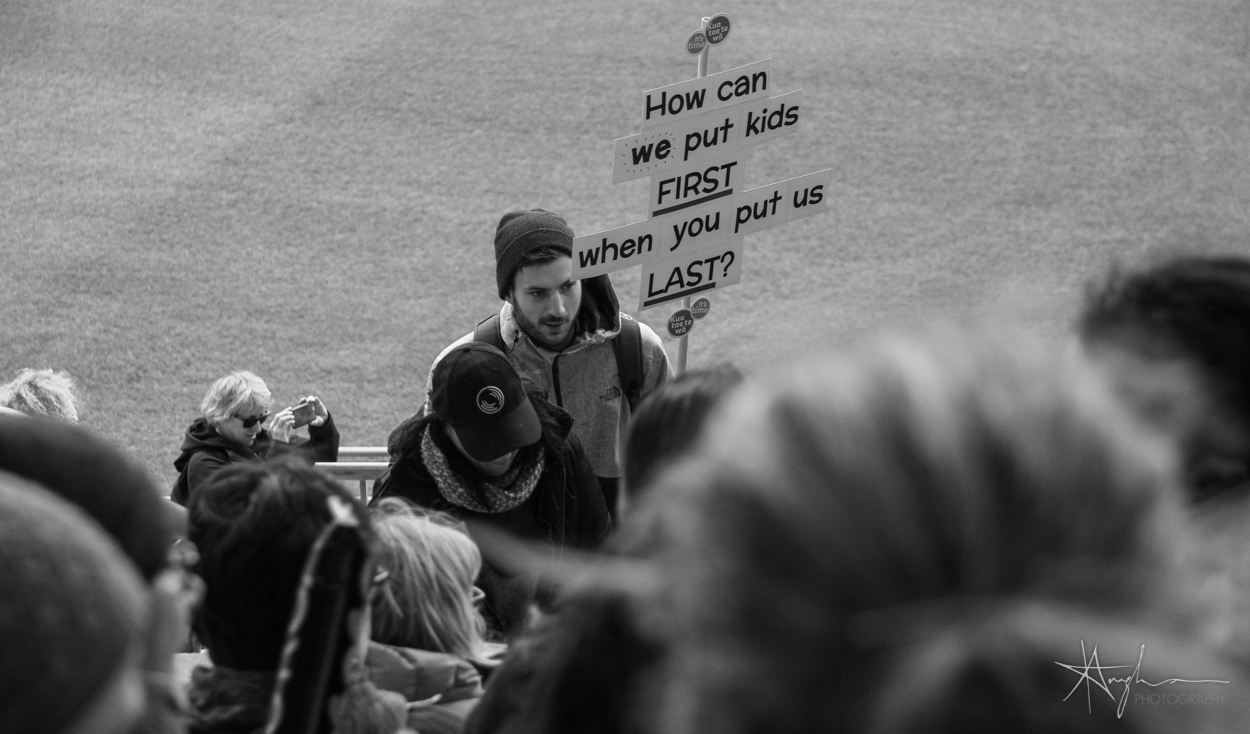
    I’m talking about two unions representing jobs that are mainly made up of women that both decided to go on strike this year. In August, NZEI members voted to strike amid their pay negotiations. 75% of Primary school teachers are female (2017, Education Counts). A month earlier, the Nurses also went on strike. 95% of Nurses are female (2015, NZNO) I’m talking about both these professions, predominantly female, feeling like they are under-valued and over-worked in New Zealand society today.

    I’m not for a second suggesting that they are under-valued because they are traditionally and predominantly female based professions. I’m just saying, it is a very interesting point of time in our history, and it might pay to reflect and review where we are as a country a little bit further than pretty smiles and celebrations on the news channels and hyped up comedy galas featuring female comedians.

  • Over the Bridges and around the Roundabouts

    Hekia did a U-Turn on class sizes back in 2012 when she announced National would be increasing class sizes.

    John Key himself stated that he sent his children to private schools because of the smaller class sizes.

    Yesterday Simon Bridges sent National back down the road, but this time after heading around the round-about and back in the complete opposite direction to his former leaders. In fact, it appears that he’s even driving on the wrong side of the road.

    “In a fiery speech to the National Party annual conference on Sunday, Bridges promised National would increase the number of primary teachers to reduce class sizes and give kids “more teacher time”.

    “With the right education we can overcome the challenges that some children face purely because of the circumstances they were born into,” he said.”

    Stuff.co.nz – https://www.stuff.co.nz/national/politics/105832210/smaller-class-sizes-under-nats-says-simon-bridges-in-major-speech

    It has left many of us scratching our heads, dazed and confused. Isn’t this what Teacher’s all around the country were asking for back when National was in power?

    It would seem easy to make such promises when you’re not held to account, or when you’re not in driving seat or in charge of the books.

    Of course, this gives Labour the mandate to lower class sizes and not have any opposition to such a proposal – least of all from the teachers around the country, backed (I’m assuming) by Simon Bridges himself.

    It won’t happen though. And here’s why.

    To lower the class sizes there are several things that need to change.

    Either there needs to be more teachers. Or there needs to be less children.

    Let’s assume that infanticide won’t go down well in 21st Century New Zealand, the government is forced into the first option.

    Please be advised: There are a lot of links to news articles in this article. I encourage you to read each article in full to gain a better perspective on the issues at hand. There is more than just one factor in all of this, and having a full picture of it all will assist you in understanding the complex array of issues raised.

    As I write this article, NZEI have just released a damning report regarding student numbers and the teaching profession, saying a crisis will hit by 2030 – a date that I bring up later on in this article as well!

    Point one.

    We’re already losing teachers by the bucket load. Earlier this year it was reported that half… HALF of all high school teachers quit within the first five years. That means that every five years we have to replace half of all the high school teachers. And that’s just to maintain the current teaching workforce. Similarly, 17% of all new ECE and primary graduates EXPECTED to leave within the first five years into their careers.

    “They often leave because they are burnt out by the demands of teaching, an increasingly narrow and prescriptive curriculum, and by policy initiatives that promise much, deliver very little, and are quickly replaced by some “new” policy that is equally ineffective and short term.”

    – Stephen May, January 22 2018

    Point two.

    We’re losing not only good teachers, but experienced ones, by the bucket load. I’m not talking about teachers with 10 years of experience. We’re talking deputy principals with 30 years of experience. We’re talking teachers with 23 years of experience as a principal, and 40 years in teaching. That kind of experience doesn’t just grow on trees. Simon Bridges was two when this principal BEGAN teaching.

    Point three.

    To try and address the dwindling education workforce, the National government sent an ambulance to the bottom of the cliff. From the ambulance came the idea that we’d just train new teachers, rather than trying to stem the flow of valuable, dedicated, and experienced teachers jumping from the top of the cliff face.  We all know why they did this – paying beginning teachers is a lot cheaper than continuing to pay experienced ones. But needless to say, the results are as expected.

    The course was introduced and graduates rushed through in record time. I trained for four years to become a teacher, and I was nowhere near prepared enough for the daily rigors of school life. Furthermore, while the introduction of this was (in my opinion) a good one with a step in the right direction towards ongoing apprenticeship where teaching students are placed in a school and get used to “the grind” with some real-life practice, it only had room for 20 applicants in it’s first year in 2016.

    Nine MILLION dollars was injected into “a raft of new initiatives” to help address the shortage in 2016. Money well spent by Hekia and the National Government? I guess proof will be in the pudding.

    On top of this, the numbers getting trained are subsiding as well. I’m not at all surprised. The number going through education training at the moment is a third of what it was when I trained in 2010. Continuing that trend we will no longer be training any new teachers by 2034. Poor pay, high stress, and better career options in other professions are being blamed.

    In addition to this, we’re not even getting the brightest or best for the profession. Just read this article from 2016 which states that graduates accepted into teaching degrees were some of the lowest scores across ALL bachelor programmes. It also explains saying that “The number of entrants into teaching has dropped by 25 per cent in five years, putting pressure on universities to accept even lower entry grades to maintain numbers”.

    Point four.

    So as we can see, getting more teacher’s isn’t working. Why not?

    Well – as a teacher, I’m certainly not recommending that anyone choose the career over any other. I’ve heard it on good authority that at least one local principal discouraged his own children from becoming teachers, stating that it isn’t like it used to be when he was a teacher while raising them in the 90’s.

    As stated: Poor pay, high stress, and better career options exist out there for anyone wanting to earn a living in this world. We’ve already seen a teacher shortage in Auckland, not just because of the lack of teachers, but because of the cost of living, the cost of housing (renting or owning) in Auckland (and elsewhere around the country) is beyond their means. Even those that moved in to try and plug the gap are now looking at leaving.

    Put simply, Teaching is no longer valued as it once was. And it is a detriment to our society.

    So how do we show value in Teaching as a profession? Well. Pay is one way. If the job is paid well, there will naturally be more interest in it as it becomes a viable career on par with other options that are out there.

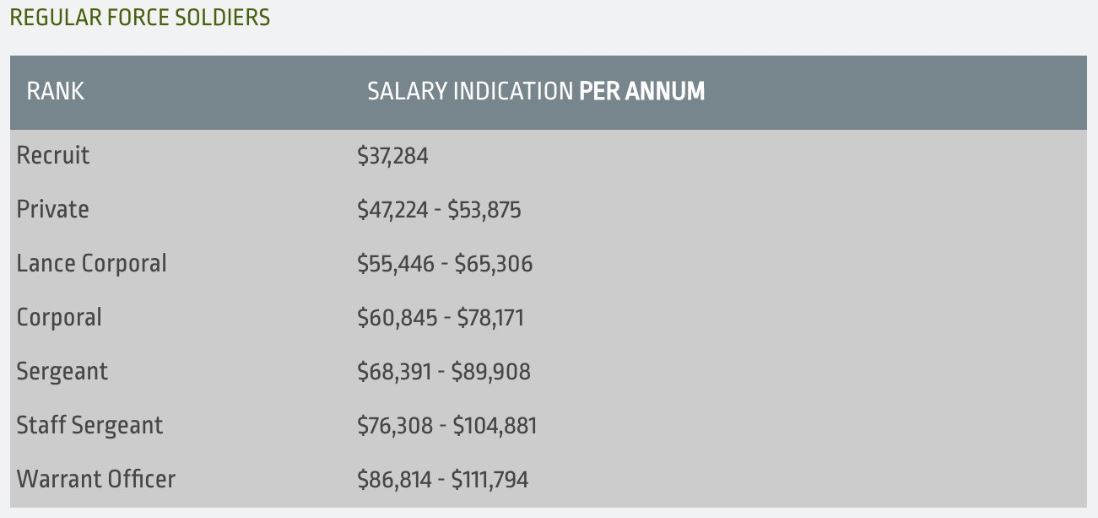
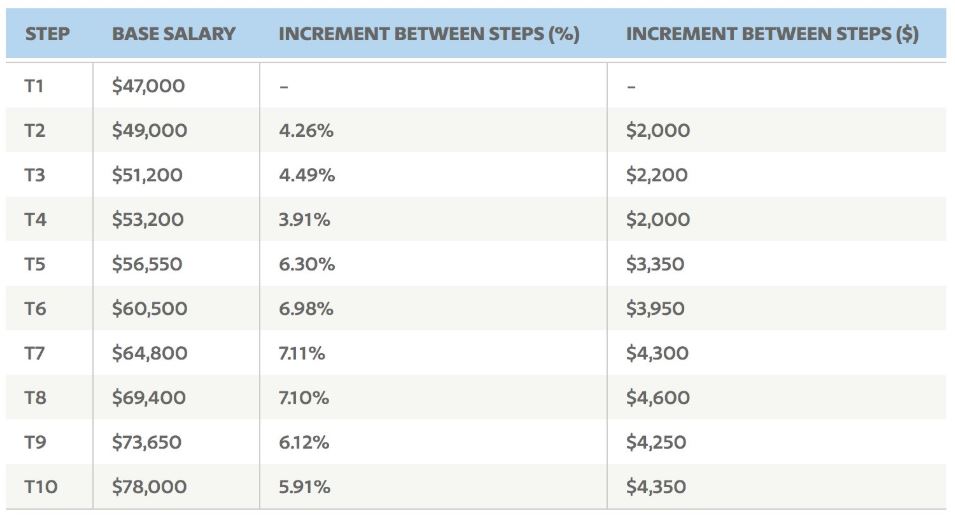
    Check out these stats from a bit of research a Twitter follower did:

    When a Corporal in the New Zealand Army can earn as much as the TOP tier experienced teachers (besides units, or senior management), then it speaks volumes. And don’t for a second think I am belittling Corporals in the New Zealand Military.

    Heck; just look at the salaries of members of parliament. You have to go back to 1979 since the pay for a back-bench MP was the same as a Teacher’s salary. Now, a Back-bench MP brings home $168K worth of bacon each year – and then vote to increase their wages which gets passed almost before the Yay’s can say ‘Y’.

    That’s a 40% difference, in nigh on 40 years. There’s no way that we’ll get back to where the pay scales will be anywhere near the same.

    It can’t happen, I hear you say…

    It did. Back in 1985, under a Lange led Labour government, a 40.17% pay hike was given to secondary teachers across the country.

    I’m not saying that it will happen again. But if the government (and the people the MP’s represent) are serious about the future of the country, then they need to get serious about making Teaching a viable career.

    You can come out and say that you want smaller class sizes, but to get to smaller class sizes, you need more teachers. And to get more teachers you have to make it a job worth staying in (less work pressure) and pay them more so that teaching is on par with other careers.

    Everyone knows, thanks to Whitney Houston, that children are our future, and we’ve all had a teacher who has inspired us to be more than we are, or more than we were. You put money into education, and you get it back in droves in the generations to come.


    The good news is, Minister Hipkins is aware of it and is doing something about it. Quite what it is that’s doing is largely unknown – given the latest purchase in the Defense force, but hey… at least it’s not a U-turn.


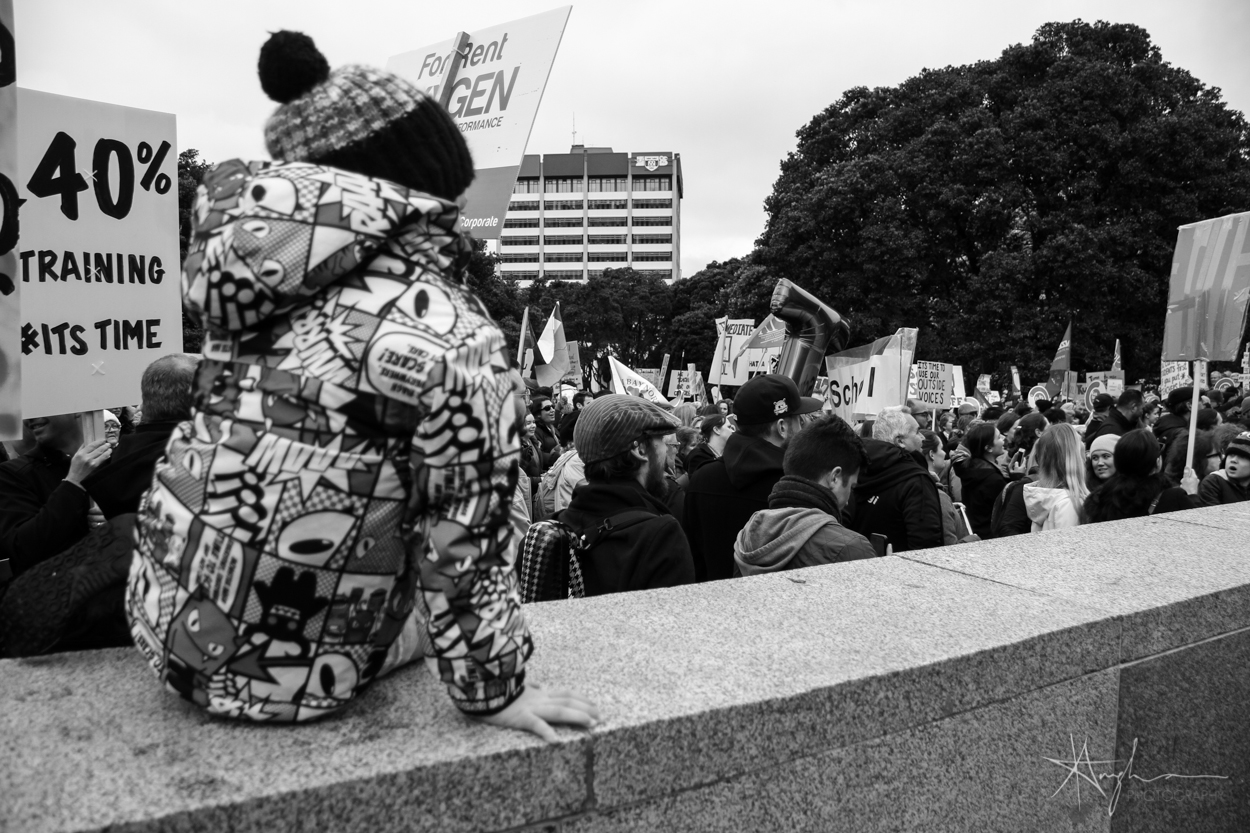
  • On the steps of parliament: protest against ERO | Network on Net

    Original article: https://networkonnet.wordpress.com/2017/08/14/on-the-steps-of-parliament-protest-against-ero/

    Timed for the opening of parliament 1996: New Zealand First in coalition with National

    On Wednesday, 11 December, I pointed my car down my driveway in Cambridge, turned right, and right again, and headed south.

    It was my appreciation that the present represented a defining moment in primary education – either education was going to be controlled by ERO through bureaucratic managerialism, or by all major participants in the spirit of democracy. As a result, it was not so much the present I was fighting against, but the future I was fighting for.

    The flux caused by the MMP elections and the coalition talks; the feistiness of the present Principals Federation executive; the concern about education directions in academic circles; the indications by the news media they were starting to understand the situation; the greater willingness of schools to take a stand; and the general alarm caused by ERO’s continued efforts to increase its powers – all combined to make this, from my perspective, a decisive moment. I had decided to give two months to the anti-bureaucratic campaign (ABC). The petition had been launched, and the returns were coming in strongly. I had hoped schools would, in their deliberations, rise above matters relating to whether they had just received a good ERO report or not, and see the role of the review office in the overall education culture; see the review office as at the centre of promoting and imposing the bureaucratic demands so widely complained about. The evidence, gratifyingly, was that schools were, indeed, seeing the wider picture.

    After launching the petition, my task, as I saw it, was to keep the issue, to the forefront, and to keep in touch with key people in education. My tactic each week was to develop a news release then sit in front of my fax, and fax for hours. In a way it was like fly fishing, you cast your line out a large number of times, and, every now and then, you have a strike. I can assure you, though, no matter how small the catch, I never threw one back. So I’d start with the big fish of the TV and metropolitan newspapers, then radio, the magazines, then moved on to the provincial newspapers and, time permitting local and suburban newspapers. I learnt a lot about the news media in the process.

    As in any campaign, the purpose is to get the message right, and then to find different ways of saying the same thing. Whether I got the message right, I don’t know, but I certainly found a lot of different ways to say the same thing. The message I tried to communicate was of a crisis in education – a structural crisis deriving from Tomorrow’s Schools allocation of increased powers to layers of bureaucracy at the expense of teachers’ sense of control over things important to them. And that a structural crisis could only be resolved through a structural response – tinkering would not do. For this reason, in respect to school reviewing, I favoured the idea of schools having a range of accredited reviewers to choose from. Such a change would free up education in all sorts of ways.

    Anyway, as I pressed on to Wellington, that was all behind me.

    About four weeks before I had received a call from Derek Gordon of Dunedin whose professional name as a storyteller to schools is Derek Bringwonder. He expressed his alarm, derived from his experience of visiting schools throughout New Zealand, at the harm ERO was inflicting on New Zealand schools. In other words, he had developed the same point of view as me from a different perspective. Derek also expressed wider concerns about the relations between the governed and those who govern – ERO’s behaviours simply being a prime example of those concerns.

    ‘I’ve heard about your petition,’ he said, ‘is there anything I could do to help?’

    ‘Thanks for the offer, I’ll think about it.’

    Two days later it came to me: those pages at the beginning of Hard Times in which the character Gradgrind insisted on reducing human behaviour to numbers, that would be just the ticket. I contemplated the matter for a few days – the idea had the capacity to be the most appalling flop, and would I have the energy? What appealed to me and tipped me in favour of ringing Derek was the opportunity to make a public statement about my concerns. For better or worse, whether the ABC petition was a success or not, I wanted to have the feeling that I had given it a lash – the best I could.

    So I rang Derek. We delegated responsibilities: he would brush up on Hard Times, do the banner, arrange for a Dickensian costume; I would try to entice along a small audience, gain the attendance of some parliamentary spokespeople, try and interest the news media, get permission from the clerk of the house for a protest on the steps of parliament, and organise material to hand out to those present.

    The following was part of the invitation to the members of parliament and others.

    Kelvin Smythe

    Developmental Publications Ltd

    PO Box 4082, Hamilton

    An invitation

    On Thursday, I2 December, at 12.20 p.m., a small meeting will be held in front of parliament allowing Derek Bringwonder, storyteller, to make a personal statement about the need to nurture the human spirit, and about his concern, developed as a result of working in schools throughout New Zealand, at the harmful effects on schools and teachers of review office practices and philosophy. (He will, as part of this, be dressed as Charles Dickens’ Gradgrind, and orate the philosophy of that character from Hard Times.) 

    I am delighted, as the organiser of the education anti-bureaucratic campaign (ABC) and petition, to support Derek Bringwonder in these purposes.

    If you could be there as an expression of your own support, it would be greatly appreciated. It will go ahead rain, hail, hurricane or shine. If you do think you can attend, please let me know.

    Best wishes

    Kelvin Smythe

    One of the difficulties was to find a day and a time when the members of parliament would be able to attend. We chose Thursday, 12 December, as a tentative date. But would that conflict with the swearing in of the new parliament? The swearing in date moved around, and sure enough, after all those weeks of coalition talks, the swearing in was Thursday, 12 December. I suggested to Liz Gordon, the newly elected Alliance member, that that might be for the best as it meant that at least they’d all be there, and that would be good; she said no, there’d be lots of other things going on, and that would be bad. However, Brian Donnelly said the swearing in would be over by 12 p.m. – as a result we adjusted the time to 12.20. When I visited National’s Tony Steel in his Hamilton electorate office he said he’d do his best to be there, and Trevor Mallard’s secretary said Trevor had noted it in his diary. Liz Gordon said there was no need for another fax, she’d be there if she could.

    So here I was heading to Wellington rather fearfully. Would my 20 or so invitees be there? Would the spokespeople be there? Would the idea be a good one in concept, irrespective of how everything else went? What would the weather be like? Though, on this, I was ambivalent. I rather liked, what was to me, the romantic notion of a howling gale, Charles Dickens and me and, of course, a back-turned Richard John Seddon, and no-one else, standing out there in howling wind and rain. We would proclaim to the elements.

    I booked in at a hotel near parliament, then walked down to it for a reconnoitre. As most people know, traffic goes round parliament in a frenzied circle. I had fears that tomorrow, in transporting the sound system in my car, of getting on this merry-go-round and not being able to get off. But there was the entrance near the cenotaph and a road looping gently to the paved area in front of the main steps with Richard John Seddon facing away. So it was back to the hotel for a sleep – of sorts.

    The coalition talks had come and gone. Information I was receiving indicated the review office was, indeed, a coalition issue, but there had not been, and there still wasn’t, any confirmation of this. I feared the worst – that in the rush to complete the talks, the matter would drop off the negotiating table.

    I went to the door to get the Dominion. On page 3 was an article about the coalition and what had been agreed. I ran my eye down the list, hoping, but not expecting, to see the review of the review office listed.

    But there it was, linked in with another review, and with the briefest possible reference. Now, how do they express this in the media? I was visibly moved.

    After years of plugging away, on the morning of a protest to be made on the steps of parliament – there it was in black and white. Wow! This was only a first step, the review office would fight a wily fight, but this was a moment to relish.

    I drove round to the hotel to pick up Derek and his wife Pamela. When he opened the door, top hat, red vest, black formal pants, and all – I felt immediately at ease. Hey! This had the makings of a memorable day.

    In picking up the sound system I found there wasn’t room in my car for an office chair I’d brought down for Derek to stand on if he needed some height to perform better. No – he didn’t need it. What to do with the chair? To this day I like to think of it still sitting in the entrance way of the shop I dumped it in.

    We made our way through the iron gates and parked on the parliamentary forefront. The day was fine (though breezy), so no Lear on the heath heroics. The parliamentary officials checked our permission papers; pointed us to our assigned place; assured us the sound system would be fine as long as we didn’t point it directly towards parliament; and, were generally very helpful. We set up the banner, the sound system, composed ourselves, and waited.

    The parliamentary scene to the north of us on the steps was one of remarkable vibrancy. The first time mps clearly identifiable by their cheerful, expectant expressions, the old hands by their here-we-go-again demeanour. Especially notable were the new Maori mps with their families and elders, hugging, laughing and singing. TV and radio reporters were everywhere. The chief justice and entourage swept past us in full regalia.

    Read full article here.

    Source: https://networkonnet.wordpress.com/2017/08/14/on-the-steps-of-parliament-protest-against-ero/


  • No More Sense from Seymour

    And so it begins.

    The non-sensical dribble spews forth from the under-secretary of Education, who gets into a lucrative position on the back of one electorate described on Wikipedia as an “exclusive, affluent suburb of Auckland”.

    That’s right. Mr. Seymour is at it again as he launches the ACT Party campaign.

    We will pay good teachers more. And great ones even more. No doubt David will be the judge as to which teachers make good teachers and which ones make great ones. I would put money on schools not being able to decide that themselves, and even more money on it being based on student results i.e. National Standards ala Performance Pay.

    Of course, one can see his point when he opens with the statement that the average teacher is paid a pittance, and deserve to be paid more.

    To fix that, the party is proposing an extra $1 billion in funding for education. “ACT’s proposed good teacher grants will give your average teacher a pay rise of $20,000 per year,” Mr Seymour claimed.

    But to receive the extra money, schools “need to opt out of the centralised payroll system and collective agreements”.

    This has rubbed a lot of people (in particular teachers) up the wrong way. No surprises there.

    But here’s why his solution makes no sense.

    Hypothetically Synonymous Seymoronous

    Let’s assume that schools go for this, and EVERY school in the country pays their teachers an average of $20,000 per year more than they are already. That is going to cost a lot.

    However, none of that has anything to do with collective agreements, the unions, or any centralised payroll system. They are not synonymous with each other.

    It’s illogical.

    In fact, under Seymour’s scheme, teachers could stay in the union with the collective agreement, and they could still get paid $20,000 more if he really means it; just get a new collective agreement ratified between the government and the union, or have both – give a bit more to schools to ‘top up’ teacher salaries that are paid through the collective agreement. It’s only because ACT are notoriously anti-union that he is dangling the carrot for principals and teachers to consider.

    Pay more Seymour

    The second factor is that given the current climate in education, there are teachers leaving in droves, and not always because they aren’t being paid enough. On many occasions, the workload is too much. Refer to this article in March. As a teacher, like many others, I would probably take less workload over getting paid more to ‘compensate’ for the increased workload that is currently expected of us.

    In Conclusion

    While paying teachers more is a genuinely nice touch, Mr. S, if you really cared and were really in touch with the education sector, and you actually wanted to value teachers, then maybe the first step is to work with the union rather than trying to sabotage it into non-existence.

    Illogical. Blackmail. Numpty.