Tag: reading

  • F01 – Voracious Reading

    https://youtu.be/3s_JHjvw6hk

  • Reading Recovery Outdated?

    Reading Recovery outdated

    Change seems to be addictive in today’s culture. We always want the latest and greatest, and tend to shun anything that is deemed too old. We strip back perfectly good wallpaper, desire the latest iDevice even though our current one is more than adequate, and as for the latest fashion trends – well we all know they go in circles.

    It’s somewhat controversial news that Reading Recovery is supposedly outdated; though I’m not sure why.

    Maybe it’s because it’s a well established teaching programme in our country now.

    Maybe it’s because so much money is poured into it.

    Maybe it’s because one to one teaching is the most ideal scenario.

    Maybe it’s because our reading recovery teacher is bordering on the perfect definition of “legendary” and “awesome” combined in one.

    I therefore am not going to debate the issue of whether reading recovery is outdated, or whether groups of five or six is better, as is outlined in the Quick60 programme.

    It’s a Numbers game

    When we look at these two programmes, they have one thing in common.
    They both have a small teacher to student ratio, allowing the teacher to offer quality, focussed, and individualised teaching for the students.

    They allow for targeted learning, often to address specific needs of each child.

    As we move further into the 21st Century, there seems to be an ever increasing demand to address all the different needs in the class, to meet each individual need, and to provide differentiated learning based on all of those needs. National Standards has all centred around where the individual child lines up against the whole country, and individualised testing and assessment has proven to be far more accurate, or understanding, about each child.

    Yet at the same time, teachers (and some parents) continue to fight the direction of the government to raise class sizes up to phenomenal levels based on whatever research they can get their hands on that supports their agenda.

    Add to this the ever increasing number of special needs requirements within the class, and you start to get the picture of a classroom teacher who is going to find it hard to individually meet the needs of their class.

    And so this is why programmes like Reading Recovery and Quick60 thrive. It’s learning at its most ideal level. It addresses the needs in front of them. It’s focussed. It’s individualised. It’s differentiated.

    And that is why it works; regardless of how much progress is made by those students. A teacher can only do so much; at some point the student will reach the point where their potential and their obstacles meet. They will require more than just a teacher, and more than just 6 hours a day, for some of those obstacles to be removed. It takes a concerted effort of all involved; the school, the parents, and the child, to overcome these and continue to make progress.

    I don’t believe we can label and programme a failure or “outdated” purely based on any kind of results or lack of achievement when they’re are obviously so many factors which contribute to it.

    Edit: Some background information

    I did some “on-the-ground” research of my own.

    Turns out, Massey do this at nearly every opportunity. You see; back in the late 70’s, early 80’s, when applying to the Government for the tender of a nationwide literacy programme from the Government for funding, the powers that be decided to go with University of Auckland’s “Reading Recovery” programme by Marie Clay.

    You see, another university also applied for the funding for a nationwide programme. You guessed it: Massey University.

    The bitter rivalry continues through to today; some thirty years later. Take a look at these recent articles, all quoting comments, research, and articles by Massey University professors, in particular Professor James Chapman, who is cited on numerous occasions.

    When pieces of research are conducted under such circumstances, it is hard not to see that they are under the duress of bias, and need to be somewhat disregarded, given that they are looking for the failings of Reading Recovery, rather than conducting independent and unbiased research.

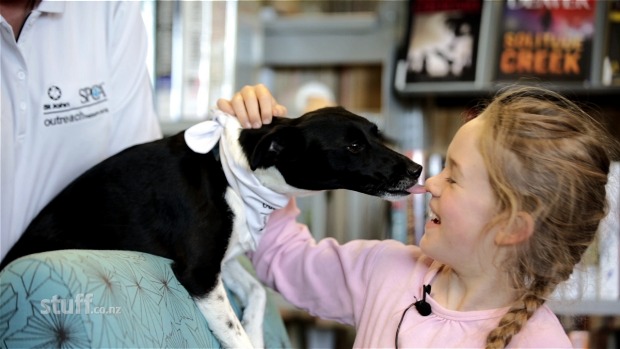
  • Children gain book smarts by reading aloud to dogs | Stuff.co.nz


    Children are reading aloud to dogs to boost their book-smarts in an innovative project.

    Source: Children gain book smarts by reading aloud to dogs | Stuff.co.nz

    Is anyone else a little miffed by this article? I mean, good on them for thinking outside of the box and involving children in the process of animal rehabilitation and the inclusion of canine expertise in facilitating the practice of the juvenile reading process, but really?

    There is no doubt that reading aloud helps children improve their reading ability, their decoding skills, and their fluency. These are all things that are a feature of many primary school classrooms around the country. Daily 5, a literacy programme that I run in my class features this as a focus for students to do exactly that – practise reading out loud to someone. Students will read with emotion and try and read so that they make sense to their buddy. Their buddy can help with coaching and support.

    But at what stage did we replace reading to someone else with reading to dogs? At what point did reading to your Mum and Dad at night before bed become ancient history? Have we become so lazy or so busy and so self-indulged in our own life that we no longer put any time or effort into spending time nurturing, growing, and supporting our children? At what point did we relegate the task of reading out loud to dogs?

    And if the only “fun” in reading is in direct relation to hungry animals, then I suspect sales in “The Very Hungry Caterpillar” might spike during January.

    Next holidays however, there is going to be a relative shortage of dogs as they attend the National Writing Convention, and so I am going to be busy training houseplants how to listen to children read and offer support to them. I may even start by putting little bandanas around them so they know to calm down and stop running around like crazy trees.


  • Listen to Reading

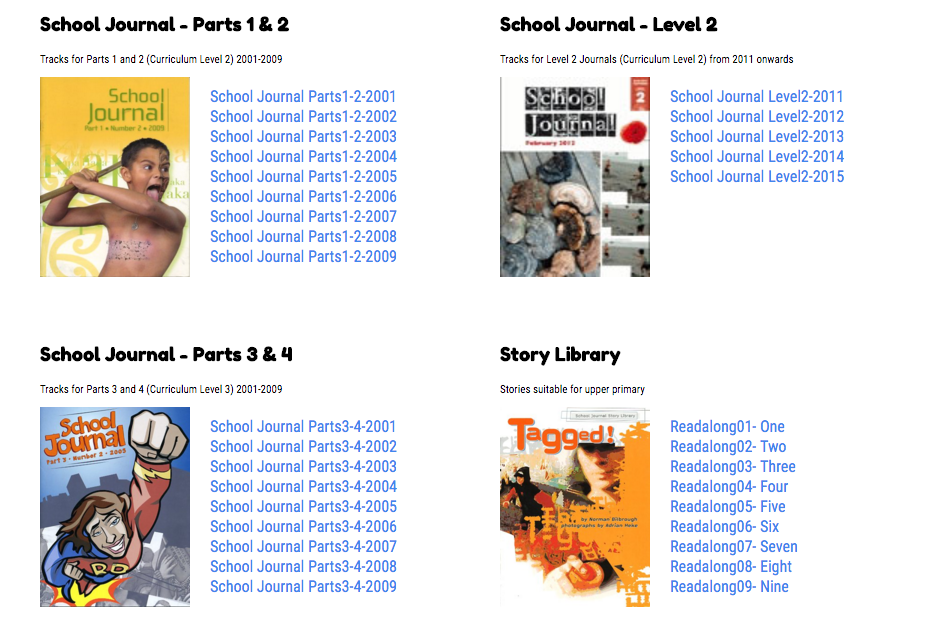
    One thing I have always been an advocate for is reading to the students. Most days I will set aside 10-15 minutes for this, if not more. With this ‘Listening Post’ so to speak, however, students have texts read to them aloud whenever they want.

    Listening Post with my class has been the introduction of headphones and Ministry provided MP3’s on our web server for students to access. With this, I have gathered the selection of Ready to Read texts along with them, and have created boxes in my classes for these books to sit in.

    Students choose the book, then look up the MP3 on the web server, and push play. Easy as that.

    Listening to reading is supported by various readings around different literacy sites. ‘The power of reading and listening by Warren Ediger says “Scientific research tells that most of our fluency – our ability to use a language – comes from what we read and hear.” In addition to this, Learning through listeningstates “Supported reading is reading with the support of recorded materials. Individuals read along with the novels or textbooks while they listen to the verbatim recording of the same material. When students are engaged in supported reading, they no longer have to labor over every word. Instead, they can read at a comfortable pace that allows them to acquire the information contained in the text.”, which I think sums up my feelings on the assistance that being able to listen to the text brings for these students.

    What I have noticed is that all students engage with this more than they would with just a book on its own. It works regardless of ability, and struggling readers are not only reading with their eyes, but hearing the words decoded for them and the language is being learned on multiple levels.

  • A picture is worth a thousand words

    Today an article crossed my desk which was ultimately concerning. I didn’t like it. Partly it was written because of that feeling. But moreover, it seems to add credibility to the research completed by Dr. Protheroe which seemed to suggest that pictures in books hindered the ability for students to learn to read, rather than enhanced. When this research was announced, I immediately made a post (Picture Books and Literacy Learning) to express my opinion on it. I encourage you to visit it and have a read.

    The article in question is Uncomfortable, Unthinkable Research Findings by Jessica Craig, and is written in response to an article in Education Review. Craig is one of the education consultants at Accent Learning, one of the former Ministry appointed professional development providers in the Wellington area before they cut funding.

    What is most concerning is that Accent is still widely regarded as a solid education learning provider for teachers. And yet Craig, along with others (I suspect), has failed to miss the flaw in the research carried out. Her main question seems to be “why isn’t more being made of this research!?”. Basically, why aren’t we telling new beginning teachers to take twink to the Ready to Read books in every school!?  (Once again;cause for concern – Accent Learning operates out of Victoria University’s Karori Campus; which is, surprise surprise, where they train teachers!)

    Now I’m no researcher, but I have done my time in many a math and statistics class through high school, and I know how important sample size is.

    The sample size for this research is – wait for it… 48.

    Yes. 48. Not even 50.

    To give you an idea of what 48 equates to. It is two average sized classrooms of 7-9 year olds.

    Two classrooms. Probably from one school.

    If we based every bit of research on that, we’d probably find all sorts of anomalies we’d then prioritise and force upon the entire nation! Consider the fact that these 48 students have probably had the same teachers as each other from the age of five. They probably have similar home lives, and might be completely different from a school down the road, let alone at the other end of the country. The fact is, there is not enough evidence within two classrooms of students to even remotely suggest anything; especially a claim that pictures in books hinder students reading progress.

    Further more, the research is based on only four texts. Two with pictures, two without. Probably only one fiction and one non-fiction for pictures and without pictures. Once again, hardly a comprehensive range of texts to base one’s research on. Who is to say that those texts were appropriate, relevant, needed pictures, had appropriate pictures, or that the questions were understood or allowed for child interpretation?

    In addition to this; I refer to a point I made in my previous article about this topic. I’d hesitate to say; but I’d say it’d be pretty accurate; that of the people that can read (of which you are one!), that you learned to read using books with pictures. So they can’t be that bad, as you, and generations before and after you have also learned to read using pictures. I would also suggest that those people that can’t read, that pictures in the books has little to do with the reason why they can’t read.

    Unlike Jessica Craig, I can completely understand why there has been no debate over this research. Its because the majority of us have worked out it’s a waste of time, resourcing, and energy. Quite frankly; it’s bogus. Until there is substantial evidence to the contrary, I shall remain in favour of the wonderful illustrations that grace the pages of picture books and sparks the imagination and inspiration of the younger generations as they explore the world of words and stories.


  • Class Stories – Great read aloud books to read to your class

    Over the many years of teaching in the middle primary school, I have been a huge advocate for reading to the class. I was read to as a student by my teachers and those memories of the stories stay with me today.

    But as a teacher, I head to the library and stare blankly at endless shelves of books and don’t know what books to choose. There are the tried and true favourites of course: Roald Dahl, C.S. Lewis, Paul Jennings. But what other stories are out there that are suitable (and fantastic!) for reading to the whole class.

    Below I have compiled a list and their suitability in terms of year level for teachers to read.
    I don’t want to rely just on my limited experience, but want to gather your ideas as well. What books do you read aloud to your class? Put them in the comments section and I’ll add them to my list.

    Book Title Author Year Level Suitability
    The Giraffe, the Pelly, the Monkey, and Me Roald Dahl Year 3-4
    The B.F.G Roald Dahl Year 3-4
    Un-series Paul Jennings Year 5-6
    Charoltte’s Web E.B. White Year 5-6
    Hatchet Gary Paulsen Year 5-6
  • Picture Books and Literacy Learning

    I was perplexed, astonished, gobsmacked, and bewildered when I read this article this morning.

    Picture books hurt reading, says linguist Pamela Protheroe

    Read Article – Stuff.co.nz

    There are very few words I can say right now about it.
    Luckily, most of us in Education circles have gotten used to ignoring such ‘research’ and will continue to listen to trained, practising teachers who know what works, rather than these so-called ‘researchers’ who blow in and blow out of a classroom to report their findings.

    But seriously. Let’s stop for just one moment. Someone has based their research thesis on this. Countless dollars on resources, time, and all sorts to carry out this research, and for the most part, it goes against every bit of logical instincts we have.

    My first reaction was – what are the implications for schools should this research be taken on board? Book rooms around the country turned upside down, with pictures being deleted from Ready to Read books, and replaced with text-only books. Picture books being thrown onto a fire in the school courtyard outside the school library. Its just not an image you even want to imagine books and schools becoming.

    Let’s face it. We’ve all been through school where picture books were more than a staple diet. They have helped us to make sense of the world, and have scaffolded our learning of English, which is confusing at the best of times! They have provided enjoyment and fun for reading. Even today, I prefer a good picture book, and the art covered pages that bring the story to life.

    And guess what. I’m not dyslexic. In fact, many of us aren’t. And even those that I know who are dyslexic, have not only learned to adapt with this world, but have done so from a very young age; suggesting that dyslexia isn’t really something that comes to haunt us in later life like baldness or arthritis might. I’m more than sure that if this research was the least bit true, that with the copious amounts of picture books that have been read over the years, we would have countless adults complaining of suddenly developing dyslexia and getting their words and letters muddled.

    Try, just for a minute, to picture it. Where the Wild Things Are, without the beautiful scratching and muted illustrations. The Very Hungry Caterpillar without the large stenciled fruit and holes in the pages. Green Eggs and Ham without the train going through the tunnel on tracks supported by the bamboo-like truffalo trees. There is no way that these stories, without their illustrations, would remain in our minds, but more importantly, remain in our hearts.

    9985972026_54e0b07122Imagination at heart

    As for ruining imagination; I somewhat agree. I believe the imagination of young people has been harmed by the overstimulation of digital media, film, and video games. But not by picture books. Not by still images. The stationary pictures that grace a page provide just a small portion of the imagination required to gather in the entire story. There are a lot more aspects to a story than even what the picture on a page can show us. Theres movement, there’s action, there’s descriptive settings, and facial expressions. There’s reactions and emotions, all of which change and adapt with the story, something that a still image in a picture book. They rather provide a starting point and a kick start for students imaginations to build on.

    Pictures, Pictures, Pictures

    My personal favourite is a book that has no words in it whatsoever. Most likely this is because of my prejudice towards art and drawings. It’s called ‘The Arrival‘ by Shaun Tan, and it is magical. In my teaching through Daily 5, a world wide literacy programme based on in class practice, developed by teachers for teachers, one of the things that is taught is ‘three ways to read a book’. One of those is to read by using the pictures. Even I ran into problems with this when teaching older children, who are now reading chapter books which contain very few pictures!

    In Conclusion

    I guess it is quite good that this researched doesn’t have a memorable name. I can’t even remember it from the title.

    There are a few things that we need to remember. They completely dispute her findings, and lay them to rest almost instantly. Firstly, like music, pictures are a universal language for all. They tell a story on their own. They are invaluable for communicating ideas for ELL students.

    And lastly, and most importantly, I leave you with one common phrase that is used all over the world, and speaks complete truth every time it is used. And I cannot think of a more suitable time to use it than this.

    “A picture is worth a thousand words.”

  • Books. Books. iBooks.

    Those that know me know I am not much of a reader. Obviously I have to keep that quite quiet in the classroom, because I want to encourage my class to read as much as possible. To do so, I usually use a lot of picture books as inspiration for reading. I like picture books because; well lets face it… they have pictures! And some of those picture are works of arts all on their own. Whilst at University, a group of friends and I had an assignment to write a children’s “EBook” for use in a classroom. We had so much fun with it, we actually wrote a few books.
    Now; this was back in the time before iPads, E-Readers and the like. We had to use Powerpoint to create them for use as an EBook.
    Having just purchased iPads for each classroom at our school, I went and found some picture books on iBooks. It gave me an idea.
    A good idea.
    So I dug around my old files from university, and eventually found our original powerpoint EBook. I took it, converted it into a suitable format using iBooks Author, and now it is currently awaiting approval from Apple NZ to be made available in our country. Seeing how easy it was, I decided that actually, I could probably use my love of art and painting, and couple it with my vocation, and make some picture books suitable for 10 year olds and up.

    02

    I even found out how to get ISBN numbers – and it’s not that hard!!!
    Keep an eye out on iBooks Store for an author out there with my name on it!