Category: Archived
All the old posts from years gone by.
-
Digital Curriculum: Destiny or Disaster?
From the first day of full time employment at a school, I was put in charge of “Technology”, not for my design process skills, but for my knowledge of ICT and computers. I became the go to guy in fixing problems with teacher laptops, sound systems and projectors. That soon became student Chromebooks and student iPads. Of course, the school had external support as well, but having someone onsite is incredibly convenient, especially when ICT can be problematic at the drop of a hat, and is becoming more and more relied upon by teachers to bring learning to today’s learners.

You’d think I’d be incredibly excited and enthusiastic about the announcement of the new ‘digital curriculum’ being implemented around the country in 2020. What an opportunity to share my passion and knowledge of ICT with the next generation and prepare them for the world of tomorrow as we delve deeper into the digital age.
However, I’m not.
You see; I’m also a self-taught programmer myself. I design and code websites. This site was built by me, though largely a theme, it has been modified to suit my own tastes and coded to reflect that. I have built my own personal website from the ground up on the back of WordPress. I dabble in CSS (with SASS / LESS), PHP, HTML, and Javascript.
There’s not many teachers (especially primary school) who can say that!
I know that behind every code, there is a whole bunch of trial and error, refreshing, and testing. Programming is largely just problem solving.
My issue is that in my current job, that we are having trouble enough teaching students to read, write, and do math, let alone be able to create a simple script that includes tags, if/else statements, or simple calculations.
In 2015, I taught a class with one-to-one Chromebooks, and we spent the first term learning how to spell our last names, because the school email address for students is firstname.lastname@schoolname.ac.nz.
Then it was time to remember our passwords.Sure, the curriculum itself isn’t going to be getting students to create complex code or learn any particular language, just like Year 1 students won’t be learning their 8 times tables. However, it would seem to me that certain priorities need to be addressed first – such as basic literacy and numeracy skills. Something tells me that for many students, it will become a matter of running before they can walk.
My other gripe is that the Ministry can announce a digital curriculum and implement it within a few years, and yet there still isn’t an actual Māori / Te Reo Māori curriculum. I guess it shows where the priorities are.
Fun and Games?
So then, what will they be doing? And will it be at all relevant to what they need in the future? Or is it all just a little bit of fun and games and doing something “cool”?
The curriculum document says:”
In years 1–8, these two areas are usually implemented within other curriculum learning areas, integrating technology outcomes with the learning area outcomes. These two areas also significantly contribute to students developing the knowledge and skills they need as digital citizens and as users of digital technologies across the curriculum. They also provide opportunities to further develop their key competencies.
It goes on to outline exactly what “Computational thinking for digital technologies” and “Designing and developing digital outcomes” mean for the students, and a lot of it is around raising awareness of what computers are capable, what their limitations are, what problems can be solved with them, and what possibilities there are. It ranges from programming to digital media and safety online.
So it might not all be so doom and gloom – especially considering that for the most part, I already try to integrate digital technology throughout all other areas of learning.
Those of you who have ever been around children and technology, you’ll know at how quickly they pick things up and run with them. I remember my 2 year old nephew taking photos on my phone and then flicking through them all after he’d taken some!
Are you Ready?
I have to give the Ministry some credit here too. Unlike National Standards where they were inflicted upon us without any kind of preparation or support, they have gone above and beyond to provide schools with resources and support through their Kia Takatū ā-Matihiko – Digital Readiness programme. Schools wanting to up-skill and get on board with the new digital curriculum should head over there now and check out the resources on hand to support you and your staff in getting up to speed with the new curriculum area.

-
Sufferage: The Sideways Movement
This year we celebrate 125 years since the Women’s Suffrage movement. In New Zealand, Kate Sheppard lead the charge to get women the vote.
“Speaking for a new generation, she argued, ‘We are tired of having a “sphere” doled out to us, and of being told that anything outside that sphere is “unwomanly”.’
 Sheppard travelled the country, writing to newspapers, holding public meetings and lobbying members of Parliament. Opposition was fierce. As Wellington resident Henry Wright wrote, women were ‘recommended to go home, look after their children, cook their husbands’ dinners, empty the slops, and generally attend to the domestic affairs for which Nature designed them’; they should give up ‘meddling in masculine concerns of which they are profoundly ignorant’.
In 1893 Kate Sheppard and her fellow suffragists gathered the signatures of nearly 32,000 women to demonstrate the groundswell of support for their cause. A 270-m-long petition – then the largest ever presented to Parliament – was unrolled across the chamber of the House with dramatic effect. Despite the opposition of Premier Richard Seddon, the Electoral Act 1893 was passed by both houses of Parliament and became law on 19 September. The news took New Zealand by storm and inspired suffrage movements all over the world.”
But how far have we actually come. I’m not talking about a bunch of young women holding their own comedy special on TV3 and making it out that they still have it bad or celebrating their womanhood.
 I’m talking about two unions representing jobs that are mainly made up of women that both decided to go on strike this year. In August, NZEI members voted to strike amid their pay negotiations. 75% of Primary school teachers are female (2017, Education Counts). A month earlier, the Nurses also went on strike. 95% of Nurses are female (2015, NZNO) I’m talking about both these professions, predominantly female, feeling like they are under-valued and over-worked in New Zealand society today.
I’m not for a second suggesting that they are under-valued because they are traditionally and predominantly female based professions. I’m just saying, it is a very interesting point of time in our history, and it might pay to reflect and review where we are as a country a little bit further than pretty smiles and celebrations on the news channels and hyped up comedy galas featuring female comedians.
-
The Teacher Crisis as it is.
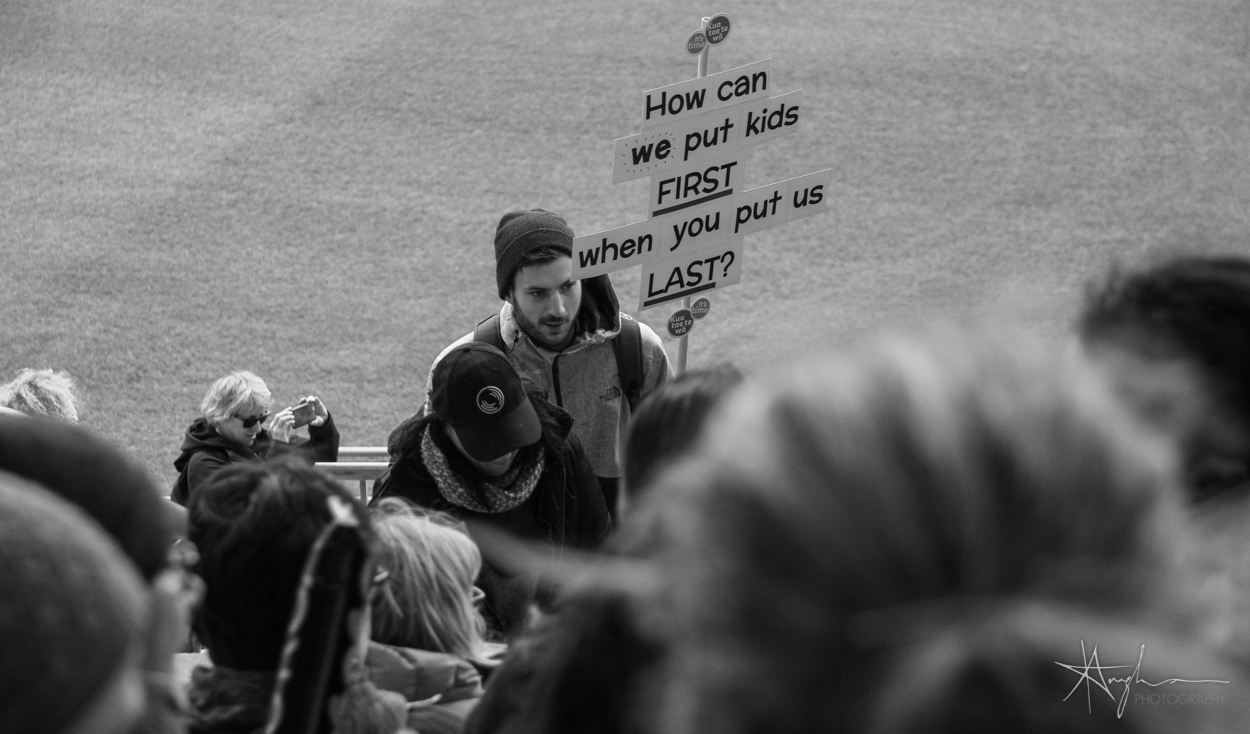
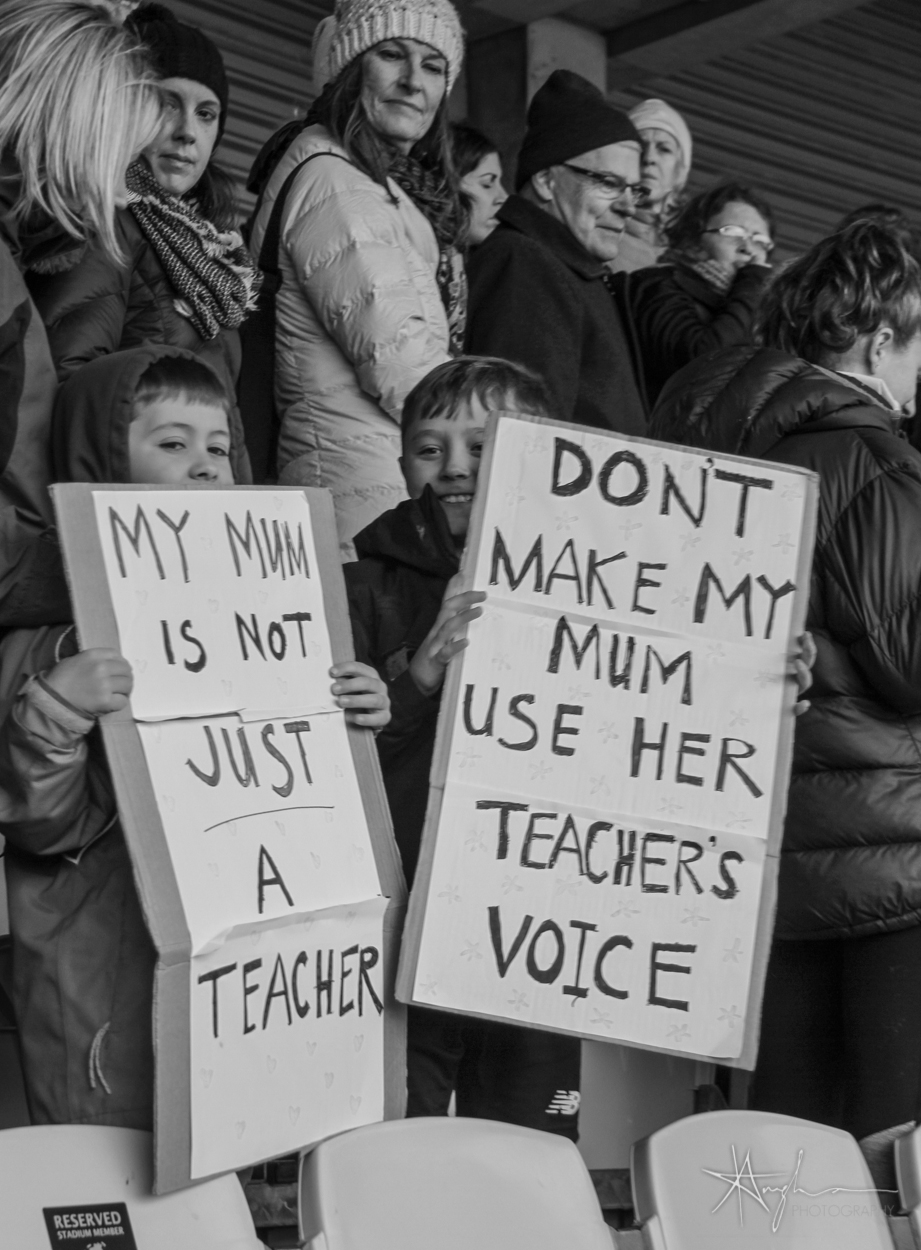
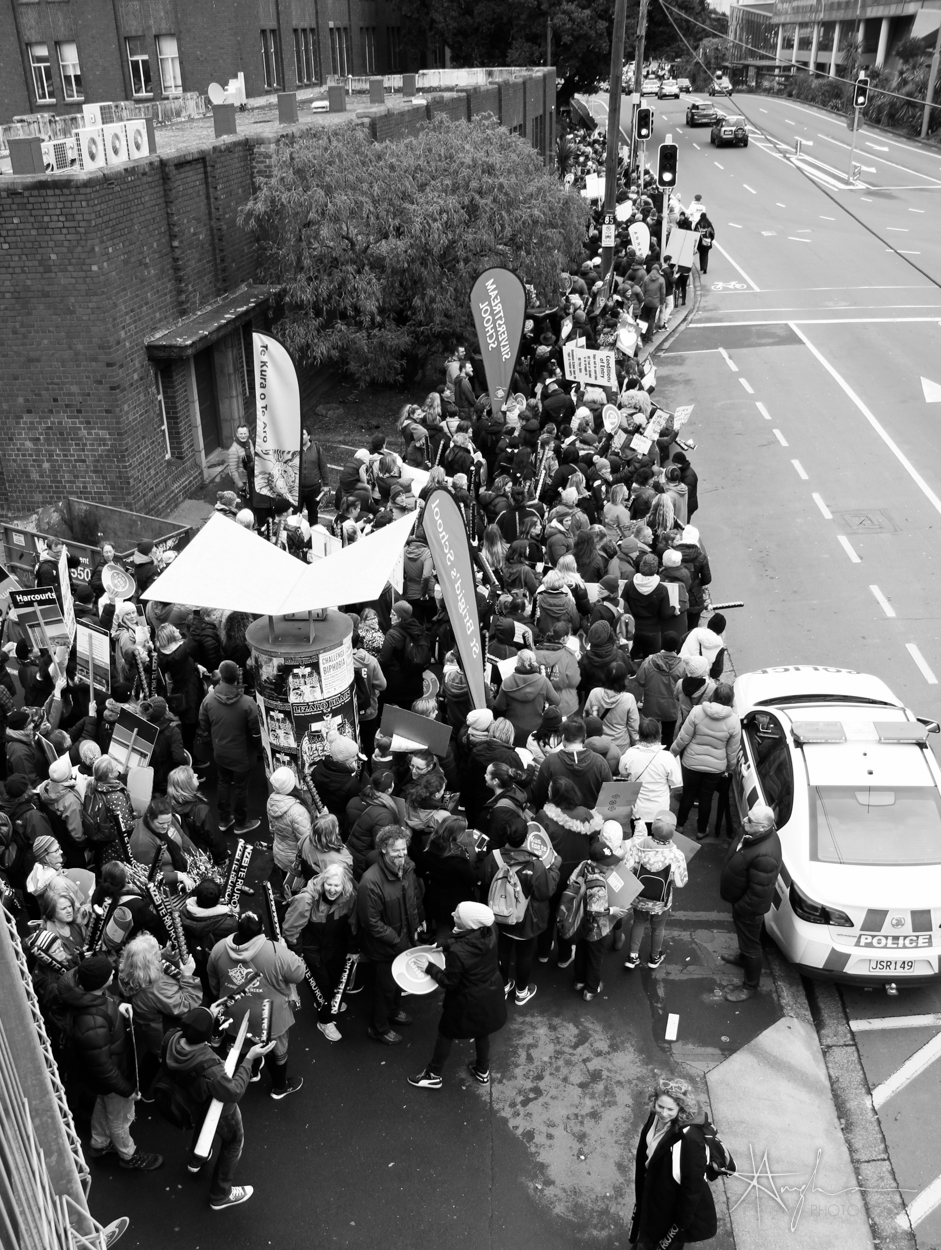
Recently there has been a lot in the media about teachers pay, and current issues in education. This was somewhat heightened by the August strike – the first primary teachers have been on since 1994.
But why? What’s it all about?
It boils down to one issue.
Workload.
 You see; many think (and has been reported on) that it is about pay. To some degree, it has to be about pay. It’s illegal to strike otherwise. But the underlying issue comes down to other factors.
I wouldn’t hesitate to say that there isn’t a single teacher in the country who is in the job for the money. There are a number of reasons for this. Firstly, the job as it currently stands is tough, stressful and does not match the pay. Secondly, most of us have tertiary level and post-grad qualifications and would waltz into other jobs, be it within education, or further afield.
No. We do it for love. We do it because it’s what we love. It might be what we’re good at. It might even be what you’d say a calling.
But it’s not the pay.
But here’s the kicker. The current work conditions are untenable. There are rising needs across the country, lower ability students, learning difficulties, additional needs, more behavioural issues than ever before. An epidemic if you will.
Add to this, there are teachers leaving in droves, and class sizes are going up. This brings more workload, less teaching time, more administration time, more reports, more parents to meet, and more stress.
Classes are being split across the country as relievers become harder and harder to come by. Sick teachers feel they have to come into school to teach.
Add to this current problems in larger city centres where schools can’t get enough teachers for their classes due to travel or property costs.
So, how do we fix this?
Well; what has to happen just to keep the current workforce, is to make it a manageable job and career. Classes of over 30 aren’t going to help this, and so classes need to be no more than 25; preferably closer to 20 than anything else. This will make the job more manageable in terms of time; time with students, time to teach, time to test, and time on admin (reports, meetings and the like). Students will finally get the time and attention they need rather than being lost in the crowd of 30+ others, of which the only way to get attention sometimes is by being the loudest, or by creating trouble and being “out of line”. Students with additional needs often require more support than just what the teachers can currently give them. It was pleasing to see the announcement from Tracy Martin this week some suggested changes to this, including specialist SENCO teachers in each school and screening for learning difficulties such as dyslexia (which has been a long time coming!) Both of these initiatives will assist teachers with dealing with the multitudes of additional needs in their classes, and alleviate some but not all of the workload.
The only way to decrease class sizes is by increasing the number of teachers in each school. Suddenly we not only have to try and retain the current workforce, but we have to recruit or entice ex-teachers back to the job. While some are called to the profession, there is one obvious way to bring more people into this career path.
 Show publicly that the profession is valued.
How you do that is up to others in power, but it has been suggested that a salary increase might be one way in which to do this.
And so, in a very round about way we can see that the strike wasn’t just about pay, but also very much more about workload and working conditions in schools that current teachers are facing, and what needs to happen to not only to maintain the numbers in their ranks, but also to be an viable and more importantly, an attractive option and career path for the future.
-
Striking Teachers: Win or Lose?
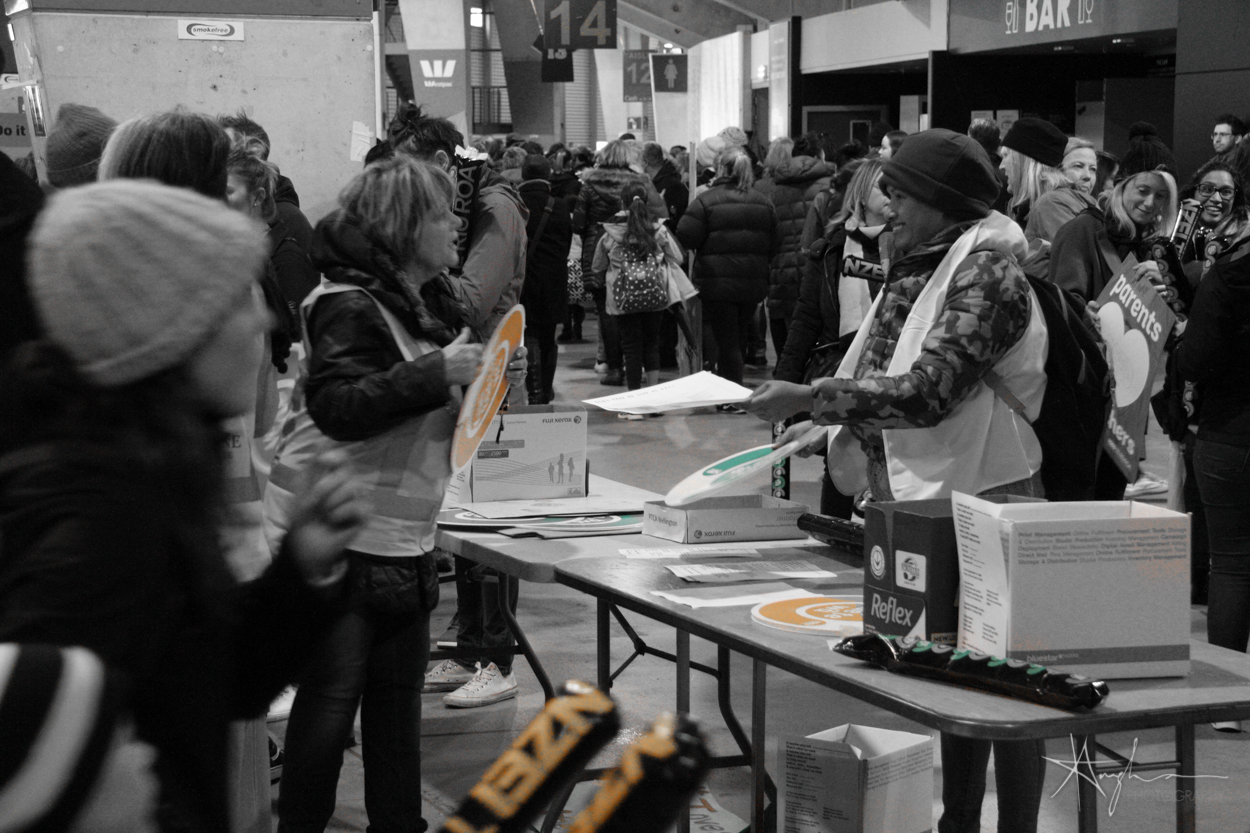
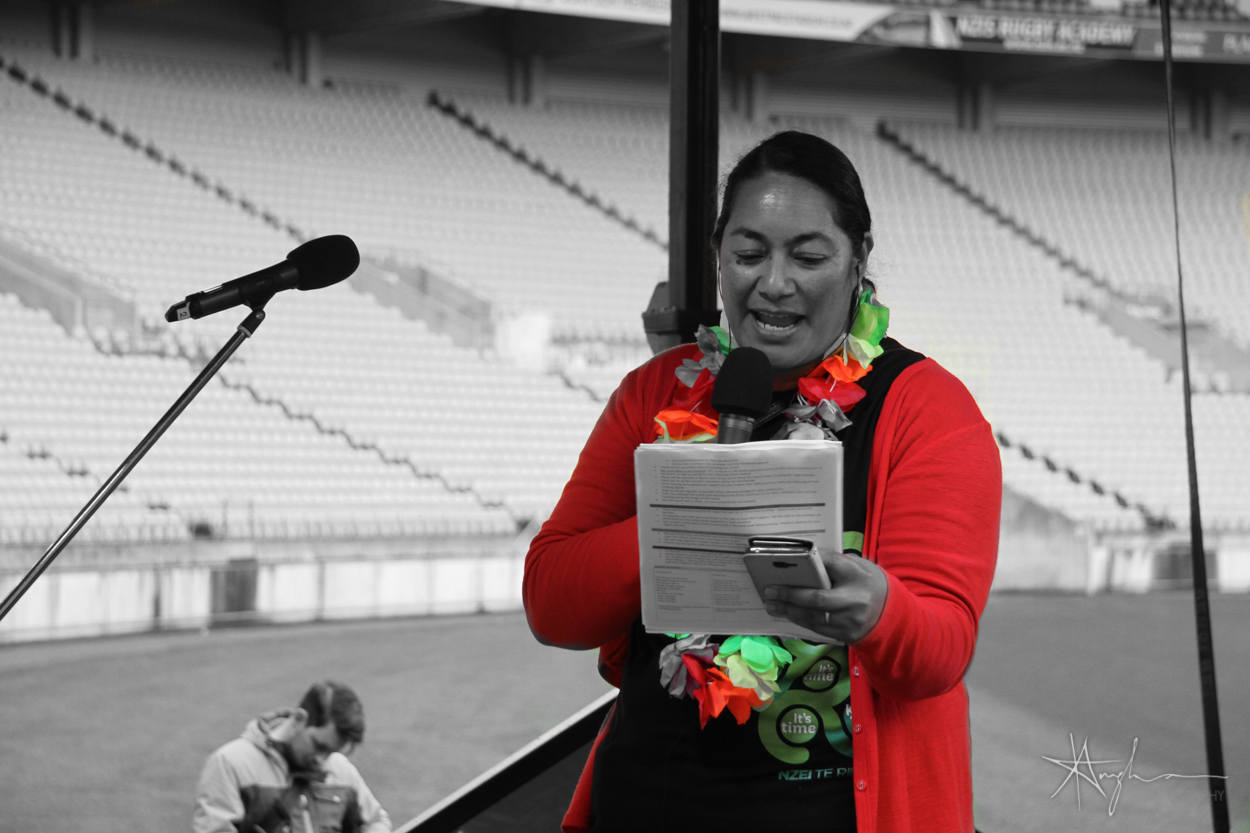
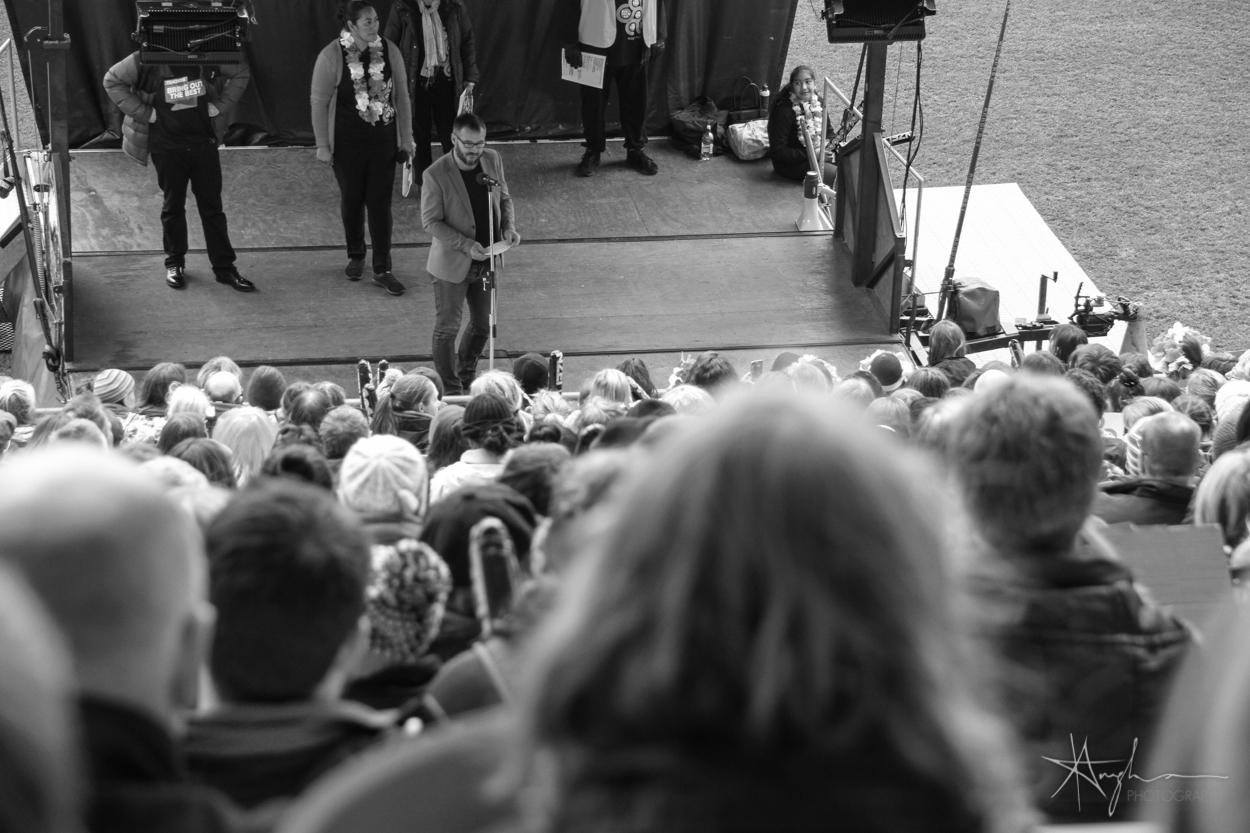
While a resounding cheer went up at ‘The Stadium’ when given the option of striking for two days, numerous teachers looked at each other and shook their heads. Minutes before we were told of two possible further actions, one that made no sense, and another which was striking for two days. ‘Now shout for which you want…’ Needless to say, without the clarity of thought or time to process either option, the cheer was for the less confusing option.
Crowd mentality.
However, the last thing teachers need is the voice of an Auckland principal speaking for the profession like he owns the place.
His words come from a place of self imposed importance. He’s welcome to his opinion though. So we’ll just make a few notes here.

Alwyn Poole, all alone in a dimly lit corridor, putting up a folded arm barrier between him and the teaching profession. “The current collective agreement round for teachers takes us back to the 1970s, and teachers and their unions (with the approval of their members) are screwing this up very, very badly. They have already lost even if they “win”.
They have attempted to frame this as a solution to the apparent shortage of teachers. If so, they should provide researched evidence that an increase in pay will solve the problem, not anecdotes from whingeing 25-year-olds complaining about their chosen career.
If New Zealand is to avoid a genuine crisis in education provision for our young people in the near future, a few things need to happen. As a start, the bar to entry for primary school teaching needs to go much higher in terms of prerequisite qualifications in maths, science and English. Lift the entry requirements and create a genuine bar for aspiring teachers to strive for, thus lifting the intake quality and enhancing the reputation of the profession in the eyes of Kiwi families.”
– Alwyn Poole, Stuff, August 2018
Where do we start. Firstly, don’t discriminate based on age. These 25 year olds are the future teachers we’re trying to keep in the job. And if they’re complaining, you can bet your bottom dollar, the rest of us have been complaining and have given up.
Secondly, raising the bar for entry to primary school teacher training isn’t the answer. As it is, when I trained in the late 2000’s, I was required to maintain a B average across all subjects of my degree. I’ve met some very smart people, with copious degrees, who I wouldn’t want (and who wouldn’t survive) in front of a class. Similarly, I know some people who would make incredible teachers, but whom aren’t academically motivated or interested in pursuing the career because of the university requirements. Kiwi families aren’t asking for smart teachers. They just want good teachers to be the best for their kids. Aspiring teachers shouldn’t need to strive academically for the thing that they know they were born to do. Furthermore, I’m not sure anything I learned in tertiary education (in terms of my Bachelor of Arts) has ever come in useful in my Year 5/6 Primary school classroom. Just saying…
Alwyn goes on… and on…
“Teachers and their unions need to stop whingeing about their jobs. Seriously, nowhere else on the planet does a profession have 12-14 holiday weeks a year. If you have to do some work in those holidays – woolly-boolly – you still have huge choices about how you go about that while in Fiji or Bali.
Stop complaining about the greatest job in the world: working with young people for the good of their future. Have teachers even considered that the children might be just a little upset that they are regarded as a burden and a chore, and that the normal things that go with teaching require a little extra work? How on earth does all this moaning and complaining inspire the next generation into this amazing career? It doesn’t. The unions are making it embarrassing to want to be a teacher.”
Seriously? How much were you paid to say this Alwyn?
You are right… though you used the word ‘else’ incorrectly in that sentence. No where on the planet does a profession have 12-14 holiday weeks a year. Not even in teaching. Seriously. As a principal, with experience, I would have thought you’d know this. Teachers work in their holidays, constantly. They work, it’s just that they don’t have 30 children around them at the time – which is the same as a normal day of work for most New Zealanders!
Obviously principals are getting paid too much if they’re taking holidays to Fiji and Bali all the time. Not sure I’ve ever had the chance in my nine years of teaching, nor can imagine taking work with me if I did.
I guess if we all only had 15 students in our class (as is the case for Alwyn and his staff), we might not have to work as much during the holidays. That’s right… Alwyn is a principal of two charter schools in Auckland, and his schools only have 48 students and 180 students in them. Both have the same website and school logo design. Brilliant.
I mean, let’s look at other professions that might be more appealing. Doctor? Lawyer? ICT?
All of these have significant pay associated with them. The average wage for a GP is $97,000. Lawyers in large firms around $87K per annum (after four years experience). ICT is a wide field of possible jobs, but an IT Manager gets between $90-$130K each year.
In comparison, the average primary school teacher gets $56K. I continually tell people, you don’t become a teacher for the pay. Nor should you. But come on. How are you meant to suggest that anyone take that kind of pay for this kind of job, and expect words like ‘love’ and ‘passion’ to pick up the slack?

Shirley Maihi, showing what teaching is actually about – arms wrapped in aroha for the kids In response, this was written by Shirley Maihi, a decile 1 principal from South Auckland.
“In a column published on Stuff on Tuesday, Mt Hobson Middle School principal Alwyn Poole said in focusing negotiations on pay, teachers and unions were “screwing this up very, very badly“.
Responding to this, Maihi said the demands for a pay increase were “absolutely right”.
When teachers’ pay competed with other sectors in the past, people were attracted to the profession, she said – New Zealand needed to get back to that point.
“It’s impossible to get staff,” she said. She has been advertising for one position since November and is yet to get a single applicant. Two other vacancies also lie dormant.
This only made teachers’ lives more stressful, she said. If a class had to be split when no relievers could be found, teachers might end up with five or six extra kids in their class.
This was on top of a workload that already caused “huge mental stress”, Maihi said.
Teachers spent much of their time dealing with social issues before they could even get to delivering an education, she said.
A teacher could not expect to start the year with 25 students and see the same 25 children at the end, so a lot of time was spent resettling children and getting them ready to learn.
That’s before the extra time they spent pouring into sports, study centres and after school care, and the hours spent working in the evenings.
As for holidays, she scoffed at Poole’s suggestion that if teachers had to work in the holidays “you still have huge choices about how you go about that while in Fiji or Bali”.
“Most of my teachers are trying to pay mortgages or living expenses,” she said. “They’re not going abroad.”
For most teachers, time away from school was an opportunity for family time that was sorely missed during term time, she said.
And – yes – for work.
“‘Holidays’ – in inverted commas – are not holidays.”
Finlayson Park ran its professional development courses in the first week of mid-year holidays, and the second week was spent preparing and setting up the classroom. Teachers might have a day or two to do shopping, but that was about it, Maihi said.
Over the summer break, she encouraged staff to take four weeks away from school work.
“Most other professions get four weeks off – so do we.”
– Shirley Maihi, Stuff, August 2018
Pretty much sums it up I think. The two photos featured above speak volumes. I know which I would rather work for.
-
Trainee teachers share aspirations, apprehensions | Stuff.co.nz

Alexia Cochrane has wanted to be a teacher since she was five years old.
Dedication, numerous part-time jobs and a $65,000 student loan helped get her through years of study and within reach of teaching her own class of young minds.
But like many aspiring teachers, the 22-year-old Waikato University master’s student says recent teacher strikes and talk of a crisis in education have her questioning her career path.
“I’ve met people with such a passion and drive for teaching who, once they go teaching, say they may only last three or four years,” Cochrane said.
“That’s devastating, because kids deserve people who are fully invested in them.”
“Teaching as a profession seems to be undervalued and I keep asking myself how long can I keep defending my passion?”
Source: Trainee teachers share aspirations, apprehensions | Stuff.co.nz
-
Two Auckland charter schools still have no idea if they will be open next year | Stuff.co.nz
It amazes me the arrogance and ignorance of some people.
Just read the comments to see the myriad of people all wondering what Labour’s problem with charter schools are.
If they’re making a difference, and they’re meeting the needs of some kids, then surely that’s a good thing, regardless of how they get there? Right?
Sure.
Except, how do they get there.
Entire schools, using tax payer money to be set up and run, with ‘special character’, which in this case includes class sizes of no more than 15.
Okay. Let’s break it down.
Let’s say that the Ministry of Education has $10,000 dollars to give to all schools to run for the year. Realistically it’s much more than this, but my ‘0’ key is starting to wear out…
From this pool of money, $7,000 is given to the state sector to teach and to raise achievement and pay the teachers and try to make educational outcomes in the positive. $3,000 is given to charter schools to do what they want with it.
However. There are 14 state schools using the $7,000, and only 2 charter schools using the $3,000. Let’s break this down. Each state school gets $500, and each charter school gets 3 times that.
Now… Because the state schools are given a class size of 28 students, this works out to be $17 per student.
Because the charter schools can state that their class sizes be no bigger than 15, this works out to be $100 per student.
Now… This isn’t the issue that those of us in the state sector have an issue with. The issue is that there is an unfair playing field being created between the public sector and charter schools which are a mish-mash of private/public. The trouble being that not every student can go to a charter school and access that amazing resource.
And in the meantime, that $3000 could have been going into the state system to provide similar benefits of smaller class sizes to every school, to every student, not just the few that manage to live near or get accepted into charter schools.
I guess it comes down to one thing…
Don’t read the comments!
Source: Two Auckland charter schools still have no idea if they will be open next year | Stuff.co.nz
-
Over the Bridges and around the Roundabouts
Hekia did a U-Turn on class sizes back in 2012 when she announced National would be increasing class sizes.
John Key himself stated that he sent his children to private schools because of the smaller class sizes.
Yesterday Simon Bridges sent National back down the road, but this time after heading around the round-about and back in the complete opposite direction to his former leaders. In fact, it appears that he’s even driving on the wrong side of the road.
“In a fiery speech to the National Party annual conference on Sunday, Bridges promised National would increase the number of primary teachers to reduce class sizes and give kids “more teacher time”.
“With the right education we can overcome the challenges that some children face purely because of the circumstances they were born into,” he said.”
Stuff.co.nz – https://www.stuff.co.nz/national/politics/105832210/smaller-class-sizes-under-nats-says-simon-bridges-in-major-speech
It has left many of us scratching our heads, dazed and confused. Isn’t this what Teacher’s all around the country were asking for back when National was in power?
It would seem easy to make such promises when you’re not held to account, or when you’re not in driving seat or in charge of the books.
Of course, this gives Labour the mandate to lower class sizes and not have any opposition to such a proposal – least of all from the teachers around the country, backed (I’m assuming) by Simon Bridges himself.
It won’t happen though. And here’s why.
To lower the class sizes there are several things that need to change.
Either there needs to be more teachers. Or there needs to be less children.
Let’s assume that infanticide won’t go down well in 21st Century New Zealand, the government is forced into the first option.
Please be advised: There are a lot of links to news articles in this article. I encourage you to read each article in full to gain a better perspective on the issues at hand. There is more than just one factor in all of this, and having a full picture of it all will assist you in understanding the complex array of issues raised.
As I write this article, NZEI have just released a damning report regarding student numbers and the teaching profession, saying a crisis will hit by 2030 – a date that I bring up later on in this article as well!
Point one.
We’re already losing teachers by the bucket load. Earlier this year it was reported that half… HALF of all high school teachers quit within the first five years. That means that every five years we have to replace half of all the high school teachers. And that’s just to maintain the current teaching workforce. Similarly, 17% of all new ECE and primary graduates EXPECTED to leave within the first five years into their careers.

“They often leave because they are burnt out by the demands of teaching, an increasingly narrow and prescriptive curriculum, and by policy initiatives that promise much, deliver very little, and are quickly replaced by some “new” policy that is equally ineffective and short term.”
Point two.
We’re losing not only good teachers, but experienced ones, by the bucket load. I’m not talking about teachers with 10 years of experience. We’re talking deputy principals with 30 years of experience. We’re talking teachers with 23 years of experience as a principal, and 40 years in teaching. That kind of experience doesn’t just grow on trees. Simon Bridges was two when this principal BEGAN teaching.
Point three.
To try and address the dwindling education workforce, the National government sent an ambulance to the bottom of the cliff. From the ambulance came the idea that we’d just train new teachers, rather than trying to stem the flow of valuable, dedicated, and experienced teachers jumping from the top of the cliff face. We all know why they did this – paying beginning teachers is a lot cheaper than continuing to pay experienced ones. But needless to say, the results are as expected.
The course was introduced and graduates rushed through in record time. I trained for four years to become a teacher, and I was nowhere near prepared enough for the daily rigors of school life. Furthermore, while the introduction of this was (in my opinion) a good one with a step in the right direction towards ongoing apprenticeship where teaching students are placed in a school and get used to “the grind” with some real-life practice, it only had room for 20 applicants in it’s first year in 2016.
Nine MILLION dollars was injected into “a raft of new initiatives” to help address the shortage in 2016. Money well spent by Hekia and the National Government? I guess proof will be in the pudding.
On top of this, the numbers getting trained are subsiding as well. I’m not at all surprised. The number going through education training at the moment is a third of what it was when I trained in 2010. Continuing that trend we will no longer be training any new teachers by 2034. Poor pay, high stress, and better career options in other professions are being blamed.
In addition to this, we’re not even getting the brightest or best for the profession. Just read this article from 2016 which states that graduates accepted into teaching degrees were some of the lowest scores across ALL bachelor programmes. It also explains saying that “The number of entrants into teaching has dropped by 25 per cent in five years, putting pressure on universities to accept even lower entry grades to maintain numbers”.
Point four.
So as we can see, getting more teacher’s isn’t working. Why not?
Well – as a teacher, I’m certainly not recommending that anyone choose the career over any other. I’ve heard it on good authority that at least one local principal discouraged his own children from becoming teachers, stating that it isn’t like it used to be when he was a teacher while raising them in the 90’s.
As stated: Poor pay, high stress, and better career options exist out there for anyone wanting to earn a living in this world. We’ve already seen a teacher shortage in Auckland, not just because of the lack of teachers, but because of the cost of living, the cost of housing (renting or owning) in Auckland (and elsewhere around the country) is beyond their means. Even those that moved in to try and plug the gap are now looking at leaving.
Put simply, Teaching is no longer valued as it once was. And it is a detriment to our society.
So how do we show value in Teaching as a profession? Well. Pay is one way. If the job is paid well, there will naturally be more interest in it as it becomes a viable career on par with other options that are out there.
Check out these stats from a bit of research a Twitter follower did:


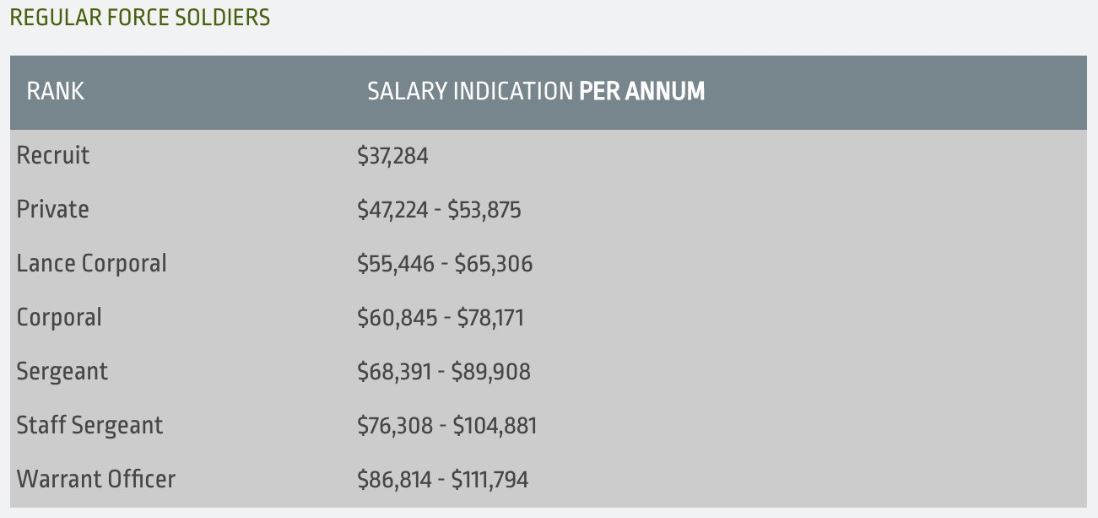
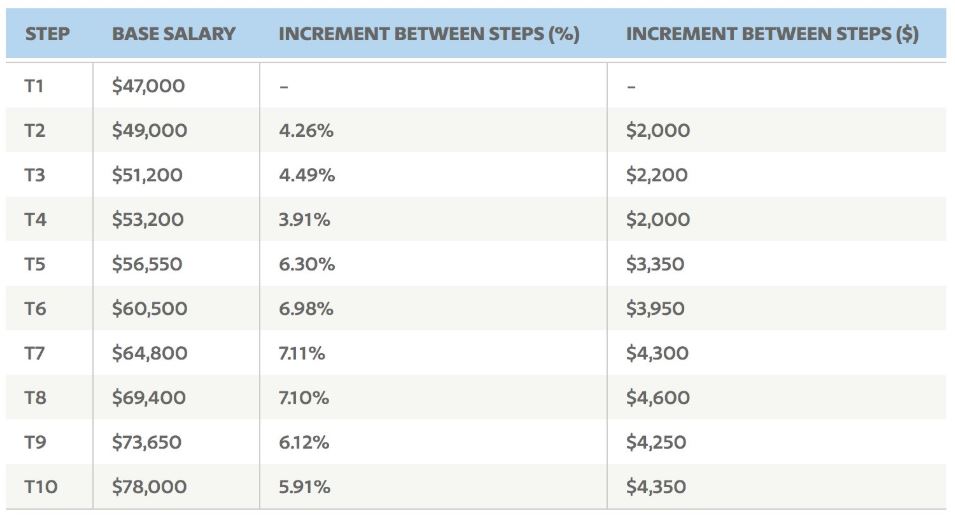
When a Corporal in the New Zealand Army can earn as much as the TOP tier experienced teachers (besides units, or senior management), then it speaks volumes. And don’t for a second think I am belittling Corporals in the New Zealand Military.
Heck; just look at the salaries of members of parliament. You have to go back to 1979 since the pay for a back-bench MP was the same as a Teacher’s salary. Now, a Back-bench MP brings home $168K worth of bacon each year – and then vote to increase their wages which gets passed almost before the Yay’s can say ‘Y’.
That’s a 40% difference, in nigh on 40 years. There’s no way that we’ll get back to where the pay scales will be anywhere near the same.
It can’t happen, I hear you say…
It did. Back in 1985, under a Lange led Labour government, a 40.17% pay hike was given to secondary teachers across the country.
I’m not saying that it will happen again. But if the government (and the people the MP’s represent) are serious about the future of the country, then they need to get serious about making Teaching a viable career.
You can come out and say that you want smaller class sizes, but to get to smaller class sizes, you need more teachers. And to get more teachers you have to make it a job worth staying in (less work pressure) and pay them more so that teaching is on par with other careers.
Everyone knows, thanks to Whitney Houston, that children are our future, and we’ve all had a teacher who has inspired us to be more than we are, or more than we were. You put money into education, and you get it back in droves in the generations to come.
The good news is, Minister Hipkins is aware of it and is doing something about it. Quite what it is that’s doing is largely unknown – given the latest purchase in the Defense force, but hey… at least it’s not a U-turn.
-
Teacher Workload: After the Standards
There was a small sigh of relief when the Rt Hon. Chris Hipkins announced that National Standards were no longer a government requirement for primary schools to use. Okay; it was more of a large cheer than a small sigh, but suddenly we are nigh on six months from that announcement, and as a teacher, I’m not seeing much of a decrease in workload.
Yet we’re assured that the government is working to reduce paperwork in the teaching profession.
When announcing the scrapping of National Standards, Hipkins got rid of the four point ruler for measuring children, but ensured that teacher workload remained high. You see, he said that “Parents will still receive reports at least twice a year on their child’s progress and achievement in maths, reading and writing as well as across the curriculum areas. But this reporting will focus on children’s progress, rather than measuring them against arbitrary National Standards.” – Chris Hipkins
So now, not only do we have to continue to report to parents twice a year (suggested at every 6 months), we are now also commenting across all of the curriculum areas.
You see; National Standards themselves did not add any extra work to the teacher workload. We already know from day in and day out interactions with the students, whether a student is below, at, or above – and so making that call took a matter of minutes and a slightly different grey shade on the report. The issue teachers had with National Standards was largely around the barbaric way it labelled children as failures, and was too broad in its measure to show any progress students might have made.
No; it wasn’t National Standards themselves that caused an insurmountable amount of additional workload. It was the need to report to parents formally in written form twice a year.
Prior to that, parents would usually have a parent/teacher meeting in the middle of the year to chat about how their child was doing, and a written report at the end of the year as a summary of how well their child was doing. Evidently this wasn’t enough. Too many children were slipping through the gaps and failing. We needed to keep parents informed on their child’s progress (or lack of) so that we could catch them before they fell through.
Except, now; with the requirement of two written reports, teacher’s workload doubled. But not just in writing screeds and screeds of reports. Teacher’s also need to gather data on each student, test them (and re-test them), anaylise their data, and compare it to an arbitrary set of benchmarks in order to see their progress. Instead of doing this at the start of the year to inform teaching and then repeating in Term 4 to write a summative report, we are now carrying out these tests throughout the year, to spread the workload out, and to be able to write two reports.
So while the National Standards have been scrapped, their remnants still remain, and continue to add to the workload and stress being experienced by teachers across the country.
Time for some Maths.
In our school’s current reporting format (which is largely based off a Ministry approved/suggested template) I have written on average 105 words for each of the Reading, Writing, and Maths curriculum areas. This includes the current progress a child is making and their next learning steps. That’s 315 words per report. My current class has 31 students in it. That’s 9,765 words. Double that because we report twice a year, and add some on for a General comment on the final report, and we’re bordering on 20,000 words each year in reports. To give an idea of how much this is, a Massey University Research Report worth 60 credits should not exceed 20,000 words, and a 90 credit Thesis paper should not exceed 30,000 words.
Every year.
What’s the solution? There’s no easy way to say this; but getting rid of the mid year report and replacing it with parent meetings seems the only way to bring the workload back to something more manageable. In my experience, there are parents of below expectation students who are aware they are below. Parents who don’t know their child is below the expectation are usually ones who a) aren’t actively helping in any way and won’t help in any way just because it’s written on a piece of paper, or b) aren’t all that concerned. This is a generalisation, sure; but I suspect that parents who care about their child’s education are going to be aware of where their child is in relation to where they’re expected to be without the need for it to be written down in a report. I also suspect that making parents who don’t care about their child’s education aware of where their child is in relation to where they’re expected to be isn’t going to change the amount of care or effort that they are going to be willing to invest in order to make any sizeable difference.
Therefore, the need to report twice a year is somewhat redundant. It’s created twice the workload, and stretched assessment throughout the year (instead of letting the teacher teach throughout the year) and adds to the stress without actually adding anything to education.
Related Reading