In the early 2020’s there became a real shift in New Zealand Education. Evidence Based Practice. The Science of anything. Every teacher was getting this thrown down their throats in a force-fed effort by every PLD provider in the country.
It’s okay. Catch-phrases are fairly common to teachers.
One large piece of popularised evidence was that of the Science of Reading. In it, researchers looked at how we learn to read. They identified core elements of reading that young children need to become good readers.
How do children learn to read?
As a fully trained teacher, I won’t even pretend to tell you that I know how children learn to read. I wouldn’t have a clue.
I can show you methods and ways in which I encourage reading in my class.
There are strategies to help students improve their comprehension and understanding of what they have read.
I have a range of supports for students when they get to a word they don’t know how to read.
But as for answering ‘How do we learn to read?’, I don’t know if I would even know where to start.
I think this is why the Science of Reading took off so fast. Many teachers have no idea on how we learn to read. We are led to believe that knowing how we read helps us identify how to teach children to become better readers. Sounding credible and academic helps. Putting “The Science of” in-front of anything will do that. “The Science of Cupcakes” will sound far more academic and evidence-based than “Grans Cupcake Recipe”. However, we all know which one we would rather have!
The Science of Learning sought to deepen our understanding of how the brain learns. It explores how to maximise memory, instant recall and long term cognition. We identify methods of teaching that enhances and “hacks” the way the brain learns best. Intertwined with things like Cognitive Load Theory (CLT), Scope and Sequence, and Working Memory, it provides a scientific basis for many things we generally take for granted.
Shift
It has been a long time since such a shift in pedagogy has occurred. Certainly not since Tomorrow’s Schools in the late 1980’s. Teachers have observed students struggling with their reading for years. They implement a vast array of strategies and teaching approaches to address the decline.
Along comes Structured Literacy, backed by the Science of Reading and supported hand in hand with the Science of Learning, and find themselves in the middle of a storm of teachers looking for answers. I’m not going to suggest that it was just happenstance. I believe early adopters saw positive results in the first instance. This placed confidence in the approach, allowing them to encourage others to adopt it and the word spread.
Not Convinced
I am naturally skeptical. It does make me mildly negative to be around at times. I question. I don’t just accept things at face value.
Change is hard. I’ll admit. I don’t enjoy change.
I’m not one to just keep doing the same thing and expect different results. Because of this, I try to keep my practice up to date with the latest insights and research. I’m often either the one giving new approaches a try, or being an early adopter with others.
It is difficult to keep up with the latest insights and research. Especially when there is such an overwhelming amount of it. It feels like its changing for popularity sake – a fad. A trend rather than anything pedagogically sound. It is also very difficult when you see first hand the cons before you see any pros.
Science of Reading, the Science of Learning, and the Science of everything else does not convince me. There are several reasons that it leaves me skeptical. Some may appear trivial to you, but no one said reservations had to be well founded.
The Science of…
The Science of Reading, Learning, Writing… what next – the Science of Science? There are at least two reasons why Science in general does not impress me:
- Society regularly juxtapose Science against my faith. Creation vs. Big Bang Theory is a decades old fight. ‘Evolution’ as a theory factors in our curriculum which I am never likely to teach due to my beliefs. The secular world sees ‘Science’ as the truth, or the pursuit of truth; seeking to understand that which we don’t yet understand. For me, the pursuit of truth is found only in Christ. My belief leads me to know that we won’t understand everything. It is only faith that allows us to bridge that gap between what we understand and what we can’t comprehend.
- Science and Art often appear on opposite sides of the curriculum. The main basis for this is that we use different hemispheres of the brain when dealing with them. Science based on facts, figures, experiments, data and logic. Art based on creativity, imagination, visual representations, emotions and ideas. My mind as a creative prefers to use the opposite side of the brain to what Science requires.
Needless to say, chucking ‘The Science of…’ in front of everything doesn’t impact me the same way in which it does others. If anything it probably has the opposite affect. It allows me to question, where others feel like they just have to accept it, because they’ve been lead to believe Science is truth.
The Art of…
Guy Claxton, who we read more from later on in this article, puts it as such:
“Another part of the problem is the gullibility of educators in the face of authoritative claims to scientific warrant by a small posse of overconfident, and in some cases ideologically-driven academics and consultants. A little knowledge is indeed a dangerous thing.”
One of my biggest issues goes back to an anciently old adage that is still strong in education. It is, and always has been ‘The Art of Teaching’. Yet here we are, in the mid 2020’s, and we are being told that it is the Science of Learning. And maybe that’s where the two opposites meet. However, the way in which the Science of Learning then suggests how we are to teach in order to allow students to learn in the most effective ways, it is fast assuming that it has to be the Science of Teaching as well.
Explicit Teaching: How We Teach Matters
The Science of Learning says that the most effective way to teach is by explicitly teaching information and concepts. This has been widely adopted throughout education in this country and is the single biggest shift in how I teach. Explicit Instruction flips the script teachers have used for decades.
An example of this would be when learning about Dolphins. In the past, I would have asked the class “Okay class – what do we know about dolphins?”. Of course, my ideal class would all put up their hands and wait their turn, but in reality, the answers come thick and fast with various students calling out louder than others. “They’re fish!”, or “They have flippers”.
Example
Explicit teaching doesn’t ask the question. It states the facts and then checks for understanding. Now, using an Explicit Teaching approach I would say “Okay class – Dolphins are fish and the have flippers.” – teaching the content that students need to know. Checking for understanding would then have me asking “What are dolphins?” and “What is something that they have?”
We flip the script. The explicit teaching of a concepts happens first, and then the students can answer.
To some extent this makes sense. If we were approaching a topic the students knew nothing about, asking them to tell me what they know about it is pointless. Getting them to guess answers isn’t the way we learn best. “I don’t know”, even if muttered internally, is a sure fire way to get a brain to shut down to new learning.
However. I’m not sold.
The good thing is I’m not the only one with reservations.
Simplistic Views on Complex Reality
Guy Claxton is a UK based cognitive scientist who has a wide range of experience at a number of prestigious institutions in the United Kingdom.
On his blog he has written about the Science of Learning and the Practice of Teaching. In it, he outlines shortcomings, misunderstandings, and areas of contention with the Science of Learning.
One of his early points centres around the limitations of the research into the Science of Learning. The main issue is the limits on purpose or outcomes. He says that if you focus on superficial tests of understanding (i.e. “A dolphin has flippers – what does a dolphin have?”) then explicit teaching has positive outcomes. However, explicit teaching does not foster curiosity, independence, imagination, which are also incredibly important in developing functioning individuals and learners.
It follows that there is no such thing as ‘good teaching’, only teaching that is good for certain purposes or outcomes. For example, if all you are concerned about is scores on relatively superficial tests of understanding , then there is a good deal of research that shows that explicit or didactic teaching – that which maximises Explanation (by teachers) and minimises opportunities for Exploration (by students) on the grounds of ‘efficiency’ – is perfectly good.
If, however, you also value (note: in addition to, not instead of, ‘knowledge’) the cultivation of character strengths such as curiosity, independence, imagination, critique, collaboration or intellectual humility, then different kinds of teaching are needed. Indeed, relentless ‘explicit teaching’ may well stunt the development of such valuable strengths.
One size fits no one.
Claxton takes umbrage at the promotion of explicit teaching across all areas of teaching. Promoting the good version of explicit teaching and pitting it against the bad version of inquiry-based learning is bad faith.
He says: “Any kind of teaching can be done ‘badly’. Explicit teaching can be dull and disengaging, just as inquiry-based teaching can be unfocused or pitched inappropriately. It is intellectually lazy to promote a ‘good’ version of one by attacking a ‘weak’ or caricatured version of the other.”
Claxton continues: “In reality, the craft of teaching mostly involves a judicious and dynamic mixture of both explanation and exploration, depending on a whole variety of factors… to which good teachers are sensitive and responsive… To try to enforce a single template is bad education and bad science.”
Claxton raises a good point here. It tends to be a bad trait of teachers in that we are one-trick actors. The research tells us that explicit teaching is effective. It is sold to us as ‘best evidence practice’, so we assume that we need to apply it to each and every situation, . It’s not that we can’t teach using multiple methods throughout the day, but that we’ve been sold a lie; because this is how brains learn, then this is how we must teach to be effective.
Cognitive Load Theory
This is exacerbated when we learn that the research behind CLT derives from work on high school mathematics and science teaching. These subjects are not valid prototypes for other subjects on the curriculum nor indeed for the many wider forms of out-of-school learning.” The Science of Reading has it’s podium crumbing under it. It wasn’t even a subject that was researched under CLT and yet we find it being used to promote specific teaching methods in Reading at primary school level.
Not only that, but it is made worse by the insights of this cognitive scientist who points out that things like Working Memory and Long Term Memory, of which CLT leans on, were “…formulated in the late 1960s and [are] long past [their] sell-by date (except apparently in dwindling bubbles of cognitive and educational psychology).”
In teaching circles, some of us are familiar with ‘Learning Styles‘, which even though were debunked, still find their way into public perception of truth because that’s what they were taught, and they sound completely plausible.
Complexity and Consistency
Another contention Claxton has with the Science of Learning is that teaching is such a complex task, juggling so many variables and consistently making judgement calls, that to over-simplify that task by whittling things like CLT down to the reason why students might be struggling with a learning task, when in reality, there are an incredibly wide range of factors that could be impacting on that student.
The primary aim of CLT is to explain why some students find learning some things hard, and to derive teacher actions from this explanation. There are a host of reasons why a child is apparently struggling with a particular learning task, that may reflect preoccupations with emotional matters in or out of school, lack of interest, the ‘work’ being too easy and boring, or its difficulty (for a particular class) being misjudged, the desire to appear rebellious to peers, and so on. To leap to narrow cognitive explanations without taking account of these and many other possible factors, is facile and often unhelpful.
Simplifying Complexity
Closer to home, we have Prof. Stuart McNaughton, Chief Education Science Adviser to the Ministry of Education for 10 years and Professor at Auckland University since 1976. Earlier this year he wrote about the mandate of Structured Literacy across the county and expressed concern in it’s implementation.
“Unfortunately some of our recent policies and practices suffer from simplism by markedly simplifying the complexity of teaching, learning and education,”
His article outlined the concern that “…years of experimental studies found focusing on decoding words in the first years of primary school could raise decoding levels “but has limited (if any) impact by itself on medium to long term comprehension.”
Radio New Zealand, 11 July 2026: https://www.rnz.co.nz/news/education/698992/education-professor-pans-simplistic-school-reforms
“Clearly you need a form of structured literacy in place in order to teach some of the basics… What I’m worried about is focusing only on those relatively simple components, the phonics components, and ignoring or at least not supporting an emphasis on the more complicated things like the role of self-regulation in early reading and writing and maths, or, like in the case of reading, enjoying reading.”
I wrote about this earlier this year after seeing first hand the de-motivation of a group of students due to the explicit teaching approach in Reading.
Dismissal of this View
The supporters of Structured Literacy and the Science of Reading in this country were quick to dismiss McNaughton’s opinion – none more so that Sir James Chapman. Chapman was made a knight this year upon Stanford’s suggestion for his work in Structured Literacy in this country. You can read his rebuttal here: https://www.liftingliteracyaotearoa.org.nz/blog/the-flimsy-case-against-structured-literacy-in-nz-schools
Any Actual Reasons?
But what reasons do I actually have from my own experience that the Science of Learning, Science of Reading, or Structured Literacy aren’t all they’re cracked up to be?
Well, there are a few.
Less Motivated
Firstly, as mentioned above, I’ve seen first hand students becoming less and less motivated to read due to teaching using a structured literacy and explicit teaching approach to it. As a society, we’re ‘already battling the decline in students reading less and less in their own time, as their access to more entertaining alternatives chew up the time that our predecessors would have used for reading.
Increased Results? Not yet
Secondly, so far, I have yet to see any significant improvement in any reading, writing, or mathematics results in the standard tests. Over the course of 15 years as a classroom teacher, I’ve got a pretty good idea as to where students sit within the curriculum, and what level they are at for Reading. In the 2 years I have been beginning to teach using explicit instruction and following Structured Literacy guidelines to the best of my knowledge and ability, I’ve yet to see a significant shift in academic results in Reading.
Now, that’s not to say that it won’t happen. 2 years is more than likely too soon to make any statements regarding its effectiveness, and I am prepared to give it more time. But it begs the question – how long before we should start seeing significant improvements? 5 years of implementing and effective practice? 7 years? 10 years?
I’m just not seeing the results that I’ve have been lead to believe I would get.
Maybe I’m doing it wrong!
Supporting Struggling Learners
My other reasons focus more on holistic views of teaching. One is the ability to adequately support students where they are at in their learning. Explicit Instruction has lead teaching towards a whole class model, where all students participate in the same lesson learning the same content.
Providing additional support in smaller break out groups can happen at an earlier, or later time, but the main focus of teaching has shifted to having the whole class participating in whole class lessons. The idea would be to then set the class up with independent follow up tasks while you, the teacher, pull out small groups of students who need support. But this feels too targeted, and too obvious for it to not be detrimental to a students’ psyche and how they see themselves as a learner if they’re always getting pulled out and never get to do the independent work everyone else is doing.
Increased Planning Time
Another factor is planning time. I have begun taking to creating slideshows for my Reading and Writing lessons. This is in an effort to work smarter and have resources for the future as I begin to cover similar curriculum content over the next few years. Slideshows not only help present the content to the students, but assist in driving the lesson and prompting me as the teacher what my lesson sequence is, instead of having to refer to a lesson plan all the time. The slideshow IS the lesson plan.
But this does not negate the fact that this is time consuming and considerably impacts on my time. Creating and making two slideshows each week, ensuring that the content is right, the formatting and layout is effective, for two curriculum areas each week can take upwards of two hours.
And yes; the introduction of AI tools could enhance the use of this time; but I have several reservations about using AI at all, and being the graphic designer I am, I not only find enjoyment in making slideshows and formatting them to be graphically pleasing, but I simply don’t trust that it can format it in a way that follows the template of how I want it to look.
Beyond that however, making the slideshow myself locks it into my memory on an intrinsic level that allows me to present the slideshow with confidence, knowing what I had planned to come next and knowing what parts get revealed and when, as well as what information or task or instruction comes up next. If I left the slideshow creation up to AI, I would have to then work to learn the slideshow myself, which wouldn’t be as intrinsically memorable as creating it is.
Conclusion
The Science of Learning sounds legitimate. Evidence based. Science backed. Popular and has a large base of promoters that celebrate it’s success across every curriculum area.
But learning is complex. More complex than the implementation methods of The Science of Learning (such as Explicit Teaching) take into account. There are a myriad of factors that impact students in what they find difficult, what they find easy, what they already know, and what they have no experience of. And these are just scraping the surface of the things students are dealing with in their learning.
Teaching is an Art. It requires creativity, engagement of emotion, relationship, nuance.
And we mustn’t lose that.

 Earlier this week
 Sheppard travelled the country, writing to newspapers, holding public meetings and lobbying members of Parliament. Opposition was fierce. As Wellington resident Henry Wright wrote, women were ‘recommended to go home, look after their children, cook their husbands’ dinners, empty the slops, and generally attend to the domestic affairs for which Nature designed them’; they should give up ‘meddling in masculine concerns of which they are profoundly ignorant’.
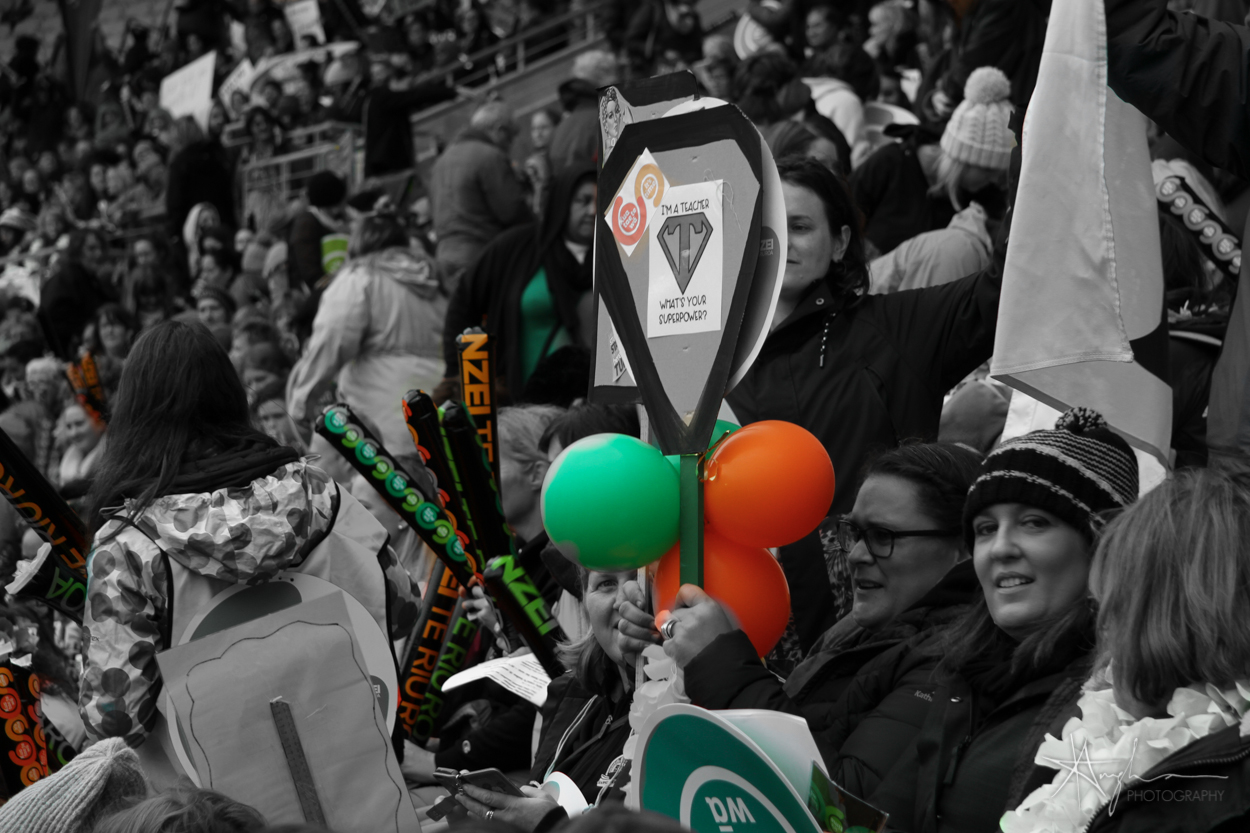
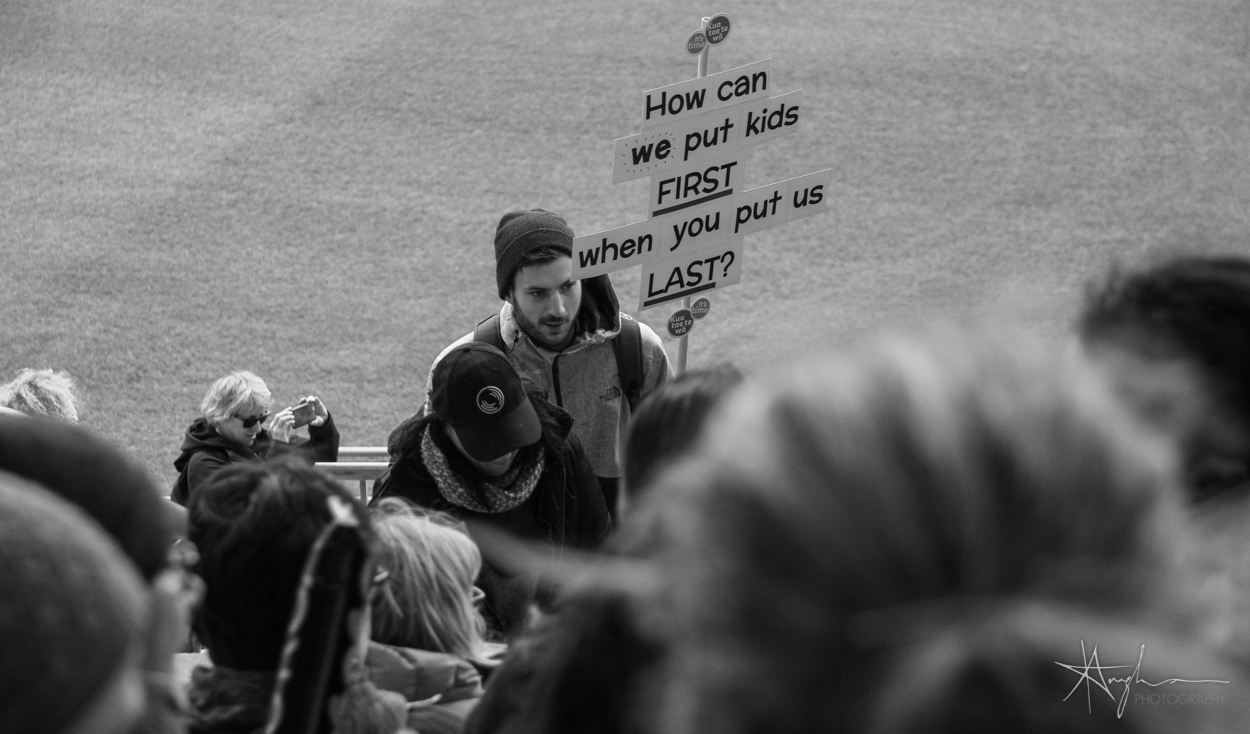
 I’m talking about two unions representing jobs that are mainly made up of women that both decided to go on strike this year. In August, NZEI members voted to strike amid their pay negotiations. 75% of Primary school teachers are female (
 You see; many think (and has been reported on) that it is about pay. To some degree, it has to be about pay. It’s illegal to strike otherwise. But the underlying issue comes down to other factors.
 Show publicly that the profession is valued.